Ann Romney and moms who ‘don’t work’

Well, the latest crazy statement by a political commentator has made its way through the blogosphere today. Since it is such an integral part of my life, I feel compelled to comment.

Here’s the basic info: Hilary Rosen, a Democratic strategist, said Ann Romney wasn’t qualified to talk about women struggling in the economic downturn because she “hasn’t worked a day in her life.” Naturally, this opinion has ignited the ire of many women, stay-at-home moms or not. Rosen made this comment while trying to make the point that because Ann Romney hasn’t held a job in the paying workplace, she can’t be qualified to have an opinion about economic issues that affect women, and can’t be a useful advisor to her husband. First, I must point out that it isn’t necessary to be the one in the family holding down a paying job to be concerned about how the economy is going and how it affects your family, no matter how much money your primary wage-earner makes. Second, and the real ignition for the fire, the comment then belies Rosen’s derisive attitude toward women who choose to stay home to raise their children.

I always find it a little absurd that women who are generally of a liberal slant, who shout about the need for women to be able to “choose,” such as about their own reproductive lives, then turn up their noses at women who make a different choice than they would in family matters. “Choice” implies that there are varied options available, and that it is an individual’s right and privilege to decide among those very different options. It also implies that any of those options are ones that should be respected by others. But in our society today, if a woman chooses an option that others frown on, that woman is often derided and called “old-fashioned.”

I am a mother of four, and my daughters’ ages are in a wide range, almost 16 down to nearly 5. I have two teenagers, an elementary schooler and a preschooler. They have very different needs and schedules and temperaments. I chose from the beginning of my reproductive life to be a mother who would stay at home with her children, and I have held to that. Over the course of 16 years, I have worked part-time out of the home (15 or 20 hours at the very most) for perhaps 3 years total, when financial realities have indicated that my income would be necessary. Right now, I work from my home office on the computer for pay for maybe 5 hours a week. The opportunity to copy edit online has been quite welcome, has added a little extra income, and has kept my skills fresh. I feel blessed not to have to leave the house to do it. I also have various projects I do in the hopes of earning pay from them in the future and/or because they are intellectually and creatively stimulating and satisfying. I also feel blessed that I have the freedom to be able to pursue these projects.

There is no doubt that our economy right now has forced many families, two-parent or otherwise, to make decisions they wouldn’t otherwise have made. Both parents might have to work outside the home; single parents have to work. Wives may work and laid-off husbands stay home with the kids while they continue to search for employment again. It’s not a happy time. Even in brighter economic times, families made decisions that were either “modern” or more “old-fashioned,” according to their needs and wants and interests. Sure, I’d like to see more women able to stay home with their children, at least not working out of the home 40 hours a week, because I personally believe it benefits the kids when that situation is possible. But I know how it feels to just be home with the kids ALL THE TIME. Getting out of the house to a job where you’re appreciated, patted on the back, given breaks and more immediate gratification than a 20-year-long project is definitely an enticing prospect. And a paycheck? It can mean college tuition for your kids, a car that isn’t 15 years old and in the shop every other week, or just a reflection of a job well done that other people in society relate to and recognize. But mothering at home full time? No paycheck, no regular gratification, no guaranteed breaks, no good reason to put on a nice blouse and makeup.

But we still live in a society in which women are just not that great at respecting each other’s choices. Hilary Rosen is just a case in point. Why can’t we just admit to ourselves that we’re all very different and have very different backgrounds, life experiences, needs and wants, abilities, interests, weaknesses, and capacities? Whether we as women are married or not, have children or not, we are going to see the world in very different ways. We also aren’t just polarized to one “side” or the other: we might be working full time but wanting to stay at home; we might be staying at home with kids but really wanting to get out into the workforce. Or we might be working outside the home part-time or working from our home offices. There are a variety of flexible options available so we don’t have to be “one side” or the other: full-time workers or full-time stay-at-homes. (At the same time, our society definitely needs to figure out ways to make more truly flexible options available to both women and men to support families and children.) So we can’t expect everyone to make the exact same choices we do.

I know it took me ages to get used to being the mother of an infant, then a toddler and an infant and then more. It just made me crazy to be at home 24/7 with a very demanding little human being. I wanted to get out and work, do something for me. Even now, the demands of a home and husband and four daughters of varying ages can at times be super-stressful and overwhelming. And my own expectations of what I’d like for my daughters, what I’d like to be able to do for them, are usually more than I’m possibly capable of fulfilling because of time and energy limitations. I can’t possibly be in the high school band boosters and the elementary school PTA and the middle-school PTA and work from home and do my projects and volunteer in church and be in charge of other things and write a book and make muffins every day for breakfast and four-course meals for dinner and shop for food and clothes and do laundry and clean. I can’t be two places at once, which sometimes comes up with four kids. Choices must be made, and they’re rarely easy ones. It’s all about balance and constantly reprioritizing and rebalancing.

At the same time, despite how different we all are, I know that any mother, working outside the home for any number of hours or not, faces similar concerns and struggles to keep balanced, to keep all her balls in the air. So why in the world should we criticize and demean and make nasty comments, rather than using those energies to support each other in our choices and figure out ways to make our society better for everyone? Let’s let “choice” mean something.
Violence in popular books and movies

I am not sure why I am even attempting to broach such a huge and important topic, but since I am often ambitious and stubbornly determined, despite my limitations, I am going to try to at least put in a few words and opinions about this subject.

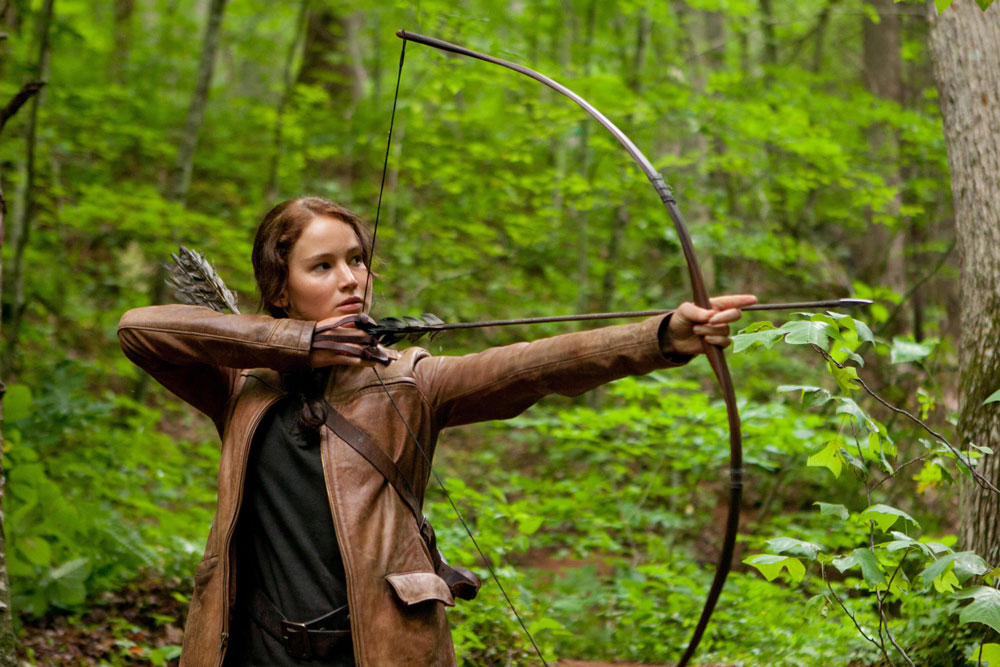
Jennifer Lawrence plays Katniss Everdeen in "The Hunger Games." Credit: Lionsgate/Murray Close

The recent uber-popularity of the book and movie versions of The Hunger Games has brought this topic to mind yet again. I think it is vital that as a society we seriously consider the issues of the kinds of content we view, hear and read in the media, whether it’s TV, movies, books, music or video games. There is a lot of research available about these issues, and there are definitely people who are concerned about these topics, but I think it still bears discussion. Since I have this blog as a forum, I’ll bring it up here.

First, I think it’s safe to say that the media we view/read has gotten steadily more detailed and explicit over the years as a whole. Sure, there have been incidences of movies or books years ago that were heavily sexualized or violent, but I think that overall, more and more of the things we see have become filled with content that could be offensive or outright dangerous. I know I have read about studies that link violent behavior with the levels of violent content viewed in movies or video games, but I won’t attempt to find them or list them here. I’ll leave that for others. This is just a blog post. I’ll talk about my feelings and experiences.

I was raised not watching any movies that were rated R. I also was raised by a father who was a television director. He worked in the TV industry and then moved on to teach about it as a university professor. He and my mother both were sensitive to the ways the media influence us and were somewhat cautious about what we watched, and when we did watch TV and movies, we often talked about them. We even talked about commercials and what messages they were giving. On the other hand, for example, my husband grew up watching R-rated movies, plenty of stuff that was filled with violence and bad language, and didn’t really give it much thought until we were married. So I find it interesting to compare how we react to things we watch.

When I see a film that contains violence, each violent act strikes home to me, and I feel it. I particularly feel affected by the portrayal of just plain evil characters. I appreciate good acting, but I never cease to be bothered by really effective portrayals of characters who are purely wicked, whose sole intent is to cause pain and suffering in others, whether it’s for gain or purely because they enjoy seeing someone else suffer. That feels all too real to me, and I would prefer not to experience that. I often don’t see the point of having to portray those kinds of people or the point of my needing to see/feel it. I flinch and cringe away from the screen. My husband, on the other hand, doesn’t seem to be as affected as I am. I feel it personally, and he views it as just part of the plot of a fictional story.

I know that how much violence we see affects how we continue to experience it. The more violence viewers are exposed to, the less it bothers them. We can actually have our feelings numbed, where difficult images don’t disturb us anymore, if we see a lot of violence. I worry a great deal about people, young men in particular, who are constantly exposed to strongly violent images and acts via movies and video games. It changes their very natures, so they are no longer bothered by acts that should be bothersome. That inevitably translates into real life in some way or another.

Now, I’m talking mostly about what might be termed “gratuitous” violence. Violence, as well as sex and strong language, have become a normal part of many movies and other media. But often they are simply there to “entertain.” I simply do not find those kinds of content entertaining; I find them offensive and soul-scarring. But there are times I think that violence has an appropriate place in media. Good literature and film and other media help to show us how life works and what happens sometimes, to remind us of history and how not to repeat it, for instance, or to remind us about how bad human nature can be and how to overcome our basest natural inclinations. So the question is, how much detail do those “good” media instances need to contain to be effective in their aim? How much evil needs to be shown to remind us to do better, be better, in some way, as individuals and as a society?

The Hunger Games has struck a chord with friends of mine, for instance. I’ve been interested to see what various friends have had to say about the books and the movie. Some have wholeheartedly embraced the positive messages of the series and what it seems to aim to do and say, even just sitting down and reading the series in one big marathon. Some have appreciated what the books are trying to do but have still felt the violence was too intense, too detailed, unnecessary. I already mentioned in my post about the movie and book that I liked them overall but felt that I could only read the books in small doses, not three right in a row, because they are so intense. I just couldn’t swallow them whole, all three in one sitting, without a break of lighter fare. I respect and find interesting and valuable the views of all my friends who have weighed in on the topic. I think that in the case of this series, it’s a valuable book series and movie, but it’s important to know yourself and what you’re comfortable with.

Some people may truly have been numbed by watching lots of other violent fare over the years, so they aren’t as sensitive; some people may just be more sensitive naturally, whether they’ve been exposed to much violence in media or not. In the case of Hunger Games, parents should be careful about knowing their children who might read the series or watch the movie to judge if it would be a good fit for them. But they shouldn’t just abdicate making any judgment on the matter because the movie and books are just so popular and “everyone” is reading/seeing them.

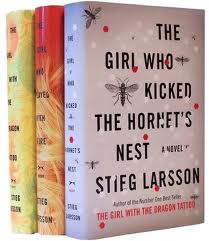
I think another movie and book series that bears discussing here is the very popular Stieg Larsson series, starting with The Girl with the Dragon Tattoo. As a book reviewer, I had an opportunity to read this book when it first came out, and I read the flap and decided it just wasn’t something that would sit well with me. I wondered about it later when it began getting a lot of buzz. After some more investigation, I still concluded that it wouldn’t be something I would enjoy. Then, with my website, I still needed to have a way to provide guidance to readers also trying to decide if the book would be a good fit for them. Finally, someone who reviews for me read the book and was able to give it a rating. She confirmed what I’d heard, that the book was filled with many explicit, disturbing scenes of sexual violence against women. She also linked to an article online I found very useful in giving more insight.

In some ways, I want to leave judging to individuals, to let them make their own decisions about how certain content might affect them. But at the same time, I find it profoundly disturbing that so many readers are embracing these novels. I asked one blogger last week who said she is a Christian what she felt about this content, as she proclaimed how much she enjoyed the Stieg Larsson books. She said, in short, that since Larsson doesn’t “endorse” the assaults, and “warns against” this kind of violence, that she was OK with the content, even though it was very difficult to read.

I found that to be really interesting. I think that is where we all have to make some kind of a judgment on any violent content; is it important to include it if it sends a message? I think so. I think an even more important question is, however, how detailed and explicit should that content be to be able to get across the message? Is it necessary to have multiple scenes of extreme violence, even misogyny? Does the negative impact of a reader (or movie viewer) experiencing that kind of secondhand assault get outweighed by the positive impact of sending a message that these things happen and are wrong, and that we can do something to prevent these acts?

Again, I’d like to say that in most cases, individuals should be able and encouraged to decide for themselves what will be best for them. I created Rated Reads for that very purpose, to give readers extra information so they could judge more accurately for themselves what they would find acceptable, given their own sensitivities and sensibilities.

But on the other hand, I think there truly are cases where too much is simply too much. That doesn’t mean censorship; I would never say that a book shouldn’t be published, period, because of its content. But it does mean that there should be warnings; there should be more information easily available to readers about what they might be facing in picking up a book. There should definitely be some lines drawn about what can be made available to readers who are younger than 18, much like R-rated movies are restricted to younger viewers. I would like to see less gory, explicit and gratuitous violence in movies and video games, as well. I just don’t think enough is being done to limit that violent content that can truly numb sensitivities and even affect violent behavior.

Unfortunately, I don’t think there’s much we can do to limit things in our free-speech society. But I think it’s important for us to talk about these ideas and be more aware of the damage that can be done by a steady diet of violence, or even an occasional sampling of “unnecessary” violent content. Obviously, we all are going to have different ideas of what constitutes the “right amount” of disturbing content or which messages are truly beneficial to remind us of truths about humanity and what’s happening in real life. I already have made clear I am pretty sensitive to violence and have a low tolerance, so I might have a much shorter list of books or movies I think are important for people to see (BUT at the appropriate ages and maturity levels) than others. But let’s make this a national conversation and be more aware of the effects of what we and others in our society are seeing.

Easter and Christ’s role in my life

I am independent, strong, determined — even stubbornly so. I have always been persistent and goal-oriented, ever since I can remember. I have tried to stand on my own two feet, not depending on someone else to do anything for me, if I can at all help it. I know there are quite a few other people out there like me; others look in at them and either can see the facade of “everything’s great” or, if they notice the person struggling, they think, “Why don’t they just ask for help?”

That’s a darn good question. In answering for myself, I’d say, perhaps, Well, I don’t need it. If things get really bad, then I’ll ask for help. Or, it’s just habit. I’ve tried so hard for so long to do things myself that I just don’t think about asking for help until it’s just kind of … too late, in one way or another. Perhaps many who suffer from this sort of stubbornness just were forced to fend for themselves for years, physically or emotionally (I can’t begin to imagine the kind of lives some people have had to experience), so now it’s absolutely ingrained. Maybe we don’t trust that if we ask someone for help, that we’ll get what we need, or we feel that no one is able or willing to help. Or maybe I’m afraid I will be laughed at, judged and found wanting in some way, or snubbed. Perhaps it comes down to pride. I feel I’m weak if I can’t do something myself. I feel that I should be good enough on my own.

Whatever the reason, or mixture of reasons at any given time, I am in the habit of doing things myself. As life has gotten more difficult and I have experienced various trials over the years, I have recognized I need to be better about saying the very useful words “no” and “please help me.” So I am working on it, even if it just means starting small.

This personality trait has been a real impediment in my life when it comes to faith and my relationship to a loving God and Savior. Faith itself is about believing in something we can’t see. It’s about giving up ourselves and our pride and vanity and stubbornness to a power greater than ourselves. It’s about trust. So as much as I absolutely and completely believe that there is a God and that I have a personal Savior, I still keep them off to the side somehow, saying, “OK, thanks for being available, but I’ve got this one.” I pray with great faith and a full heart for other people I know and care about who need help that I can’t possibly give myself, trusting that God will answer those prayers and help them. But when I’m struggling and feeling weak, I still don’t just give over my heart and worries to God very easily. I hang on to them. It’s absolutely crazy.

I really enjoyed reading a wonderful article in our church’s magazine, the Ensign, this month, about the arms of Christ. The author was speaking about Peter’s experience walking on the water to Jesus in the midst of a storm. He went a little ways actually walking on water. Then he doubted and sank. He cried out to Jesus, just ahead of him, “Lord, save me!” Brent Top writes,

All of us have had, are having, or will yet have a Peter-like “sinking” experience in some way and will at some time (probably many times) cry out, “Lord, save me.” Even Peter’s strong fisherman arms were not strong enough to save him. He needed the rescuing arms of Christ, and so do we. Can you imagine Peter—choking, his head bobbing beneath the surface of the water—saying as the Savior extends His arms: “No, thank you. I will swim to shore. I sank myself, so I must save myself”? Of course not. How ridiculous! Yet we sometimes do just that.

We may know in our heads that our mortal arms and hands are deficient—in fact, utterly incapable of rescuing or redeeming us—but we sometimes resist, even recoil from, the outstretched arms of the Savior. Sometimes we spiritually drown ourselves because we won’t allow His arms to cradle us. Elder Jeffrey R. Holland of the Quorum of the Twelve eloquently stated:

“May I be bold enough to suggest that it is impossible for anyone who really knows God to doubt his willingness to receive us with open arms in a divine embrace if we will but ‘come unto Him.’ …

“I am convinced that none of us can appreciate how deeply it wounds the loving heart of the Savior of the world when he finds that his people do not feel confident in his care or secure in his hands.”

This message is not new information, but it touched me deeply, first, because I spiritually almost always refuse to ask for my Savior’s help. I’m sinking and just frantically treading water, waiting for the storm to cease on its own, for me to somehow get enough strength to swim to shore. Second, I was touched by Elder Holland’s words about how it must hurt our dear Jesus when we don’t go to him for help. I know how I feel when someone I care about could use my help, and I am eager to lend support or specific help and they won’t even ask. The Savior is perfectly loving and compassionate and has the most sensitive soul and heart. He must feel hurt when I refuse his help.

On this Easter Sunday, I could write about how grateful I am for the Lord’s sacrifice, in that he gave his life so we could all live eternally and be resurrected. I could write about how much hope that gives me, that I can one day have a perfect, immortal body, and that my deceased family members will have the same, and that we can all be reunited. All that is absolutely true and deeply important to me. But on the most personal level, I am grateful today that Jesus suffered, that he already experienced, in a way I can’t possibly understand with my mortal brain, all of the pains and struggles that I’m experiencing now, have experienced, and still have yet to experience. He’s already been through it all. He’s on the other side of those sufferings, and he’s waiting to help me to get through to the other side as well. I just have to turn my heart over to him and give up my pride and my need to do it alone.

I’m not going to overcome this struggle in this life, I’m sure. I am just trying to do better, to give up my self and my bad habits, a little at a time. Today, on Easter, I say, thanks be to my Savior for always, always, always being there; for already suffering for me; for patiently waiting for me to give him my whole heart.

My take on “Hunger Games” …

… because I have to weigh in.

I tend to hear about many books that end up being “hot” early in the game thanks to all the ways I stay connected in the publishing world. In the case of The Hunger Games, I heard about it on Stephenie Meyer’s website. I have found that Ms. Meyer has quite good taste in books. She talked about Suzanne Collins’ eventual blockbuster on her website when the first book came out, and I ran out and bought a copy. (She also recommended a fantastic “duo” of books starting with Dreamhunter, which I really liked as well but which isn’t the phenomenon that The Hunger Games has become; in fact, I’ve run across no one else who has read it.) I was thoroughly impressed by the fascinating premise and by the skilled execution of the great idea. I think a lot of what got my attention was the idea that in some messed-up future, the most horrific of survivor reality shows would be enacted. I’ve never been a fan of pretty much any reality shows on TV, preferring well-written, original scripted programs whether they be comedy or drama, so I thought it was brilliant to take our current society’s obsession with the cheaply-produced stuff that passes for entertainment to its gory and worst-case conclusion.

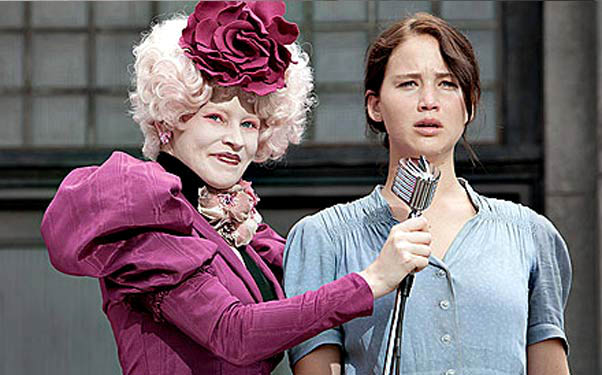
Elizabeth Banks and Jennifer Lawrence star in "The Hunger Games." credit: Lionsgate Films/Murray Close

Of course, since I read the first book when it was newly published, I had to wait a year for Catching Fire. As it happened, I ended up putting my newly purchased copy on a shelf and holding on to it for a year until Mockingjay was published. At that point, I then had two fresh, unread copies of the rest of the series, but it had been two years since I’d read the first book. That meant that I had to reread The Hunger Games so I could refresh my memory. Since the books are so intense, I still had to take a little break between reading the second book and then the third, reading one or two other books in between. From what I hear, this is unusual; everyone else I know, including my husband, who isn’t a BIG-time reader, just sat down and gulped the books down in practically one sitting, reading all three straight through. For me, I just needed to take a step back from the violence and, well, sadness. Either way, though, I was gripped by the story and how it unfolded. I liked how it showed people’s resilience and the need to rebel against an oppressive government. Collins had a wonderful idea for the books and then just showed great talent as a writer in taking the story through to its conclusion. I knew that she wouldn’t tie everything up neatly in a bow and that there wouldn’t be perfect happy endings for every character; I could tell, as most readers probably did, that this would be a gritty, more “realistic” set of books, with messier but mostly true-feeling plot lines. Some were shocked by how she finished the series, but I didn’t find myself completely taken aback or annoyed by it. It worked for me.

Now that I’ve had an opportunity to see the movie adaptation, I can say I’m very satisfied. Books turned into movies can be generally very un-satisfying propositions, so to be able to attend this film and say, “Wow. That was really well done” was a happy ending for me. I wasn’t terribly pleased with the first several Harry Potter film adaptations, feeling that although they did bring to big-budget life main plot points of the first books, they somehow lost a lot of the “feel” of the books. Part of what I loved about J.K. Rowling’s writing was not just the complex world and plot arc over seven books, but the whimsy. They are so clever in the names and in all the little non-crucial, witty touches. They made me laugh. The movies just didn’t do that at first. They felt lifeless. And Twilight… that’s a whole other story altogether.

So I was pleased with the movie because it completely captured the feel and tone of the books, the harshness of the regular citizens’ lives and the hopelessness, and the barbaric nature of the Capitol’s Games, carried out with such pomp and calculated publicity every year, even as 24 teens were brutally encouraged to leave behind their humanity and kill each other to survive, just to go back to their bleak lives.

The acting was superb and the script was deftly adapted. A movie really is a different animal than a book, and much as book lovers hate it, movies must make changes as the story goes from one distinct medium to another. I love good films (my dad taught me how to appreciate the classics), and I enjoy seeing how a director and all the other skilled people who contribute to a film really bring out the best in a story using all the tricks up their sleeves. For instance, the fact that there wasn’t much music in the film was a method that contributed to its tone. When music was used, it was spare and simple, echoing the story lines.

I think what I most appreciated, though, was that the visual nature of film really struck home to viewers the messages of the story even more than the book. The book tells us about totalitarian regimes and what governments do when they have too much power; it tells us about how people still can’t keep their eyes off of watching others fight and suffer, even in larger-than-life color (the rubbernecking, train-wreck mentality). It showed us the obliviousness of the people living in the Capitol to the real lives of the rest of Panem’s citizens. The movie, though, because of its very nature, really made me think about how silly and superficial those in the Capitol were, how they pranced about in their lives of ease and wealth, wearing their ridiculous clothes and crazy makeup and hair, not caring at all that people in their own country were mostly poor and always hungry and struggling. The Hunger Games were really just a game to them, a spectacle. It was disturbing and made me realize yet again how absolutely wealthy I truly am compared to so many people around the world, and so many of us here in the United States are, but even so, most of us complain that there are still others richer than we are, rather than thinking about the many who are poorer. We go around getting plastic surgery and Botox and spend ridiculous amounts of money on electronics and fattening fast food while others are struggling just to have something to eat. We sit in our comfortable living rooms watching big-screen TVs with scenes playing out of “reality” that’s not at all real: people pretending to love each other and women fighting each other for the “love” of one superficial guy, other people supposedly using survival skills to “win” on a remote island that’s been rigged for the show.

I was nervous about the violence of the movie, since the books truly are about violence. I will just briefly say I was pleased not to be too overwhelmed by violent images. The issue of violence in books and movies in general is something I find really interesting and important, but that will be a topic for another day. Suffice it to say for now that I enjoyed both this book and its movie version, and I was pleased that it made the leap between mediums in a satisfying manner.

“Love by assignment”

My church has a women’s organization called the Relief Society that was established in 1842 with just a small group of women. Now there are millions who belong to the organization, all around the world, from all kinds of backgrounds and life situations.

I think one facet of the organization I have always appreciated is a program called visiting teaching. The woman who has been assigned to be the president of the Relief Society in each congregation, or “ward,” takes the list of all the women in her group and divvies it up so that two women generally are given maybe four or five other women to watch over and, ideally, to visit every month. I once read about it being “love by assignment,” and I think that’s a great description.

I have enjoyed the program because it has allowed me to get to know many really great women I might not otherwise have had the opportunity to get to know so well. I have become acquainted with women by being assigned to visit them and by being visited by others. What’s been most rewarding is knowing that I have a simple way of being able to help someone else in whatever ways they might need. If someone I visit has a baby, I can take in some food. Or I can send a card and goodies when she celebrates a birthday. Or I can just pray for her especially if she’s facing a problem I can’t do anything else about. And I always hope that each woman I’m assigned to feels comfortable to call me if something comes up in her life she might need help with somehow, without me having to ask all the time if there is something.

This program has also allowed me to make some fast friends. I have a very dear friend now who has been a constant in my life, a source of strength and just fun, whom I met because she was assigned to be my visiting teacher some 16-plus years ago. It’s very possible we would have connected if we hadn’t been put together that way, but maybe we wouldn’t have. I shudder to think what my life would be like without her.

And I’m making new friends all the time. Often, we don’t get the chance to cross paths in our congregations because we might be assigned to teach children’s classes or something and we might end up at opposite ends of our church building during our meetings. And we might not think to sit near each other at a potluck or other activity. So when I get to visit someone new I haven’t gotten to really talk to before, I am often very pleased to find I’m making a new dear friend. Our assigned visits then turn into two- or three-hour “hangouts” where we just chat and bond. What’s not to love?

People outside my church may just consider this a nice program. I, however, see it as one that’s inspired from a God who loves me and his other daughters and wants us to be able to serve and be there for one another. I am always grateful for the great friends I’ve made because of this inspired opportunity.

Beauty and the backlash

A few months ago, I started interviewing women who elected to have cosmetic surgery. Today KSL.com published my compilation of (a little of) what I learned from them.

I knew it would certainly get people’s attention — as well as opinions and comments. As I’ve read the comments left on the article, I’ve wanted to respond to many of them. Since I can’t really do that there, I’ll take a couple of points here.

My first response is that this article is only a little piece of the story. The previous articles I’ve researched and published are also pieces that contribute to a whole picture, which is still only slowly forming, about what might be a trend of elective surgeries happening in Utah. So as people say, “Well, what about the influence of media?”, for instance, or “What about how men see and treat women (including the huge problem of pornography)?” I say, those are  good points. I’d like to get to those  in future articles or a book or just on this blog.

My second reaction to many commenters is that this issue is more complex than it may seem at first glance. Many either say, “Why worry about what people’s personal choices are? Let them do whatever they want” or “Those women are so vain! They should accept who they are.” It’s easy to just pick one of those two opinions. But in speaking to these individuals, I found myself empathizing and just enjoying our conversations. In addressing the second widely held opinion, for example, I would say, You know, I liked these gals. We’d probably hang out or be in a book club together. We could be sitting in a gym locker room or a mothers lounge or any number of places, commiserating about how giving birth has drastically altered our bodies, how we’re dissatisfied with our soft, squishy bellies or our stretch marks. I get it. I am not happy with how I look, and honestly, I’m having a slightly difficult time coming to terms with what aging is doing to my body.

I didn’t find these women to be shallow, vain, or self-centered in the 30 or 45 minutes I spent talking to each of them. One of them specifically told me how she’s tried very carefully not to wear revealing or tight clothing or act any differently since she had her mommy makeover. She doesn’t want to change how she acts or looks or puts herself across to others. She doesn’t want to become immodest, or, heaven forbid, immoral. She just wants to feel more comfortable in her own skin (now less saggy than it was).

Having spoken with them and empathized, I don’t want them to be seen as some kind of poster children for vain women who care only about their appearance. They’re not all that different from the rest of us who have complained about how we look. The big difference, however, between them and those of us who have merely complained is that they have gone far enough to invest a sizable amount of money in a change and to take the risk of subjecting themselves to surgery, which always carries the possibility of harm. Granted, in the hands of a certified plastic surgeon and with many procedures now “routine,” the risk of death or other serious harm is fairly low, but it is definitely a risk and something one must seriously take into account. This seems particularly of concern when the patient in question is a mother of children still at home, and if she does die on the table, she’d leave them without a mother. These women did consider those issues and still chose their course.

What I’d like to come of all this is a conversation. Our culture in America today encourages women to think of themselves as objects, to look first at how much we weigh, if we jiggle in good or bad ways, if we are sexually attractive, if we still look young and as fresh as we did before giving birth. Our society worships youth, there is no doubt about that. What started as a trend in Hollywood and among the rich and famous has now become commonplace among the masses: to fix any body issues with surgery and other procedures. We are awash in images of perfection, so much so that it’s impossible not to compare ourselves with those images, unreal as they may be.

Let’s look at the factors that contribute to this trend, such as pervasive media influence, our expectations of ourselves, our comparisons with each other, and the way men are socialized to respond to women, to name a few. Let’s admit that though we may not choose to do what some of these women chose to do, that we may have thought how nice it would be to magically look better.

This doesn’t have to be a trend that continues to go the same direction. We can halt the ever-increasing percentages of people who are having cosmetic procedures done. We can change how society looks at women in particular and glorifies a perfect image, male or female, which now means thin bodies and full breasts for women and lean, muscled lines for men. Maybe we can get back to the days when full-bodied women were glorified. Even better, maybe, just maybe, we can progress far enough where there is no ONE ideal, where all kinds of looks are appreciated. Now that sounds perfect.

Dear doctor

Over the years, I’ve come to realize that the doctor-patient relationship is vital to good health. As with any other relationship, it must be built on effective and clear communication, understanding, compassion, and just mutual “liking.”

Unfortunately, it’s hard to find a really satisfying doctor relationship. It’s hard enough to find friends out in the wide world of people, to find someone who just clicks, who is fun and understanding and supportive. When you’re narrowing down the pool of potential medical mates to perhaps 50 people in your town who are qualified and approved by your insurance, then finding that kind of chemistry in that small group is going to be a real challenge. And it’s not as if those 50 potential mates are sitting in one room, giving you an afternoon to interview them and get to know them. They’re holed up in an office somewhere, with crazy schedules, spending 5 minutes with each of their already existing patients, and walled in by receptionists who take messages and aren’t necessarily great conduits for starting relationships or even investigating the possibility.

So I don’t really expect my doctor relationship to be as close and mutually satisfying as a great friendship. But it still must have a few of those qualities for it to be most effective.

Here’s the thing: I know my body best. I’m not a doctor; I don’t have medical training. But I’m not completely ignorant when it comes to medical issues; perhaps that makes me one of those frustrating patients who knows just enough to make me dangerous. Perhaps it’s helpful. At any rate, that’s where I am. I do know that I’ve been in charge of my own medical care for 20-plus years, and I’ve taken all kinds of medications over the years, seen a number of doctors and some specialists, had some tests, and had a LOT of time to ponder on test results or effects of what I’ve taken or tried. I’ve been smack dab in the middle of my own personal lab experiment for all this time. I’ve said for some time now that it’s really unfortunate that I don’t have my own control group. That would make things so much easier. But I’m one person and I’m the control group and the experimental group in one. It doesn’t make for good experimenting. But that’s how it is.

I know these things: over the years, I have come to appreciate that any hormonal changes in my body really reverberate and effect my whole being, emotionally and physically. Female hormone changes can make me irritable or emotional; they can make me tired; they can make me bloated, and they can make all kinds of other waves I don’t even register in my consciousness. I know that I have a mental illness that requires medication, and that is also a very delicate state of being, to get to where medication helps me but doesn’t knock me out or make me feel numb emotionally. I know that if I don’t feel “right,” then I should look into whatever options there are.

Unfortunately, again, since I’m not medically trained, and I don’t have authority to write prescriptions for myself, I need a trained doctor to step in and work with me to find possible problems and possible solutions. We need to be a team. I will respect your training and experience, but I need you to respect that I can feel things in my gut about myself that you can’t. We don’t have a few hours for me to use all the words that it might take to express why I might feel something particular just “in my gut.” I have to figure out how to get it across in about two minutes. And if I can’t do that, then we’re stuck.

I know if I’ve gained weight. You don’t need to point it out. Believe me, I’m all too aware of it. And if you’re a petite woman who runs marathons and doesn’t have a problem with overeating, then I’m going to instantly feel that you won’t understand where I’m coming from, unless you put me at ease otherwise and try not to judge. I eat healthy, mostly, and I exercise every day. I’m doing the best I can. Pointing out I’ve gained 20 pounds and sighing and shaking your head won’t make me feel any more motivated. It will only depress me. Not only that, it will make me dread having to come in and see you. That’s never good. If I dread coming in to your office, then I’ll put it off, and everyone knows that putting off important medical care is bad. Plus, being anxious anticipating what you’re going to say will probably elevate my blood pressure readings while I’m in the office.

If I tell you I’d like to consider some alternate therapies or tests that you don’t usually use, I’d like your support. Sometimes, those require your signatures and authorization. Please don’t refuse because you think these things are a waste of time or money. If I feel that there’s something going on that your regular tests and medicines don’t seem to be addressing, I’d like the opportunity to waste my own time or money. At least I’ll know I’ve tried. I’m not way out there trying really bizarre things. So try to have a little bit of open-mindedness. Yes, I know where you’re coming from. But please understand how frustrating it is to feel “not right” and not have any answers. Rather than making a face and flat-out refusing, you could at least explore more why I’d like to try something else and perhaps find a way within traditional medicine to address that issue. You support my going to an acupuncturist. So let me try a compounding pharmacist, for example. But the second you squeeze up your face into a disapproving look and shake your head and refuse, you’re going to earn my ire (anyone who knows me would know that will just set me off). At least try to make me feel that you’ve heard my concerns and figure out a way to address them your way; at least make me feel that I’m an active partner in my own care. Don’t make me feel judged or condescended to or brushed aside. Work with me so I can feel validated and part of the team.

Listen, I understand that working in health care is tough these days. Doctors especially have huge debts from medical school and have to jump through all kinds of hoops just to get reimbursed halfway reasonable amounts for the work they do. Yeah, it stinks. I appreciate that. My husband works in health care, though he’s not a primary physician. So I’m not completely ignorant. I understand that you need to be true to the science you were taught that was thoroughly researched. But you have to appreciate also that the knowledge we do have is still pretty limited, and that a lot of research that has been done either used men exclusively as the experimental group, or averages have been calculated using the data from a variety of people. We also know that some research ends up being faulty or rushed and has to be reversed later on, with great human costs. Don’t blame me for being just a little bit skeptical sometimes. And simply averaging information gathered from groups of subjects and mathematically deciding that data then should apply exactly to my individual body chemistry and internal workings is not what I’d call the most effective use of scientific inquiry, either.

Most of all, please understand that how I feel is not just physical symptoms, but emotional. It’s all part of one big whole. If I try to take a few minutes to explain or ask for further help or thinking out of the box, please indulge me if you possibly can. If I don’t feel you’re hearing or understanding me, I’ll get more emotional. It’s natural. Don’t blame it on my “being mentally ill” or think immediately that I must need a higher dose of medication for my mental illness. “Normal” people have a wide range of how they express and show emotions, and it’s natural to feel frustrated when we feel we’re not being heard. It’s natural to feel emotional if you don’t feel well physically and there doesn’t seem to be an obvious  reason. Please validate my feelings rather than telling me that I don’t have the right to express them in any way. I work hard to be kind and civil and understanding, but I am not devoid of emotion, and I cannot stay completely poker-faced when I feel frustrated. Don’t write me off. But when you say we may not be a good fit, you know what, you’re right about that. But sometimes we patients don’t have the luxury of finding a great fit. I just have to make do with that little group of doctors in town that my insurance will pay for and who are taking new patients. But if you know another doctor who might be a good fit for me, then by all means, please give me a name.

I would very much like to find a doctor who will be on the same wavelength with me, at least in how I communicate with words and body language and a little show of emotion. I’d like one who maybe even has a little sense of humor or likes to banter a little. Maybe with the way our health care system works today, that might be impossible to ask for both of us. If that’s the case, that’s very sad. And on a political note, if that is the case, then just making our health care system bigger won’t solve the problem. It needs an overhaul; it at least needs tweaking and adjusting. Let’s not just make a really ineffective system bigger so more people can be frustrated. Let’s dig into it and see how to truly make it BETTER.

Thanks for your time, former doctor and potential new doctor. I know you have a tough job to do. Thanks for going to medical school and doing the work you do. I just hope that we as a society can figure out how to do better in matching patients to doctors so this process of finding optimal health can be a little easier.

Sincerely, Cathy

Perfect to a T

A visitor the other day asked me, “So, are you a perfectionist?” Ha! I had to chuckle. It’s like asking me if I like chocolate. Or ice cream. Or books.

Uh, yeah. I’m a perfectionist. I’d like to call myself a “recovering perfectionist,” but that would be implying I’d actually improved a bit and stopped some of my perfectionistic ways. Nah, I’m firmly off the wagon.

This moniker is accurate despite the fact that my friend came into my house while I was in the middle of vacuuming my dining room. The chairs were arranged haphazardly along the edge of the living room carpet, and I was wearing a ratty old T-shirt and sweats. My hair was up in a clip and I was, as is typical for a weekday, without any makeup. Luckily, and unusually for a weekday inside my home, I was wearing a bra, and this is only because there were men in my house installing some new windows. My four-year-old was running around doing whatever while I vacuumed, which was the precursor to mopping (which only happens about once a month around here, though I’d like it to be once a week). With the men stomping around upstairs and creating some background noise, plus occupying my driveway with their big truck, my home was the site of some serious action, and I was a little sweaty and rattled. My main goal was to get the house clean and put the preschooler in her room for some quiet time so I could sit down and rediscover my equilibrium.

Mostly, I wouldn’t point to these markers as signs of perfectionism. Perfectionists’ homes are just naturally clean, with outsiders never seeing the behind-the-scenes action (like the best of magic tricks, everything looks amazing with some sleight of hand); female perfectionists always are stylishly dressed with neat coifs and impeccable makeup; their children do not run wild. But I know the truth: cleaning my home is a must because I am a perfectionist. I like clean floors and surfaces. I like them to stay clean. Since people (children and husband included) live here, they do NOT stay clean. I am perpetually frustrated.

I can’t explain away the lack of makeup, the hair always in a clip on the top of my head, or the fact that I ALWAYS wear sweats and old T-shirts at home (or, if I leave the house,  blue jeans and T-shirts without holes). Perhaps that’s the one category in which I just let myself slide because even I have realized I can’t do it all. (Unfortunately, I have yet to realize I can’t even do half of it all, but I keep on trying.)

And people do see me sweat because I go to the gym every day. And I certainly do not wear makeup or have my hair fixed there (although in that case it’s in a ponytail rather than a clip).

But I can’t point to these habits and say, “See? I’m NOT a perfectionist.”

A whole list of qualities and habits shouts loudly that I most certainly AM (this is only a sampling, mind you):

  • I can’t stand having unfinished projects lying around. When I sew, for example, which is maybe once a year, I just get it all done in two days. I may sew four dresses at once, but I will sit at the sewing machine almost nonstop until they are done and I can put away all my materials and the machine back into their appropriate “homes,” out of sight.
  • Look at what I do for a living: copy editing. Can one be more perfectionist than that? The goal is to have an article or manuscript with NO ERRORS. No misspellings, no grammatical blunders, no style mistakes, no factual goofs, no libel. It kills me to look back on a story I’ve edited that still contains an error that I MISSED. That fault on my part will haunt me for days.
  • I’ve already written about my body issues and will continue to do so. Let’s just observe that my glaring imperfections (hello? 40, possibly 50, excess pounds?) do not slip by my eagle eyes. But in the interest of full honesty, I will say that I’m generally content with my hair and my face. I think I have a pretty face with some very fine features (always got compliments on my eyes and smile) and good hair that rarely gives me problems, unless it’s in dire need of washing.

The thing is, I’ve always been like this. My mom says I was born this way. I believe her. My family dynamics and circumstances tended to reinforce that tendency, but it was always there. My first two children didn’t inherit the trait, but my third has. I sympathize with her. She’s always going to excel in school and activities, but she’ll feel tormented when she doesn’t do as well as she’d hoped (it already happens, even with pictures she draws).

No, I’ll never be labeled “laid-back” or “easygoing.” But people like for me to be in charge. I get things done — and well. But it comes with a price. I’m not the friend you want to take to the beach. I won’t sit there quietly and companionably for five days running, the sand tickling my toes and the sun kissing my skin, thinking only about wispy clouds and bright blue skies. I can only sit and do nothing for about two hours. After that, I’ll be grabbing your hand and leading you on a tour somewhere, or hooking up to the Internet to write or edit or search for useful information. No, I’m not a relaxed gal most of the time. Mostly, I’ve come to be OK with that. And I’ll insist on that until stress makes my cortisol hit freakish levels and I have a heart attack. But when I’m gone, you’ll look back on my body of work and say, Look how much she got done. Wow, those articles are completely error-free. She was amazing.

Divinely beautiful

I’d like to address beauty today from the standpoint of faith. I grew up in a religion that taught me that I am a daughter of God, of infinite worth, that he created me as a spirit daughter and then sent me here to this earth life, mortality, for a time to gain a body and learn faith while not in his presence. I hope to return to him someday. I am now teaching those same truths to my own four daughters, on loan to me from my Heavenly Father.

I have been struck many times by how much we as females are worth, how amazing we are, how much we can do, how strong we are. If we are truly created by God, and he loves us as children, we must be pretty wonderful and worthwhile.

But here’s the kicker: I also believe there is an adversary out there, a fallen spirit son who chose to rebel, and now this evil one is out and about trying to make us all miserable, just like he is. And he is pretty smart and very determined to bring us all down. He’s quite successful at what he does, too, sadly enough.

He knows just how amazing women are. He knows our potential, and he knows what we can do right now. He knows our power, strength, and beauty. So he is working really hard to fool us into believing that we are ugly, weak, unloved, and unimportant, that we don’t deserve all the best that God can give us. And many of us are happy to let his pernicious lies enter our ears and our thoughts and affect how we feel and how we act and live.

I think one of his tools in our society today is sending a constant message that we are not good enough unless we look good. We must have perfect bodies, perfect faces, perfect hair. We must wear the latest fashions covering (or barely covering) our perfect, thin bodies that sport flat abs and finely toned muscles and perky, full bosoms. If we have flabby arms or flat chests or a little bit of fat anywhere on our bodies, we are not good enough, not worthy of love. He whispers to us that we’re not even worthy of our own love.

In our society today, we are constantly steeped in images. Images of women who are impossibly thin, who have no flaws on their figures or skin. Images of women who wear scanty clothes that reveal every square inch of perfection. Those images shout at us from billboards, from magazine covers at the grocery store, from ads that pop up online, from movies and TV shows, from commercials. Even if we don’t watch TV or movies, we can’t avoid the onslaught.

And most of us are allowing the messages from those images to permeate our very beings, down to the very center of who we are. We are allowing those evil, twisted messages from a miserable being to convince us that we aren’t beautiful, that beauty is simply about being a size 2 and having perfect features. We are forgetting who we truly are, what our royal lineage is, and where we are bound.

In my interviews with women who have elected to have cosmetic surgeries, I have been moved by their feelings of insecurity before their surgeries. I don’t condemn them or want them to feel bad because of the message I hope to convey through this blog. I understand. I can’t look in the mirror without feeling, EVERY SINGLE TIME, that my body is ugly and fat, that it’s unacceptable. I used to be thin, and now I feel I’ve failed. I’m weak, I’m a disappointment. I do understand.

But I want to fight back. My purpose in writing this is to try to remind my fellow daughters of God who we are, and what our real worth is. It’s not about how we look. It’s about who we ARE, who we have always been, and who we are meant to be. We’re far from perfect, in looks or behavior or anything, right now. But we’re works in progress, and that’s OK. It’s more than OK. It’s exciting. We have so much ahead of us, and we’re on the path toward greatness.

We can spend a few hours a week at church, being reminded of who we truly are; we can spend half an hour a day praying and reading scripture. Those things are helpful, indeed, and crucial. But when during the rest of our days and weeks we are bombarded with messages telling us we’re not good enough, that we’re ugly and fat, and that our worth is tied up in our looks, then we must fight back. We must remind each other how important we are, how loved we are. We must take a stand against all those negative messages that are completely opposite of what the truth is: that we are truly of divine, infinite worth. We are daughters of God. Let’s do all we can to go out and spread these true, positive messages, to find ways to wallpaper our lives with them, to cover over those untrue messages.

Stand tall! Remember who you really are, and take the time every day to remind the women and girls in your life who they are, and just how precious and beautiful they are. We can make a difference.

A shout-out to the blog that started this conversation

Early last month, I saw this lovely post linked from a friend’s Facebook page. It got me thinking about my situation, and I decided it would be useful to start a blog that talked openly about mental illness. So here we are, about six weeks later.

Being Sunday, I will focus today on some faith-related observations. I don’t necessarily intend this blog to be focused entirely around faith and my religion in particular, but from time to time I’d very much like to address belief because it is very important to me and how I experience life.

I am of the opinion that my church, the Church of Jesus Christ of Latter-day Saints, has done a nice job bringing some of these more sensitive topics to the attention of the church membership worldwide. The official magazine of our church is called the Ensign, and it comes to homes monthly with lots of wonderful inspiring articles and first-person experiences of how the gospel of Jesus Christ has changed people’s lives. The magazine has featured over the past decade more and more articles that address special situations like how to parent and teach people with disabilities, for instance, and how to tackle the problem of pornography. It has featured articles about mental illness, as well, from the viewpoints of licensed therapists and from those who have struggled with it personally.

So in no way do I think our church has tried to sweep the issue under the rug or act as if it isn’t a challenge to many people. I have definitely enjoyed the articles about mental illness in the official magazine, and I have appreciated books that have been published about the topic that are aimed at the LDS audience.

But I do think that more can be said, more can be done to bring what was once rather a taboo topic out into the open. I’ve already written about how more people seem to understand physical illness, and I liked how this blogger mentioned the same feeling. Our church women are known for providing meals to those who are sick or who have just had babies. We’re great at delivering casseroles. But while I have been given some meals over the years postpartum, I haven’t been provided much sustenance when it’s come to my mental recoveries. I think that there are basically two reasons for that: 1) few people even know when someone’s suffering from mental illness (in general or a bad episode of it) and 2) our society as a whole still just doesn’t talk about it enough so that it’s something people all feel comfortable with. Sure, not everyone is even good about talking about physical illness, shying away from the “C” word, for example, but even so, I think that the more a topic is addressed, the more people can become comfortable with it and the less it will feel like a taboo.

So here I am, again writing these words out in public so they can feel less strange, less taboo, less “other,” less misunderstood. The topic of mental illness is extremely personal to me, and I could continue being very private about how it’s affected me, or I could do what I’m doing now: just speaking out loud. I think this whole blog has that same purpose: to contribute to a conversation, to raise awareness, to increase sensitivity and understanding. I think that in our day we have been blessed with the gift of technology, and if we use it to improve and uplift people’s lives, we will be giving a gift to others.