Media portrayals of women won’t change until we demand them to

… and that means women need to teach girls to expect better of the media

The latest Photoshopping news item to grab online attention is proof that a magazine tweaked a cover photo of Jennifer Lawrence. Rightly so, people were outraged.

Question is this: will this just die down and go away and be forgotten? It’s already been a couple of days since the story hit the ‘net and I don’t hear much talk about it anymore. People’s attention spans are short, and the next juicy item follows behind so quickly. Today, it’s all about the Duck Dynasty gay-comments issue with Phil Robertson. Tomorrow, who knows?

So, really, since human nature, at least in our 24-hour-news-cycle age, means we’ll forget most outrages in a matter of hours, will this information change anything?

Sadly, I doubt it.

Here’s what needs to happen, though: both women and men need to consciously work to keep this topic in the forefront of their minds. And they need to act. We all need to stop buying and reading the magazines that Photoshop women (which is pretty much all of them, even the health and fitness ones). Stop watching the movies and TV shows that make women secondary characters and, then, feature them only as sexual beings, as scantily-clad “pretty props” or set dressing. With the media, the only way to make a change is to vote with your pocketbook. Stop feeding the beast. And speak out, directly to each media company, and discuss with friends and family.

After years of living in a world saturated with media images portraying women as sex objects and set dressing, it’s taking a while to get older, more experienced women (and men) to realize what’s been happening. We need to keep getting the word out to them (I firmly fall into that category: at 43, I’ve been marinating in this lopsided, demeaning, and oppressive culture for decades).

At the same time, once we older people get the idea, we absolutely must teach our younger family members and friends to see the truth. The media loves the young folks: they’re the ideal demographic, so everything is skewed to their supposed tastes. So if we’re going to get a message out to the media, we must make sure the young people understand it, get it, and act on it.

It would take many, many blog posts to “prove” just how damaging this Photoshopping nonsense is to girls and women, and not only to females, but to males. It changes everyone’s expectations and core beliefs for the worse. There are plenty of resources out there that talk about this. Beauty Redefined is a great one, but there are others (check out BR’s posts related to “recognizing” what’s happening to get a good start). So this little post is just another part of the call to action. Don’t just cheer internally for Jennifer Lawrence’s ideals (not liking Photoshop, wanting to get rid of body shaming, sending a better message to young girls about image) — take a stand and do something. Write to magazines and ask that they stop Photoshopping. Stop watching movies that relegate women to sex objects. Talk about the topic with young people, both boys and girls, and keep it in the forefront.

The media won’t change without huge pressure to do so. Be part of that change. It takes one person at a time, but one person and another and another all add up. Take that first step. Hey, even reblog/post this. Let’s just bombard people with this message. Maybe someday, maybe even by the time my teen daughters are mothers of teens themselves, our culture won’t be marinating us in negative portrayals of women anymore. It could happen.

(For ideas on “resisting” negative body-image messages in the media and our culture at large, read Beauty Redefined posts related to that topic.)

AND AS AN ADDENDUM, another great resource from a woman who’s “been there, done that” when it comes to being ultra-toned. Taryn Brumfitt at Body Image Movement says this (in a blog response to fit mom Maria Kang): “I AM a health advocate. I run, I lift weights, I eat healthily but I also have a cookie with my soy latte and knock back the odd burger or yiros when I feel like it. It’s called balance. And whilst I am getting on my soap box (I’ll just be here for another minute) health is not dictated by your looks. Health is physical, emotional and spiritual and so much more that is not visible and not always obvious to others” (emphasis was added by me). She also told the Daily Mail: “If what you value is your health then you’ll treat your body like a vehicle, not an ornament.” I LOVE that.

Value your body for what it can do, not for how it looks. I think it’s pretty simple.
Whatever her intentions, fit mom’s photo still misguided

I’ve watched the past few days as different people and media observers have discussed the backlash as well as support for the very fit mom of three boys who posted a picture of her scantily clad self with the title “What’s your excuse?” I’ve wanted to say so many things to respond to so many other people who have added their own reactions to the whole thing.

you are capableHere’s the lowdown, though: practically no one has gotten down to the nitty-gritty of the real issue here. There have been two primary reactions: “her story is inspiring, as she meant the post to be” or “it’s shaming.” The latter response has skirted it but hasn’t fully developed it. But the great ladies who started Beauty Redefined and who work tirelessly to spread their message about women have already addressed this topic on their blog and have revisited it many times: We as women are capable of more than just being objects, of just being something to look at.

They discuss the topic of “fitspiration” in a blog post they wrote almost a year and a half ago. Here’s one point: how do you (if you are a woman) feel when you look at this incredibly fit woman? Do you feel inadequate, less than worthy, embarrassed about your own body? Because I think that for the majority of us who aren’t this incredibly toned and fit, that is the real reaction we have immediately, whether or not we talk ourselves through it, even very quickly, to a place where we think the more acceptable “oh, that’s so inspirational.”

Let’s be real here: yes, many of us in the U.S. could do better to take care of our physical health. Too many of us are overweight, don’t eat enough of the healthy foods our bodies need and too much of the foods our bodies don’t need; too many of us don’t exercise regularly, even if it’s just for 20 minutes. HOWEVER, even if all of us did eat healthier and spent 30 minutes exercising four or five times a week, which is essentially what most experts on health recommend, we would not look like this woman. There’s this thing called genetics, and some bodies are just not built that way. But eating right and exercising will make those bodies healthy and strong, which is the real goal of fitness and taking care of ourselves.

What this photo does is tell us that if we don’t look like this, we’re clearly NOT doing the right things. This woman, Maria Kang, has said she spends about an hour each day working out. I don’t know what her diet plan is; it may be healthy and satisfying; it might be pared down to a small number of calories. Whichever it is doesn’t matter here; what does matter is that her eating and hour of exercise lead her to look like a model. I can honestly say that if I eat the number of calories I should (which I admit I have been overdoing a bit for some stressful months here) and continue the hour of exercise that I already do incorporate into my life five to six times per week, I WOULD NOT LOOK LIKE HER.

And that’s OK. Isn’t she saying we’re supposed to make ourselves a priority and exercise? But what the picture tells us is that the point is to LOOK a certain way, not have our own version of good health, which is often correlated with appearance but not entirely. Yes, diets lead to “looking” thinner. But if she and other “fitspiration” advocates, as well as their supporters, truly just wanted us all to be healthier, there would be no need for pictures that make women feel bad.

The truth is this: our society is still firmly entrenched in certain results, in appearances, in what we consider an ideal, which today is being very trim, with firm and hopefully large-ish breasts, not just thin but toned. (Fifty years ago the ideal was different; one hundred years ago it was very different.) Just because this is TODAY’s ideal doesn’t mean it’s some kind of eternal, absolute Truth.

I’m sure that Kang did want to inspire. But she bought right in to our culture’s damaging belief about appearance being paramount. It’s so prevalent that it’s almost invisible. We can’t see that it’s there right in front of our eyes because it’s been “taught” to all us, male and female, since we were born into this world. The only way to notice it is to start taking action, to respond in positive but strong ways that women are more than objects.

How about the radical notion that, rather than stripping down and showing off her abs and thin but toned thighs, Kang posted some information about her actual health: cholesterol levels, healthy blood sugar, etc.? Because that’s what health is about, what the fitspiration posters SAY they want to promote. So stop the shaming photos of ideals that really are not possible for at least half the population (and I’m being conservative here). Talk about health and measure it.

The women who did complain about Kang’s post are experiencing shame twice now, once as they felt bad about themselves when seeing Kang’s perfect body, and a second time by being called “catty” and “jealous.” They should be supported as they remind us all that shame is not an effective motivation, not in the long run. It’s “counterproductive, … debilitating and discouraging,” according to an excellent post on shame at Beauty Redefined. Please take the time to read that post because it is absolutely crucial in understanding what’s going on in our culture. The more that we can talk about this issue, the better. All in our culture, women and men, need to change their mindset, need to totally rewire their brains when it comes to how they think about appearance. Let’s unlink “health” from “appearance.” Let’s stop thinking of our bodies, our appearances, as the most important part of our SELVES. Let’s compliment ourselves and others for more important things than how we look.

Let’s have this conversation and do it right. Be an advocate. Share these “radical” ideas. Kindly challenge and help remind others, wherever you are, whether it’s online (Facebook, Pinterest, Instagram) or in person, that we are capable of being more than looked at. Start changing how YOU think, the horrible messages society has drilled into your brain for years, and help others to do so too. We can all do it if we just speak up.

Sure, the new prince is getting attention, but so is the royal post-baby belly

royal baby bumpYes, the world has gone crazy over the royal baby. And people have plenty to say about how this very soft news has eclipsed some other very important news. I could say lots about that, being a journalist myself, but for right now let me just say that even as a journalist who does like to stay informed about vital news events, who doesn’t like to take a little break from all that is depressing and frustrating to enjoy a cute little baby? My own four daughters are now getting sadly far past the baby stage, the youngest now going into first grade (!), and I find myself missing a little bit those sweet days of their infancies. So yeah, I’m feeling a little nostalgic and enjoying the baby photos.

A secondary focus of talk around the blogosphere has been Kate’s post-baby belly. There are many who are applauding her willingness to just let everyone see the reality that is a woman’s belly right after birth: it’s still quite large. I remember looking down at my own belly after giving birth each time and thinking it looked like a huge lump of bread dough (enough for probably four loaves) that had risen for hours and then just been punched down. Soft, squishy, lined and utterly non-sexy. I honestly have to join in and say, thanks, Kate, for not trying to hide that belly. I’m sure with all her resources, she could have minimized its size or shape by dressing a certain way or wearing Spanx or… something. But she didn’t.

On the other hand, other observers have noted it’s sad any of us are focused on the Duchess’s appearance at all. The fact we’re applauding her for her “honesty” just shows we’re still focused as a society on a woman’s appearance rather than other much more important attributes. And I have to say I agree with that as well. (Another point made within this same observation is that aside from the belly, Kate looks pretty darn good: her hair and makeup look great. And not many new moms get that kind of beauty treatment the day after giving birth. Sure, that’s true. But at the same time, how many of us have to step out of the hospital a day after giving birth to show off our baby to billions of people? The fact is, Kate and the whole royal family have a role to play, and when it comes down to it, she’s doing it with a lot of grace. So if she gets stylists to spiff her up a bit for photo ops, so be it.)

But my conclusion is this: we still live in an appearance-obsessed society. I think most of us would like to see that change. I know I would like to make people more aware of just how much we all think about looks, so that’s why I write occasionally about the topic. But I don’t think our society is going to change overnight. I’m OK with “baby steps.” And if Kate, playing the role she does in British society and even on the world stage, feels best about fixing her hair and donning nice makeup and a pretty but simple dress to show off the newest heir to the throne, even while feeling comfortable enough to show off the reality of the post-pregnancy belly, more power to her. The belly is a baby step. I say, focus on the ways we’re making progress, celebrate and applaud those, and then still remember that we can make more progress in the future.

Compliments that last forever

So I’ve written occasionally about beauty and self-image, but I haven’t said much about how we compliment each other. Have you noticed that most of the time we tend to compliment others on how they look in some way? “You’ve lost weight! Lookin’ good!” “Love that new outfit.” “Nice new hairdo.” “You look pretty today.”

I have to admit, of course I love receiving these kinds of compliments. Yes, I do like feeling that I look good. And I think compliments are pretty much always a good thing. But what happens when we’ve gained weight or we’re having a bad hair day? Are we going to automatically remember the times we were told positive things when we were thinner or fresh from the hairstylist? (and then think poorly about ourselves right now in comparison?) Just something to consider.

I was reminded twice recently just how wonderful it is to be complimented on attributes that will last. One, I spent a morning editing, which is my only paid job. And honestly, it’s not work for which one gets a lot of high-fives. Writing is more visible; editing, though, is basically a way to ensure someone else’s writing either gets noticed or doesn’t get attention in a bad way (“you misspelled my name?!” or “I’m going to sue you for libel!”). So as proud as I am of my editing work, it’s largely thankless and something about which I can only congratulate myself.

But during the course of this busy morning of work, I fixed a mistake, and the writer was appreciative. That writer either brought the important catch to a publishing editor’s attention, or that editor saw it in the notes on the story. Either way, that editor contacted my boss and said how much she appreciated my good work. My boss passed it along to the other editors with whom I work, so we all can know that sometimes, our hard work does get noticed. And bam! I’d gotten appreciation. Actual praise for the work I do regularly. Woot!

The other compliment recently that really meant something to me came from someone I’d never met before. I was doing volunteer work at the Fresno temple of The Church of Jesus Christ of Latter-day Saints. We Mormons go to church services on Sundays in our local meetinghouses/chapels/church buildings (we refer to them variously as such). But our temples are extra-special places, where we learn and make covenants with God and then can provide those same opportunities for our ancestors who have passed on. They’re particularly quiet, holy, and sacred, and going there to do work for our ancestors is such a blessing. Early one Saturday morning, I spent an hour there, working in close proximity to a few other women I didn’t know but drinking in the peace that exists there. In the course of our time together, I felt particularly warmed by the kindness of the women who were volunteering there with me. They smiled beatifically (absolutely true!) and were thoughtful and helpful. One told me that she loved how my eyes danced, among a few other observations about how I came across as a person.

Now that was a compliment to remember. Lately, I might have been feeling incredibly stressed and exhausted and worn down by all kinds of things that have been going on in my life, and I might have been feeling bad about my weight (I admit the stress has led me to eat very poorly, a habit I’ve been trying to break but have been not terribly successful in fighting recently). I was wearing no makeup; my hair hadn’t been fixed for the day other than receiving a quick brushing. I wasn’t even wearing anything nice. But this compassionate lady told me that she appreciated my soul, my spirit: who I am inside. And I thought, “You know, it doesn’t matter today how I look. Because who I am is shining out through my eyes and my face. And somebody noticed.” If I stay the kind of person I want to be (well, hopefully, become better), my eyes will always dance. I will always smile genuinely and with warmth and friendliness. Even when I’m 90 and my body looks very different and my face is wrinkled, my eyes and my smile will be the same.

Yes, I like it when people tell me I look pretty. But when someone compliments ME, who I AM, it really sticks with me and warms me from the inside out; it has staying power. If all of us just made more efforts to recognize the best qualities — the forever, enduring ones — of those around us, the world would be a nicer place. And maybe, just maybe, we could be less concerned about how our outer “shellves” look.

The Victoria’s Secret people have fallen to a new low

Given my views on our society and the feminine “ideal,” it should be fairly clear at this point what I think about Victoria’s Secret. The whole way that brand markets its products just makes me shake a little with indignation. I haven’t set foot in one of those stores in years. I just won’t support that company with my dollars. And let’s be clear: the “fashion show” that VS puts on on television once a year is just soft porn that’s received a stamp of cultural acceptability.

Victoria's SecretBut here’s the thing: the show is now being marketed to families. Yes, somehow this spectacle of impossibly thin, tall models with unnaturally large breasts who are showcased in sexy bras and angel wings (really?) is now somehow becoming a family event. Wha? Even though most rational people would not consider this family entertainment, it’s hard to ignore how the show is being packaged and advertised. The runway models wearing itty-bitty push-up bras and panties adorned with bling galore (can someone say Bedazzler?) are being accompanied by musical entertainment. This year, it’s Rihanna, Justin Bieber and Bruno Mars. Just who is Justin Bieber’s audience? Teen and tween girls. And Rihanna’s? Same. The producers are clearly aiming to snag the eyes of young girls and prepubescent boys, not just the obvious men of all ages and teen boys.
Is anyone else outraged by this? It’s bad enough that men are going to watch this “acceptable” porn on network television and just reinforce the feminine body ideal. And it’s bad enough that women are going to see it as well and have yet another opportunity to compare themselves unfavorably to what’s honestly a runway full of genetic aberrations. Now, young girls and boys are being indoctrinated into the religion that worships the female body ideal as well.

Just turn off the TV or switch the channel.

There’s more lying on Pinterest than in any political campaign

So I have enjoyed Pinterest quite a bit since I decided to sign up and start using it earlier this year. It’s definitely handy-dandy for lots of things. My youngest even knows that if we’re trying a new recipe, it’s most likely from Pinterest. I think, like a lot of other Pinterest users, I use the site for recipes, laughs, and just useful ideas about all kinds of things.

Yes, it is delicious. But NOT 50 calories; no, it’s 500.

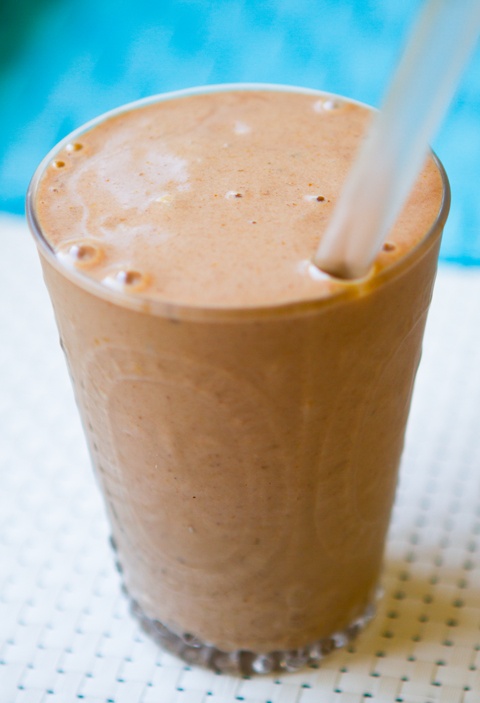
But what has really gotten my goat over the months is noticing how much of it is just blatantly false. This is the case with “no-calorie” recipes of various kinds and with “fitspiration” pins. A few examples: the 50-calorie shake. The photo shows a delectable-looking glass filled with a thick, creamy chocolate shake. It always says “50 calorie shake” underneath the photo. I have now seen this repinned by friends at least four or five times. Every time I can’t help but comment on it. Because the truth is that the shake (if the whole recipe is imbibed) is 496 calories. Nearly 500. Not 50. If one wanted to have a 50-calorie version of this shake, that person would have to get out a shot glass, because she’d only be able to drink about 2 ounces. The original site doesn’t say anything about it being “diet” or low-calorie; it’s just a healthier way to have a “shake” than going to an ice-cream shop.

There’s also the “no-calorie slushie.” The photo shows a glass with the final product, and there’s pictures of bananas and strawberries. If anyone were to think about it for just a second, she would know that bananas and strawberries HAVE CALORIES. The blogger admits that “her diet plan” doesn’t count fresh fruit or vegetables, but for those of us who do count everything (which I certainly think is a wise move), it’s about 250 calories. I’m thinking there’s a big difference between NO calories and 250. In fact, if one were to drink that no-calorie slushie every day without changing her diet in other ways, she’d gain half a pound a week.

I think I’ve already mentioned the “fitspiration” pins. Beauty Redefined writes a fab blog post about those. Here’s the thing: it’s great to motivate yourself if you’re trying to take better care of your body by eating better and exercising. But the pins that show a ridiculously thin naked midsection with hip bones protruding, for example, are not going to help anybody. They tend to say “all you have to do to get these abs is follow this plan….” Honestly, I don’t care how much I worked my abs, I would never look like that. I’d also have to cut my calories to less than 1000 per day (not healthy) and get plastic surgery to get rid of the extra skin and the stretch marks to look like that. Can we sit back for a moment here and say, OK, I’d like to get healthier, but repinning this ridiculous photo isn’t going to help me or anyone?

Yep. All lies. Why is it that we perpetuate them? I personally don’t repin these. I just don’t. If the recipe looks tasty and I’d like to try it, then I’ll repin it and give it an accurate title and caption: “fruity slushie,” for instance, or “protein-packed shake.” And even if I would like the tips for exercise, I just flatly refuse to repin those photos of tiny midsections. I’m not gonna do it. I don’t want to send the message out to my friends that image is paramount and flat abs are a holy grail. I don’t want my wonderfully normal friends to feel worried about their abs. Why should they? I also tend to make comments when friends pin some of these, just to correct the erroneous notions that are being sent along via the ever-so-simple pin. I imagine they are annoyed by me. Oh well.

So I ask: if you’re a Pinterest user, are you going to breezily send the lies along for hundreds of other pinners to see, or are you going to stop them in their tracks? When you see a claim that seems “too good to be true,” it most likely is. Think about it for a second. Do some quick calculations. Go to the original post. Do something, but just don’t send it on!

Speak up about the real value of women

It would be difficult for anyone to argue that women aren’t being demeaned as objects in pretty much every single corner of society. It happens so much and is such a thoroughly pervasive message in media that we’ve almost forgotten to be angry about it. We just take for granted that it’s happening.

Well, I think it’s time for women — and men — to stand up and show some anger about this phenomenon. It’s time to stop the saturation of our culture with images of sexualized women.

You can’t slap a pink ribbon on everything and say it’s “supporting” women.

I’ve been writing off and on about this topic, and I’ve nearly finished the book I’m writing, which focuses on the topic from a faith-based angle. But nearly every day, I see something else that makes me want to shake my fist and just DO something, SAY something. Yesterday it was a USA Today article about how breast cancer is being sexualized. Wha?? Yep, it’s true. I suppose I’d already kind of subconsciously noticed it myself, but the article really clarified the point. I also had just noticed a full-page ad in an in-flight magazine when I was traveling over the weekend: it showed a photo of a very trim, fairly young woman with smallish but nice breasts (a point I feel inclined to note, since most of these kinds of photos show women with larger-than-life breasts) dressed in an itty-bitty white bikini. Flat abs, no fat, no cellulite, no blemishes. And the ad had the nerve to have been run by plastic surgeons touting the message that they can do great reconstruction on women who have had breast cancer. Aaaaiiiieee!

Let’s think about this honestly. Is the average survivor of breast cancer going to look like a 20-something model? Ah, nope. She’s going to have scars, could be some pretty big and ugly ones, depending on how much surgery had to be done. She might be thin (thanks to not being able to eat much during chemo), but not necessarily in the “attractive” way. It might not even be possible for reconstructive surgery to get her back to “normal.” A friend in her 50s recently told me about her experience with breast cancer, and she said that after having a double, radical mastectomy, she was told by surgeons that the process for giving her breasts would be lengthy and, as she put it, “barbaric.” And then she wouldn’t even be able to have normal-looking breasts: they wouldn’t be able to give them nipples. She turned down the surgery; no point in going through all that to have substandard breasts.

Nope, these kinds of demonstrations of support for breast cancer aren’t help. They are simply marketing opportunities painted in pink. The article quotes Karuna Jagger, executive director of advocacy group Breast Cancer Action, as saying, “The implicit message in these campaigns is that it is breasts that are sexy; sexy is what is important; and we should care about breast cancer because it takes those lovely, sexy breasts out of the world . . . Every October, the stunts just gets more bizarre and further removed from what’s needed for this epidemic.”

Why can’t we just stand up and say, ENOUGH, ALREADY!? Sexy, young, thin, well-endowed female models are used to sell almost everything. I work out at the gym every day and can see a bank of about five TV monitors showing different networks while I exercise. I read or listen to music, but I can’t help but glance over at the monitors and see what’s going on. At any given time, I see several images of unrealistically-shaped young women, on commercials or the news or various programs. The anchors on news networks are thin and usually young (at least in comparison to the men, who can be any age). Innocuous game shows feature models showing off the prizes. Soap operas feature cute young girls and some older women who have often had various work done (at the very least, Botox and injections to plump up their lips or cheekbones). All the commercials feature women. Products for men and commercials aimed at men feature sexy models, scantily clad. Products for women and commercials selling those products for women feature women; most of them are for hair color (get rid of gray) or skin creams that aim to reduce wrinkles and make skin look younger and fresher. Car commercials even mostly feature women: young, trim models.

It’s all about sexualization. When will all women say, Enough. No more. I refuse to be sexualized, to be objectified, any more. It starts at home and with our circle of friends, even just on Facebook or Pinterest. Stop pinning the “fitspiration” pins. I don’t. I like to exercise, and it’s a vital part of my daily routine. But I refuse to put another photo in front of me that has a ridiculously skinny teen or 20-something clad in a sports bra and tight boy shorts, touting her amazing workout that will make all of us look just like her. It’s ridiculous. We should be laughing, not trying to emulate those girls! Stop posting about how you feel fat or ugly or that you look old. Don’t expect yourself to look your regular self two weeks post-baby, either. Stop focusing on how you look, period. And don’t focus on how your friends look. Support them as they do great things with their lives, as they work on being their best selves.

Women’s important body parts aren’t our breasts or backsides. They’re our hearts and hands.
Photo by Louise Docker, via Wikipedia

Focus on YOU, women. Allow the men in your life to focus on who you are inside, too. Teach your daughters to be who they are, and teach your sons positive language about women and not to focus on appearance. Yes, be healthy. Try to eat mostly well. Exercise regularly. But don’t make how you look the end-all, be-all. Don’t let yourself be objectified. Don’t let the media and the marketers and the porn producers dictate how you feel about yourself or how society views you. Gently remind friends that they are “more than eye candy,” as Beauty Redefined enshrines in billboards, or that they are more than just numbers on a scale.

We women are amazing creatures. We nurture future generations. We lead society. We do great things. Let’s show ’em what we’ve got! We’re not about our body parts, unless we talk about our brains, our hearts, or our hands. Let’s join those hands and speak up.

A sensitive topic: race and hair

Gabrielle Douglas
Photo by Los Angeles Times

My husband and I were struck particularly this week by some of the talk that swirled around the Web after the amazing Gabby Douglas won all-around gold in gymnastics. We were both dismayed to read how many of her fellow blacks commented not on her performance or her history-making status as the first black woman to win gold in the individual all-around at the Olympics, but on … her HAIR.

Yes. Her hair. Now, I have read a couple of fairly reasoned comments by blacks explaining why the intense focus on her hair and disparaging comments about it, saying that since she is “representing black people” as a whole, who have experienced a clearly bad history of injustice and who now feel they have to essentially overcompensate to be seen just as equal, that even appearance is an important facet of that sense of proving themselves. There is no question that that is sad.

It’s bad enough that women today are being pressured more than ever to look perfect according to current societal norms. These norms are admittedly different (within each community, at least, though not in our society overall) for whites and blacks. And blacks make no secret about how their hair is always a challenge. Comedian Chris Rock put together a very interesting and entertaining documentary about the topic, in fact, called “Good Hair.” It was just a glimpse for those of us who do not have that texture of hair into what it’s like to try to come to terms with it.

I’m only weighing in on this topic because it’s a personal one to me. We have three biological daughters, but we also adopted our youngest daughter, who is black. And from the second we got her (the day after she was born) and took her out in public, we started getting advice from blacks on how to take proper care of her hair. Five years later, we are no less inundated with opinions.

They haven’t been unwelcome. It’s clearly true that I have no experience styling black hair. I have dark blond, smooth, straight hair. Easy-peasy. I wash it and comb it and that’s pretty much it. I’ve got it good even for a white person. So it’s helpful to have people who have experience give me ideas. What’s been interesting, however, is just how varied and sometimes clearly opposite those tidbits of advice have been. My husband had co-workers telling him from the start to use Vaseline in our daughter’s hair. Others said absolutely categorically that Vaseline was NOT what we should use. When it came to products, then, I ended up fairly early buying and using the products made by Carol’s Daughter. I like them, they smell wonderful, and they seem to keep our daughter’s hair mostly smooth and manageable if we use them every single day. So, end of story. The product side is done.

What’s the other even bigger issue is that of STYLING. I’ve been mostly interested in just letting her have a natural style, keeping it oiled nicely and combed, but nice and curly and as-is. I’ve even been bolstered in this opinion by seeing all of the emails and information that Carol’s Daughter is sending out to customers about “transitioning” to more natural hair. I absolutely refuse to straighten her hair with strong chemicals. If she chooses to do that when she’s “of age,” she can, but I am not going to put lye on her tender scalp.

So straightening chemically is out. But what about styles? When I’ve gotten ambitious, and had some time on my hands, I’ve put her fairly short hair in little “poof-balls,” as I call them. They look super-cute. But I have never learned how to do cornrows or other similar styles. This week, however, I decided to try just braiding her hair. We sat down and spent half an hour getting this done. I put about 15 little braids in her hair, and I think it looks cute and, I think, SHOULD be approved by blacks.

Then again, I worry. With five years experience getting blacks’ advice (sought and un-sought, from friends and strangers), I know it can be contradictory, and that it is taken VERY seriously. This is why I am not surprised at how Gabby Douglas’s hair was discussed in what most whites would consider rather mean terms. Blacks are serious about their hair, and it’s a complex issue for them. Many women, thanks again to the not-helpful culture in which we all live, feel self-conscious about their textured, very curly hair. They want to have smooth, straight hair that isn’t so “ethnic.” As with all the other topics I’ve written about so far in the broader issue of beauty and contemporary culture, I find this sad and disappointing. Why in the world can’t we have a whole variety of “ideals”? And why does there have to even be an “ideal” shape or look anyway? Can’t everyone just be who they are, whatever shape, size, color or hair they have?

I suppose now I’m just being idealistic. It’s probably crazy to hope for something so drastic. But it doesn’t hurt to discuss it and remind ourselves that just being our own best selves is desirable. It’s a tough fight because we’re battling against SO MUCH societal pressure and messages, but we can still try to fight it.

I suppose also that I could have spent more time over the past five years going to special salons to get blacks to style my daughter’s hair. But, as with many issues I’m aware will crop up over the course of her life with me being white and her being black, I hope we can strike the right balance between pretending (ridiculously) there are no differences between us and making a big deal out of them (I just want to always acknowledge that, yes, she is adopted, but I am her mommy always and forever, and that, yes, she is black and I am white, and, yes, her hair is different than mine, and then just go about the business of being just who we are). I am just taking this interracial-adoption situation a day at a time, and just being her mom. (And, really, adoption and interracial adoption are just whole other big blog-able topics, aren’t they?) I’m doing the best I can to be a mother, period, and to be a mother to both biological children and an adopted child.

For now, I hope to be true to each of my children, for who they uniquely are. My youngest is black and adopted. My second-oldest has Down syndrome. The older three are half-Caucasian, half-Filipina. And each has her own amazing talents and gifts and personality traits. And each will have her own hair and appearance issues. But I hope that no matter what, each can feel good about herself and not succumb to society’s negative values, especially about image.

Yes, I might be treading on a minefield here. I’m well aware of that. I hope to be respectful but also share my own experience. My daughter’s only five. So I’m sure we have many years ahead in which we will just continue to take one day at a time in dealing with hair or anything else that becomes pertinent.

And what’s so bad about being an 80-year-old?

This past year as I’ve become more aware about the issue of self-image and how appearance dominates in our society, and as I’ve researched and discussed with other people, I have realized just how pertinent the topic of aging is to the discussion. I don’t think that this will be news to most people, but our society is very anti-aging. We don’t want to look old; ideally everyone in society should have the skin and shape of a 16-year-old. Twenty-somethings are still acceptable, but after that it’s all about thirty-somethings looking like they’re still 20 and “40 is the new 30.” Wrinkles are ugly and must be Botoxed and Juvederm-ed out of existence. Soft bellies must be sucked dry of fat. Saggy breasts must be perked up through surgery.

But it’s not just the look of aging that puts people off. It’s just being old. Our culture, unlike many other cultures, does not revere or respect the older members of our society. We are happy to shunt them off to the side and try to pretend that old age does not exist. No one likes to think about the inevitable breaking down of parts of our bodies. As long as we’re young or just somewhat young, we can eat right and exercise religiously and tell everyone (and ourselves) that since we’re doing all those things, we’ve earned our good health. Even with diseases like Alzheimer’s, which we still don’t know the causes of, there are still all kinds of “tips” out there to help us exercise our brains, too, so we can somehow fend off that kind of debilitation. Perhaps. But the fact is, we cannot fend off aging or death. They are a natural part of life. With all of the technology and resources we have today, we can put them off a little longer, but we still simply cannot make them go away.

I would love to be in a culture in which we respect and revere the elderly, in which we want to put them front and center, in which we seek their wisdom and yearn to be more like them. Rather than trying to emulate 16-year-olds, why don’t we emulate those who truly have something meaningful to impart?

After I broke my foot this week, I became pretty helpless physically. The day afterward, my husband had to help me shower. I used a walker to get into the bathroom, and I needed assistance toileting and getting in the shower, and he helped hold me steady while I shampooed and tried to soap up. Just having one foot broken threw me completely out of whack. I was unable to take care of myself, and I felt my body had completely betrayed me. Leaning over my walker and hobbling slowly down the hallway and being in need of my husband’s help in such personal ways just bothered me. I said, “I feel like an 80-year-old!”

It is very disorienting to all of a sudden not be able to do the things I usually do. It’s upsetting to have to lean on someone (literally) for so much help. It’s hard to lose freedom. And the things that happen to our bodies as they age lead to those outcomes. In our independent, “me” culture, having to be dependent on others goes against our very natures. But really, why should it bother me SO much to feel like I’m 80? It’s not a horrible thing. I know wonderful 80- and 90-year-olds.

Life is not all about youth. Life is about ages and stages. We weren’t meant to stay frozen as teenagers for our entire life spans. We were intended to become adults, to move through middle age into old age. We are built to change, in all ways. Our bodies change, and our minds change, and we learn and gain (hopefully) wisdom and knowledge. We are supposed to experience life in all of its varieties. There’s simply no reason for me at age 42 now to be wistfully thinking back on how I looked at age 16. Honestly, I wouldn’t want to relive those days, I don’t care how cute my legs looked. I love my age now. I love all the neat things I can do. And in 20 years, I expect that I will be loving the new opportunities I will be facing at that stage of my life. I will be even closer to my “golden years” (or IN them) at that point, and I will be that much further away from the fresh years of my youth when my skin was wrinkle-free and my belly flat(ish).

I have read several times about how women in their 70s or older say they just feel free and completely able to just be themselves because they just don’t worry anymore about how they look. Wouldn’t it be wonderful if ALL AGES of people could say the same thing? That we could just be who we are, the real us? Wow. That would be freedom, indeed. We expend so much energy worrying about how we look and trying to look young and thin and … whatever. I don’t mean we shouldn’t take care of ourselves, but we can stop obsessing about all the details and perfection.

I’m thinking I should embrace all the good things about being 80, or at least just appreciate where I am now. Right now, I think I should embrace my SELF, who I AM. Right now, I should enjoy just who I am and where I am in my life. My teen years are past (thank GOODNESS); my 20s are past (those lean years); my 30s are even past. Now is what matters. I am 42, by golly. Today, I have a broken foot. This year, I’ve let myself eat too much, so my body is not in its best shape. I have plans to work on that, and thanks to the foot, it might be a few more months until I can really work hard on that aspect of taking better care of myself. But I have some quality time to read and plan how I will eat better and lose some weight. My house isn’t going to be as spotlessly clean as I like, but my kids are doing the cleaning and laundry. I’m not getting to cook a whole lot of the nice things I like to make, but we’re all getting fed. I’m reading a bit more and getting a chance to watch some movies, and my girls are learning a few more skills and how to take care of their mom. I’m appreciating how nice it is to be independent. I think this time in my life is just fine.

Envying the sinners and oppressors

I was reading some scriptural passages over the weekend that really stood out to me relating to beauty and self-image. They all spoke about envy and how dangerous it is. In my church’s canon is a wonderful chapter that allows us to ask ourselves questions about how prepared we are to meet God. One poses this question: Are you “stripped of envy”? (Alma 5:29)

So I began searching for other scriptural references to envy, as it relates to individuals. At one point, a prophet told his people, “And I know that ye do walk in the pride of your hearts; and there are none save a few only who do not lift themselves up in the pride of their hearts, unto the wearing of very fine apparel, unto envying, and strifes, and malice, and persecutions, and all manner of iniquities.” (Mormon 8:36)

In Galatians 5:26, we are admonished: “Let us not be desirous of vain glory, provoking one another, envying one another.” And in 1 Peter 2:1, that prophet tells us: “Wherefore laying aside all malice, and all guile, and hypocrisies, and envies, and all evil speakings.”

What struck me particularly were these references in Proverbs about who in particular we don’t want to envy: sinners and oppressors. Proverbs 3:31 exhorts: “Envy thou not the oppressor, and choose none of his ways.” Proverbs 23:17 similarly says:  “Let not thine heart envy sinners: but be thou in the fear of the Lord all the day long.”

Today, we might not be oppressed by government or worldly leadership; we’re not in bondage to other people. But we can easily be oppressed by the images and messages that are constantly bombarding us. If we allow them, those who are behind these messages can oppress us in mind and in spirit. Advertisers do all they can to make us feel bad about ourselves, mainly how we look. Cosmetics companies want us to feel bad about our skin’s youthfulness, shine and clearness; clothing manufacturers want us to feel bad about how our clothes fit, how stylish they are, what fine materials they aren’t made out of. Everyone out there wants us to feel fat and ugly in some way so we will buy their products to make ourselves look better somehow, in some way. And it’s SO easy to accept and internalize those messages and to just feel bad about ourselves. And that leads us to envy. We’re envying those who oppress us. When you think about it, isn’t that crazy? Shouldn’t we be rejecting those messages and just laughing at the absurdity of it all?

At the same time, we’re also envying those in society who are sinners. So many celebrities are held up as the icons of beauty and style. But they’re also making headlines as people who are driving drunk, committing adultery, and just plain being immodest and immoral in lots of ways. I don’t think I need to give a whole lot of details to support this statement. Just pick up a magazine or glance at celebrity news on Yahoo. The next time you wish your waistline could look like that of one of the ridiculously talentless but still ubiquitous Kardashian sisters (which is easy to do while standing in a supermarket checkout line), take a second to think about them as people and what they stand for.

Peter goes on in chapter 2 to tell us who we really are: “But ye are a chosen generation, a royal priesthood, an holy nation, a peculiar people; that ye should shew forth the praises of him who hath called you out of darkness into his marvellous light. … Dearly beloved, I beseech you …, abstain from fleshly lusts, which war against the soul.”

No, we shouldn’t be like everyone else; we shouldn’t be envying our oppressors and the sinners in our society. Those of us who are faithful believers in God are a “peculiar” people, which means we’re set apart from others. We’re God’s special people, and He loves us. He doesn’t want us to envy and try to emulate those in our society who only want to hurt us and make us feel bad about ourselves. Envy starts with comparing ourselves with others, and then finding ourselves wanting, in both ways. I think the first step in stopping this cycle is not comparing. As soon as you find yourself seeing a picture (inevitably it’s some kind of image), just stop and think about where your thought processes are going. And don’t go there. Don’t compare. Don’t envy. You’ll find yourself much happier.