So glad I could help

Few things give me greater satisfaction than having friends (or even just acquaintances) come to me as a resource when faced with questions relating to mental health. Perhaps in part it’s nice to know that, despite my sometimes quirks or slightly “off” behavior, they still consider me a valuable source of information and even wisdom. It’s nice to be valued, to be needed, to be seen as able to dispense tidbits of guidance. It’s even better to feel that maybe, just maybe, everything I’ve gone through can help someone else, that I can maybe help cut short the long journey for them just a little, provide a quicker route that still gets them to a good destination.

I can tell you about my therapists, my psychiatrists (i.e., medicine-dispensers) and medications, the books I’ve read, the ups and downs and ins and outs. I can talk about the wacky ways my mind is able to play tricks on me, despite my hyper-awareness that it can, and a sort of vigilance about trying to think clearly and navigate life from a kind of emotionally handicapped state. I can share the surreal-ness of dealing with others who have been in worse shape than I have ever been, of their living in (and trying to reason from within) realities that just don’t line up with the reality the rest of us know. I can look back on my own experiences and say, “I wish I could have seen the whole picture from the beginning, because I would have gone right to ___.” Man, does it feel good to think that I might be helping someone jump over hurdles with relative ease and speed that I’ve had to walk around, re-jump, and move around countless times.

Again, in this latest discussion, a friend and I agreed that it would make life so much better for everyone if all of us could just open up about our real challenges. Most of us have something, a weakness or an addiction or a habit or an illness, whatever, that we find embarrassing or shameful somehow, that we would really rather NOT talk about. And there are plenty of stigmas left in our culture about lots of problems, including mental illness. It just doesn’t help that there aren’t really clear-cut answers (let alone even questions) about how our minds and emotions, etc., work. The science is much clearer with other health problems. So it makes mental illness still hazy and misunderstood and even a little scary for people who don’t have to face it head-on regularly. If just more of us SPOKE UP! Whatever your shame, your stigma, your weakness, your difficulty, just talk about it. Yeah, unfortunately, you’re probably still going to be judged and misunderstood by some, maybe many. But you could help so many others.

oven mitt

I feel so weak and so isolated sometimes, and then nervous about talking about my experience. Because like most everyone, I just want to be liked, to be understood, to be respected and appreciated. And that stigma can put a big roadblock in the way of that satisfying goal. But I want to help other people. I want to pave the way for less stigma, for more understanding, even for better science (somehow). So, I talk. I write. I blog. I’m open. It can be nerve-wracking and painful. But I’m doing it anyway. Because I’m glad I can help. So call me or write if you have questions or need advice for a family member or friend. Reach out. Sometimes you might need oven mitts, but pretty much I’ll always be happy to talk, if I can help someone else.

There’s more lying on Pinterest than in any political campaign

So I have enjoyed Pinterest quite a bit since I decided to sign up and start using it earlier this year. It’s definitely handy-dandy for lots of things. My youngest even knows that if we’re trying a new recipe, it’s most likely from Pinterest. I think, like a lot of other Pinterest users, I use the site for recipes, laughs, and just useful ideas about all kinds of things.

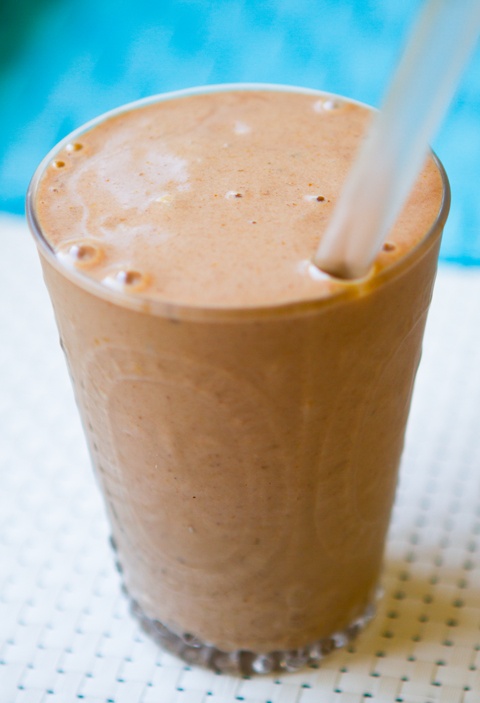
Yes, it is delicious. But NOT 50 calories; no, it’s 500.

But what has really gotten my goat over the months is noticing how much of it is just blatantly false. This is the case with “no-calorie” recipes of various kinds and with “fitspiration” pins. A few examples: the 50-calorie shake. The photo shows a delectable-looking glass filled with a thick, creamy chocolate shake. It always says “50 calorie shake” underneath the photo. I have now seen this repinned by friends at least four or five times. Every time I can’t help but comment on it. Because the truth is that the shake (if the whole recipe is imbibed) is 496 calories. Nearly 500. Not 50. If one wanted to have a 50-calorie version of this shake, that person would have to get out a shot glass, because she’d only be able to drink about 2 ounces. The original site doesn’t say anything about it being “diet” or low-calorie; it’s just a healthier way to have a “shake” than going to an ice-cream shop.

There’s also the “no-calorie slushie.” The photo shows a glass with the final product, and there’s pictures of bananas and strawberries. If anyone were to think about it for just a second, she would know that bananas and strawberries HAVE CALORIES. The blogger admits that “her diet plan” doesn’t count fresh fruit or vegetables, but for those of us who do count everything (which I certainly think is a wise move), it’s about 250 calories. I’m thinking there’s a big difference between NO calories and 250. In fact, if one were to drink that no-calorie slushie every day without changing her diet in other ways, she’d gain half a pound a week.

I think I’ve already mentioned the “fitspiration” pins. Beauty Redefined writes a fab blog post about those. Here’s the thing: it’s great to motivate yourself if you’re trying to take better care of your body by eating better and exercising. But the pins that show a ridiculously thin naked midsection with hip bones protruding, for example, are not going to help anybody. They tend to say “all you have to do to get these abs is follow this plan….” Honestly, I don’t care how much I worked my abs, I would never look like that. I’d also have to cut my calories to less than 1000 per day (not healthy) and get plastic surgery to get rid of the extra skin and the stretch marks to look like that. Can we sit back for a moment here and say, OK, I’d like to get healthier, but repinning this ridiculous photo isn’t going to help me or anyone?

Yep. All lies. Why is it that we perpetuate them? I personally don’t repin these. I just don’t. If the recipe looks tasty and I’d like to try it, then I’ll repin it and give it an accurate title and caption: “fruity slushie,” for instance, or “protein-packed shake.” And even if I would like the tips for exercise, I just flatly refuse to repin those photos of tiny midsections. I’m not gonna do it. I don’t want to send the message out to my friends that image is paramount and flat abs are a holy grail. I don’t want my wonderfully normal friends to feel worried about their abs. Why should they? I also tend to make comments when friends pin some of these, just to correct the erroneous notions that are being sent along via the ever-so-simple pin. I imagine they are annoyed by me. Oh well.

So I ask: if you’re a Pinterest user, are you going to breezily send the lies along for hundreds of other pinners to see, or are you going to stop them in their tracks? When you see a claim that seems “too good to be true,” it most likely is. Think about it for a second. Do some quick calculations. Go to the original post. Do something, but just don’t send it on!

And what’s so bad about being an 80-year-old?

This past year as I’ve become more aware about the issue of self-image and how appearance dominates in our society, and as I’ve researched and discussed with other people, I have realized just how pertinent the topic of aging is to the discussion. I don’t think that this will be news to most people, but our society is very anti-aging. We don’t want to look old; ideally everyone in society should have the skin and shape of a 16-year-old. Twenty-somethings are still acceptable, but after that it’s all about thirty-somethings looking like they’re still 20 and “40 is the new 30.” Wrinkles are ugly and must be Botoxed and Juvederm-ed out of existence. Soft bellies must be sucked dry of fat. Saggy breasts must be perked up through surgery.

But it’s not just the look of aging that puts people off. It’s just being old. Our culture, unlike many other cultures, does not revere or respect the older members of our society. We are happy to shunt them off to the side and try to pretend that old age does not exist. No one likes to think about the inevitable breaking down of parts of our bodies. As long as we’re young or just somewhat young, we can eat right and exercise religiously and tell everyone (and ourselves) that since we’re doing all those things, we’ve earned our good health. Even with diseases like Alzheimer’s, which we still don’t know the causes of, there are still all kinds of “tips” out there to help us exercise our brains, too, so we can somehow fend off that kind of debilitation. Perhaps. But the fact is, we cannot fend off aging or death. They are a natural part of life. With all of the technology and resources we have today, we can put them off a little longer, but we still simply cannot make them go away.

I would love to be in a culture in which we respect and revere the elderly, in which we want to put them front and center, in which we seek their wisdom and yearn to be more like them. Rather than trying to emulate 16-year-olds, why don’t we emulate those who truly have something meaningful to impart?

After I broke my foot this week, I became pretty helpless physically. The day afterward, my husband had to help me shower. I used a walker to get into the bathroom, and I needed assistance toileting and getting in the shower, and he helped hold me steady while I shampooed and tried to soap up. Just having one foot broken threw me completely out of whack. I was unable to take care of myself, and I felt my body had completely betrayed me. Leaning over my walker and hobbling slowly down the hallway and being in need of my husband’s help in such personal ways just bothered me. I said, “I feel like an 80-year-old!”

It is very disorienting to all of a sudden not be able to do the things I usually do. It’s upsetting to have to lean on someone (literally) for so much help. It’s hard to lose freedom. And the things that happen to our bodies as they age lead to those outcomes. In our independent, “me” culture, having to be dependent on others goes against our very natures. But really, why should it bother me SO much to feel like I’m 80? It’s not a horrible thing. I know wonderful 80- and 90-year-olds.

Life is not all about youth. Life is about ages and stages. We weren’t meant to stay frozen as teenagers for our entire life spans. We were intended to become adults, to move through middle age into old age. We are built to change, in all ways. Our bodies change, and our minds change, and we learn and gain (hopefully) wisdom and knowledge. We are supposed to experience life in all of its varieties. There’s simply no reason for me at age 42 now to be wistfully thinking back on how I looked at age 16. Honestly, I wouldn’t want to relive those days, I don’t care how cute my legs looked. I love my age now. I love all the neat things I can do. And in 20 years, I expect that I will be loving the new opportunities I will be facing at that stage of my life. I will be even closer to my “golden years” (or IN them) at that point, and I will be that much further away from the fresh years of my youth when my skin was wrinkle-free and my belly flat(ish).

I have read several times about how women in their 70s or older say they just feel free and completely able to just be themselves because they just don’t worry anymore about how they look. Wouldn’t it be wonderful if ALL AGES of people could say the same thing? That we could just be who we are, the real us? Wow. That would be freedom, indeed. We expend so much energy worrying about how we look and trying to look young and thin and … whatever. I don’t mean we shouldn’t take care of ourselves, but we can stop obsessing about all the details and perfection.

I’m thinking I should embrace all the good things about being 80, or at least just appreciate where I am now. Right now, I think I should embrace my SELF, who I AM. Right now, I should enjoy just who I am and where I am in my life. My teen years are past (thank GOODNESS); my 20s are past (those lean years); my 30s are even past. Now is what matters. I am 42, by golly. Today, I have a broken foot. This year, I’ve let myself eat too much, so my body is not in its best shape. I have plans to work on that, and thanks to the foot, it might be a few more months until I can really work hard on that aspect of taking better care of myself. But I have some quality time to read and plan how I will eat better and lose some weight. My house isn’t going to be as spotlessly clean as I like, but my kids are doing the cleaning and laundry. I’m not getting to cook a whole lot of the nice things I like to make, but we’re all getting fed. I’m reading a bit more and getting a chance to watch some movies, and my girls are learning a few more skills and how to take care of their mom. I’m appreciating how nice it is to be independent. I think this time in my life is just fine.

Giving my old life the boot … temporarily

So a couple of days ago I wrote about my new normal, which is living life with a broken foot. It’s thrown me for a loop emotionally in a number of ways. The first evening after it happened and then most of my day the next day involved a lot of wondering and what-ifs and trying to plan for what was still somewhat unknown. It made for a stressful day, all run from the confines of my couch.

Yesterday was much nicer. I got my two oldest girls off to camp, and my husband took me to a specialist who could really tell me what would need to happen to get my foot back to its unbroken self. In short, the breaks are simple enough that I only need to wear a boot, rather than a cast (hallelujah for that removable piece of hardware!!), and I can put a little weight on it as I hobble about on crutches or the lovely walker my husband dug out of storage (he likes to collect these old things because someday they might come in handy). Partial weight-bearing actually helps my bone heal properly rather than resting it completely and letting it find its own sloppy way. Amazing. At any rate, my dear husband, who is a physical therapist, reminded me several times that this was the best news possible. I agree, with the addendum “in this situation.” The best news possible for me right now would be to travel back in time three days and tell myself to stop hurrying around so much, especially on uneven pavement. (Smack upside the head) But given that the deed is done and the bone truly is broken, knowing that at least I can just wear a boot that I can take off sometimes is great news.

So my new normal for the next week or so is pretty much what I’ve been doing for about the past 24 hours: sitting on the couch with my leg up and reading or using my laptop computer. That’s the nice part. The tricky part involves when I must move around. Yes, I still need to get up and go to the bathroom. I pull myself up onto the very stylin’ walker, grab hold and walk very lopsidedly, putting the smallest amount of pressure on my left foot, preferably the heel or toes.  I try not to crash into the furniture that lurks all around me. I lurch down the hallway and … well, I won’t go into too many details about that. I lurch back down the hall and collapse back onto the couch.

End of the day is entertaining. The first night, my husband suggested I go up the stairs backwards, which worked but was also a workout. Man, it exhausted me. (He suggested before that that I just sleep downstairs, but I just wanted the comfort and semblance of normalcy that was my own bed.) The next night, after a comical but also nerve-racking shower experience during which my husband manhandled me in and out of the big shower downstairs and held onto me while I washed my greasy hair and stale body, I decided to heft myself up the stairs frontways, just kind of crawling. That was much easier. So I repeated that last night. At the top of the stairs, though, I still have to get myself back up from a crawling position into standing using the crutches. Not as easy as it seems, frankly. And last night, I went up without any help, so I had to crawl through my bedroom into the bathroom, which now has tile on the floor rather than carpet (thanks to our work of a couple of months ago, and which I generally prefer to the old carpet, but let me tell you in this case, it’s hard on the knees). By the time I’d made my way, pilgrim-like, into the bathroom area, my husband had come up with the crutches, and I pulled myself up rather like Gollum, via the chair he had also brought into the bathroom the other night, into a half-standing position.

One big problem is that I cannot carry anything. Both of my hands are completely kept busy just keeping myself semi-upright and not too much in pain. So if I need to take one or two or three items from point A to point B, I must order around one of my minions. It’s astonishing how much we take for granted when all is working fine. It’s such a nice thing to be able to stand up, walk across the room, and grab a Kleenex. Or hop over to the kitchen for a glass of water (or some chocolate…). Or just GO TO THE BATHROOM, for pity’s sake.

Yep, it’s a brave new world.

Dear doctor

Over the years, I’ve come to realize that the doctor-patient relationship is vital to good health. As with any other relationship, it must be built on effective and clear communication, understanding, compassion, and just mutual “liking.”

Unfortunately, it’s hard to find a really satisfying doctor relationship. It’s hard enough to find friends out in the wide world of people, to find someone who just clicks, who is fun and understanding and supportive. When you’re narrowing down the pool of potential medical mates to perhaps 50 people in your town who are qualified and approved by your insurance, then finding that kind of chemistry in that small group is going to be a real challenge. And it’s not as if those 50 potential mates are sitting in one room, giving you an afternoon to interview them and get to know them. They’re holed up in an office somewhere, with crazy schedules, spending 5 minutes with each of their already existing patients, and walled in by receptionists who take messages and aren’t necessarily great conduits for starting relationships or even investigating the possibility.

So I don’t really expect my doctor relationship to be as close and mutually satisfying as a great friendship. But it still must have a few of those qualities for it to be most effective.

Here’s the thing: I know my body best. I’m not a doctor; I don’t have medical training. But I’m not completely ignorant when it comes to medical issues; perhaps that makes me one of those frustrating patients who knows just enough to make me dangerous. Perhaps it’s helpful. At any rate, that’s where I am. I do know that I’ve been in charge of my own medical care for 20-plus years, and I’ve taken all kinds of medications over the years, seen a number of doctors and some specialists, had some tests, and had a LOT of time to ponder on test results or effects of what I’ve taken or tried. I’ve been smack dab in the middle of my own personal lab experiment for all this time. I’ve said for some time now that it’s really unfortunate that I don’t have my own control group. That would make things so much easier. But I’m one person and I’m the control group and the experimental group in one. It doesn’t make for good experimenting. But that’s how it is.

I know these things: over the years, I have come to appreciate that any hormonal changes in my body really reverberate and effect my whole being, emotionally and physically. Female hormone changes can make me irritable or emotional; they can make me tired; they can make me bloated, and they can make all kinds of other waves I don’t even register in my consciousness. I know that I have a mental illness that requires medication, and that is also a very delicate state of being, to get to where medication helps me but doesn’t knock me out or make me feel numb emotionally. I know that if I don’t feel “right,” then I should look into whatever options there are.

Unfortunately, again, since I’m not medically trained, and I don’t have authority to write prescriptions for myself, I need a trained doctor to step in and work with me to find possible problems and possible solutions. We need to be a team. I will respect your training and experience, but I need you to respect that I can feel things in my gut about myself that you can’t. We don’t have a few hours for me to use all the words that it might take to express why I might feel something particular just “in my gut.” I have to figure out how to get it across in about two minutes. And if I can’t do that, then we’re stuck.

I know if I’ve gained weight. You don’t need to point it out. Believe me, I’m all too aware of it. And if you’re a petite woman who runs marathons and doesn’t have a problem with overeating, then I’m going to instantly feel that you won’t understand where I’m coming from, unless you put me at ease otherwise and try not to judge. I eat healthy, mostly, and I exercise every day. I’m doing the best I can. Pointing out I’ve gained 20 pounds and sighing and shaking your head won’t make me feel any more motivated. It will only depress me. Not only that, it will make me dread having to come in and see you. That’s never good. If I dread coming in to your office, then I’ll put it off, and everyone knows that putting off important medical care is bad. Plus, being anxious anticipating what you’re going to say will probably elevate my blood pressure readings while I’m in the office.

If I tell you I’d like to consider some alternate therapies or tests that you don’t usually use, I’d like your support. Sometimes, those require your signatures and authorization. Please don’t refuse because you think these things are a waste of time or money. If I feel that there’s something going on that your regular tests and medicines don’t seem to be addressing, I’d like the opportunity to waste my own time or money. At least I’ll know I’ve tried. I’m not way out there trying really bizarre things. So try to have a little bit of open-mindedness. Yes, I know where you’re coming from. But please understand how frustrating it is to feel “not right” and not have any answers. Rather than making a face and flat-out refusing, you could at least explore more why I’d like to try something else and perhaps find a way within traditional medicine to address that issue. You support my going to an acupuncturist. So let me try a compounding pharmacist, for example. But the second you squeeze up your face into a disapproving look and shake your head and refuse, you’re going to earn my ire (anyone who knows me would know that will just set me off). At least try to make me feel that you’ve heard my concerns and figure out a way to address them your way; at least make me feel that I’m an active partner in my own care. Don’t make me feel judged or condescended to or brushed aside. Work with me so I can feel validated and part of the team.

Listen, I understand that working in health care is tough these days. Doctors especially have huge debts from medical school and have to jump through all kinds of hoops just to get reimbursed halfway reasonable amounts for the work they do. Yeah, it stinks. I appreciate that. My husband works in health care, though he’s not a primary physician. So I’m not completely ignorant. I understand that you need to be true to the science you were taught that was thoroughly researched. But you have to appreciate also that the knowledge we do have is still pretty limited, and that a lot of research that has been done either used men exclusively as the experimental group, or averages have been calculated using the data from a variety of people. We also know that some research ends up being faulty or rushed and has to be reversed later on, with great human costs. Don’t blame me for being just a little bit skeptical sometimes. And simply averaging information gathered from groups of subjects and mathematically deciding that data then should apply exactly to my individual body chemistry and internal workings is not what I’d call the most effective use of scientific inquiry, either.

Most of all, please understand that how I feel is not just physical symptoms, but emotional. It’s all part of one big whole. If I try to take a few minutes to explain or ask for further help or thinking out of the box, please indulge me if you possibly can. If I don’t feel you’re hearing or understanding me, I’ll get more emotional. It’s natural. Don’t blame it on my “being mentally ill” or think immediately that I must need a higher dose of medication for my mental illness. “Normal” people have a wide range of how they express and show emotions, and it’s natural to feel frustrated when we feel we’re not being heard. It’s natural to feel emotional if you don’t feel well physically and there doesn’t seem to be an obvious  reason. Please validate my feelings rather than telling me that I don’t have the right to express them in any way. I work hard to be kind and civil and understanding, but I am not devoid of emotion, and I cannot stay completely poker-faced when I feel frustrated. Don’t write me off. But when you say we may not be a good fit, you know what, you’re right about that. But sometimes we patients don’t have the luxury of finding a great fit. I just have to make do with that little group of doctors in town that my insurance will pay for and who are taking new patients. But if you know another doctor who might be a good fit for me, then by all means, please give me a name.

I would very much like to find a doctor who will be on the same wavelength with me, at least in how I communicate with words and body language and a little show of emotion. I’d like one who maybe even has a little sense of humor or likes to banter a little. Maybe with the way our health care system works today, that might be impossible to ask for both of us. If that’s the case, that’s very sad. And on a political note, if that is the case, then just making our health care system bigger won’t solve the problem. It needs an overhaul; it at least needs tweaking and adjusting. Let’s not just make a really ineffective system bigger so more people can be frustrated. Let’s dig into it and see how to truly make it BETTER.

Thanks for your time, former doctor and potential new doctor. I know you have a tough job to do. Thanks for going to medical school and doing the work you do. I just hope that we as a society can figure out how to do better in matching patients to doctors so this process of finding optimal health can be a little easier.

Sincerely, Cathy

The complex intersection of health, fitness and self-image

I never felt particularly pretty or slim when I was growing up. I always felt like I was a little chubby. When I was about 11 or 12 I actually went on a diet, and at this point I don’t feel I can accurately recall whose idea it was: mine or my mother’s. I cut out sweets, mainly, and ate a little less. My younger sister was taller and slimmer than I and just somehow charismatic and attractive, and I always felt kind of dumpy next to her. When we went on family vacations on occasion, such as the one we made to Florida (Disney World and Daytona Beach) when I was 17, my 15-year-old sister is the one who snagged the attention and admiring looks of the guys. I was just there and along for the ride. It wasn’t until a little later that I came to feel that I was attractive.

My father also had a bad habit of commenting on people’s looks. I adored my dad, and his death in October 2009 was devastating to me, but he did have his quirks and plenty of imperfections, and this obsession with judging others’ outward appearance was one of those. I finally told him the year before he died that it was time he stopped making comments about how people looked. It surely contributed to my constant worry about my own appearance. One of Dad’s infamously terrible remarks happened when I was somewhere around 12 or 13 years old, and we were all listening to music in our living room. My mother was dancing around the room, and my dad observed that she looked like “one of the dancing hippos from ‘Fantasia.'” Silence. I knew it was a bad idea to compare my mom to a hippo, even if it was a very cute animated one, and my mom to this day will sometimes remark about how much it hurt her.

My dad had gotten overweight when he was in his mid-20s and decided to do something about it, so he went on a diet and started running. After that, he stayed super-trim and always exercised and ate healthy foods, even obsessively so. I am sure that his own experience feeling overweight contributed to how he saw things, or the other way around, or both, but it certainly affected my self-image.

We always ate fairly healthy foods when I was growing up, with my mom making homemade wheat bread and putting wheat in every baked good she made. We ate vegetables and fruits in reasonable quantities, and rarely had soda or ate out. So we took care of ourselves pretty well. I never was an athlete, but I did start running my freshman year at college because I was “forced” to in a required fitness class I took my first semester. I dedicated myself to doing it and then just never stopped. Over the past 23 years, I’ve always gone to the gym to work out or gone running or walking, and I’ve only had a hiatus of a year or so total over that time, I think. I just enjoy the feeling of having a good workout, and for a long time, it helped me stay reasonably trim.

At college, too, I didn’t have a car, and my campus was large, so I did a LOT of walking. I could eat all I wanted at my cafeteria and have ice cream galore (I am a fool for ice cream), and with all that exercise, I probably lost a few pounds when I went off to college, rather than gained any. I actually felt pretty good about how I looked, and I felt confident in my attractiveness to all the members of the opposite sex I had the opportunity to meet at that large school.

When I married, graduated college, and got a desk job, however, I quickly put on 20 to 30 pounds. I wasn’t pleased with that and I started eating lower-fat foods and lost a little of it. But I still had most of that extra weight when I got pregnant the first time. After putting on almost 40 pounds with that pregnancy, I left the hospital just under 200 pounds and was shocked at how I looked in the mirror. That was all I needed to limit my calorie intake (I started counting calories for the first time in my life, and I kept it to 1800 since I was nursing), and I managed to take off all the pregnancy pounds plus some. After my second pregnancy, during which I still put on almost 40 pounds, I took off all of that weight and got down to a good size again. I did it again after my third pregnancy, gaining the same amount but getting it all back off 6 months after. I was 32 at that point, and I looked the best I had since I was in college 10-plus years earlier. I was pleased with how I looked, with my good eating habits, with my commitment to exercise, and being able to do all that after three babies.

About five years later, however, I had some pretty stressful experiences and put on about 10 or 15 pounds because I was eating too many sweets. I have always eaten chocolate and ice cream to my heart’s content, so either I started getting a little too old to burn off those calories, or I just ate too much, more than before. I wasn’t pleased with that extra weight and thought I looked chubby in photos. But try as I might, I couldn’t get those 10 or 15 pounds off; all I was able to do was take off maybe 4 pounds and that was all. Two years later, we went through a cross-country move, couldn’t sell our first house (and had lots of financial worries), tried to settle into a new and more stressful life and get to know entirely new people (and miss the old friends where we’d lived for 10 years), lived three months in a house with family (14 of us lived there in one house for that whole time) while we tried to find and buy a new house, and life really put the screws on. I ate and ate and ate. I packed on the pounds and suddenly was 40 pounds heavier. I hadn’t been that weight except right after that first pregnancy, and this time I’d done it without being pregnant, a really embarrassing feat.

As life settled in and eventually got a bit better, and I somehow got motivated, I was able a year later to focus on “dieting,” which for me meant eating fewer calories and cutting out  sweets, a painful thing for me, and I lost 35 pounds over the course of months. I never got to where I wanted to be, but I felt much better about where I was. I tried to lose more but couldn’t, and as life became (and/or stayed) more stressful, I managed to put a few pounds back on.

About a year ago, my doctor told me my cholesterol had inched up. I told her I’d try to lose more weight and see how that affected the numbers; I really don’t want to be on medication that would need monitoring of my liver and have side effects, etc. So I worked really hard for more than a month and still didn’t manage to lose as much as I had anticipated. I was hungry all the time and super-cranky because of it and only lost something like 7 pounds. I didn’t feel I could keep going that way and lose any more, let alone maintain that kind of hungry feeling for very long. So I gave up. Then life got very stressful again in the fall (the long and the short of things is that I simply got far too heavily involved in far too many things), and I put that weight back on and more. I’m back to 10 pounds short of where I started 2 1/2 years ago.

So what is the point of all these details?

First, appearance. I’d like to be able to look in the mirror and not have my first thought be a mixture of shame, disgust, embarrassment, and self-hatred because I weigh more than I would like.

Second, health. Yes, I would like to be healthier, no question. I generally eat healthy food, but then I also eat ice cream and chocolate. I’d like to be able to eat less of the bad things, just to benefit my health and heart.

Third, fitness. I’d like to at least give myself a pat on the back that I have always worked out. I still go to the gym every day of the week except Sunday, with only occasional weeks where I miss another day or two for reasons of illness or vacations (even then, when I travel, I usually find a way to exercise). So this is my one high-five to myself that I am dedicated to fitness. I like how it feels. I like that time to myself that I have at the gym. It’s wonderful. I highly recommend it.

Fourth, mental health. This is the crucial key to my weight issues. I already mentioned how my father was obsessed with appearance. He would make remarks frequently about aging movie stars or singers (he loved Linda Ronstadt but was so disappointed she “let herself go” and got “fat” as she got older; he was sad that Julie Christie had aged when she had been so gorgeous when she was young; the list goes on and on); he would comment about complete strangers who just walked by; he would comment about friends or family members. Naturally, I couldn’t help but wonder what he thought of my heavier weight, though he never said anything to me. It was pretty likely he commented about it to someone else when I wasn’t around.

My mental health issues include my turning to food as a coping mechanism. It’s my drug, I think. My father’s family had a history of alcoholism. The men in my dad’s family drank themselves to death. Dad managed to escape that because he chose in his 20s to join our church, which discourages drinking any alcohol. So he stuck to that and never had another drink in his life, though his own father had given him a taste for beer when he was a toddler and he still missed it. I believe that there is such a thing as addictive personalities; either it is actually hard-wired in our genes or chemical makeup, or it’s a family pattern of behaving. My sister started using drugs and alcohol at a young age and was very likely self-medicating her own mental health issues. Since I also have grown up with the same faith as my father, I have never had a drink of alcohol or a puff of a cigarette, avoiding any possibility of becoming an addict. But I am quite sure I’m addicted to food. I am reasonable with my eating habits when I’m not stressed, but when the screws are on, I turn to the kitchen. Last fall, things were so hard that I literally felt I couldn’t stop eating. I wasn’t hungry; I didn’t even necessarily taste the food anymore; I just couldn’t STOP. And it scared me.

So my goals are twofold: I’d like to look in the mirror and love myself, not immediately see my physical flaws. I’d like to accept who I am, see ME, rather than a body that’s aging and not model-slim, or even slim like I was in my early 30s (I still have those size-6 super-cute dresses I wore a mere six years ago; they’re in a box). I want to love myself, whoever I am.

But I would also like to break my addiction. I would. I’d like to stop my bad habits. But the idea of stopping them scares me. It scares me to even think about not using chocolate or cookies or ice cream as a soothing mechanism. My life can often become so not-my-own (I have four daughters and plenty of other responsibilities) that the food I eat is my only easy fix. I am not proud of this, but at the same time, I am aware that this is not at all uncommon. Those who don’t have this problem think it’s easy to just substitute other soothing mechanisms for the food and those of us who do have this weakness would just be A-OK. It’s just not that simple. I have pretty good “willpower” when I’m not feeling super-stressed or tired, but when I am, I just cannot resist the food. It’s just too easy. I don’t take the easy way out in almost anything in my life. I have come to believe now, after all I’ve experienced and weathered, that I am strong, brave and resilient. I say the honest thing to people even when it’s the harder thing to do; I work hard to achieve my goals, which may sound a little extravagant. But I try. So the food weakness is one spot in which I just too often feel I don’t have the strength or will to resist, when everything else is so hard and I am not taking the easy way out.

I could probably write ad nauseam about this topic. And I will write more. But I’ll just say that weight loss and health can be very complex issues for many people, and there are no quick and easy answers. Again, those who don’t struggle with these things will THINK there are easy solutions, but there are not. I think with everything I address in this blog, this is the case. That is precisely why I’m writing in this blog. Because life can be very difficult, and every person has his or her own set of weaknesses and strengths. If one thing is a strength for one person, it’s a weakness for another, and the two will likely not understand each other’s views on that topic. I’d just like to be able to explore the complexities of life and communication and relationships here, and those who have thoughtful insights they’d like to contribute to the discussion are most welcome to do so. Sensitivity is most welcome, and thinking twice before writing a cliche or simple answer would also be a fine idea. What say all of you?