Parents who don’t hover are the ones in danger, not their kids

I’ve read a couple of articles lately that have reminded me just how tough it is to parent these days. And not in the ways you might think.

First, I read a great column about one woman’s experience, When kids were unbreakable, remembering her “dangerous” childhood and giving her kids some more opportunities for freer play. I think most of us who are in our 40s and up fondly recall hours of free play when we were growing up. I was particularly lucky to live “out in the country” most of the time before I turned 10, after which point I was more in neighborhoods. In both living situations, though, I was away from my house (and my watching mom) for hours at a time, playing in the dirt and in creeks, exploring the woods, walking along dirt roads, riding bikes along suburban streets or cutting through unfenced yards to walk to friends’ houses. I rode my bike with no hands a number of times, and once I ended up needing stitches in my elbow because of it (and I didn’t do it again). I don’t remember a lot of other dangerous things I must have done, just that I had lots of fun, was mostly smart about it, and paid attention to what was going on around me. Dad taught me to shoot a rifle in the backyard a few times (in the country); Mom taught me how to use a knife (and lots of other tools) in the kitchen.

The short story is this: my mom and dad didn’t watch my every move. I wasn’t penned inside my house; I wasn’t watching TV or any other screens very much. I ran and played. I breathed fresh air. I invented all kinds of fun games by myself and with friends and (if forced 🙂 ) my younger siblings. I made something fun out of “nothing,” the materials at hand. My mom felt fine — and was a perfectly great parent — letting me go outside her supervision for those hours.

Today, things are far different. We live in a hyper-vigilant society, in which we have 24-hour news coming at us from TV and the Internet and smartphones. Every instance of bad things happening to kids is reported to us. We fear strangers and are sure if we aren’t watching our kids every moment, that someone will likely snatch them. We live in a time when we are told to know the signs of child abuse. This is a good thing; abuse is not pushed under the rug as much and is better reported. But it’s made us all wary of being the kinds of parents who let our kids have free creative time to explore and imagine and play, without being within 10 yards of them at all moments. We fear that our kids might get kidnapped and/or abused. We fear that we’re not being “engaged” with our kids, providing them lots of fun play options. We fear we’re not good enough. I’m fairly sure that these weren’t concerns for our parents.

Which brings me to the second, and very disturbing but not surprising, article, Woman Calls CPS After Seeing Kid Play Outside. It upsets me to read it because I’ve been in a similar position. When my first two were only 2 years old and a few months old, I was reported (anonymously, though I was able to piece together who it was because I knew her personality and modus operandi) to CPS because someone was concerned they were undernourished and one had a raw, chapped rash between her lips and her nose. Here’s what the circumstances were: my kids were and still are, many years later, petite. The infant had Down syndrome, and many people don’t realize that children with Down’s have their own growth chart. My pediatrician measured her growth against other DS kids. She was fine and perfectly healthy. In fact, we’ve always been blessed that she’s been remarkably healthy, with no heart problems, no digestive problems, almost no ear infections, even. But she looked, to one too-sensitive observer, to be “too small.” My 2-year-old just had a bad (and difficult to break) habit of licking above her lips and that small area was for a fairly short period of time just red and chapped, and I did everything I could think of to make it better. This apparently also made me an object of concern.

A case worker came out to our house and questioned me and looked at the kids, and I was lucky enough that that was the end of it. My kids also were too young to know anything was going on. But it was extremely upsetting for me. I was scared and just sick to my stomach. Raising my kids was hard, and I was always grateful for a break and me-time, but I certainly didn’t want them taken from me!

It was also my introduction to the brave new world of Big Brother: everyone is watching you. And they are given the power over your life to call a number and anonymously report the possibility of you being a Bad Parent. Then you are thrown into what I have discovered is not just a flawed system, but one that’s in some places openly hostile and dangerous to normal, good parents. I don’t have space to tell all the stories, but I could relate a number of them, of good and loving parents who have ended up having to take time-consuming and unnecessary parenting classes, hire attorneys, and be in genuine fear for their parenting and working lives because someone misconstrued something they did in public. It is terrifying.

We have become a nation of helicopter parents, it’s true. And we’ve become a nation of people who are quick to jump to conclusions, who are quick to call “the authorities” on the basis of a tiny possibility of a problem, who don’t know their neighbors from Adam, who have no idea of any context of the lives of the people they’re reporting on. If we knew each other better, knew that our neighbors were good parents who love their kids, whose parenting styles assuredly are different from ours but are NOT BAD, who support their kids and teach them and are making them into responsible adults, we’d be far less likely to go straight to the government with a concern rather than talk to our neighbors first, if we do anything. But we don’t. We are very connected with disembodied people via smartphones and tablets and computer screens, and with talking heads on the news, but not truly interconnected with a community of real, living, breathing people. We’re taking a quick way out to call the authorities and assuage some kind of guilty conscience (for not being better involved, for not knowing Mr. and Mrs. Smith and their two kids next door) or to pat ourselves on the back for “doing the right thing,” as the government and news outlets repeatedly tell us.

Would it be possible at this point to go back a little, to recapture the sense of community we had as neighbors, to support each other in the tough job that is parenting, and to let our kids have the space they so desperately need (as studies keep proving) for free play and imagination and learning how to navigate the world? I’m a little worried that it’s not, that we’ve gone too far. But I desperately hope we haven’t.
Silence isn’t emptiness; it’s potential

Ever noticed how uncomfortable silence makes most people? It’s as if any unfilled space is a vacuum they must rush in to fill. People abhor it, indeed.

I’ve come to appreciate silence, those golden but seemingly interminable seconds between what most people consider the “active” moments. Because so much really does happen in those quiet spaces between.

I’ll use a church setting as an example. Sunday School teachers often ask questions, because they’re told that’s part of being a good teacher. Typically, however, they’ll make one of two mistakes: they’ll ask a yes/no question or one with only one short “right answer” that’s so obvious and “easy” that everyone feels silly answering it, or they’ll ask a really great thought-provoking question and then shut down any potential for discussion if no one raises their hand within about three seconds. The best teachers, however, are comfortable with waiting and letting their listeners’ minds work, even as silence descends on the group. If given a moment, participants can really create an invigorating or inspiring (or both) discussion.

Think about time you’ve shared with someone you’re either trying to get to know better or with someone you do know well but with whom you’d like to have a kind of serious or challenging talk. When you ask a question, do you sit patiently and quietly, showing with your facial and body language that you support them and respect them enough to give them some time to think and respond in a way that they’ll feel comfortable with? Or do you rush to reframe or redirect or say, “Oh, never mind” or “Don’t worry about it”?

My oldest daughter and I have talked about how many people tend to talk to us and share things with us. I think it’s because we’re active listeners. We’re comfortable with quiet and that space that is silent but most definitely not empty. We’re interested in what others have to say and don’t always have to respond to give our two cents’ worth. And maybe it’s nice to know that people feel comfortable confiding in us, trusting us with their “secrets.”

I’ve also realized that keeping my mouth shut for an extra minute or two when I might be inclined to respond quickly with an easy answer or snap judgment can yield some surprising results and make me glad I didn’t say anything. Just yesterday, my little 6-year-old, who can easily cause some frustration and annoyance in her older siblings (and parents), said to me, “So, there’s this new girl in my class, and she’s really annoying!” I admit I immediately thought, “Oh, really!? Pot, meet kettle.” But I held my tongue. Then she went on to say, “Yeah, she goes around choking people.” What? (Still not sure what exactly “choking” entails, and we’ve made sure to impress on her that if anyone at school is trying to hurt her, etc., to immediately tell a teacher; my point here is that “annoying” in her mind wasn’t quite the meaning I usually attach to it.) If I had responded what I’d been thinking rather than just continuing to listen, she might not have shared that last vital bit of information that allowed us as parents to teach her something important.

Keeping silent has value and can allow us to learn much we wouldn’t know otherwise. Unfortunately, it’s a skill that we don’t emphasize nearly enough in our culture of nonstop information. Turning off the TV, the computer, the smartphone, and other devices has power; turning off our tongues does as well.

The magic of reading aloud to a child

I’ve been blessed with four amazing daughters, and I have to say that, despite my general unease and unpreparedness for being a mother when I first gave birth, one of the things I most looked forward to at that time was being able to read to my children. I wasn’t a big fan of newborns or even older babies; I was eager to teach and talk to little people. Over time I did get better at appreciating the fun parts of having babies around, but I still think that my favorite part of raising children is teaching them and interacting verbally. What fun!

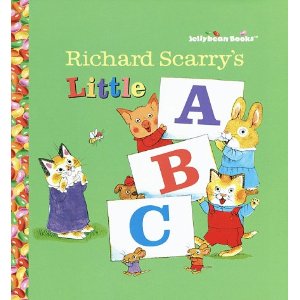
As a reader myself, sharing books with them was a big part of that teaching and communicating. I admit, however, when I first started reading aloud to my now-16-year-old, I was not a fan of the ABC and 1-2-3 books that we had to read OVER AND OVER. And over. And over. And … well, you get it. And over. Gah! Richard Scarry, cute. But I can only count so many bunnies and watermelons up till 3 or 4 or even 10 until my head’s about to explode like a ripe melon hit by a sledgehammer. I was SO excited when she got past that stage and I could read actual stories to her. Then we went through the stage of the very short stories that we read over and over and over. Even Dr. Seuss started to get on my nerves a bit. No, Mom, no. Don’t say that!

At any rate, I toughed it out and read to my girls every night. Unfortunately, I will also admit that as the third and fourth came along, I ended up getting a little busy and just overwhelmed to read to every single one of them every single night. My youngest hasn’t had the privilege of me reading to her every night before she nods off. The best she’s had was me reading to her in the middle of the day just before naptime. Now that this littlest one is in kindergarten, I’m going to have to figure out a good time to read to her and with her regularly. ‘Cause for a while there a few years back, I really was going bed to bed and room to room at 8:00 at night and reading with one girl at a time. An hour later, I was definitely ready for bed myself. Alone time with the husband? Important, yes. Did we get much of it? Not really.

So the routine’s gotten shaken up, but I’ve still logged many very pleasurable hours reading with the girls, at various stages and differing ages. Even my oldest enjoys having me come in at night sometimes as she’s finishing up schoolwork and Facebook-chatting and all that kind of teen stuff and lie down next to her on her double bed and read aloud as she winds down and relaxes to the sound of my voice. With her, I’ve read some of A Tale of Two Cities or Huck Finn or All Quiet on the Western Front, all assignments for classes, or we’ve pulled out a few old favorites for some fun. Maybe I’ll even read to her the night before she gets married someday. It’ll be the best way to remember our time together as mother and daughter at home.

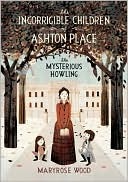
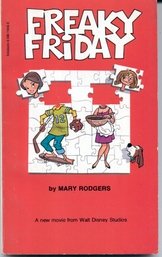
My third daughter is an absolutely voracious reader and has been wolfing down books this summer in particular. We’ve had fun with a few in particular: I read Freaky Friday, one of my favorites from when I was a pre-teen long ago, aloud to all of the girls who wanted to listen some months back, and we all laughed and chortled and chuckled together at all the funny things that happened (Boris and his beetloaf … funny stuff, man). This past month or so, this third girl and I have been reading the very charming and quotable books about the Incorrigible Children of Ashton Place by Maryrose Wood. I am of the opinion that read-alouds are most fun when they provide many opportunities for giggling and lines to quote later as a shared experience. Daddy has no idea what we’re referring to, which is different from all of our shared family movie quotes.

I read Eragon aloud with my oldest when she was probably about 10, and it took us six months to get through. But we enjoyed it. The movie version came out not long after, and she and I joined together in great distress and disgust when the movie version was absolutely horrible. What a shame!

I admit that though I do have children of varying ages, picture books up through teen and adult books, and I do a ton of reading on my own, young adult books aren’t my specialty. I have lots of blogger friends who really know a LOT about the middle-grade and young adult genre. So I think my last point here is: what do you think qualifies as great read-aloud material for middle readers, in particular? I think that something of a modest length and with some silliness is extra handy. More “serious” material is fine as well, but the silly factor makes it lots of fun. Any ideas?