Today my husband and I are celebrating our 22nd wedding anniversary. And as much as I love to celebrate and love to love, I also love to remind people that choosing a marriage partner is serious business. Sure, it involves those butterflies and fireworks, but it also involves solid doses of reality.
Here’s one: finding your soul mate is not a prerequisite for marriage. Sometimes, even, that person who feels like your “soul mate” may end up not being a good partner for you.
I love this reminder from a psychology professor at my alma mater: “Stop looking for a soul mate.” Scott Braithwaite said that when you have the idea that your soul mate is out there somewhere, and if you feel you’ve found him, you may think that the marriage relationship will be easy. Or later on when marriage does get hard (which it will), you may feel you made a mistake and thought you’d found your soul mate but didn’t. What happens then? Either looking outside the marriage for the “real” soul mate or ending the marriage to do so.
Back in my teen years and early 20s, I dated a lot. I had fun with plenty of young men. I had several serious relationships. I thought a couple might lead to marriage. They didn’t. I could even say that I probably had kind of the notion that one of those was my “soul mate.” We were a lot alike, were best friends, and had that “connection.” But it didn’t work out. While I mourned the loss of the friendship for a long time, I came to realize I was blessed not to end up marrying that person. In fact, one quality lacking in that person was something that I realized was important to me, and when I was dating my now-husband, he showed he had it.
Honestly, my husband and I don’t have what I would call a “great love story,” one that seemed fated, or meant to be, or in the stars. I probably was “crazier” about some other guys. I don’t think of him as “my best friend.” He’s not my soul mate. And that is OK. More than OK. It’s a good thing. I chose him. I chose him because of the qualities he exhibited, his dedication to me, his desire to be a good husband, his desire to be a father. He put me first. That he made me grin, was an easygoing complement to my type-A personality whom everyone can’t help but like, was a great dancer, was a great kisser… well, all those were icing on the cake.
Today, 22 years later, I am so grateful that I chose him. He wasn’t just “meant for me.” Our love story wasn’t out of our hands. It has been completely in our hands: we have written it together over all this time. We made three gorgeous babies and adopted another adorable one. We’ve moved, traveled, made friends, experienced life together, laughed, cried, supported each other. This year is particularly sweet because we got to see our oldest make her own choice of a fine husband. Today, I celebrate making a fabulous choice.
So it’s that time of year that happy couples generally enjoy and singles either ignore or protest. Me, I’ve been married to a pretty great man for more than 20 years, and I’m a celebratory type of person, so I embrace it.
I found myself a bit sad the other day to read a Dear Abby letter in our newspaper from a young woman who’s been with her serious boyfriend for more than 2 years and who is disappointed that he refuses to celebrate the day with her. He says that it’s a trumped-up holiday that exists solely for businesses to make money. And get this, Abby actually told her to leave him alone. She said it’s true about the origins of the holiday, and if she were being pressured to give a present, she’d feel annoyed too. What?!
Here’s my take: pretty much every holiday has become commercialized. Christmas? Hello? It’s a religious holiday that celebrates the birth of the Savior, and its date is set around a pagan holiday. And it’s the biggest merchandizing season of the year. Easter is similarly a religious holiday and has been overtaken by the bunny and baskets full of candy and other gifts. So using the excuse that a holiday’s origins and/or commercialization negates its value ain’t gonna fly.
Excuses aside, here’s what I think is the real crux of the matter: if you love someone, you will do whatever you can (within reason and whatever’s healthy) to make the other person happy. If she enjoys gifts, you’ll get her gifts on special days and even other times for no occasion whatsoever. If he just loves hugs and kisses, you’ll hug and kiss him. If she likes to be told she’s beautiful and smart, you’ll tell her that. And so on. (Just read The Five Love Languages: it’s simple and absolutely true.) You won’t begrudge her what makes her happy.
In our society today, we should celebrate happy relationships and families every chance we get. I am of the conviction that society’s success rests on the backs of successful families. Marriages that endure and are happy are the backbone of those strong families. So just give in and share the love on Valentine’s Day and every other day. It doesn’t have to be expensive, fueling the economy and those “greedy businesses.” I love to celebrate every chance I get because it just makes life sweeter. Celebration at its heart is just gratitude, and every expert says that being more grateful makes us happier.
So today, Feb. 12, as I have for the past 20 years, I celebrate the anniversary of the first kiss I shared with my husband. 21 years ago, we had a date at my apartment, just eating a meat lovers’ pizza from Pizza Hut and watching “The Princess Bride.” And every year on this date, we watch that movie and usually eat pizza. (Small wonder our family quotes so much from it. See the fun we had making mashups of PB and “Star Wars” on a previous post….)
Eat your heart out this year.
If you’re in a relationship, celebrate it. Have fun. Share the love. Do something special. If you’re single, then show gratitude for the successful relationships that are in your life and help make you who you are. Don’t be a love Grinch. Let your heart grow three sizes this holiday.
Ever noticed how uncomfortable silence makes most people? It’s as if any unfilled space is a vacuum they must rush in to fill. People abhor it, indeed.
I’ve come to appreciate silence, those golden but seemingly interminable seconds between what most people consider the “active” moments. Because so much really does happen in those quiet spaces between.
I’ll use a church setting as an example. Sunday School teachers often ask questions, because they’re told that’s part of being a good teacher. Typically, however, they’ll make one of two mistakes: they’ll ask a yes/no question or one with only one short “right answer” that’s so obvious and “easy” that everyone feels silly answering it, or they’ll ask a really great thought-provoking question and then shut down any potential for discussion if no one raises their hand within about three seconds. The best teachers, however, are comfortable with waiting and letting their listeners’ minds work, even as silence descends on the group. If given a moment, participants can really create an invigorating or inspiring (or both) discussion.
Think about time you’ve shared with someone you’re either trying to get to know better or with someone you do know well but with whom you’d like to have a kind of serious or challenging talk. When you ask a question, do you sit patiently and quietly, showing with your facial and body language that you support them and respect them enough to give them some time to think and respond in a way that they’ll feel comfortable with? Or do you rush to reframe or redirect or say, “Oh, never mind” or “Don’t worry about it”?
My oldest daughter and I have talked about how many people tend to talk to us and share things with us. I think it’s because we’re active listeners. We’re comfortable with quiet and that space that is silent but most definitely not empty. We’re interested in what others have to say and don’t always have to respond to give our two cents’ worth. And maybe it’s nice to know that people feel comfortable confiding in us, trusting us with their “secrets.”
I’ve also realized that keeping my mouth shut for an extra minute or two when I might be inclined to respond quickly with an easy answer or snap judgment can yield some surprising results and make me glad I didn’t say anything. Just yesterday, my little 6-year-old, who can easily cause some frustration and annoyance in her older siblings (and parents), said to me, “So, there’s this new girl in my class, and she’s really annoying!” I admit I immediately thought, “Oh, really!? Pot, meet kettle.” But I held my tongue. Then she went on to say, “Yeah, she goes around choking people.” What? (Still not sure what exactly “choking” entails, and we’ve made sure to impress on her that if anyone at school is trying to hurt her, etc., to immediately tell a teacher; my point here is that “annoying” in her mind wasn’t quite the meaning I usually attach to it.) If I had responded what I’d been thinking rather than just continuing to listen, she might not have shared that last vital bit of information that allowed us as parents to teach her something important.
Keeping silent has value and can allow us to learn much we wouldn’t know otherwise. Unfortunately, it’s a skill that we don’t emphasize nearly enough in our culture of nonstop information. Turning off the TV, the computer, the smartphone, and other devices has power; turning off our tongues does as well.
I’ve been thinking about this idea for a long, long, LONG while, and I’ve put it in words now after reading some others’ blogs. Here it is: My mental illness is NOT an excuse for people with whom I interact to just write off anything I say or do that they disagree with. And yes, this extends to opinions that I have that are carefully considered, based on life experiences and, yes, even my interactions with YOU, who are so eager to chalk up my opinions to craziness.
I’m not going to say that in my darkest moments (and the times I feel most ashamed of myself and my behavior) I never say something I regret or that I don’t even completely, 100%, mean. I do. But, honestly, DON’T WE ALL? We all get tired, angry, frustrated, annoyed, irritated, strung out and worn out, and say and do things we don’t mean or that we just regret. So in this way, I’m really no different than any “normal” person, if you’d like to use that easy but non-precise terminology.
Here’s what really, really, REALLY bugs me: when I choose to discuss an issue with someone who is treating me poorly, in an effort to improve the relationship or our necessary interactions, and then that person essentially throws up a wall and refuses to talk because they don’t like what I have to say. People do that a lot anyway, sure. But I am convinced that some people through the course of my life have been all too quick to throw out the baby with the bathwater when it comes to anything I say. If it’s something they don’t want to hear, they say, “You’re overwrought. You don’t know what you’re saying.” and then either studiously ignore me or what I tried to discuss, or they react with righteous indignation, even putting a burden of guilt and shame on me for daring to be open. They might even point the finger at me outright and denounce me to others. Not cool, people, not cool.
Because I’m that type of person. I don’t like having any kind of relationship with someone, whether it’s family, friends or acquaintances, or even work associates, that essentially forces me to bury any hurts or problems. I like to TRY, at least, to resolve the issue, to bring it to light and talk about it and free all from the burden of darkness. I think it’s much kinder to everyone. It does generally involve the peeling back of a scab, but then that sore is much more likely to heal over and not scar or get infected. It’s worth the initial discomfort.
But it angers me when my efforts are met with derision, nastiness, and blame. I have also tried to be somewhat open about the mental illness with which I struggle on occasion. And that, unfortunately, is seen by some people as a free pass, as a way to characterize my opinions as simply the effects of a frenzied mind. And they’re not. I might end up being not as soft and kind as I generally am (I think I’m pretty good at phrasing things well most of the time), and I do regret that. But that doesn’t mean that what I have to say is wholly without merit. If there’s a problem festering in our relationship, it’s NOT ALL ON ME. Face it: it might be you. Or at least partly you.
Let’s not be too quick to peel blame off ourselves and throw it back on another person, especially someone who is an easy target like one afflicted with mental illness. Let’s stand courageous and brave and compassionate and stop deflecting. Please just don’t write me off. My thoughts, opinions, and concerns have value. Please treat them accordingly.
I’ve just had another week (couple of weeks? month?) that ended horribly for me mentally. I ended up nearly incapacitated with hurt, anger, and hopelessness, curled up on my bed in a puddle of tears and surrounded by tissues that I’d flung wherever. And something that has struck me (yet again) is how difficult it is to explain this outcome and all the little triggers, inner and outer, that lead to it. I still am convinced that most people do not have the least idea how to deal with someone in this situation, or clearly on their way to it. This even (maybe especially?) includes family members, who have known me for years and have varying levels of knowledge about the struggles I face periodically, but who still just don’t KNOW what it’s like to be me at those moments or how to be WITH me.
I can’t blame them, most of the time, honestly. In their place, I might be unsure what to do or say (and how to handle any lightning bolts that come zinging my way out of the storm) and possibly just find it easier (safer?) to wait until that storm was over, the clouds all blown away, until I came near again. But when it comes down to it, in my own place, I can’t help at those times but feel angry and resentful that few people do know how to approach, how to offer support. And if family members, who are supposed to love me and be there for me, just as I’ve always tried to do the same for them, cannot be there for me, what does that say about them, or even about me? Those moments leave me mostly alone, feeling abandoned. I mentioned on Facebook, to friends, that that medium is a dicey place for trying to reach out for true support. How in the world do we use the one medium that keeps us in touch most readily to really connect, to really help each other, when it generally is limited to use as a place for sharing mundane details of day-to-day life, news of our kids’ accomplishments, and photos that show us in vacation spots or in our best moments? I do appreciate that when I put out that little message, some friends offered their support and care, just saying they were thinking about me. That did mean something. A lot, really.
But in real life, how in the world do I get support from those whom I need when I’m giving off a really bad, hopeless, negative, angry, and, yeah, even “crazy,” vibe? Most normal people would run away, far and fast. This is been one of my biggest concerns over the years as I’ve struggled with this beast of mental illness. I’m a pretty “normal” person most of the time, and people say they find me to be upbeat, happy, blessed with a great smile. I care and really put myself out there to help others. I do spend a lot of my time and energies trying to help those around me. But sometimes life just gets to me or I end up spending too much of my energies on others and then run dry in my own well.
It’s kind of like I’m boiling water on the stove, and as long as there’s still water in the pot, even if it’s only a half-inch of water, everything’s fine. But the second that water boils off, the pan is in big trouble. And despite my best efforts to balance my life (ha!) over the years, it’s still a really tricky act to pull off successfully, and I burn out sometimes. The pan bursts into flames as soon as it gets dry, and I need to be removed from the burner, cooled down, and filled back up again with water. Those are the times I need loving friends and family who, armed with oven mitts, are willing to help me cool off and refill my reserves. I sit on the stove sometimes and whistle like crazy, wondering where my mitted friends are, because it’ll take a lot longer to get myself filled up on my own merits. If left for too long, I stay hot and just get angry.
I know it’s hard to come near me at those times. I realize that. But I know I’m worth the effort. I know that I am a good, genuinely caring person who uses my talents and resources to be helpful to others. I’m fun, I’m generally kind, I’m pretty handy to have around in a lot of ways. So I give. Even just in a balance-sheet kind of way, I’m worth the investment. But during all those good moments, I still fear that those I care about aren’t taking the time to find out more about the few really bad, challenging moments that are my reality just as much as they are the good ones. I want my friends and family to want to really get to know me, to understand me a little better, so when the storms come, they’re ready for a little lightning. Because when the sun comes back out again, it will warm them even more radiantly.
All in all, this is probably true for every single one of us, whether we have mental illness or not. We need people in our lives who really get to know the whole us so they’re ready for the times we’re not our best selves. But it’s just magnified a lot more with mental illness, and society still places a stigma on it, where many people misunderstand and avoid in their ignorance. I wish we could all do better to stop this from happening. I would be happy to keep all this to myself. I’m not proud of who I am in my dark times. But that’s my reality, one I’m trying to mitigate and improve, bit by bit. So in the interest of increasing awareness and helping others, just by being open and sharing information, here I am, baring my soul. And thanks, from the bottom of my hot saucepan, to those dear friends who have braved the storms and held me until they’ve cleared. The world is brighter in so many ways because of you. Thank you, my dear ones.
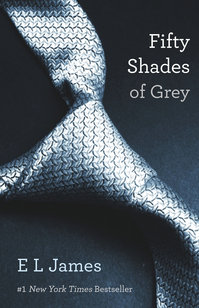
Yet another day when I’ve been thinking about a topic and I end up reading something closely related. Some of the hottest books flying off shelves (or e-shelves) are romances. The latest is not just a romance; it’s erotica: the Fifty Shades of Grey books are at the top of the e-book bestseller lists and feature not just loads of sex but bondage and domination, apparently (nope, I am not going to read them).
And it would be crazy to even discuss this topic without mentioning the insanely popular Twilight saga (which, apparently, in some way is how Fifty Shades was inspired). Not erotica, at least, but heavy on the romance, lust, making-out, etc. Sure, there are action scenes dealing with the bad vampires, but it’s really about intense teen love. The very interesting series I’m reading right now, Outlander and its many sequels, is historical fiction that has lots of great characters in many settings, but the primary focus is the intense attraction between the heroine and her 18th-century husband.
I think many people concentrate on TV and movies when they consider the effects of mass media, and they are right to do so. But books can be overlooked in the kinds of effects their messages have on readers. This Deseret News article, for instance, focuses on film: romantic comedies, specifically, and how viewing them can affect real people in real relationships. I don’t think it comes as much of a surprise to anyone that relationships and love are not portrayed terribly accurately in movies, and I can say as a reader that there are plenty of books that fit that pattern as well. At least in literature, there are many more genres and many more books to choose from, and many can be found that do portray life much more realistically than film, in part just due to their length, honestly. But there are lots of books that are just print versions of rom-coms or trite romances (Nicholas Sparks, you’ve done damage in both print and celluloid!).
I’ve thought many times as I’ve read books that feature romance how so many skirt realities most of us experience. I don’t know about you all, but after 19 years of marriage, I don’t feel the same intensity of nonstop attraction to my dear husband as I did at the very beginning. In fact, I probably never felt the same way as some characters I read about. I remember reading The Time Traveler’s Wifeand thinking, Good heavens! These people have sex all the time!Do they not do anything else when the husband isn’t popping off into other time periods? And as much as I am thoroughly enjoying the Outlander series, really: does anyone (or everyone) feel like having sex with their spouse all the time? I’m not saying that isn’t a great thing between husband and wife and vital to a good relationship, but it isn’t the ONLY thing or even 50 percent.
The other main issue, I think, with some of these books is that they often posit that there is one “true love” out there for everyone, that love is destined, fated, that each of us must find THE ONE, our soul mate. This can cause a number of problems; for instance: if a relationship isn’t going smoothly, then our partner must not be THE RIGHT ONE (and we ditch a perfectly good partner and move on to find that elusive person); we might be fooled by temporary chemistry that someone we are crazy about is perfect for us (and we ignore all the signs that show he or she truly may not make a good spouse); we may never find someone who fits the supposed characteristics of a soul mate and end up alone.
One of my church’s leaders, Spencer W. Kimball, said something very wise but not what anyone might consider easy or exciting or the basis of a swoon-worthy story line: “‘Soul mates’ are fiction and an illusion; and while every young man and young woman will seek with all diligence and prayerfulness to find a mate with whom life can be most compatible and beautiful, yet it is certain that almost any good man and any good woman can have happiness and a successful marriage if both are willing to pay the price.”
Still, it’s hard to resist the siren song of these romance stories. They just make everything seem so intense, so easy, so larger-than-life. They’re fantasy. But we like fantasy. We like to read about things that aren’t like real life. At the same time, does reading these unrealistic stories do damage to us as readers as we go about our regular lives once the book is put back on the shelf? Do we end up with unrealistic expectations from our relationships? Research seems to show that the answer is yes, at least in film. I dare say the same is true for similar messages in print.
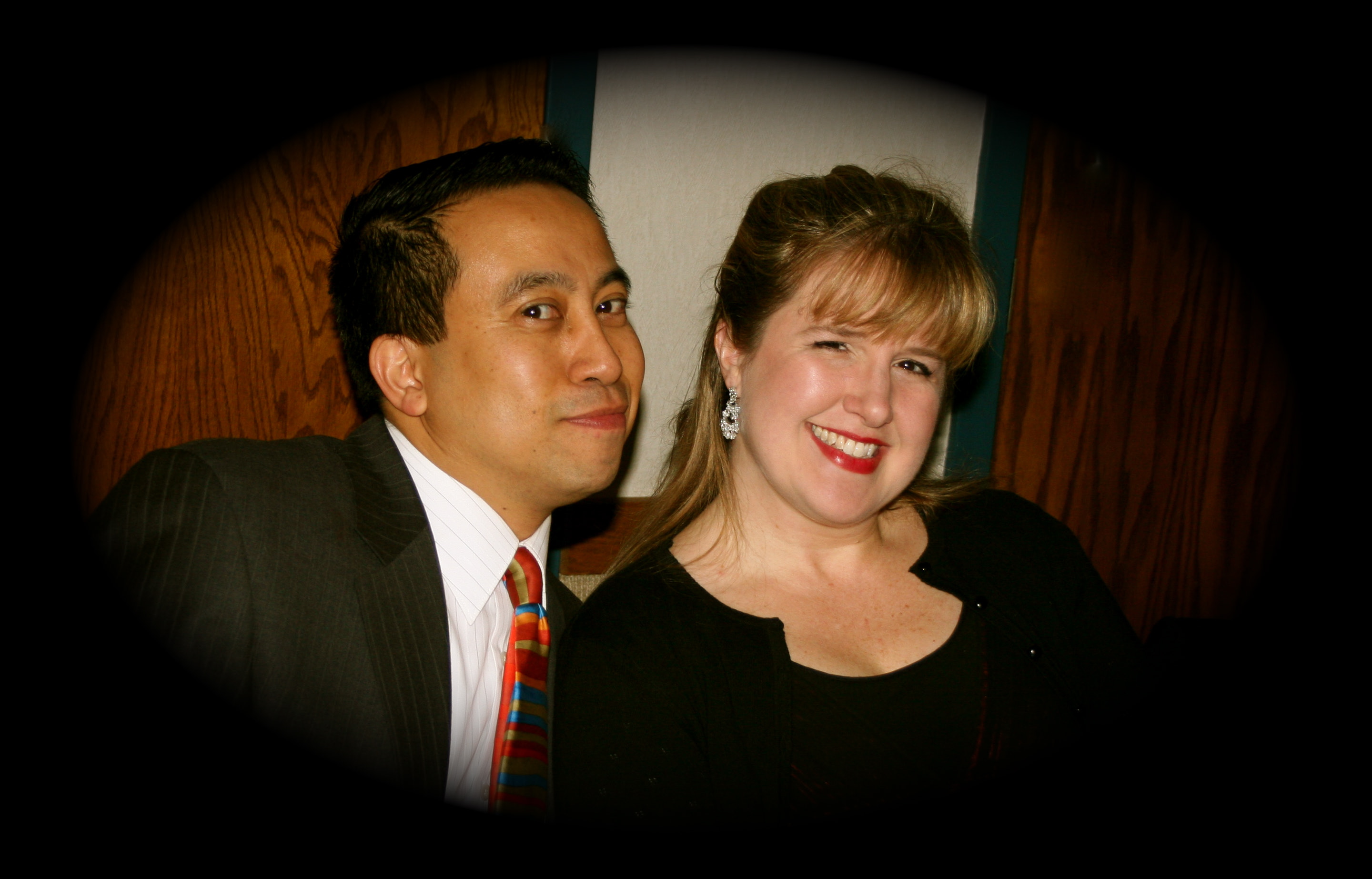
Yep, we look lovey-dovey and dressed-up here, but this is not everyday reality. I don’t care to take a lot of pictures of me (and us) during everyday reality…
Real life is harder, messier, more boring, more frustrating, more mundane, more work. Children can bring joy to our lives, but the work and the commitment involved can easily take away from our relationship as a couple (not that this is a good thing, but it happens easily if we don’t work to stop it from happening). The pressures of just making an everyday living and going about our usual day-to-day business can strip the thrill from our relationships. And time has a way of changing how we relate to each other, mostly for good. Love is a complex, wonderful, deep, multifaceted animal, and romance is only one of those facets. Sexual attraction is just a part of the romance. Infatuation and attraction occur strongly in the early stages of a romance, and real love develops past those, even though it is still desirable and a wonderful thing to still be attracted to our spouse 50 years after those early stages. My husband can still kiss me and make my legs turn to jelly, even 19 years into our relationship. But he doesn’t do it 10 times a day, and … well, I won’t go into any more private details. I don’t always look at him and think, Kiss me! I may just think, Thank heavens he’s home. Or I wish he’d do the dishes. After he’s home, the kids are in bed, and the dishes are done, then I am more disposed to think, Man, I wish he’d kiss me and jelly-fy my legs.
I think I have appreciated Anne Tyler’s books because they feel so much more real. They’re not romances, but they are about love. I was so profoundly moved by The Amateur Marriage, for instance, for its look at a less-than-ideal or smooth relationship. I love how Tyler can just dig right into real life, excavate some broken and dirty old shards, and hold them up to the light for our inspection. Yes, we think, this is how people lived then.
I couldn’t possibly write enough here about all the truths of relationships and longtime marriages. I certainly don’t have it figured out; 19 years is just enough for me and my husband to get in and get serious and tweak some rules so they fit us better. All I know is that media don’t often enough reflect real life. And that’s too bad. The shiny, glittery stuff that’s reflected to us off of film or the pages of books is too often easier for writers to portray and more desirable for us consumers. It’s just nicer or more appealing to consume a quick, too-sweet product than one that’s more subtle and layered. We want escape, all too often, not more of reality. But reality can be wonderful; in fact, it can be much better than the intense but one-sided stuff that comes at us from various media. I thank those amazing writers who have not just transported me to intriguing new places but those who have taken me right back to where I started and made it seem new and interesting in all its reality.



 Life and Lims