Guilt and mothering: like peanut butter and jelly

So Mother’s Day in the United States has just passed, a day in which millions of women received handmade cards with paint-stamped body parts in shapes of hearts and various forms of breakfast, either in bed or at the table. It was a day in which mothers smiled and were gracious about the efforts of their young progeny, same as pretty much every other day of the year.

It was also a day that induced or amplified all kinds of emotions in women of all ages and stages of life, ones who have children and those who do not. So let me address one of those emotions that tends to rise to the surface yet again for some mothers on the second Sunday in May: guilt.
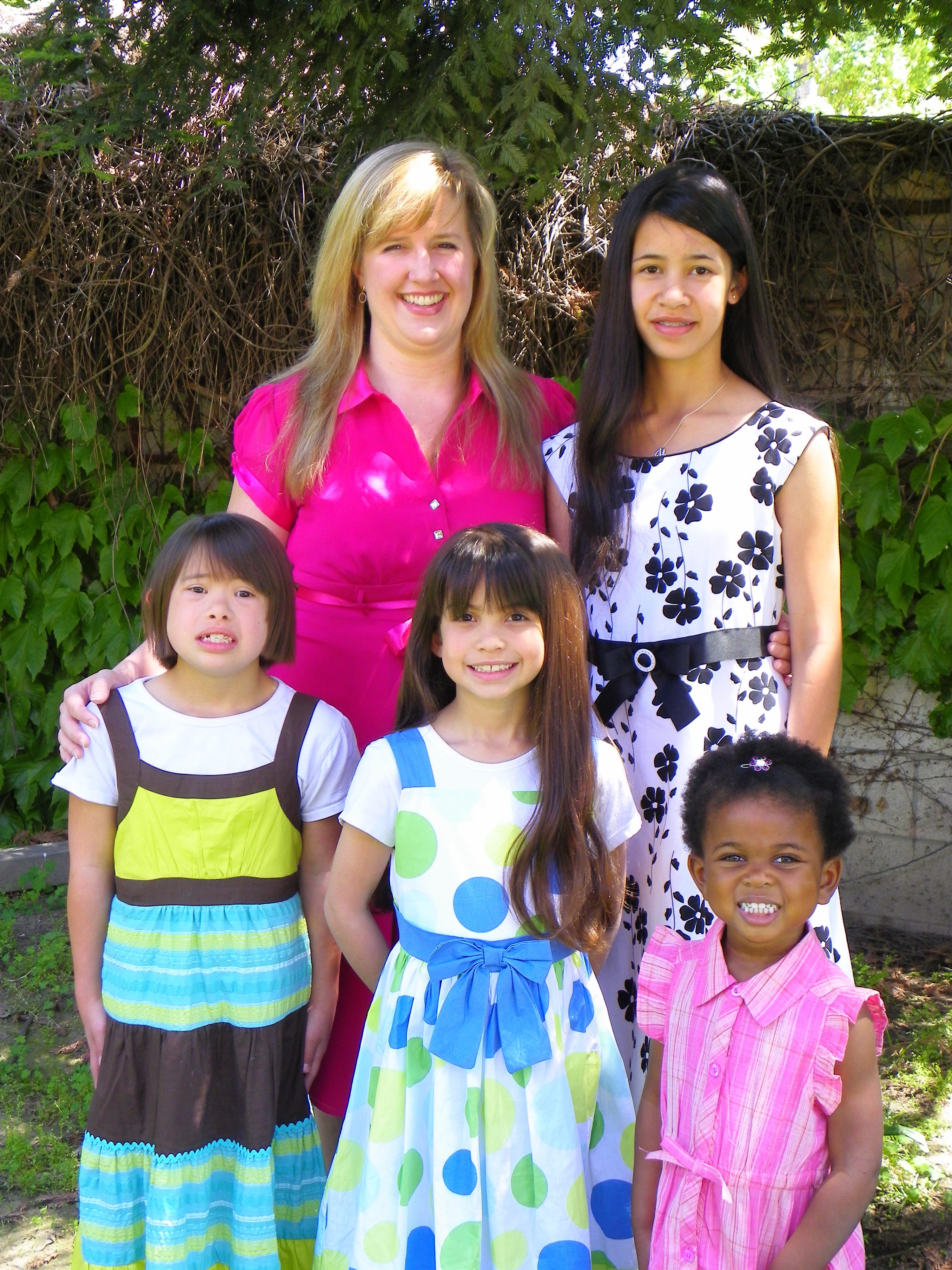
Yep, one of my obligatory Mother's Day photos, in which at least one kid is making a funny face.
Yep, one of my obligatory Mother’s Day photos, in which at least one kid is making a funny face.

Here’s one scenario of feelings that can play out that Sunday, particularly if one attends church, where people stand at the pulpit and talk about their angel mothers: I am not good enough. As a mother, I do not sound at all like the description often made of those amazing moms whose stories go down in the history books of being completely self-sacrificing, completely loving and giving, completely kind and always up for listening to a child’s ramblings, no matter how constant or stream-of-consciousness they may be. These women never seem to snap, never seem to request a break just for some peace and quiet, never ask for “me” time, never tell a kid to come back later.

If, for some reason, a woman doesn’t hear those kinds of talks or they just don’t bother her, then there’s still the rest of the day to barrel through, which invariably also means her husband and children are eager to make her happy. If you’re like me, someone who can get overloaded and overstimulated seemingly far too easily, and you just made a T-shirt quilt for the high school band director so her senior daughter and fellow seniors could have a personalized gift to give him before graduation, and you hosted a before-prom dinner for 16 students at her house the night before Mother’s Day (just as two examples), you probably just want to be left alone for an afternoon and evening to sleep and collect your thoughts again (and gear up for more events and to-do-list items begging for your attention). But your children and husband know it is their DUTY to MAKE YOU HAPPY that day. To them, just leaving you alone and letting you sleep, etc., translates into profound failure on their part, because MAKING YOU HAPPY means being with you every moment, attending to your every supposed need and loving on you.

So as a mother, you’re stuck. Either you take the needed time to just be alone and manage to rest up enough so you can forge on with your selfless mothering duties for the rest of the week, month, year, and lifetime, for all those other days for which you are supposedly celebrated and venerated on the one Sunday, OR you suck it up and spend time with the kiddos doing things they enjoy because they think it’s stuff you enjoy and that will make them happy.

Let’s just say that mothering guilt will inevitably occur. No matter what, you’re back at that familiar rock and hard place.

Let’s just posit this idea: women generally are and want to be selfless when it comes to their families, except for those women who truly are just bad mothers (they do exist, you know). They do make sacrifices, some seemingly bigger or more story-worthy than others, at different levels that are unique and personal and necessary for each (some even sacrifice too much, honestly, more than is good for their own mental and emotional health). So the reality is that there’s going to be at least some level of guilt on the day they’re celebrated, at some moment or hour during that day. There’s going to be guilt because there’s guilt 365 days a year; there are just a few new twists on it on Mother’s Day, in addition to the regular ol’ garden-variety guilt.

How about we just declare the day “Mom, don’t feel guilty” day? How about we ban guilt for one day? It’s a bold and wacky idea, but maybe we can give it a try. It might be very liberating.

Marriage is for all of us

When the “Marriage Isn’t for You” blog post by Seth Adam Smith started appearing on friends’ Facebook feeds the last week or so, I didn’t really read it, just took a quick look. It just seemed so simplistic and obvious that I thought it was kind of silly people were making a big deal out of it. Yes, marriage is about selflessness. It doesn’t work too well when two people are selfish. OK.

I suppose I’m still a little flabbergasted by how big it’s gotten. I mean, 24 million views (as of two days ago)? That’s ridiculous.

Here I am with my husband. He's often more self-sacrificing than I am, but we've taught each other.
Here I am with my husband. He’s often more self-sacrificing than I am, but we’ve taught each other.

I think what the success of this post tells us is that people in our society have lots of differing views of marriage, in addition to just wanting to clarify a couple of things in this simple post. One point is this: the post was written by a man, and as one woman wrote on Bustle, that’s kind of why it’s gotten so much attention. Women generally have been expected to be the ones to sacrifice, to give all of themselves, for their spouses and families. Men have been asked to provide. So for a man to say he needs to remember to be self-sacrificing is news (as goes the old journalism trope: it’s not news if a dog bites a man; it is news if a man bites a dog).

Another big point people are wanting to make is to clarify that we can’t do well in marriage if we ONLY focus on our spouse; we still have to do what’s important for our own well-beings. I don’t think that Smith meant to say that we shouldn’t be whole, mostly mentally sound people on our own or that we shouldn’t continue to make ourselves the best we can be as individuals; he just was making the point that in our society today, too many of us probably worry too much about ourselves without taking sufficient care to be selfless. This brings up a point I’ve thought about frequently after reading it in a book years ago: when someone is given advice, it’s tailored specifically for them and what they lack and could be totally wrong for someone else.

As an example, my parents never needed to lecture me about being more responsible. I was so overly responsible and focused on planning for the future that they had to encourage me to relax and have some fun in the moment. When I went to prom, they stood at the door and admonished, “Do NOT come home before midnight!” Now this would have been the opposite of what they would have done for my sister, who was more of a have-fun-in-the-moment kind of gal. She was better (and still is, I think) at carpe diem-ing. She’s been a good example to me in that way.

So what I am saying is that this young man needed to hear the advice his dad told him to stop with the anxiety about whether his upcoming marriage would be right for him and to consider more how he could give to his future wife. That’s what he needed to hear and it made such an impact on him that he felt the need to share it on his blog. And there are rightly going to be plenty of people who read his blog who are like him and will need that reminder; others will not need it for themselves because they are already very self-sacrificing. Those readers need a different, almost opposite, reminder that they should take time to make themselves more well-rounded, more complete, etc. And those people (or those who know and love them, it seems), who may very well be primarily female, are those who responded so strongly that Smith shouldn’t forget that point of view.

At the same time, I suppose I shouldn’t have been surprised to read from other bloggers that marriage isn’t about family and children. One guy writing for SFGate.com said this: “Many people enter marriages without a desire to procreate and this just doesn’t hold water for the ever-growing numbers of childless by choice couples.” I can only say that I essentially consider this to be just plain sad. I am still of the belief that marriage really is about creating families, about having children and rearing them to be great people and contributing members of society. (I won’t even get into the problems that this attitude is having on society, just one of which is that countries with low birthrates are now facing serious issues with there being too many elderly and not enough young people.) Yes, I do believe that a very few people really are not cut out to be parents, it seems, but far more who choose never to have children thinking that they fall into this category very likely would be the ones shocked to find themselves enjoying, appreciating, and learning from the experience of parenthood. Through parenting, we contribute to society and we grow as people through both the challenges and the joys we experience. I am one of those who really does consider those who choose deliberately never to have children to be a bit too selfish.

So marriage is for all of us. It’s for husbands and wives, it’s for children, it’s for society. Each of us can stand to do a little better to be selfless and help others; some of us can do a little better in developing ourselves as individuals.