Parents’ and schools’ responsibility to young readers

So I received an email through my Rated Reads site, asking me for guidance on resources that can provide information about content in books for younger readers. It got me thinking again about the place for parental involvement and potential restrictions on books for elementary-school students. I suppose I’m a little late to the game in terms of this topic because Banned Books Week was over a month ago, but here goes anyway.

Before I say anything else, I’d like to make clear that I am against “censorship” in general (let me restrict this discussion purely to books). That entails actually suppressing and forbidding the viewing or use of particular passages or entire books. It’s not my place to decide what kind of content should be completely forbidden, and it just sets a bad precedent. I wouldn’t want someone else to have the power to forbid what is viewable by me or my family members.

So while I am against forbidding things entirely to most readers, parents and educators do have a responsibility to young children to make sure they read material that is appropriate for them. Even then, I hesitate to ban books entirely because, while I wouldn’t want a child getting hold of soft porn, for example, I wouldn’t agree with those people who were eager to ban Harry Potter because of its theme of magic.

What I am a proponent of is information. That’s why I started Rated Reads, a modest effort though it is. But at least it’s something. We have nearly 1,000 books featured with content ratings and moderately detailed paragraphs explaining what kind of potentially objectionable content is in each book. I firmly believe that each reader and, in the case of children, each parent should be able to have resources to find information that will allow him or her to make a decision.

I would like to think that books that are selected for a children’s library are going to be appropriate for young readers and acceptable to most parents, both in thematic content and possible sex, violence, or bad language. But young readers who are ready for young adult books, for instance, deserve to not be shocked by what they read or to have their parents be shocked. There are a lot of great young adult books that are fine for younger readers, that don’t have strong language or detailed violence or sex scenes. But there are just as many that I wouldn’t want my younger kids reading.

Since elementary schools generally have limited space, I think it would be wisest to select books that will be most age appropriate and least objectionable to parents. But at the same time, there may be a few YA books that would be great reads, in terms of stimulating thought on various topics, that might be nice picks for those libraries. And some of those might have some violence or other scenes that could be objectionable to parents or their kids. In these cases, it seems it would be particularly smart for everyone to include a kind of electronic ping with further information for the student and her parent when it comes to checkout time. This would allow parents to give a yea or nay to their child reading that book; a note could be sent home before the book is approved for checkout, providing details about why that book could be a poor choice, including themes, sex, violence, and language.

Now there are going to be some parents who are very careful about using this system, saying no to some books and yes to others based on their consideration of the information provided; there are definitely going to be other parents who simply won’t care. And that is their business. If I were that child’s teacher, or a fellow parent, I might not agree with those parents’ decision, but it wouldn’t be my responsibility to override or actively disagree in some other way. As long as a parent hasn’t been declared unfit, it is his or her responsibility to make decisions regarding his child, and that needs to be respected.

But there is no doubt in my mind that more information should be available so readers and parents of readers can make more informed decisions. I don’t think it’s always possible or practical for a parent to read every book a child would like to read, becoming the child’s first reader. We just need more information. Again, that’s why I’m doing Rated Reads. But I’d love to see more coming direct from publishers or something similar (I suppose that’s kind of another topic, but in brief, I don’t see why it would be so hard for the editor to include a brief description that states how much language or sex or violence is in it…). There’s simply not enough information available about most books.

So. What are your thoughts? Do schools sometimes need to be more cautious about what they choose to stock in their elementary libraries? Do parents need more information, and how should it be provided? And what about junior highs/middle schools and high schools?

Strong language in books: not so common as one might think

After addressing my great discomfort with the number of strong and vulgar language in J.K. Rowling’s first book for adults, The Casual Vacancy, I looked at other bloggers’ reviews on the book, and I was perhaps a tiny bit surprised that few expressed any frustration with that issue. Several that I commented on basically did respond that they thought that the really, really frequent use of harsh language felt “authentic” to them.

So I decided to do a little analysis of how frequently the f-word, for instance, pops up in popular books to see just how much use readers are “used to” or tolerate.

My ratings website, Rated Reads, features nearly 1,000 reviews of a variety of fiction, nonfiction, and young adult books. Of those, only about 175 are rated “high” and a few are rated “DIRT” (for “don’t invest reading time” — not because of the quality of the writing, but just because of the offensive content). I thought that it would be interesting to see how many uses of the f-word tend to be used among those books my reviewers and I have already rated “high,” which means in terms of language, more than five or six uses of the f-word.

Here’s the breakdown: 17 of the “high” ratings have no use of strong language (they’re rated high for detailed sexual content); 91 have between 6 and about 15; 31 have between 20 and 40 uses of the f-word; and only 15 have more than 50 uses of that strong word (or the very rare c-word).

My conclusion? Writers of the most “popular” or “critically acclaimed” books, which are sampled fairly well on Rated Reads, don’t tend to use the f-word much more than 15 times. Only a very few use it very liberally, 50 times or more.

Which is why J.K. Rowling’s book for adults seemed so outrageous to me: she must use the f-word 100 times or so (and the c-word at least once), not to mention a liberal use all the other “milder” language. That puts The Casual Vacancy into a very small group: only about 1 percent of books, according to my sample of about 1,000 books, use strong language that casually.

It brings me back to wondering why authors use strong language. Readers who “defend” the liberal use of harsh language say it’s because the authors are being “authentic.” Especially when it comes to high school-age kids, they say, that kind of language is used all the time. I don’t argue that notion. It’s true that one can hear a lot of bad stuff in a school hallway. And then there are different groups in society that tend to use that kind of language very frequently and without any thought for what it says about them. But if most authors would hope to be “authentic,” then why do so few actually use that kind of strong language very often? In a book of 300 to 500 pages, my “most common” group of usages of the f-word only feature about 6 to 15 uses of it. That’s actually not too “true to life,” one could argue.

In fact, a lot of the books that readers really love don’t have any use of the f-word, or very limited use of it. It would seem that those authors, who write well and with large followings, don’t feel a need to use “authentic” language. Hm.

Most of the books out there that are really entertaining or thought-provoking, that open a window into other worlds of all sorts, succeed at transporting us as readers, making us think and experience other places and groups of people, and do the job we want them to do — most of the time without using really harsh language (even if the characters, places, and situations might genuinely call for that kind of language if they were to be completely “authentic”). Are most of us complaining that they don’t use more authentic language? No. But when an author does use a lot of bad language in the service of being authentic, people just say, “Well, that was authentic.” Where’s the outrage here? If only a small percentage of writers (in this case less than 1 percent) really go for it and use tons of vulgarity, why don’t they stand out from the crowd that doesn’t write with tons of that trash?

I’ll let you all ponder on these facts and draw some of your own conclusions. Then comment and let me know what you think.

All I want to say to conclude is that in real life, yes, there is plenty of “authentic” rampant use of vulgarity and harsh language. I hear it sometimes, and I heard it when I was in school. My high-schooler hears it at her school. But given the choice, we both try to avoid it as much as we can, because regardless of what we’re “forced” to hear, we still don’t like it, and we haven’t “gotten used” to it. I avoid the groups of people and places where I would be likely to hear that kind of abuse of the English language, and likewise, I try to avoid books and movies that contain that language. I don’t HAVE to read or watch those books or movies or TV programs. I have a choice. And I choose to stay away from them.

‘Casual Vacancy’ left me feeling empty

Given how gifted a writer J.K. Rowling proved herself to be as she gave readers the amazing series of Harry Potter, I couldn’t help but be excited about her writing a new book. I knew it would in no way compare to Harry Potter, but I thought that there was no way she could craft a bomb.

Well, less than 30 pages in to The Casual Vacancy, I was forced to stop reading. I’ll never know if the book is a worthy effort in terms of plot or writing style because it’s just jam-packed with vulgarity, and I refuse to read any more. I very rarely put down a book after getting started simply because it’s laced with profanity and other offensive content, but this was one of those times. I am SO disappointed. I am particularly disenchanted with Jo Rowling. From what I read in the first bit and then just after flipping through the book and stopping on random pages, I am inclined to estimate that there must be a hundred uses of the f-word (the rarely used c-word is even in the first bit that I read). Or even more. I just don’t care to read more to find out exactly how many. What’s the point?

I’ve already written about my aversion to vulgarity in books and that I don’t see a need for them to show “authenticity.” There’s just no reason for that. I know that there are people out there who disagree with me, but I am also fairly sure that quite a few readers really don’t want to read a book that contains 100 uses of the f-word.

Jo, just because this is your first book for adults doesn’t mean that it has to be “adult.” You could have written a fine book without all of that trash. I know that it doesn’t really matter to you how many copies you sell, at least financially, since you’re already set for about a hundred lifetimes. But does it matter to you that many of your loyal readers are now disappointed and disgusted by your choice to make this so full of vulgarity? I hope it does. I hope that next time you write a book you choose to make it “cleaner.” It doesn’t have to be squeaky-clean, and it doesn’t have to be appropriate for young readers, (even though that would be nice, considering the fact that some younger readers will likely try to read your adult novels even though they’re clearly “for adults”) but it would be nice if it were more accessible for everyone.

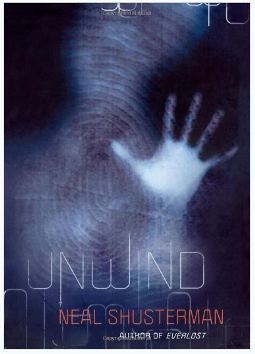
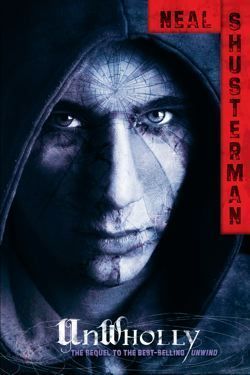
Review and thoughts on ‘UnWholly’ and ‘Unwind’

Although I write book reviews on my review website, Rated Reads, sometimes I’d just like to take a little time to write extra about the books I’ve read and put them in context in other ways. After reading Neal Shusterman’s UnWholly, the sequel to his young adult book Unwind, I find myself having to wax eloquent and enthusiastic about this series.

In brief, Unwind introduces a future in which there has been a war between pro-choice advocates and pro-lifers. It is ended when the two sides come to an agreement in which abortions are outlawed, but teens may be “retroactively aborted” or “unwound” by essentially donating their organs and ALL of their body parts. Whoa! What a concept! I love to read books that have compelling, original premises, and it thrills me when the authors are skilled enough to be able to execute those ideas perfectly. Neal Shusterman has written quite a few other young adult books, including the popular and well-regarded Skinjacker Trilogy (which I have yet to read but have heard good things about), and he also writes screenplays. So he was the right man for this job, with experience and skill.

I was introduced to Unwind by a friend, who had our book club read it, and it was a great book to use for that purpose: it’s interesting and fairly easy to read, but it is so thought-provoking that it provides plenty of material for discussion. UnWholly continues the series very well, keeping up a fast pace filled with action, and introducing new characters and new ideas that are ripe for dissection. What’s particularly interesting to me is that Shusterman doesn’t seem to have a clear “agenda” in that he’s obviously pro-life or pro-choice; he allows readers to just think about all the issues and ramifications of the choices that have been made by those two groups and society as a whole in this imagined future.

What’s nice is that Shusterman also chooses not to fill the books with bad language, vulgarity, sexual content or gore, which plenty of writers out there would certainly be tempted to do to give it “authenticity” (I’ve already discussed my feelings about THAT). There is occasional bad language and some violence, but it’s not too detailed or gross, just enough to get the point across and move along the action and plot. Good going, Neal!

This series is great for teens and adults alike, for entertainment and for the seeds of a good discussion about a variety of moral and ethical issues. Honestly, I think this trumps The Hunger Games for a few reasons and should get more attention because of that: it’s just as action-filled, compelling, and exciting, great for guys to read as well as girls (’cause honestly, there aren’t necessarily as many popular books out there geared towards teen males as there are toward female readers), but it has more elements that give food for thought. Hunger Games makes one think about the excesses of government and the concept of reality shows gone too far, but after that, it is just a good story. But Unwind and UnWholly continue to provide topics for discussion and pondering as the stories go forward, not just giving pause for thought with their premises. I’d definitely recommend this series for anyone who loved Hunger Games.

Yep, still wary about self-published books

I hate to say this, but as much as I hate the traditional publishing “system” as a writer, I’m mostly grateful for it as a reader. This past month I spent most of my time reading books that were either self-published or had originally been self-published and now had been picked up by a publisher, or the author had started out as a self-published writer.

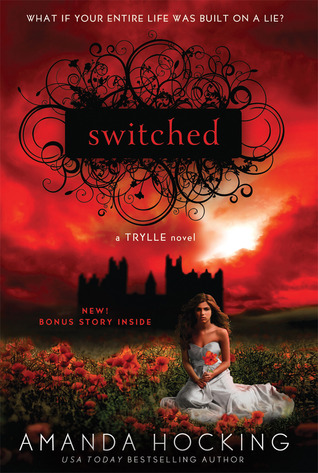
First, I decided to try out Amanda Hocking. She received a great deal of attention for the many sales she made in self-publishing of her Trylle Trilogy series. The millions she made got the notice of some publishers, and she got picked up by a traditional company. I ended up getting a review copy of the first book in her new Watersong series, Wake, which is her first to be published entirely traditionally. It’s in e-book format as well as hardcover. Everything about it is polished and professional, from the cover to the marketing to the actual writing. I found the story to be compelling and pretty well written. I don’t think it’s going to be my favorite of any YA series out there, but it holds its own among its competitors.

After reading that, I thought it might be time to investigate the older Trylle series, starting with Switched. Now that Hocking has been picked up, the books she’s already self-published have gotten the professional treatment, with nice cover images and some editing. Having not read them before they were edited, I can’t say how much editing they got. Did they just get some good proofreading, or did the stories themselves get some good polishing and reworking to make them better? I don’t know. I suspect they didn’t get as thorough editing as the Watersong books, however, because I did feel they could have used some more changes. I can also say that I didn’t think that the Trylle books were “all that.” Again, they hold their own OK compared to other books in the full YA romance and “paranormal” market, but they’re not standouts, in my opinion. The love story was pretty well done, but I couldn’t get on board with the “triangle;” one character just didn’t get fleshed out well enough for me to be completely behind him. And that was really important. I also just couldn’t get into the premise of the story enough for me to really like it; the idea of these “beautiful trolls” having little communities and “kingdoms” hidden among humans was fine, sure, but I just didn’t care what happened to them. Hocking kind of resolved that for me by the end of the series, but a reader shouldn’t have to wait till the middle of the third book to “get into” the premise. That was a major strike against the books, I thought.

So I am glad that Hocking got picked up by a major publisher, because she has talent enough to produce books that will sell well in the YA market, and she definitely benefits from good editing.

Next, I started a self-published book called Broken Shell Island, which a blogger had highly recommended. Looking at her list of other favorite books, I found similarities in our tastes and thought I should try out this book. I have to say that this is a fairly good story, but I just didn’t love it. It’s deliberately quirky, with a splash of Alice in Wonderland, almost, but the whole mix just didn’t do it for me. Others may like it. I think it would do better with a larger audience if it had the benefit of a good editor, as well.

Since I had blogged about clean romances, an author contacted me and asked if I’d like to read one of hers. Normally, I tell self-published authors I simply don’t have time to read their books; I have such a huge list of to-reads anyway, and limited time for reading/ reviewing, that it’s just safer for me to stick with traditionally published stories. (More on this later.) Plus, I want to make sure that Rated Reads reviews books that are getting a lot of attention, so that my site’s visitors know if the popular books they’re hearing about are clean or not. If I had a hundred reviewers contributing to RR, maybe I could alter that policy, but for now it still works. But I made an exception and read her book, Forgotten Honeymoon. It was cute enough, I suppose, but I did feel that I could have used that reading time for something I would really have loved. Again, it’s nice to know that someone’s out there writing “clean romances,” but they have to be really great and well-written in addition to simply “clean.”

Last, I read Love Unscripted, which is another book and writer who have been picked up by a traditional publisher after finding some success in the self-publishing arena. As I wrote on Goodreads, I decided to read this when I saw on one of my publishing-news updates that it had gotten picked up by a publisher. I figured that meant it should be a cut above the usual self-published stuff. For the first half or third of the book, I felt convinced that was true. It was fun to read and actually pretty well written. But as the book wore on, I had more complaints. I am hoping that since it’s now getting the treatment from a good editor, it may end up correcting some of the problems that I saw.

First, it was entirely too long; it could easily have been edited down without losing anything at all; in fact, taking out some stuff would have made me happier. It just dragged. I felt that some of the plot points were stretching my credibility and patience, and they could easily have been left out or changed significantly. Second, and related to the first point, as some other Goodreads reviewers noted, Reber does too much “telling” rather than “showing” in her writing. She hammered us over the head in telling us how the characters must be feeling. We get it. We’re smart enough to follow where you’re going. Third, a few things toward the end were so obvious that I just wanted to smack the character and the writer. I won’t “spoil” the story, but, really, this character is pretty smart. She didn’t see the really, really, REALLY obvious things that were going on around her from a mile away? Everyone else knew, and she didn’t. Urgh.

And on the topic of “clean” content or not, I was unhappy with the number of uses of the f-word. There were at least 25 to 30, which was simply far too many. The sexual details throughout the book were actually at a satisfactory level except for the first time the main characters have sex, and that scene is long and detailed. I REALLY didn’t want to know exactly what he was doing to her. Ick.

I think, though, that this author has potential and can create some characters we can root for and a love story that draws us in. This just needs a little bit of good editing. I hope that when it gets that and is published “traditionally,” this book will do well.

So, to sum up: In this month of spending my reading time with books that have been self-published somewhere along the line, I can still say with all confidence that I’d rather read something traditionally published. It’s still true that the publishing route allows books to get vetted for quality and then edited to make them even better. I just want to read books that are going to knock my socks off, and so far I haven’t read anything self-published that has done that.

And if that means that since I have yet to get picked up by a traditional publisher for the projects I’ve spent months of my life (and blood, sweat, and tears) on, I’ve not produced writing that’s good enough for others to read and love, so be it. It hurts my pride, but I’ll keep trying.

The power of story

Over the past few years, it has really struck me just how strong the power of a story is.

But really, most of us just take for granted how surrounded we are by stories, how they can captivate us, ensnare us, direct us and shape us, without our even realizing that it’s happening.

Of course, as a dedicated reader (and editor and writer), I love to be willingly captured by a good story, whether it’s one that’s been spun completely out of someone’s imagination or one that’s based in reality and been tamed just enough to be put down in words. I’ve come to realize how difficult it is to extricate ourselves from a story once we’ve stepped inside of its boundaries. The story could be shared via any medium: books, film, television, or any other kind of art.

Have you ever noticed that even if you’re watching a movie or reading a book that’s even just mediocre, it’s challenging to walk away? (I can detach myself from a story that’s really poorly told, however.) Something in us yearns to know “the rest of the story.” It’s so against our nature to not find satisfaction in completion. We must know how the story plays out ’til its bitter end.

What’s even more entrancing is to find ourselves enmeshed in stories within stories. One recent example that had me absolutely mind-boggled was the movie “Inception.” There were so many stories layered inside of each other that I wasn’t even satisfied completely with one viewing; I had to go back and let my mind wander those strange passages several times so I could really follow the stories and how every detail fit together. I absolutely adore complexity. And surprises. (I’ve written about that already in my post on gothic tales.)

But books and movies don’t by any means hold a lock on story. Our minds always create stories for us. We lay down memories that are ordered in some kind of story format. We consciously and unconsciously create stories to make sense of information we run across. Yes, story-making is hardwired within us. Some people are just skilled at weaving the stories within them for others’ consumption, but they are not the only storytellers. I recently loaned some of my favorite books to a friend, and she very kindly extricated some wonderful quotes from the second in the set, Carlos Ruiz Zafon’s The Angel’s Game. One goes like this: “Everything is a tale. … What we believe, what we know, what we remember, even what we dream. Everything is a story, a narrative, a sequence of events with characters communicating an emotional content. We only accept as true what can be narrated.”

Yes, story is a powerful thing. It can be dangerous; it can be liberating; it can be instructive. It has the power to move people to action, for good or evil.

I just thank those people who have the gift to create and shape stories and share them with me. I think that’s why books are so beloved, and why even writers pay homage to other writers and to the written word itself. Books and the stories in them can transport us and change us, so much so that they come alive themselves. As Zafon also writes, “As long as there is one person left in the world who is capable of reading [books] and experiencing them, a small piece of God, or of life, will remain.” Thank goodness for that!

The magic of reading aloud to a child

I’ve been blessed with four amazing daughters, and I have to say that, despite my general unease and unpreparedness for being a mother when I first gave birth, one of the things I most looked forward to at that time was being able to read to my children. I wasn’t a big fan of newborns or even older babies; I was eager to teach and talk to little people. Over time I did get better at appreciating the fun parts of having babies around, but I still think that my favorite part of raising children is teaching them and interacting verbally. What fun!

As a reader myself, sharing books with them was a big part of that teaching and communicating. I admit, however, when I first started reading aloud to my now-16-year-old, I was not a fan of the ABC and 1-2-3 books that we had to read OVER AND OVER. And over. And over. And … well, you get it. And over. Gah! Richard Scarry, cute. But I can only count so many bunnies and watermelons up till 3 or 4 or even 10 until my head’s about to explode like a ripe melon hit by a sledgehammer. I was SO excited when she got past that stage and I could read actual stories to her. Then we went through the stage of the very short stories that we read over and over and over. Even Dr. Seuss started to get on my nerves a bit. No, Mom, no. Don’t say that!

At any rate, I toughed it out and read to my girls every night. Unfortunately, I will also admit that as the third and fourth came along, I ended up getting a little busy and just overwhelmed to read to every single one of them every single night. My youngest hasn’t had the privilege of me reading to her every night before she nods off. The best she’s had was me reading to her in the middle of the day just before naptime. Now that this littlest one is in kindergarten, I’m going to have to figure out a good time to read to her and with her regularly. ‘Cause for a while there a few years back, I really was going bed to bed and room to room at 8:00 at night and reading with one girl at a time. An hour later, I was definitely ready for bed myself. Alone time with the husband? Important, yes. Did we get much of it? Not really.

So the routine’s gotten shaken up, but I’ve still logged many very pleasurable hours reading with the girls, at various stages and differing ages. Even my oldest enjoys having me come in at night sometimes as she’s finishing up schoolwork and Facebook-chatting and all that kind of teen stuff and lie down next to her on her double bed and read aloud as she winds down and relaxes to the sound of my voice. With her, I’ve read some of A Tale of Two Cities or Huck Finn or All Quiet on the Western Front, all assignments for classes, or we’ve pulled out a few old favorites for some fun. Maybe I’ll even read to her the night before she gets married someday. It’ll be the best way to remember our time together as mother and daughter at home.

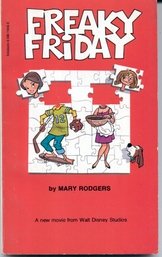
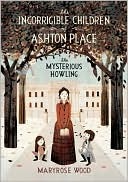
My third daughter is an absolutely voracious reader and has been wolfing down books this summer in particular. We’ve had fun with a few in particular: I read Freaky Friday, one of my favorites from when I was a pre-teen long ago, aloud to all of the girls who wanted to listen some months back, and we all laughed and chortled and chuckled together at all the funny things that happened (Boris and his beetloaf … funny stuff, man). This past month or so, this third girl and I have been reading the very charming and quotable books about the Incorrigible Children of Ashton Place by Maryrose Wood. I am of the opinion that read-alouds are most fun when they provide many opportunities for giggling and lines to quote later as a shared experience. Daddy has no idea what we’re referring to, which is different from all of our shared family movie quotes.

I read Eragon aloud with my oldest when she was probably about 10, and it took us six months to get through. But we enjoyed it. The movie version came out not long after, and she and I joined together in great distress and disgust when the movie version was absolutely horrible. What a shame!

I admit that though I do have children of varying ages, picture books up through teen and adult books, and I do a ton of reading on my own, young adult books aren’t my specialty. I have lots of blogger friends who really know a LOT about the middle-grade and young adult genre. So I think my last point here is: what do you think qualifies as great read-aloud material for middle readers, in particular? I think that something of a modest length and with some silliness is extra handy. More “serious” material is fine as well, but the silly factor makes it lots of fun. Any ideas?

Favorite teen books, part 2

So since I wrote about my take on NPR’s top-100 young adult books, I realized I had a lot more to say on the topic. First, I felt that there were a fair number of books on the list that were just so-so and wouldn’t really stand up in 20 years or more to be “classics.” So then I thought, “Hm. So what books are missing from this list that should be on it?” And I realized, looking through all of the books I’ve kept and lugged around with me through thousands of miles of moves and lots of years, that I didn’t really have a lot to add to the list, for a few reasons. First, some of the books I remember loving and reading over and over were actually more like middle-grade books, rather than for older teens. Second, I’d like to see more Madeleine L’Engle books on the NPR list, but at least her teen books were represented with A Ring of Endless Light. (The wonderful series that starts with A Wrinkle in Time, of course, is really more aimed at middle readers.) Third, I just couldn’t find any other books I’ve read and enjoyed that weren’t on the list already or were really what I’d call classics. Yes, there have been some great books written in the past 25 years or so since I wasn’t a “young adult” myself, but I think most of what I have read more recently as an adult has gotten represented. Honestly, though, I think the list would be better if it were just a “top 50.”

So I’m going to write today just a bit about some of the books that I did absolutely adore as a younger reader, books I either kept from buying them way back when or that I bought later on to have copies of in my home library. They’ll fit into a few different categories, but I’ll just kind of lop them together in this post.


  1. Middle-grade books I adored and read and re-read: These are easy: The Chronicles of Narnia by C.S. Lewis and A Wrinkle in Time and sequels by Madeleine L’Engle. I have no idea how many times I went back to savor these. I will say now as an adult that I have read some with my daughters, and I still enjoy them for various reasons but am not quite as captivated. I’m guessing that has to do a little with the age level. Susan Cooper’s The Dark Is Rising sequence is so complex in its world and how it is written that it can be read by middle readers but still is great for older readers, and it’s held up well for me as an adult. I don’t think that this means anything negative about the middle-grade books I loved so much back then, but they were, I think, really well-aimed at those ages, rather than being for a broader age group. But others may very well disagree with me on that opinion.
  2. On to L’Engle’s teen books: as I just mentioned, there is a definite difference in target audience between A Wrinkle in Time and the Austin family books, even though there are connections in characters who appear in the two major sets of books she’s written (about the Murrays and Austins). The characters are different ages, as are the target readers, and have different kinds of struggles and experiences because of their ages. I love how I was able to grow up with Madeleine L’Engle’s characters, moving from middle reader to teen.
  3. On teen books that were my absolutely most-read: thank you, Beverly Cleary. She, like L’Engle, wrote books for a variety of ages of young readers, and I grew up with her characters as well. I enjoyed Ramona and then went on to gobble up her teen romance stories. I really could have added in Cleary’s teen romances to the great clean romance list I contributed to and wrote about here. I read two books countless times: Fifteen and The Luckiest Girl. They are so well-worn they’re soft to the touch. My 16-year-old, who has kind of grown out of gobbling up books the past few years, still has read and re-read Fifteen almost as many times as I read it (at least 15). Some teens today might think that the stories are dated, and while it’s true they are most definitely set in a “simpler” time, they are still swoon-worthy and absolutely delightful. They’re clean, romantic and absolutely true. I wish more books today were as good as those.

And there you have it. I may revisit the topic and talk more about middle-grade books in the future, but for now this is how I view some of my old faves.

More of my top picks: best gothic tales

There are probably some differing opinions out there on what exactly “gothic literature” entails. For my purposes, I’m just going to say it’s fiction that has a setting that’s at least in part dark and possibly supernatural (or just hints at it or seems like it), is infused with a sense of foreboding, and has a mystery or secret that is revealed by the end. I am a big fan of the surprise twist, and I LOVE to be caught off-guard at the end, completely unable to guess the twist. If I can guess, the book just isn’t fun for me.

So I have found myself to be enamored by really well-spun gothic stories. I suppose this shouldn’t be a surprise to me now, considering how much I devoured all of Edgar Allan Poe’s tales when I was a teen. Now, though, I enjoy stories that are a bit less macabre and more about the very well-kept secret. When these secrets are deeply buried in an old noble family somewhere in England living in a crumbling-down mansion, all the better.

So, without further ado, here are a few of my favorite gothic novels.

  • Rebecca, by Daphne DuMaurier. I read this classic book sometime in my late teens, I think, and it got me hooked on the twist.
  • The Thirteenth Tale, by Diane Setterfield. A friend handed this to me to read, and I feel eternally indebted to her. What an amazing story! I don’t know if Setterfield will ever write another book, but if she doesn’t, that will be fine because this is a masterpiece of gothic literature. A mysterious, reclusive writer with a strange past finally decides to tell the truth about her life, and it is full of some shocking twists. Weird old family in old house? Check. Buried secrets? Check, check, check. It just doesn’t get better than this.
  • The Shadow of the Wind, by Carlos Ruiz Zafón. I came across this a few years after reading The Thirteenth Tale, and I found this was probably came in right behind that in pure awe and satisfaction. Another masterpiece. Zafón has written two novels in a series after this, continuing and enlarging upon the story and the setting, and they’ve been pretty good, but honestly not the triumph that the first was. Again, the setting is the past, and the story is permeated with mystery hanging over it like a mist. The twist is great, I loved how it all came together, and the writing is superb.
  • The Forgotten Garden, by Kate Morton. Morton has now written a number of really fine gothic stories, all set in England in old estates, with buried family secrets. The first, The House at Riverton, was a good example, but her second really nailed it. I am glad that she’s managed to keep writing. I don’t think any of her books is quite as amazing as Diane Setterfield’s one great story, but they’re all quite good, and I am just grateful she’s providing more stories for me to relish.
  • The Historian, by Elizabeth Kostova. Since this story is about Dracula, this could almost be considered a horror tale, but it really has more elements of what I consider gothic. That infamous vampire rarely appears in the book, and the story revolves around some historians who are trying to hunt him down in the mostly present day. The story takes readers on a wonderful and intense journey around the globe, into rooms filled with old books and documents, slowly revealing information and ending in a satisfying manner. I savored the journey and was sad when it was over. I was also sad when Kostova wrote another book and it wasn’t at all what I had hoped in tone or story (and THAT is probably why Diane Setterfield has turned Harper Lee on us).

What do you think? What other great gothic tales (my definition) am I missing?

Best young adult novels?

So NPR just released the results of a poll it conducted asking people to nominate and then vote on finalists in the category of teen novels. I did see the poll soon enough to vote on the finalists. I found that I was a little surprised at some of the books that were nominated enough to make it to a finalists list of 235 titles. There were some fun books on there, but quite a few weren’t ones I would consider truly excellent or memorable. I do think that this final 100 is fairly good and mostly reflects books that will stand the test of time.

Some of my favorites on the top 100 are these:

  • Harry Potter. No question. These books were popular for a very good reason. Not only was the whole series complex, detailed and full of wonderful twists and turns, but it had great characters, an unforgettable world to visit and revisit, and cleverness and wit galore.
  • The Book Thief. Yes, it got a lot of attention and word-of-mouth when it was published a few years back, and rightly so. Many books have been written about the Holocaust, but this was one that was relatable for teen readers as well as adults and was beautifully rendered, powerfully affecting and vividly evocative.
  • The Giver series. I suppose that this was almost an early entry in the now-burgeoning sub-category of dystopian novels. But each of the novels in the series got my attention and made me think about the cost of “equality” and “perfection.”

  • His Dark Materials series. When I finished the first book in this series, I was kind of scratching my head and not sure if I wanted to continue. But I’m so glad I forged on. The series was just so imaginative and deeply thought-provoking I wished I could just continue to experience it. And that is the hallmark of a great book: it creates a land you simply don’t want to leave.
  • The Dark Is Rising sequence. A never-to-be-forgotten school librarian introduced me to these books when I was only nine years old. I will forever be grateful. Even on multiple readings as an adult, I am still in awe at how well-written these books are and how complex. This is one of the best epics of good versus evil, light versus dark, EVER. Magic, Arthur and Merlin, the old hills in Wales … it’s all steeped in British legend.
  • Flowers for Algernon. Love, love, love this book. It can make me cry every time, too. What a lovely story about intelligence and humanity and gaining new skills and a new life and then losing them.

  • The Mortal Instruments and the Infernal Devices series. I absolutely adore these books by Cassandra Clare. When I found the first set a few years ago, I devoured them in no time flat. The story is good, but the characters and their dialogue and interactions are the best part. I loved how Clare could make me laugh out loud, and the romance between the two main characters is truly sizzling.
  • Anna and the French Kiss. I don’t know how much this completely compares to the others on my list here for utter staying power and memorability in, say, 20 years from now, but it absolutely delighted me. It’s a very fun teen romance.
  • If I Stay. Wow, what a great book. I loved the absolute real-ness of the whole story and its ability to make me root for the characters. The main character has such a beautiful relationship with her family members. I loved that the family unit was intact and that the parents and children loved each other so much. But at the same time, the main character has to decide if she should go with them or stay with her life and her boyfriend, who is a fine young man.
  • Feed. I really didn’t like the HUGE amount of strong language in this book. For me, it was really distracting. But the story is a really fine tale to get teens thinking, no question, about the amount of electronic interaction they have in their worlds. How far will we go as we allow electronics to become literally embedded in our lives?
  • The Hunger Games series. Yes, these are almost so ridiculously popular right now it seems silly to comment on them. But they are good books, and no doubt will become new classics.
  • A Ring of Endless Light. I read all of the Madeleine L’Engle books I could get my hands on when I was a teen. I will have to write about L’Engle in another post sometime. I just feel bad she didn’t get better represented on this list. She was amazing.
  • The Goose Girl. OK, I haven’t read this one. I must change that. I have read about five other Shannon Hale books, and I think she is an amazingly talented writer. She writes with a beautiful, lyrical style in the “serious” books, and she’s just got a great sense of humor in her lighter ones.

A few I thought were good but I don’t think will necessarily stand out from the crowd given a few years:

  • Divergent series. I did enjoy the first book, but I haven’t even felt compelled to read the second one yet. I may or may not get around to it.
  • Vampire Academy? Bloodlines? Wha? I don’t think so. I only think it’s on here because it and a bunch of other similar books are riding the popularity coattails of Twilight. If I’m wrong, please tell me I must read these and why. Same goes for House of Night series. Coattails.
  • Sarah Dessen books Just Listen, Along for the Ride, and The Truth About Forever AND This Lullaby. Wow. Four whole books. Eh. I enjoyed reading Along for the Ride, and I wrote that it was good, but apparently it wasn’t great enough for me to want to rush out and read more, and now I barely remember it.

And then there are a few others that are kind of in the middle for me. I did enjoy the Shiver series by Maggie Stiefvater, but I don’t know if I’d call it among the 100 best. Hm. Same goes for Delirium. I admit I eagerly await the third book after finishing the second installment, but we’ll have to wait and see if it should also be among the top 100. I would probably put Uglies as a single book in the top 100 for sure, but as much as I really liked that book, I liked the series less and less as it went along. I just didn’t like the direction it ended up taking. I also read Before I Fall and Unwind, which were thought-provoking in their own ways, but I don’t know if they’d get top billing. At the same time, though, I haven’t read any other Neal Shusterman, but I hear he is quite good, so he does probably merit a spot in the top list. As for the Gemma Doyle trilogy, I read the first book and was only mildly interested. Never read the rest.

I may very well need to make this into a series of reflections and think about some books I’d add onto the list if it were mine. But that is going to be for another post and another day.