Guilt and mothering: like peanut butter and jelly

So Mother’s Day in the United States has just passed, a day in which millions of women received handmade cards with paint-stamped body parts in shapes of hearts and various forms of breakfast, either in bed or at the table. It was a day in which mothers smiled and were gracious about the efforts of their young progeny, same as pretty much every other day of the year.

It was also a day that induced or amplified all kinds of emotions in women of all ages and stages of life, ones who have children and those who do not. So let me address one of those emotions that tends to rise to the surface yet again for some mothers on the second Sunday in May: guilt.
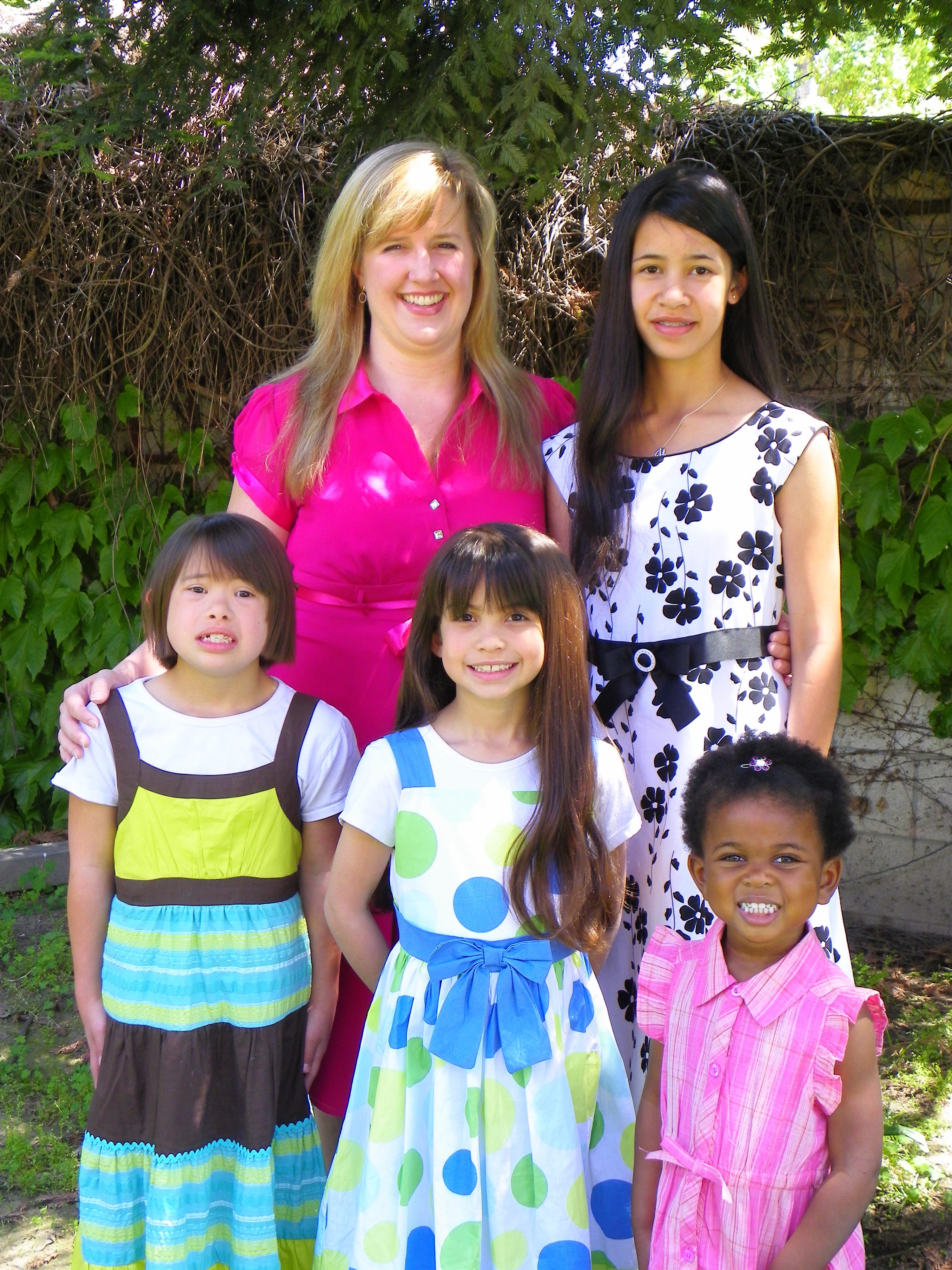
Yep, one of my obligatory Mother's Day photos, in which at least one kid is making a funny face.
Yep, one of my obligatory Mother’s Day photos, in which at least one kid is making a funny face.

Here’s one scenario of feelings that can play out that Sunday, particularly if one attends church, where people stand at the pulpit and talk about their angel mothers: I am not good enough. As a mother, I do not sound at all like the description often made of those amazing moms whose stories go down in the history books of being completely self-sacrificing, completely loving and giving, completely kind and always up for listening to a child’s ramblings, no matter how constant or stream-of-consciousness they may be. These women never seem to snap, never seem to request a break just for some peace and quiet, never ask for “me” time, never tell a kid to come back later.

If, for some reason, a woman doesn’t hear those kinds of talks or they just don’t bother her, then there’s still the rest of the day to barrel through, which invariably also means her husband and children are eager to make her happy. If you’re like me, someone who can get overloaded and overstimulated seemingly far too easily, and you just made a T-shirt quilt for the high school band director so her senior daughter and fellow seniors could have a personalized gift to give him before graduation, and you hosted a before-prom dinner for 16 students at her house the night before Mother’s Day (just as two examples), you probably just want to be left alone for an afternoon and evening to sleep and collect your thoughts again (and gear up for more events and to-do-list items begging for your attention). But your children and husband know it is their DUTY to MAKE YOU HAPPY that day. To them, just leaving you alone and letting you sleep, etc., translates into profound failure on their part, because MAKING YOU HAPPY means being with you every moment, attending to your every supposed need and loving on you.

So as a mother, you’re stuck. Either you take the needed time to just be alone and manage to rest up enough so you can forge on with your selfless mothering duties for the rest of the week, month, year, and lifetime, for all those other days for which you are supposedly celebrated and venerated on the one Sunday, OR you suck it up and spend time with the kiddos doing things they enjoy because they think it’s stuff you enjoy and that will make them happy.

Let’s just say that mothering guilt will inevitably occur. No matter what, you’re back at that familiar rock and hard place.

Let’s just posit this idea: women generally are and want to be selfless when it comes to their families, except for those women who truly are just bad mothers (they do exist, you know). They do make sacrifices, some seemingly bigger or more story-worthy than others, at different levels that are unique and personal and necessary for each (some even sacrifice too much, honestly, more than is good for their own mental and emotional health). So the reality is that there’s going to be at least some level of guilt on the day they’re celebrated, at some moment or hour during that day. There’s going to be guilt because there’s guilt 365 days a year; there are just a few new twists on it on Mother’s Day, in addition to the regular ol’ garden-variety guilt.

How about we just declare the day “Mom, don’t feel guilty” day? How about we ban guilt for one day? It’s a bold and wacky idea, but maybe we can give it a try. It might be very liberating.

Financial advice to a kid who’s getting ready to be an adult

In talking about education, and many of public education’s failings, the notion that kids simply aren’t taught about real-world, practical personal finance has come up a few times. I know people who are really great at handling money, regardless of how much they make. They make wise decisions in budgeting, spending, and saving, and they feel secure. Then I know plenty of others who really don’t know how to handle money, and it’s cost them, literally. The problem is usually this: no one ever taught them how to do it right. I don’t think many people really WANT to be “bad” at handling their money, but they just didn’t learn basic skills and rules.

I was blessed to be taught by my parents about wisely using my resources. For instance, I am a really great shopper (just ask me about all the dresses and other clothes I’ve gotten for myself and my kids at top-notch stores for totally cheap!). I also have been very careful going into any situation that might require me to take out a loan. My husband and I are now on our third house, and I think we’ve done pretty well each time we’ve purchased a home (with a mortgage, mind you). I don’t follow Dave Ramsay; I do respect the advice he gives when I read it and am thrilled he is a source of basic information for many who just didn’t know any better up until they came across him.

dollar light bulbSo I’ve been working over the years to make sure I consistently talk to my girls about money, with appropriate information at appropriate ages. With the oldest in high school, I’ve definitely given her very specific information and directions. I’ve talked to her about how banks work, about how loans and interest work. I’ve shown her how I budget for the month and how I pay bills. I am not sure how much she remembers, so I need to follow up again. But here I’m going to share a few of the top pieces of advice I hammer home to her.

  1. Learn how to make a budget, at least a fairly simple one. First, figure out what you have to spend monthly or yearly or at other regular intervals, and then break those things down to per-month units. If you don’t know how much you spend on food or incidentals or entertainment, keep a little booklet and write down every time you spend in whatever category you want to track. After a month (one that’s an “average” one, ideally, and try two, even, to get a better idea), tally it up. Enter that into your budget. You can use just a list in a Word program; you can use Excel or any other kind of software that makes you happy. You can have a paper list in a file folder. Doesn’t matter the type; just do it, whatever you like the best. And then — ONLY SPEND WHAT’S IN THE BUDGET (or less).
  2. Do not get a loan for anything you don’t absolutely need. Houses, cars, and education qualify. Pretty much everything else does not. Whenever someone gives you the option of paying for something on an installment plan, just firmly say “no, thanks.” If an appliance is more than you can afford with cash you’ve saved for a certain amount of time, for example, buy a simpler one or start with a used one. When I was first in a rental townhouse that provided washer/dryer hookups, for instance, I was thrilled just to not have to go to a laundromat. But I didn’t go and buy a new washer and dryer. I bought used ones at a local store that sold used appliances, and they worked great. In fact, I had used washer/dryers for probably a decade.
  3. Going along with point 2, if you’re buying a big-ticket item, do not allow the salesperson to give you numbers broken down according to “installment thinking.” If you have the money to pay for the item up-front, just say so and buy it. If you do need a loan, negotiate on the full price of the item (let’s think “used car” here, because that’s an acceptable option for something you can buy with a loan) and get the lowest possible interest rate. Shop around for this: there are plenty of options, like local credit unions, your bank, or even sometimes the credit available through the sales place (car dealership, for instance). Don’t let the person sweet-talk you by using monthly payment numbers. Tell him firmly you want interest rate deals and settle on the price of the item. If after all that, you find that the monthly payment is too much, you need to get a different car, one that costs less. Sorry if it has to be kind of a junker.
  4. Used cars are almost always the best deal. Even if you’re far enough along in your adult financial life that you have cash to pay for a car up-front, buying one that’s just a year old will likely be your best bet over the long haul. Homes generally hold their value or go up in value. You can buy one for $100,000 and sell it later for a profit, especially if you’re in it for a long time and there’s no recession. Cars automatically lose their value. New cars lose value the moment you drive them home. You can’t turn around and sell a car you bought new on the lot a month later for the price you paid for it, or even close. You’ll lose a lot.
  5. Don’t feel you have to have the newest of anything, particularly technology. Like cars, which depreciate immediately, brand-new technology immediately is eclipsed by better models. You can shop around and compare and figure out just what you need in a new TV or computer, and a month later you’ll wish you’d waited because technology evolves that quickly. But it’s OK. You don’t NEED those improvements. In fact, you’ll be fine without them for a good number of years. Unless your paid work is in the technology field, you don’t need to have or use the latest stuff at home.
  6. Watching money pile up in savings is a thrill. Spending can certainly be a thrill, too. But consciously socking away money you could have spent on something you didn’t need, for a particular purpose, whether it’s saving for something fun like a vacation or something necessary like a newer, better-running car or a newer appliance, is long-term satisfying. Nowadays, it’s easy to just go online at home and transfer money you were thinking about spending from your checking account into savings. And just enjoy watching your own dollars do a little work for you. That’s where interest comes in. …
  7. Interest can be your worst enemy. Or it can do your bidding. Unfortunately, the sad truth is that today, you don’t get paid much in interest for savings accounts. But at least you’re letting it work for you rather than being its slave. Loans always come with interest attached (unless you’re buying a brand-new car with a deal of 0% interest, which might sometimes be OK, but in general let’s stick with used, shall we?). And that interest keeps building the longer you have the loan, the longer you draw it out by paying the bare minimum or as little as possible. The concept of “compound interest” is essentially this: over time, a $1000 loan (let’s say) accrues interest, which then is added on to the original $1000, and then interest builds again over that sum that’s greater than the original. If you pay the tiniest amount (this is the worst when it comes to credit cards or consumer loans such as those at stores rather than banks), your $1000 will only decrease by that small amount you pay, even while interest is adding back onto it. Then interest is calculated on that. And on that bigger number. And so on. (Note that I am not a financial expert and am not trying to explain this from that kind of viewpoint. This is just basic advice.)
  8. Make sure you learn how to balance a checkbook/checking account/savings account. Whenever you write a check or take money out of the account by debit card (which are linked to checking accounts, by the way, and are not like credit cards except that they are the same size and shape) or transfer (hopefully to savings!!), WRITE IT DOWN and do the math. Subtract right then and there, or do it every evening if you make purchases/pay bills regularly during the day. If you get a deposit, then add! (Even better!) But then every month you need to do the double-checking. Your bank will give you a statement. Make sure you check off your own register, comparing it with the items on the bank’s statement. Sometimes you might have forgotten to write something down, you might have made a math error, or the bank might actually have made a mistake. So check as soon as you get the statement and compare and “balance.” You can avoid a lot of problems this way.
  9. Buy used for big items when you’re getting started. But in certain cases, when you have to buy something new, buy a good-quality (even more expensive) item. Then shop for a deal. Certain items are cheaper over the long run, when you have a little more money available in your budget, if you get a higher quality item now and then you won’t have to spend again to replace the item too soon. Shoes work this way; some kitchen items and technology work this way. It might be worth paying double or at least 50% more to get a really good-quality item that will last and perform better in the meantime than a cheaper one that is less well made and will need to be replaced sooner (and more frequently).
  10. The shopping strategy of buying higher quality goes along with this advice that might shock a lot of people: it is often cheaper to shop at nicer department stores that run regular sales than at cheaper all-purpose stores that don’t run sales. For example, I am a huge fan of Macy’s. It’s long been my go-to store for clothing and shoes. I’ve been able to come out of Macy’s with some nice-quality dresses or shirts for a quarter or less of their original “regular” price. (That leads to another note: most “regular” prices are just listed as a way for people to think they’re getting a great deal when the item is discounted, so don’t go too crazy.) What’s more, the final price is far less than I would have paid for a similar item at a store like Target or even discounters like Marshall’s or Ross. Sure, the latter stores are “always” discounted, but if you pay attention to sales, you can get a nicer item that’s not been run through the mill or was destined for a discounter from the beginning. And you have a much more pleasant shopping environment! 🙂 (Let me also note that I very rarely shop outlet stores for this very reason: the “discounts” aren’t any better than what you’d get by good shopping at the regular store, and often the products have never actually been in the real store; they’ve been made cut-rate specifically to sell at outlets.)
  11. When buying any item, keep track of the regular, everyday prices for things you buy on a regular basis (I just know in my head the usual prices for everything I buy regularly, but if you can’t do this, write it down!). This mostly applies to food and toiletries and cleaning supplies. But it works for clothes (note No. 10 above). This is important because when you’re shopping and see something you use a lot and can stock up on (pantry items, cleaning supplies, for instance) on sale and discounted significantly, you already know it’s a good deal and can buy a bunch and save yourself money in the longer run. I find this is far simpler than keeping track of coupons. Most coupons anymore don’t apply to my regular purchases, so I end up clipping very few coupons from the newspaper and mailed flyers.
  12. Credit cards aren’t necessarily bad. But this really depends on your personality. If you know you’re going to go crazy and just spend because it’s easy when you have “plastic,” then don’t use them. If you are pretty careful, though, they’re a valuable tool. They are (somewhat unfortunately, in reference to those who aren’t careful with their use) a vital part of building credit, which is important if you do need to take out a loan (for house or car or education…) in the future. They are also pretty handy for emergencies, traveling, or other situations where you need to pay for something but didn’t expect to need to do so. But don’t let “exceptions to the rule” become the rule and mess up your budget and/or credit. Make sure you budget a certain amount for the items you get regularly and can use a credit card for. Then pay that balance EVERY MONTH IN FULL. I do this. I have a budget with my couple of main credit cards and know I will buy certain things with them (toiletries and cleaning supplies and some food at places like Target and Wal-Mart; gasoline for the cars; online purchases; gifts, etc.). I know what I need to buy and how much I spend monthly on average, and I stick within that. Then, I get points for my purchases, and I can get cash back. I’m not paying any interest but I get extras. I also can keep my check register from being full. I really like simplicity in there. But that’s just me.

Last, when in doubt, ASK FOR HELP! Ask your parents if they’re good at finances. Ask someone you know from school or a church or community group. If you have enough connections, it’s highly likely you can pretty easily find someone who’s willing to give you some input before you make, particularly, a big decision.

Safe, healthy food a must for everyone

I wrote recently about how we as individuals and families need safety nets and support from extended family and society around us. What’s on my mind the most is that of all the issues we as families (and in my case, being the mother and “home manager” of a family of six) face, it’s impossible to fix them all or deal with them all on our own.

As just one example, I have many concerns about public education, but I can’t change them alone; I can only try to speak up when I can and get involved in the big picture (higher levels) in what are fairly limited ways at this stage of life. I also have decided I am not capable (mentally, mostly) of home-schooling my kids, so I send them to public school and try to be involved and aware at the school level.

Health is another big topic. Health care and health coverage systems are a part of that. I’ve written a little about that and found one book really a great overview and resource: Catastrophic Care, by David Goldhill. Another issue we face that is part of our health is that of our food supply. Obesity in the U.S. and in other developed nations is a huge problem, and one I’ll admit I personally struggle with. (And might I point out that I exercise daily and cook healthy meals at home almost daily, and I’m STILL significantly overweight. What about all those out there who don’t exercise at all, who don’t cook, who eat junk food, etc.?) Yes, there are some “obvious” issues, such as the easy availability of food that’s bad for us, sedentary habits, and the heavy marketing and research done by large food corporations (just read Salt, Sugar, Fat by Michael Moss: Yikes!). But there are also more insidious things going on with our food supply that are affecting everyone: hormones and antibiotics and other fatteners being fed to the animals that we eat for meat, pesticides, and even sugar substitutes (just to get a taste of these problems, read a recent article on Salon).

If we’re having a hard time as a country educating individuals and families about healthier ways to eat, just putting together balanced meals at home with vegetables and lean proteins, etc., as well as getting people to just move more, it’s going to be a pretty hard sell to get everyone to eat organic and/or locally produced food, including dairy and meat, which either costs more money and/or takes an extra trip (or two or three), to get to farmers markets or specialty stores. Again, I consider myself to have the motivation, interest, and time (as well as a decent income) to be able to shop well and cook well on the first count. But I admit I balk at spending three times or more the amount on produce and meats and dairy to get foods that supposedly come without coatings of pesticides or added hormones or antibiotics, though that would certainly be ideal.

I'm working on being more involved in our backyard garden and learning more about it. This way, we get fresh, healthy food we like right from our own yard.
I’m working on being more involved in our backyard garden and learning more about it. This way, we get fresh, healthy food we like right from our own yard.

There are possibly some alternatives to the above pricey/time-consuming options for me and others who might have the time and at least a little extra cash to put towards them, such as growing your own food (if you have the time, the space, the know-how, etc.), contributing to raising a community garden, or just shopping local. But these options, again, are ones that are going to work when education efforts get past just the simple things of getting people to eat better, cook, and exercise.

No, this goes back to our society as a whole, including how our government is involved in regulating (or not overseeing) our food supply. It’s becoming more clear and more substantiated that these pesticides, hormones, antibiotics, plastics, etc., are contaminating our food and introducing all kinds of chemical problems into our bodies, making us fatter and just less healthy, maybe causing cancer. But government is slow to regulate and corporations are certainly not going to change of their own accord unless we as consumers really get educated and speak up with letters/phone calls to these companies or at the very least speak with our wallets by not buying their products. But that latter option leads again to this issue: what are average Americans going to buy if most of the big food producers aren’t providing healthy food? Most can’t afford organic or specialty stores.

As a mom and home manager, I am daunted and sometimes overwhelmed by all that is wrong and all I have to “protect” my family from, all that I need to “fix” or address in some way. What about all those others who don’t have even the luxuries of time and some extra money that I have? I feel a responsibility to do all I can not just to make life better for my own family, but for them. But I don’t have THAT much time or extra cash.

Yes, government can and must do better. Companies can and MUST do better to be responsible to consumers. Those with greater wealth and time to do good can do better to help those who don’t have what they have. Each of us can do a little something to spread the word, to raise awareness about whatever issues we’re facing, and to just speak up and let our voices be heard: voice our discontent, ask for specific things to be changed and improved. It comes back to my starfish post: I can’t save everyone, but by doing a few small things, they might add up to saving at least a few others. Give back by doing just a little, just whatever you can do.

Safety nets and support systems

A few weeks ago, an outspoken acquaintance was ranting about public education, among other social issues. The married man in his mid-30s (who has no children, mind you) said, “Anyone who sends their kids to public school is a neglectful parent.” Bold — but undeniably hyperbolic — words. And while I appreciated the kernels of insight (far) below them, with many frustrations of my own about public education, I had to disagree for a number of reasons, aside from the obvious point that there are plenty of us very good parents who still are sending our kids to public schools.

Then I was talking with my mom about my grandma, who’s 97 and in probably better health than I’m in, and living in a nice retirement community. She recently fell a couple of times and got an infection, so she spent a few days in the hospital and now is in transitional care and needing a bit more attention, rather than being pretty much independent. My mom has been with her there (visiting from the town she lives in about a 6-hour drive away) and has been outraged at the lack of attentive care she’s been witnessing — and this is with my mom there near her, at a highly ranked facility, and my grandma has very good insurance and financing. We’re not even talking about a not-so-great facility paid for by Medicare.

I won’t go into all my concerns about public education, about health care, about elder care. They’re each deserving of thousands and thousands of words. What strikes me, though, is that as a 40-something woman who has children at home, one daughter about to attend college, and a mother who’s retired and a grandma who’s quite old, I am in that spot of life where there are plenty of people to worry about and take care of on some level. And as much as I’d love to be the kind of person who could home-school my kids, I’m just not. Plus, I still want them to have the opportunities for learning about the world that exist outside my home. And I wish my mom and grandma could live with (or nearer to) me and I could help watch out for them.

We all need safety nets.

Here’s the thing: none of us in our society today is capable of doing it all. In fact, no one ever has been able to “do it all” as we see it in our contemporary society. We have so many opportunities for self-actualization and fulfillment (which can be “bad” or “good,” depending on to what lengths we go to achieve them) and for involvement in the world around us today. But we depend on our public-sector system to provide certain services to take care of our wide and varied needs, like education and health care. Decades ago, extended families lived either in one home or very close by, and they worked together, sharing all the duties. Communities were truly communal; everyone did something to take care of someone else, essentially. Today, extended families are often distant. My mother is 2000 miles away from me, as well as most of my siblings. It’s my job and my husband’s to take care of my children; he provides most of the money from his 40-hour-a-week job to buy what we need, and I carry out many of the functions at home (another blog post entirely, too…). I feel we’re actually blessed to be able to have that setup (I am pleased with it, let’s make a note of that, too); I have flexibility to be able to be there for my girls when they need me throughout the day and to be involved in educational and extracurricular activities. I also am able to pursue some of my own interests, which makes me feel “me” and better able to take care of my family.

“It takes a village” has now become a bit of a trope, but it’s still true. Individuals need systems around them to allow them to live and thrive. Nuclear families best provide individuals with what they need, and extended families best support nuclear families.

So what’s wrong now? I am positive much of it is the breakdown of nuclear families; we have so many single-parent families today. Extended families are just as broken in many respects; some aren’t broken, just distant because of necessity. The basic solution is twofold: do all we can as a society to support the nuclear family, helping and encouraging the formation and permanency of families, and then to make sure the public-sector services are good and dependable. Everyone, every family, needs to know that education is well funded and well run. And families who are responsible for their elder members need to know they will be supported in those vital endeavors as well.

I’m not “for” government running everything. I am “for” programs that will provide help to families, who are the backbone of our society. I am “for” making sure there are safety nets and support systems in place, not to replace the work of families, but to help them do their work better. Because if our families are struggling, our whole society is in a real pickle.

I will not admonish you to ‘enjoy this stage’

I think one of the worst things to hear as a parent, at least of young children and definitely of kids still at home, is “Enjoy this stage: they’re going to grow up before you know it!” Honestly, any unsolicited advice or “pseudo-advice,” which is what I’d call this admonishment, is generally unwelcome. Adjusting to parenting is hard enough — finding your own groove, your own way of handling all the changes, all the individual factors that combine to make your parenting experience unique in some ways — that getting told how to do better, or, worse, how to “think” or “feel” better about it, is a tough pill to swallow. You pretty much just wanna smack the well-intended but not-thinking person who dared to say it, perhaps with a squishy used diaper (OK, this is my reaction when I get ridiculously tired and cranky: I tend to overlook how people really can say things in well-meaning ways). Here’s my advice to improve that advice: be encouraging, give specific tips you’ve found useful, and provide a meal or babysitting if you really wanna make ’em smile!

Here’s what I know after 18 years of being a mom and being still in the middle of raising four daughters: parenting is tough. It’s physically and mentally and emotionally draining. It takes everything that’s in you and more. It makes you double- and triple-question yourself. And each stage of raising kids has its own set of challenges that exhaust your reserves (or try to) in various ways.

But I have come to appreciate that each parent, thanks to his or her particular backgrounds and skills, may be better at, more suited to, or at least enjoy certain stages more than others. I am pretty sure I was not a natural at parenting babies and toddlers, although by the time I got to my third, I was better prepared and, thus, more interested in it and wanting to “enjoy” it, “savor” it, more (as much as is possible). But with my first, who was honestly a very needy, demanding baby and gave me not a second to myself, to gather my thoughts or even shower, without fussing for me, I was always on edge. Tired is not an adequate adjective to describe how it feels to take care of a newborn in any circumstance, anyway. (This is why I reiterate: do NOT tell the mom or dad of a newborn to “just relax and enjoy it.” Enjoyment requires a level of consciousness that is precluded by the exhaustion that fogs up the brain and life in general. One can just catch snippets of enjoyment.) I did enjoy my subsequent babies more because I knew a little better what I was doing and they weren’t as demanding, naturally; plus, I had other kids by then to help with them. But I still just couldn’t dive in and fully enjoy because, like I said, that requires a lack of haziness.

What I have come to enjoy so far are the school years, in some small part because I generally get a full night’s sleep every night. Mostly, though, I love to teach my kids and help them learn, and read with them (and since I love reading, I must admit I’d rather read a book that at least has a rudimentary PLOT, rather than a long selection of letters or numbers, I don’t care how adorably illustrated and brightly colored those letters may be). I also like having them be gone for part of the day, so I can have a little time to gather my thoughts, be myself, and get some things done without their assistance or accompaniment. Yes. I admit that. When they are then home I can really have more fun with them. I like teaching them as part of our everyday life, not as a “lesson.” I chatted with my nearly-12-year-old last night about mathematics, physics, chemistry and biology, including my interest in subatomic particles and my desire to eventually make time to stop at the (fairly close-by to me) Lawrence Livermore lab (ooh… particle acceleration!). I mean, really, who wouldn’t be excited by the tiniest, unobservable pieces of matter being slung around inside a tube for a mile to see what they’ll do?

My girls are just great fun.

I found myself grateful yesterday by the simple fact that I could run inside the library for a couple of minutes and tell the same nearly-12-year-old that, yes, since she has a good stack of books for the moment, she could stay in the locked car and (probably read while doing so) wait for me. You can’t do that with littler ones. I am grateful for this stage of parenting, with a daughter who’s about to graduate high school (but hasn’t yet) and younger ones down to a nearly-7-year-old who can all open and close the car doors, buckle and unbuckle themselves and get in and out themselves. They can walk with me in the store rather than have to be stuck in a cart (although it’s still generally preferable, because it’s faster and quieter, for me to shop at Target or the grocery store by myself). They’re all potty-trained and can give themselves baths and do all the other self-care. They can even prepare food for themselves, at various levels. Yep, I’m glad to be past the stage where I have to do every detail to keep them alive and healthy. Now it’s more fine-tuning and the heftier matter of getting them properly educated and prepared for the world. It’s daunting, but it’s a stage I mostly enjoy.

I have friends who adore when their children are out of school and can pursue all kinds of things; I have friends who are/were amazing in all the cute projects they did with their toddlers and preschoolers. I know some amazing grandparents. But I no longer feel bad about not having been more like them, for instance, when my kids were at earlier stages. I am liking where we are now, despite the raging female hormones and completely unfounded crying spells. It’s fun. They’re easier to talk to, to share things with, to joke with. No, I do not treat my kids like “equals” or “friends” in that I do not expect them to be respectful of adults and do what I ask since I’m the parent. But they are so fun and so interesting that I consider them friends now. And isn’t that the greatest thing in the world: to raise your own friends?

Celebrate love on Valentine’s Day and every day

So it’s that time of year that happy couples generally enjoy and singles either ignore or protest. Me, I’ve been married to a pretty great man for more than 20 years, and I’m a celebratory type of person, so I embrace it.

I found myself a bit sad the other day to read a Dear Abby letter in our newspaper from a young woman who’s been with her serious boyfriend for more than 2 years and who is disappointed that he refuses to celebrate the day with her. He says that it’s a trumped-up holiday that exists solely for businesses to make money. And get this, Abby actually told her to leave him alone. She said it’s true about the origins of the holiday, and if she were being pressured to give a present, she’d feel annoyed too. What?!

Here’s my take: pretty much every holiday has become commercialized. Christmas? Hello? It’s a religious holiday that celebrates the birth of the Savior, and its date is set around a pagan holiday. And it’s the biggest merchandizing season of the year. Easter is similarly a religious holiday and has been overtaken by the bunny and baskets full of candy and other gifts. So using the excuse that a holiday’s origins and/or commercialization negates its value ain’t gonna fly.

Excuses aside, here’s what I think is the real crux of the matter: if you love someone, you will do whatever you can (within reason and whatever’s healthy) to make the other person happy. If she enjoys gifts, you’ll get her gifts on special days and even other times for no occasion whatsoever. If he just loves hugs and kisses, you’ll hug and kiss him. If she likes to be told she’s beautiful and smart, you’ll tell her that. And so on. (Just read The Five Love Languages: it’s simple and absolutely true.) You won’t begrudge her what makes her happy.

In our society today, we should celebrate happy relationships and families every chance we get. I am of the conviction that society’s success rests on the backs of successful families. Marriages that endure and are happy are the backbone of those strong families. So just give in and share the love on Valentine’s Day and every other day. It doesn’t have to be expensive, fueling the economy and those “greedy businesses.” I love to celebrate every chance I get because it just makes life sweeter. Celebration at its heart is just gratitude, and every expert says that being more grateful makes us happier.

So today, Feb. 12, as I have for the past 20 years, I celebrate the anniversary of the first kiss I shared with my husband. 21 years ago, we had a date at my apartment, just eating a meat lovers’ pizza from Pizza Hut and watching “The Princess Bride.” And every year on this date, we watch that movie and usually eat pizza. (Small wonder our family quotes so much from it. See the fun we had making mashups of PB and “Star Wars” on a previous post….)

Eat your heart out this year.

If you’re in a relationship, celebrate it. Have fun. Share the love. Do something special. If you’re single, then show gratitude for the successful relationships that are in your life and help make you who you are. Don’t be a love Grinch. Let your heart grow three sizes this holiday.

Silence isn’t emptiness; it’s potential

Ever noticed how uncomfortable silence makes most people? It’s as if any unfilled space is a vacuum they must rush in to fill. People abhor it, indeed.

I’ve come to appreciate silence, those golden but seemingly interminable seconds between what most people consider the “active” moments. Because so much really does happen in those quiet spaces between.

I’ll use a church setting as an example. Sunday School teachers often ask questions, because they’re told that’s part of being a good teacher. Typically, however, they’ll make one of two mistakes: they’ll ask a yes/no question or one with only one short “right answer” that’s so obvious and “easy” that everyone feels silly answering it, or they’ll ask a really great thought-provoking question and then shut down any potential for discussion if no one raises their hand within about three seconds. The best teachers, however, are comfortable with waiting and letting their listeners’ minds work, even as silence descends on the group. If given a moment, participants can really create an invigorating or inspiring (or both) discussion.

Think about time you’ve shared with someone you’re either trying to get to know better or with someone you do know well but with whom you’d like to have a kind of serious or challenging talk. When you ask a question, do you sit patiently and quietly, showing with your facial and body language that you support them and respect them enough to give them some time to think and respond in a way that they’ll feel comfortable with? Or do you rush to reframe or redirect or say, “Oh, never mind” or “Don’t worry about it”?

My oldest daughter and I have talked about how many people tend to talk to us and share things with us. I think it’s because we’re active listeners. We’re comfortable with quiet and that space that is silent but most definitely not empty. We’re interested in what others have to say and don’t always have to respond to give our two cents’ worth. And maybe it’s nice to know that people feel comfortable confiding in us, trusting us with their “secrets.”

I’ve also realized that keeping my mouth shut for an extra minute or two when I might be inclined to respond quickly with an easy answer or snap judgment can yield some surprising results and make me glad I didn’t say anything. Just yesterday, my little 6-year-old, who can easily cause some frustration and annoyance in her older siblings (and parents), said to me, “So, there’s this new girl in my class, and she’s really annoying!” I admit I immediately thought, “Oh, really!? Pot, meet kettle.” But I held my tongue. Then she went on to say, “Yeah, she goes around choking people.” What? (Still not sure what exactly “choking” entails, and we’ve made sure to impress on her that if anyone at school is trying to hurt her, etc., to immediately tell a teacher; my point here is that “annoying” in her mind wasn’t quite the meaning I usually attach to it.) If I had responded what I’d been thinking rather than just continuing to listen, she might not have shared that last vital bit of information that allowed us as parents to teach her something important.

Keeping silent has value and can allow us to learn much we wouldn’t know otherwise. Unfortunately, it’s a skill that we don’t emphasize nearly enough in our culture of nonstop information. Turning off the TV, the computer, the smartphone, and other devices has power; turning off our tongues does as well.

Beyond compare

The past months have just seemed nonstop stressful (well, to be completely honest and accurate, they’ve been nearly-nonstop stressful; I’ve had a few days here and there that weren’t). With the holidays and some big projects wrapped up, I now stand at the beginning of a new year.

While I’m not striving for a “new year, new me” (I cringe every time I see that in any media source the first few weeks of any January), I really have been searching within to figure out what I can do a bit better for myself, so I can feel less stressed even as life is most definitely going to continue to be hectic. After all, I’m launching an adult into the world in mere months, to provide just one example of the life experiences I’m going through. (Giving birth is a big job and one that launches a new person into the world after nine months of gestation; at this stage, I’ve been actively parenting for 18 years to make sure this person can be a full-fledged independent being. It’s exhilarating and all of a sudden terrifying.)

I’ve noted, not for the first time, that I compare myself, my strengths, weaknesses, abilities, energies, visible-to-others “products” (children, writing and editing projects, volunteering efforts), etc., to those of others all the time. Social media is a blessing in many ways, connecting me at least in small part with far-flung friends who bring various gifts into my life, but it can also be a nasty tool for comparison. Day in and day out, I see photos of friends my age who still have the same figure (at least what I can see) they had 20 years ago; I see perfect family portraits; I see kids of these friends who are doing unbelievably impressive things in music or sports. It’s easy to look askance at my own figure, which is now no longer the one I had even a decade ago; to briefly (and, honestly, selfishly) wish I’d put my kids in more activities and lessons so they could do more with their own talents; to wonder why I cannot get just four kids to smile normally all at the same time.

Even worse, I compare my current self, at age 43 years and 8 months, to the self I was (or at least imagined I was, which might be more accurate) a decade or two ago. This body is 50 pounds heavier than it was at those times, when I wore a size-6 dress and had a great figure and pretty, shapely calves. To be honest, my habits aren’t much different. I have exercised an hour every day for 20 years. I have generally eaten healthy. But I now struggle mightily with my weight. (I emotionally eat and always have, and at times it’s worse than others, but it hits me harder now.)

In examining myself, I feel weak, impatient, tired, not nearly as capable as I used to be. I almost felt I had the parenting thing down somewhere in the middle of this 18-year mothering journey I’ve been on so far: I had fewer worries for my girls and felt I’d hit my stride. Now that they’re older and the stakes feel higher somehow, it’s a whole new world and I once again feel inadequate more than I’d like.

I mostly pinpointed maybe 10 years ago the kinds of mental challenges that are my particular “cross to bear” and have been on medication pretty much ever since, have consistently gone to counseling, have tried to stay aware of where I am so I can stay or get balanced. But even with the awareness, the knowing, I am honestly terrible at balancing out my capacity to give and do with what I think I need to do and be. My mental mouth is always bigger than my emotional stomach: I put so much on my plate and live to regret it. (I either metaphorically stuff myself or throw the plate against the wall…)

I guess I feel frustrated with myself because I still somehow don’t get it yet. I don’t feel a whole heck of a lot different, stronger, wiser, than I did when I was younger. I’m just older and tireder and flabbier.

I see people around me who have double the number of kids I do. I see peers who have experienced the death of a child or a spouse, who have gone through cancer, who have what I’d term other real crises or catastrophic events. One part of me thinks when considering those things, “I should feel more appreciative of what I have” (and I really am appreciative and grateful), and another part speaks up: “I can barely handle the challenges I have, and they don’t seem nearly as ‘big’ or ‘bad’ as those others’ challenges. Man, I’m a mess if I fall apart at stupid little things.” I compare my trials to others’ trials and come up feeling inadequate! Now that’s pretty ridiculous.

So that’s where I’m at. At least part of me is an optimist, someone who’s very grateful and happy for all I have and get to experience in life. I readily smile; it truly is the natural and comfortable way for my facial muscles to arrange themselves. Even so, I can easily feel disappointed in myself for just not “getting it,” even after what should be plenty of opportunities to do so.

I guess the truth is that I really have grown stronger and more resilient as life has thrown me the same kinds of trials, just constantly tweaked, over and over. I just can’t tell. It’s not obvious. Maybe if I were able to put my current self back into what I thought was a difficult time 15 or 20 years ago, I’d sail right through without batting an eyelash. But life doesn’t usually give us that kind of opportunity. It keeps upping the ante, tightening the screws, adding on five pounds of weight to the stack as we lift.

Meantime, I keep lifting. I will also keep working on rewording my thoughts and inner instantaneous reactions so I don’t compare my right-now self to my earlier self or anyone else. I suspect I won’t be completely successful in this life, but I’ll edge ever so closer.

I’m that kind of mom

As I pulled the peanut butter muffins from the oven the other night at 9 p.m., I thought, “Now, this is the kind of mom I am.”

Yes, I am that mom who bakes. I’m also the mom who cooks dinner every night. I “spoil” my family a bit by making them breakfast, too. Sometimes.

muffins
Yes, I bake. A lot. Muffins are a breakfast favorite.

But I don’t make breakfast every day, at least on school days. And I do NOT get up early so it can be fresh. No, if I feel like making breakfast on a school day for my husband and kids, I make it the night before so I can sleep in. Muffins will still be tasty but not hot from the oven, guys. Either you eat them cold, or you can have them warm if you give ’em 12 seconds in the microwave.

I’m the kind of mom who does things on my own schedule, at least when it’s possible.

I’m not the kind of mom who does everything I find on Pinterest. It’s fun to browse and get ideas for cool projects or decoration or holidays or … whatever. But I’m not fool enough to think I need to actually DO all that stuff. Honestly, I think Pinterest has just upped the ante yet another 10 notches on what seems to have become competitive parenting.

I am the kind of mom who reads to my kids, or has read to them for much of their young lives. I can’t help it; I love books. I have shelves and shelves of them. There are bookshelves in all the bedrooms, as well as the living room and office.

I’m not the kind who schleps my kids to all kinds of activities and lessons. Two of my girls take piano lessons. And that’s it on the scheduled stuff. My philosophy is the old-school one that holds that kids need plenty of free time to find their own way, be creative, play, figure things out on their own. Plus, I just don’t have the money to pay for gymnastics, dance, etc., and I don’t have time and energy to taxi them around nonstop after 3 p.m. They don’t play organized sports, either. I love to exercise, and I want them to be active, but I admit I’m personally not very good at sports. So, yeah, that’s kind of influenced my parenting. But my girls have plenty of opportunity to play and be active. We have a pool in the back yard, a swingset and slide, a basketball hoop, and other outdoor play stuff.

I’m a mama bear when I need to be. Some things that happen to my kids (at school, primarily) make me instantaneously morph into werebear. But the rest of the time, I try to let them figure things out themselves. I am not going to step in and take care of little details. I don’t have time and energy for that, and they need to learn. Simple as that.

I’m the kind of mom who still spends plenty of time reading. If dinner’s half an hour later than our “usual” time sometimes, so be it. If I’m sitting at the computer writing or doing my freelance editing, they know they will not get a welcoming response if they ask me something that isn’t truly urgent. And it almost never is, believe me.

It’s difficult to have a “life of my own” (which is still a fluid concept, open for definition and tricky to pin down) with four daughters, from a high school senior down to a first-grader. But I certainly do try. If I don’t get some free time, some quiet time, some space to myself to regenerate and let my mind wander and my body rest, I am a prickly, mean mom. So for the happiness of everyone, I need that time to myself. Balancing the right amounts of that is, again, tricky. But they know that I need it and I know they feel the difference in the atmosphere when I haven’t had “me” time.

I’m that kind of mom. I nearly wear myself out for my family much of the time. I’d do whatever is necessary to do what’s best for them. I absolutely ADORE my girls. I am in awe of them. They are beautiful inside and out and amazing and talented and funny and sweet.

But I’m the kind of mom who will never say “my children are my life.”

Right now, of necessity for their well being, their needs take up much of my time and energy, but I am still ME and have a SELF that’s not defined by being their mom. I have a life, and my children are a big part of it. I love that. I chose that. It’s seriously hard work. But I’m the kind of mom who values my individuality and still has goals that don’t directly involve my kids.

Yep, I’m all kinds of things. On some fronts, I’m the kind of mom who “does it all.” On others, I might seem to do too little. But I’m a great kind of mom.

Letter to a child who’s grown up too fast

Dear oldest daughter,

So. Here we are, you with only one semester left of high school. I think this one semester has given me more grief than it has you. For years, I’ve vowed that I would not, would NOT, have specific expectations for you that were based more on my own experiences than on what should be your own. But this last month has certainly tested that vow. First, I was concerned about your unacceptably low grades in one admittedly very difficult class. Then the deadlines came and went for priority admissions to several universities you were interested in, and you hadn’t completed half of what needed to be done. Last was this past week: that challenging class ended with a very low grade, despite my (unsuccessful) efforts to reach the teacher earlier in the semester to ask what you could be doing to make it better. Yep, I admit I ended up coming home on that last day of school after trying to talk to the teacher and your counselor and collapsing into a puddle on my bedroom floor. Of course, it had more to do with all the other things I’ve been doing for you and the rest of my children, but that was the topper.

So I’ve succeeded pretty well in just letting you live your own life, with support and some guidance from me, without me choosing things for you (pretty much) or imposing my own will or interests on your plans. But now that it’s crunch time, it’s been very hard.

Marce, Cathy and baby BI think back to the day I gave birth to you, my first child, and how absolutely at a loss I was for knowing what to do next. I’d successfully navigated a pregnancy, but holding you in my arms left me gaping into a future that I had no idea how to handle. I barely knew what to do with a baby. In photos holding you, I can just see the look in my eyes of “what now?” Luckily, your dad was much more adept with handling baby stuff: changing diapers, swaddling, clipping tiny but sharp little fingernails that had scratched up your delicate face before birth. At least you took to breast-feeding pretty well; I could feed you.

I’ve become much more skilled at taking care of baby and kid stuff over the past 17 1/2 years, and I diapered and fed and toilet-trained three others after you with aplomb. Now, though, I’m feeling that same feeling I haven’t felt in so many years: “what now?” How do I let you loose on the world? How do I balance not taking over details (I would have just been on top of those priority applications, no question, when I was younger; I was a very focused and driven high school student) with giving some gentle guidance and continuing support? As a young woman who’s about to be a legal adult, you have to make your own mistakes and learn from them the way you need to. But as your parent, it’s my job to help you navigate your way, maybe minimize the number of those mistakes a bit, even tweak natural consequences a tad when I can.

Because this is transition time. I’ve always wanted my kids to grow up working hard and being confident and independent, much like my parents did for me. (My mom says it was tough, but there’s no question my sister and brother and I were independent. Rueful chuckle.) I’ve never wanted to step in and take over, to not let you carry much of your own life loads, because then you’d be in shock when you were forced to do that later in life. But it does kill me to see you bloody your knees too badly.

So if someone were to take a photo of me standing next to you right now, I suspect the look in my eyes is going to be that deer-in-the-headlights look again. “What do I do with this fledgling adult?” I have to let you fly more outside the nest, but you’re getting scraped up a bit much lately and I feel it keenly.

So forgive me for my freak-out moments; be patient as I try to navigate a new time in my life of parenting. Try to come to me for help before things get out of control so I can really help. But that’s a lesson I’m still learning too (ask for help; say no; learn your limits), so I guess it’s just the start for you.

We’ll do this together, and we’ll come through with flying colors. In the meantime, though, the colors might be a little muddled.

Love, your adoring and dedicated mom