When books disappoint

Watching a movie or reading a book that’s gotten a whole lot of hype can be problematic because they’re just set up for failure. How many things really, completely, amazingly, wonderfully live up to the expectations? Not many, in my experience.

But still, I read books that have received loads of attention and many glowing reviews. Because sometimes, the book really will meet expectations and I will truly be blown away.
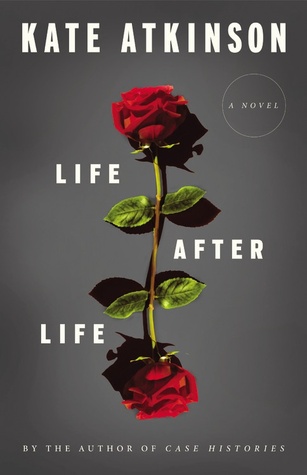
Life After LifeUnfortunately, this was not the case for Kate Atkinson’s newest novel, Life After Life. (Incidentally, one of the earliest bits of information I learned about the book was that two new novels were coming out around the same time with the same title, and both had favorable buzz. I might need to check out the other Life After Life, by Jill McCorkle, and see if I like it any better.) I suppose I should have been warned off it by at least one sign: I had read Atkinson’s also-much-lauded Case Histories and was unimpressed. Eh.

In the case of this book, though, the kudos came in from all kinds of quarters, and the premise of the book was fairly original and intriguing: the main character is born and dies immediately. But then just one little thing changes in an “alternate time line,” one could say, and she lives. And she goes on a few years and dies. But something changes, and she gets to live instead. And on and on. Ursula dies over and over again in all kinds of ways, but then she lives in alternate versions. Cool idea. (To read more about it, check out my full review.)

Sadly, though, the ending left me cold. I felt it just didn’t conclude or bring everything together in a meaningful way, or give me any satisfaction as a reader. I hate that. I complained about it several times after I put the book down, to any family members who would listen. I went to Goodreads and tried to take solace in the few other reviewers who were equally disappointed and wondering why everyone else was giving the book 5 stars. Even then, I still wonder: WHY? Why all the glowing reviews? What did I miss? Please, somebody explain it to me. It’s these kinds of endings that make me feel stupid, that somehow I’m missing an important piece of the puzzle that would make the book meaningful. But no, I felt the same way with this as I did when I finished Cloud Atlas: disappointed, annoyed that there was no apparent Greater Meaning anywhere. Everyone said there was this payoff, this Meaning, this Message. But no, I sure didn’t see it. Right now, I’m just reading something simple, an easy book without any Meaning. That way I won’t be disappointed again. I can’t handle it again quite this soon.
‘Clockwork Princess’ review and thoughts

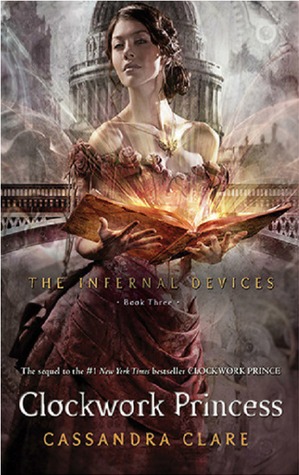
Clockwork PrincessSo I just finished reading Clockwork Princess, the conclusion to the three-book series The Infernal Devices by Cassandra Clare. These books could easily be read by someone who hasn’t read Clare’s The Mortal Instruments series, or they could be savored by those of us who already have developed a taste for the deliciously entertaining world of Shadowhunters.

The brief story: in 1878 New York, a teenage girl is orphaned, and her brother invites her to join him in London. On arriving there, she is taken by women who essentially imprison her in their house and insist that she has special powers. They spend weeks training her to shape-change, and she is astonished to learn that she actually CAN turn into other people. Luckily, she is rescued by a dashing young man named Will, and Tessa is introduced to the world of Shadowhunters, people who are charged with protecting humans from the world of demons and other “Downworlders.” As it turns out, the “Dark Sisters” were only tools in the hands of the Magister, who has very scary and nefarious plans to destroy Shadowhunters. Tessa, as well as an army of mechanized creatures, are the main components of those plans.

Clare gets to have fun in this series continuing to explore the world of Shadowhunters, but she also gets to add in components of steampunk, via the clockwork-angel necklace that Tessa wears and the clockwork creatures the Magister has created. The other ingredients that work so well for her in the Mortal Instruments are all there: teens charged with safeguarding humanity and using lots of cool weapons to kill ugly and dangerous demons; intense love affairs and some good makeout scenes; secrets and curses that throw wrenches into those love affairs and make the characters dark and brooding but tender underneath; lots of action and fight scenes; mystery and intrigue; and even some great snark, cleverness and humor. When I first started this series, the pattern was so similar to the other books that I thought it was too much of a copycat. But I enjoyed the story and the characters so much that I couldn’t help but just throw myself into it anyway.

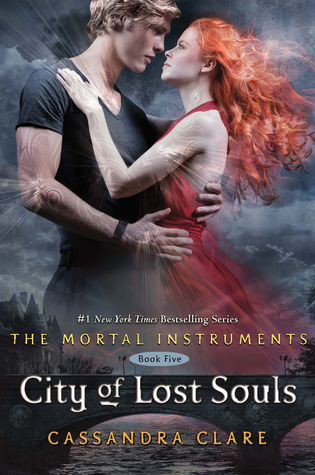
City of Lost SoulsNow that I’ve finished (and having read all five of the existing books in the Mortal Instruments), I find myself much more satisfied with how The Infernal Devices played out and concluded. When I finished the fifth book in the MI, City of Lost Souls, I was pretty annoyed with Clare. She simply got off the rails with the story and let it spin out of her control, like a wild dog in desperate need of obedience school. With the ID, she used a lot of her familiar elements but still crafted a story that is nicely paced and tamed. She tied up the series very satisfyingly and restrained herself. In fact, I felt completely happy with all of it, and I was teary-eyed with how the characters’ story lines were concluded. And having enjoyed City of Bones and the next few books in the Mortal Instruments, it was fun to tie together the characters from both series and see how they are related. When you get to know and love characters, it’s always wonderful to learn more about them.

I’d highly recommend the Infernal Devices series, and if you want to read City of Bones and its sequels, you might want to limit yourself to the first three or four books. But we’ll see. I’m hoping Clare can bring it all together and do it right in what I hope will be the real conclusion to the Mortal Instruments, which apparently will come in September 2014 and be titled City of Heavenly Fire. Next question is: how will the “City of Bones” movie be? So far, I approve of the casting. I just hope that the movie captures the humor of the books and not just the action and sizzling love stories. If it misses the humor, it will be a tragedy (which I do fear is a possibility: look at Harry Potter — those books had so much cleverness and wit that seemed to be largely missing from the movie adaptations).

My top books of 2012

Since 2012 is winding down very quickly, I thought I would jump on the bandwagon of “top of the year” lists with my top reads this year. Most are books that were also published this year. I’m not making it a top 10, just a top whatever. (I don’t want to give a couple of extra books kudos they don’t necessarily deserve just to make it an even 10. So there!)

So here goes:

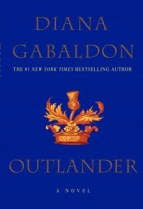
  1. outlanderThe Outlander series by Diana Gabaldon. (This is actually the only entry on this list that wasn’t published this year.) Another blogger mentioned these books, and I decided to try them out. I got hooked just as thoroughly as many other readers. Normally, I would say they’re too long and full of far too much detail, but the characters and the interesting premise kept me reading. I read four, dying to know what would happen next, and then did get slowed down in the fifth, (finally coming to a point that I felt I knew enough about what had happened to them) so I’ve put it aside in favor of other books. The only downside is the sex: there’s a lot and it’s described in a lot of detail. 
  2. Goodbye for Now, by Laurie Frankel. I just read this book and found it utterly charming and funny at turns and at other times sweetly poignant and heartbreaking. Frankel describes so perfectly how it feels to lose someone you love dearly. She balances grief and new love all in one lovely book that made me both cry and laugh out loud. Plus, it has a very clever premise.
  3. EdenbrookeEdenbrooke, by Julianne Donaldson. The first in a new “series” of books called “proper romances,” this book takes readers into Regency England and brings it to life with a sweet, clean romance almost as well as Austen herself. A really fine work that aspires to grand heights of Jane-dom and doesn’t disappoint.
  4. The Secret Keeper, by Kate Morton. I’ve become a Morton fan over the past few years she’s been writing her Gothic stories full of family secrets, and this newest novel just cemented my fanaticism. Always a pleasure.
  5. On the note of further books by authors I’ve come to appreciate is also the latest middle-grade book by Rebecca Stead, Liar & Spy. She was rightly awarded a Newbery for her fantastic book When You Reach Me (the plot revolves around A Wrinkle in Time: she got my attention right away), and this newest, though not so cleverly plotted, was still poignant in just the right dose and a charming read for young readers and adults alike.
  6. Then there are the books that came next in series that lived up to the hype of the previous books. First, there’s UnWholly, an unexpected sequel to Unwind, a YA book with an incredibly thought-provoking premise that was packed with action to boot. I’ve already written in detail about these books, so just click here to read that post.
  7. Pandemonium was a great sequel to Delirium, another YA dystopian series, in which society has decided that love is a disease that can be eradicated. I thought that the sequel was just as entertaining and interesting as the first book, perhaps even better. I am now chomping at the bit to read the conclusion.
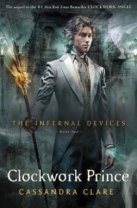
  8. Clockwork-PrinceClockwork Prince was one of two new books this year by Cassandra Clare. It was the second in her Infernal Devices series, and I enjoyed it even more than the first in the series, and definitely more than the fifth book in her Mortal Instruments series, City of Lost Souls, which was really disappointing. I love her combination of hot romance, supernatural demon-fighters, and wit. I just wish someone had made her take some time to make City of Lost Souls better. I hope that the last in the Infernal Devices series doesn’t disappoint.

Parents’ and schools’ responsibility to young readers

So I received an email through my Rated Reads site, asking me for guidance on resources that can provide information about content in books for younger readers. It got me thinking again about the place for parental involvement and potential restrictions on books for elementary-school students. I suppose I’m a little late to the game in terms of this topic because Banned Books Week was over a month ago, but here goes anyway.

Before I say anything else, I’d like to make clear that I am against “censorship” in general (let me restrict this discussion purely to books). That entails actually suppressing and forbidding the viewing or use of particular passages or entire books. It’s not my place to decide what kind of content should be completely forbidden, and it just sets a bad precedent. I wouldn’t want someone else to have the power to forbid what is viewable by me or my family members.

So while I am against forbidding things entirely to most readers, parents and educators do have a responsibility to young children to make sure they read material that is appropriate for them. Even then, I hesitate to ban books entirely because, while I wouldn’t want a child getting hold of soft porn, for example, I wouldn’t agree with those people who were eager to ban Harry Potter because of its theme of magic.

What I am a proponent of is information. That’s why I started Rated Reads, a modest effort though it is. But at least it’s something. We have nearly 1,000 books featured with content ratings and moderately detailed paragraphs explaining what kind of potentially objectionable content is in each book. I firmly believe that each reader and, in the case of children, each parent should be able to have resources to find information that will allow him or her to make a decision.

I would like to think that books that are selected for a children’s library are going to be appropriate for young readers and acceptable to most parents, both in thematic content and possible sex, violence, or bad language. But young readers who are ready for young adult books, for instance, deserve to not be shocked by what they read or to have their parents be shocked. There are a lot of great young adult books that are fine for younger readers, that don’t have strong language or detailed violence or sex scenes. But there are just as many that I wouldn’t want my younger kids reading.

Since elementary schools generally have limited space, I think it would be wisest to select books that will be most age appropriate and least objectionable to parents. But at the same time, there may be a few YA books that would be great reads, in terms of stimulating thought on various topics, that might be nice picks for those libraries. And some of those might have some violence or other scenes that could be objectionable to parents or their kids. In these cases, it seems it would be particularly smart for everyone to include a kind of electronic ping with further information for the student and her parent when it comes to checkout time. This would allow parents to give a yea or nay to their child reading that book; a note could be sent home before the book is approved for checkout, providing details about why that book could be a poor choice, including themes, sex, violence, and language.

Now there are going to be some parents who are very careful about using this system, saying no to some books and yes to others based on their consideration of the information provided; there are definitely going to be other parents who simply won’t care. And that is their business. If I were that child’s teacher, or a fellow parent, I might not agree with those parents’ decision, but it wouldn’t be my responsibility to override or actively disagree in some other way. As long as a parent hasn’t been declared unfit, it is his or her responsibility to make decisions regarding his child, and that needs to be respected.

But there is no doubt in my mind that more information should be available so readers and parents of readers can make more informed decisions. I don’t think it’s always possible or practical for a parent to read every book a child would like to read, becoming the child’s first reader. We just need more information. Again, that’s why I’m doing Rated Reads. But I’d love to see more coming direct from publishers or something similar (I suppose that’s kind of another topic, but in brief, I don’t see why it would be so hard for the editor to include a brief description that states how much language or sex or violence is in it…). There’s simply not enough information available about most books.

So. What are your thoughts? Do schools sometimes need to be more cautious about what they choose to stock in their elementary libraries? Do parents need more information, and how should it be provided? And what about junior highs/middle schools and high schools?

Strong language in books: not so common as one might think

After addressing my great discomfort with the number of strong and vulgar language in J.K. Rowling’s first book for adults, The Casual Vacancy, I looked at other bloggers’ reviews on the book, and I was perhaps a tiny bit surprised that few expressed any frustration with that issue. Several that I commented on basically did respond that they thought that the really, really frequent use of harsh language felt “authentic” to them.

So I decided to do a little analysis of how frequently the f-word, for instance, pops up in popular books to see just how much use readers are “used to” or tolerate.

My ratings website, Rated Reads, features nearly 1,000 reviews of a variety of fiction, nonfiction, and young adult books. Of those, only about 175 are rated “high” and a few are rated “DIRT” (for “don’t invest reading time” — not because of the quality of the writing, but just because of the offensive content). I thought that it would be interesting to see how many uses of the f-word tend to be used among those books my reviewers and I have already rated “high,” which means in terms of language, more than five or six uses of the f-word.

Here’s the breakdown: 17 of the “high” ratings have no use of strong language (they’re rated high for detailed sexual content); 91 have between 6 and about 15; 31 have between 20 and 40 uses of the f-word; and only 15 have more than 50 uses of that strong word (or the very rare c-word).

My conclusion? Writers of the most “popular” or “critically acclaimed” books, which are sampled fairly well on Rated Reads, don’t tend to use the f-word much more than 15 times. Only a very few use it very liberally, 50 times or more.

Which is why J.K. Rowling’s book for adults seemed so outrageous to me: she must use the f-word 100 times or so (and the c-word at least once), not to mention a liberal use all the other “milder” language. That puts The Casual Vacancy into a very small group: only about 1 percent of books, according to my sample of about 1,000 books, use strong language that casually.

It brings me back to wondering why authors use strong language. Readers who “defend” the liberal use of harsh language say it’s because the authors are being “authentic.” Especially when it comes to high school-age kids, they say, that kind of language is used all the time. I don’t argue that notion. It’s true that one can hear a lot of bad stuff in a school hallway. And then there are different groups in society that tend to use that kind of language very frequently and without any thought for what it says about them. But if most authors would hope to be “authentic,” then why do so few actually use that kind of strong language very often? In a book of 300 to 500 pages, my “most common” group of usages of the f-word only feature about 6 to 15 uses of it. That’s actually not too “true to life,” one could argue.

In fact, a lot of the books that readers really love don’t have any use of the f-word, or very limited use of it. It would seem that those authors, who write well and with large followings, don’t feel a need to use “authentic” language. Hm.

Most of the books out there that are really entertaining or thought-provoking, that open a window into other worlds of all sorts, succeed at transporting us as readers, making us think and experience other places and groups of people, and do the job we want them to do — most of the time without using really harsh language (even if the characters, places, and situations might genuinely call for that kind of language if they were to be completely “authentic”). Are most of us complaining that they don’t use more authentic language? No. But when an author does use a lot of bad language in the service of being authentic, people just say, “Well, that was authentic.” Where’s the outrage here? If only a small percentage of writers (in this case less than 1 percent) really go for it and use tons of vulgarity, why don’t they stand out from the crowd that doesn’t write with tons of that trash?

I’ll let you all ponder on these facts and draw some of your own conclusions. Then comment and let me know what you think.

All I want to say to conclude is that in real life, yes, there is plenty of “authentic” rampant use of vulgarity and harsh language. I hear it sometimes, and I heard it when I was in school. My high-schooler hears it at her school. But given the choice, we both try to avoid it as much as we can, because regardless of what we’re “forced” to hear, we still don’t like it, and we haven’t “gotten used” to it. I avoid the groups of people and places where I would be likely to hear that kind of abuse of the English language, and likewise, I try to avoid books and movies that contain that language. I don’t HAVE to read or watch those books or movies or TV programs. I have a choice. And I choose to stay away from them.

‘Casual Vacancy’ left me feeling empty

Given how gifted a writer J.K. Rowling proved herself to be as she gave readers the amazing series of Harry Potter, I couldn’t help but be excited about her writing a new book. I knew it would in no way compare to Harry Potter, but I thought that there was no way she could craft a bomb.

Well, less than 30 pages in to The Casual Vacancy, I was forced to stop reading. I’ll never know if the book is a worthy effort in terms of plot or writing style because it’s just jam-packed with vulgarity, and I refuse to read any more. I very rarely put down a book after getting started simply because it’s laced with profanity and other offensive content, but this was one of those times. I am SO disappointed. I am particularly disenchanted with Jo Rowling. From what I read in the first bit and then just after flipping through the book and stopping on random pages, I am inclined to estimate that there must be a hundred uses of the f-word (the rarely used c-word is even in the first bit that I read). Or even more. I just don’t care to read more to find out exactly how many. What’s the point?

I’ve already written about my aversion to vulgarity in books and that I don’t see a need for them to show “authenticity.” There’s just no reason for that. I know that there are people out there who disagree with me, but I am also fairly sure that quite a few readers really don’t want to read a book that contains 100 uses of the f-word.

Jo, just because this is your first book for adults doesn’t mean that it has to be “adult.” You could have written a fine book without all of that trash. I know that it doesn’t really matter to you how many copies you sell, at least financially, since you’re already set for about a hundred lifetimes. But does it matter to you that many of your loyal readers are now disappointed and disgusted by your choice to make this so full of vulgarity? I hope it does. I hope that next time you write a book you choose to make it “cleaner.” It doesn’t have to be squeaky-clean, and it doesn’t have to be appropriate for young readers, (even though that would be nice, considering the fact that some younger readers will likely try to read your adult novels even though they’re clearly “for adults”) but it would be nice if it were more accessible for everyone.

More of my top picks: best gothic tales

There are probably some differing opinions out there on what exactly “gothic literature” entails. For my purposes, I’m just going to say it’s fiction that has a setting that’s at least in part dark and possibly supernatural (or just hints at it or seems like it), is infused with a sense of foreboding, and has a mystery or secret that is revealed by the end. I am a big fan of the surprise twist, and I LOVE to be caught off-guard at the end, completely unable to guess the twist. If I can guess, the book just isn’t fun for me.

So I have found myself to be enamored by really well-spun gothic stories. I suppose this shouldn’t be a surprise to me now, considering how much I devoured all of Edgar Allan Poe’s tales when I was a teen. Now, though, I enjoy stories that are a bit less macabre and more about the very well-kept secret. When these secrets are deeply buried in an old noble family somewhere in England living in a crumbling-down mansion, all the better.

So, without further ado, here are a few of my favorite gothic novels.

  • Rebecca, by Daphne DuMaurier. I read this classic book sometime in my late teens, I think, and it got me hooked on the twist.
  • The Thirteenth Tale, by Diane Setterfield. A friend handed this to me to read, and I feel eternally indebted to her. What an amazing story! I don’t know if Setterfield will ever write another book, but if she doesn’t, that will be fine because this is a masterpiece of gothic literature. A mysterious, reclusive writer with a strange past finally decides to tell the truth about her life, and it is full of some shocking twists. Weird old family in old house? Check. Buried secrets? Check, check, check. It just doesn’t get better than this.
  • The Shadow of the Wind, by Carlos Ruiz Zafón. I came across this a few years after reading The Thirteenth Tale, and I found this was probably came in right behind that in pure awe and satisfaction. Another masterpiece. Zafón has written two novels in a series after this, continuing and enlarging upon the story and the setting, and they’ve been pretty good, but honestly not the triumph that the first was. Again, the setting is the past, and the story is permeated with mystery hanging over it like a mist. The twist is great, I loved how it all came together, and the writing is superb.
  • The Forgotten Garden, by Kate Morton. Morton has now written a number of really fine gothic stories, all set in England in old estates, with buried family secrets. The first, The House at Riverton, was a good example, but her second really nailed it. I am glad that she’s managed to keep writing. I don’t think any of her books is quite as amazing as Diane Setterfield’s one great story, but they’re all quite good, and I am just grateful she’s providing more stories for me to relish.
  • The Historian, by Elizabeth Kostova. Since this story is about Dracula, this could almost be considered a horror tale, but it really has more elements of what I consider gothic. That infamous vampire rarely appears in the book, and the story revolves around some historians who are trying to hunt him down in the mostly present day. The story takes readers on a wonderful and intense journey around the globe, into rooms filled with old books and documents, slowly revealing information and ending in a satisfying manner. I savored the journey and was sad when it was over. I was also sad when Kostova wrote another book and it wasn’t at all what I had hoped in tone or story (and THAT is probably why Diane Setterfield has turned Harper Lee on us).

What do you think? What other great gothic tales (my definition) am I missing?

Clean romance: does anyone want to read it?

So as those of you who pay attention to my “reading life” posts know, I review books. I have for years now. I run a website, Rated Reads, that exists to help readers know about the potential offensive content of books they might like to read. I think it goes almost without saying that I tend to prefer and appreciate books that don’t have lots of offensive material, be it vulgar language or sexual situations or even violence. I just clap my hands with joy when I find a book that’s just great in every way AND doesn’t have offensive content. Yay!

There are all kinds of genres and sub-genres out there: sci-fi, fantasy, paranormal fantasy, historical fiction, memoir, biography, young adult, romance, self-help, science, business … the list goes on forever. But certain types of genres sell particularly well overall, and some get extra attention during “fads.” Ever since Twilight, vampire love stories are very of-the-moment. And now it’s Fifty Shades of Grey. No vampires, but the protagonist is still super-hot and super-rich, just like the Twilight hero. In the case of this uber-popular new series, the love story isn’t necessarily about forbidden or supernatural love, but it’s about kinky sex, explicitly detailed in the book.

Um, no thanks.

So while those books are flying off the shelves and, most of all, being furtively downloaded onto e-readers, where no one else can tell what the purchaser is reading, I still say, Publishers and authors, please give me some great clean romance. Men often wonder why in the world so many of us women swoon over the Regency-era books, where the happy couple don’t even necessarily get a single kiss. I’ll tell you why: because the fun of romance is in the chase, in the slow buildup of longing looks and quiet exchanges of meaningful glances and words. It’s amazing to have a man treat us with respect and chivalry. I just don’t want to read about some gallant hero spanking a bound woman. Gah.

One of my review contributors, Teri Harman of Book Matters, talked about good clean romances on today’s KSL-TV Studio 5 segment:


She asked me a month ago what books I recommended that would fit the parameters. I pored over all the reviews I’ve written over the past four or five years and posted on Rated Reads and, sadly enough, came up with an extremely short list. This is what I wrote to her:


  • Major Pettigrew’s Last Stand is a delightful romance about an older English gentleman and a widowed Pakistani woman. I rated it mild for some language.
  • I really enjoyed all of Carrie Bebris’s books continuing the story of Darcy and Elizabeth Bennet. They’re mysteries, but they’re love stories as well in Austen mode. I like that she does a good job with them and feels true to the originals.
  • I loved Erin McMahon’s I Now Pronounce You Someone Else, a sweet YA book that I rated moderate for teens but mild for adults. Nice bonus: main character is saving sex for marriage, and she sticks to it.
  • I did enjoy Edenbrooke, the first in a new set of books that will be published by Deseret Book called “Proper Romances.”
  • Flipped is a very charming middle-grade book about two eighth-graders. Very cute.
  • Of course, I liked Austenland, but I’m sure other people know about that one by Shannon Hale.

What’s striking is that three of them are either Regency/Austen-type books or are patterned after them. Two are written by authors who are members of The Church of Jesus Christ of Latter-day Saints. Though they aren’t the Christian genre, their authors are going to decidedly keep their writing fairly clean because of their religious beliefs. So, sure, it might be easy enough to find a decent enough clean romance because it’s either a classic or patterned after a classic or because it’s in the Christian genre, but finding just any other romantic books out there in general fiction that aren’t some type of genre that demands or expects clean content is a tricky task.

So, yeah, authors and publishers. The dirty stuff apparently does sell. But so does the clean stuff. If you’re going to hop on a bandwagon, can you please hop on the latter one? ‘Cause I’m not riding the dirty wagon or patronizing it in any way. Thanks.

A brief introduction to my favorite books

As a newspaper book reviewer for more than a dozen years, two of which I was the editor of a book page, and a member of the National Book Critics Circle, as well as having my own book review website, I think I could say I’m an expert on books. At the same time, the more you know, the more you realize you don’t know, so I hesitate to call myself much of an expert on anything at this stage of my life. I know how little I’ve read of so many things and would like to read more, but there’s only so much time, isn’t there? I’ve read a number of classics that have enriched my knowledge and understanding of all kinds of topics, but then I’ve missed out on a lot of them as well. So, that being said, I’ll talk a bit about what I enjoy reading, what moves me, enlightens me, inspires me, opens my mind, and just entertains me.

I read a bit of most everything. I like fiction and nonfiction and young adult literature. I still have a great fondness for the award-winning books I loved as a child, and it’s been a true delight to share those with my daughters as they’ve gotten old enough to appreciate them. I don’t think I read a lot of genre books, like science fiction, and even though I did get caught up in the Twilight books, I didn’t just jump on the paranormal bandwagon. I try to be selective about what I read, checking with friends and now GoodReads, for instance, to see what other people have said before I invest time in any book. I’ve collected quite a few books over the years I’ve been reviewing, since reviewers get free review copies, but I’ve also gotten rid of most of them except the ones I truly loved.

Sometimes I enjoy a book not so much for the story but for the way it’s written — poetic, lyrical, lovely, clever, full of great metaphors — and sometimes I just like it because it has fun characters or a super-clever or engaging plot. I love to be surprised, so I adore books (and movies and TV shows, too) that are able to pull off a great plot twist that I don’t see coming (but it has to make sense). I suppose that’s why I adore gothic stories; one of my absolute favorites is The Thirteenth Tale. Wowee. There just aren’t nearly enough good twists like the one Diane Setterfeld pulls off in this one. I don’t typically read a lot of sci-fi, but I have enjoyed a few good science fiction tales over the years (I do quite appreciate Orson Scott Card, even though I’ve still never managed to read what is by all accounts his best book, Ender’s Game). I like fantasy better than sci-fi, so I’ve read more of that (I loved Card’s Seventh Son series about Alvin Maker).

Sometimes I’m in the mood for a hefty tome that digs in deep to a topic, and sometimes I just need some good fluff. I’ve found that YA love stories satisfy me well on that latter count (I found Anna and the French Kiss to be delightful, for example, as well as I Now Pronounce You Someone Else). I like to learn about all kinds of topics, particularly science and health and different places (this book on memory research was fascinating: I didn’t realize just how complex it is to figure out biologically and chemically how our brains create memories), and I appreciate good memoirs (especially if they combine science and humor, like Richard Feynman’s wildly entertaining Surely You’re Joking, Mr. Feynman!). Any book that includes passages on grammar or punctuation earn points with me, as did one character’s two-page riff on a comma error in The Elegance of the Hedgehog, a great book even without that hilarious-to-a-copy-editor segment, and once I read Jon Krakauer’s riveting account of disaster on Mt. Everest (I was skeptical when a friend suggested I read it), I’ve found myself attracted to other mountain-climbing books.

I still have all the books I acquired as a child and teenager, and I’ve shared them with (sometimes foisted them on) my daughters. It doesn’t get better than Madeleine L’Engle’s A Wrinkle in Time or Susan Cooper’s The Dark Is Rising series. The latter especially has held up for me as an adult reader: the books are complex with lovely storytelling, great vocabulary and legend.

Ah, I could go on and on. But that’s what more posts are for. So stay tuned.