I obviously care about values, values in the media, and how we teach our children values (and help protect them from some of the value-less media out there). Let’s just say for my purposes here that “values” is shorthand for positive messages and content that is low on vulgarity, harsh language, sex, violence, and other crudeness.
I started my book-review website, Rated Reads, because I wanted to provide useful guidance for readers of all ages and parents of younger readers. The more information we can obtain as media consumers and parents of media consumers before actually viewing movies, TV, books, websites, etc., the better: we can protect ourselves from content we wouldn’t want to have to see/hear. Luckily, there are a good number of websites and other resources available to help us make good, informed decisions about movies and TV shows, as well as music. I started Rated Reads because there weren’t nearly so many resources available with the same kind of information about books.
Naturally, with this mindset and as the mother of four daughters, I want to be able to protect them from seeing and hearing vulgar, obscene, gross, crude content. I don’t want to see/hear that stuff myself, and I certainly don’t want my girls to be inundated with it. I can’t protect them from other people or from other kids at school (much as schools supposedly try to police obscene language, etc., it’s a losing battle in reality, honestly), but I can help them to feel safe at home.
With this as my philosophy, I’ve always been shocked by what I see other parents do/not do for their own children. Sure, all parents are different, and I can’t say that “different” is usually or always bad. But sometimes it’s hard not to judge, such as when I see adults bring tiny kids to PG-13 movies or just movies that are super-scary or intense. Or those who routinely let their young kids watch R-rated movies at home. I just can’t see that that does any good for (and doesn’t harm) these impressionable youngsters.
But what really, really makes me start steaming is seeing vulgar movies or TV starring children. For example, when I went to the movies this week, I saw a preview for a movie I will NEVER go see, called “Bad Grandpa.” An actor dresses up as an old man and takes a young boy cross-country with him on an MTV “Jackass”-inspired trip. They pull all kinds of pranks and film real people’s reactions. One clip in this trailer showed this young boy, who is 9 years old, dressing up as a pole dancer and gyrating in all kinds of crude ways that would make me cringe if it were an adult performing the acts. But this is a CHILD! To expose kids to this stuff is bad enough, but to then make a child PERFORM these acts is beyond irresponsible. It’s heinous. It’s horrible. It goes beyond the pale.
I don’t think I’m a prude. I simply believe in values (and if you don’t, then don’t bother commenting because we come from very different sides and will likely never agree). I believe in teaching values to our kids, in protecting them from as much as we can, in helping them learn ways to protect themselves from vulgarity as they grow older. Again, none of us can possibly shield ourselves completely. But we can take steps to reduce the amount of crudeness we have to ingest. And it’s parents’ responsibility to reduce exposure and teach their children, not douse them in “adult” filth.
We’re living in a world that’s radioactive with crudeness and vulgarity. We’re going to be exposed. Question is: will we take precautions and shield ourselves and our kids, or will we allow ourselves to be constantly irradiated, leading to sickness, cancer and death of the inner self?
So I’ve written a few times about my (mostly happy) love affair with Cassandra Clare’s Shadowhunter books. Most recently, I wrote about the Infernal Devices series, which was completely satisfying and just right. And at the end, you may notice I wrote about my eagerness to see how the movie version of City of Bones turned out.
Here’s what I thought was kind of funny initially, before the movie even started: Since I’m quite a fangirl when it comes to this series (although I refuse to shell out $2.99 per story for the Bane Chronicles; all together, that’s going to be a lot of moolah), I honestly expected to see crowds out front of my local theater when I dashed out to see it last night, right after it opened (but, admittedly, on a Thursday, before weekend busy-ness). After all, Twilight fans were lined up for hours ahead of each show. And honestly, this series is even better: it has action, hot romance, supernatural elements, and wit. But when my husband and I got there, 35 minutes before showtime, there were two other people seated in the theater. Wha? By the time it started, there was a reasonable small group in there for a Thursday night, but I sat there thinking, I hope that audiences do not miss this movie.
So I’m recommending it to everyone.
The movie did not disappoint. It stays true to the story without taking too many liberties but not, however, being so faithful to the book that it bogs down the pace of the action and plot; the action is engaging enough for male viewers to be able to get into it (come on, you know that Twilight the movie wasn’t exactly geared toward the men); the romance is still scorching hot (the great kiss scene in the middle is even better on film than it is in the book, which is saying something); the story and the world building are interesting, as in the book; the sets are great. I loved seeing everything I imagined (and didn’t get around to imagining, apparently) come to big, beautiful life on the screen.
Casting: When it all comes down to it, the most important casting pick was for one crucial character. The actor (Jamie Campbell Bower) who portrays the central character, Jace Wayland, is honestly just about a perfect choice. I admit I don’t think he’s great-looking (and yes, I do think that RPatt is just to die for when it comes to looks, not to mention how funny he is in interviews), but the character isn’t really either. It’s all about presence. Jace is intense, moody, and utterly irresistible because of how he emotes. And Bower nails this. He has screen presence galore. He smolders up there on the screen. His hair looks terrible. But it simply doesn’t matter. His whole body, his face, his eyes show who the character is and what he may or may not feel or believe. And when he looks at Clary, his face near to hers, temperatures rise. Yikes.
Now I did mention in that previous post that my main concern would be the humor. The books are laugh-out-loud funny in the banter between the characters and some of their one-liners. The movie just did an OK job on capturing this wit. There were a few good lines, but still, as I feared, that delicious banter isn’t in constant supply. The action and romance win out, and the wit came in last. Even so, it wasn’t a complete bust. I really felt that the Harry Potter movies suffered in comparison to the books because they really did sacrifice most of what I saw as clever and funny in the books. I didn’t feel that this movie did quite so badly.
Overall, a great adaptation and a movie I’m going to have to watch a few more times on the big screen. I liked it that much. Now pardon me while I get ready to head to the theater, this time with my oldest daughter.
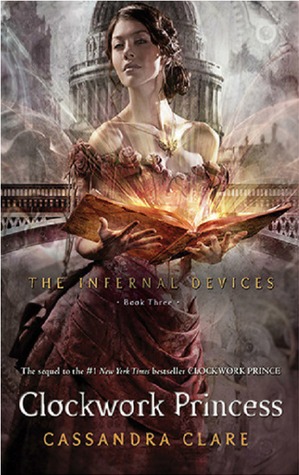
So I just finished reading Clockwork Princess, the conclusion to the three-book series The Infernal Devices by Cassandra Clare. These books could easily be read by someone who hasn’t read Clare’s The Mortal Instruments series, or they could be savored by those of us who already have developed a taste for the deliciously entertaining world of Shadowhunters.
The brief story: in 1878 New York, a teenage girl is orphaned, and her brother invites her to join him in London. On arriving there, she is taken by women who essentially imprison her in their house and insist that she has special powers. They spend weeks training her to shape-change, and she is astonished to learn that she actually CAN turn into other people. Luckily, she is rescued by a dashing young man named Will, and Tessa is introduced to the world of Shadowhunters, people who are charged with protecting humans from the world of demons and other “Downworlders.” As it turns out, the “Dark Sisters” were only tools in the hands of the Magister, who has very scary and nefarious plans to destroy Shadowhunters. Tessa, as well as an army of mechanized creatures, are the main components of those plans.
Clare gets to have fun in this series continuing to explore the world of Shadowhunters, but she also gets to add in components of steampunk, via the clockwork-angel necklace that Tessa wears and the clockwork creatures the Magister has created. The other ingredients that work so well for her in the Mortal Instruments are all there: teens charged with safeguarding humanity and using lots of cool weapons to kill ugly and dangerous demons; intense love affairs and some good makeout scenes; secrets and curses that throw wrenches into those love affairs and make the characters dark and brooding but tender underneath; lots of action and fight scenes; mystery and intrigue; and even some great snark, cleverness and humor. When I first started this series, the pattern was so similar to the other books that I thought it was too much of a copycat. But I enjoyed the story and the characters so much that I couldn’t help but just throw myself into it anyway.
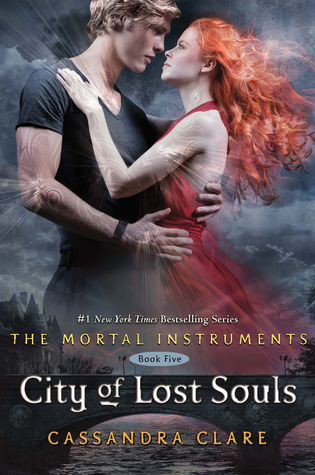
Now that I’ve finished (and having read all five of the existing books in the Mortal Instruments), I find myself much more satisfied with how The Infernal Devices played out and concluded. When I finished the fifth book in the MI,City of Lost Souls, I was pretty annoyed with Clare. She simply got off the rails with the story and let it spin out of her control, like a wild dog in desperate need of obedience school. With the ID, she used a lot of her familiar elements but still crafted a story that is nicely paced and tamed. She tied up the series very satisfyingly and restrained herself. In fact, I felt completely happy with all of it, and I was teary-eyed with how the characters’ story lines were concluded. And having enjoyed City of Bones and the next few books in the Mortal Instruments, it was fun to tie together the characters from both series and see how they are related. When you get to know and love characters, it’s always wonderful to learn more about them.
I’d highly recommend the Infernal Devices series, and if you want to read City of Bones and its sequels, you might want to limit yourself to the first three or four books. But we’ll see. I’m hoping Clare can bring it all together and do it right in what I hope will be the real conclusion to the Mortal Instruments, which apparently will come in September 2014 and be titled City of Heavenly Fire. Next question is: how will the “City of Bones” movie be? So far, I approve of the casting. I just hope that the movie captures the humor of the books and not just the action and sizzling love stories. If it misses the humor, it will be a tragedy (which I do fear is a possibility: look at Harry Potter — those books had so much cleverness and wit that seemed to be largely missing from the movie adaptations).
I’ve mentioned a few times I have a daughter with Down syndrome. She has been an utter delight in so many ways, and such a blessing to our family. She smiles and hugs and just shines like the sun around pretty much everyone. She’s silly and goofy and has a great time with everything. She was even an “easy” baby, just so content to sit and observe and smile (a relief after my first baby, who was very demanding and had to be held ALL THE TIME).
Yeah, I had an adjustment period getting used to the idea of having a child with a mental disability. Luckily, I was able to absorb that information before she was even born, thanks to a blood screening test and then an amniocentesis. It is a shock; it’s scary; it’s unnerving. It’s not something you ever expect will happen to you. It changes things. But I came to terms with the new emotions and fears and uncertainties and just embraced the sweet daughter I got.
Honestly, even though for the first few years of her life, she was slower in her development than other kids (and than my first), and she needed special early-intervention services, it wasn’t often I thought that it was just that much different than raising my older daughter. It was mostly just a minor adjustment in expectations and in schedule, sometimes. I thought, “you know, this isn’t too bad. She’s not really different from other kids.” And honestly, she still isn’t.
But as she’s gotten older and is now a teenager, so much has changed. As time has marched forward further and further, it’s become clear just HOW much behind other kids she is, at least in terms of what she is learning (reading is great; comprehension is still not as great; and math? ARGH), and how much younger she really acts than other kids. When your child is only 6 and has lags in development and seems more like a 3- or 4-year-old, compared to other 6-year-olds, it’s still not a big difference. But when she’s now 14 and acts like and has the grade level, basically, of a 7-year-old, that gap is much bigger. It’s a gaping chasm that is obvious to everyone.
I was getting accustomed to that growing distance in development as well. But now she has hit puberty and has started menstruating, and man, that is a whole other story. My 10-year-old, who is bright and intensely curious and conscientious, learned about the whole “female thing” last year and asked me with great concern, “Mom, have you told Marissa about this? ‘Cause she’s going to start this soon.” I replied, “You’re right, kiddo. But how would I explain this to her ahead of time? Would she really understand? How would she react?” I thought it would be easiest to just catch her when it first happened and do a very simple explanation. She was fine with it, too, for a few months, happy to be like a “young woman,” like her older sister and mom.
But then the hormones seemed to kick in. Now she’s been moody and sometimes snappish, completely out of nowhere. She will burst into tears like a sudden cloudburst. I thought it was probably just PMS, as in “pre-” menstrual, but now it happens whenever. Her teacher called today to let me know she’s been bursting into tears in class sometimes too.
It’s so much easier to explain the how and, especially, the “why” of hormones and moods and all that female stuff to a young woman who understands the nuances and can do a little better at looking inward and analyzing a bit and piecing things together. But I fear those kinds of things are lost on my second child. So it just breaks my heart to see her going through these moods and having no idea why she feels so sad all of a sudden.
Nope, this is a lot trickier than just making sure my toddler is learning to walk properly or hold a pencil well so she can write. Those were walks in the park. Now, life is much more complicated. But isn’t that always the case?
So I received an email through my Rated Reads site, asking me for guidance on resources that can provide information about content in books for younger readers. It got me thinking again about the place for parental involvement and potential restrictions on books for elementary-school students. I suppose I’m a little late to the game in terms of this topic because Banned Books Week was over a month ago, but here goes anyway.
Before I say anything else, I’d like to make clear that I am against “censorship” in general (let me restrict this discussion purely to books). That entails actually suppressing and forbidding the viewing or use of particular passages or entire books. It’s not my place to decide what kind of content should be completely forbidden, and it just sets a bad precedent. I wouldn’t want someone else to have the power to forbid what is viewable by me or my family members.
So while I am against forbidding things entirely to most readers, parents and educators do have a responsibility to young children to make sure they read material that is appropriate for them. Even then, I hesitate to ban books entirely because, while I wouldn’t want a child getting hold of soft porn, for example, I wouldn’t agree with those people who were eager to ban Harry Potter because of its theme of magic.
What I am a proponent of is information. That’s why I started Rated Reads, a modest effort though it is. But at least it’s something. We have nearly 1,000 books featured with content ratings and moderately detailed paragraphs explaining what kind of potentially objectionable content is in each book. I firmly believe that each reader and, in the case of children, each parent should be able to have resources to find information that will allow him or her to make a decision.
I would like to think that books that are selected for a children’s library are going to be appropriate for young readers and acceptable to most parents, both in thematic content and possible sex, violence, or bad language. But young readers who are ready for young adult books, for instance, deserve to not be shocked by what they read or to have their parents be shocked. There are a lot of great young adult books that are fine for younger readers, that don’t have strong language or detailed violence or sex scenes. But there are just as many that I wouldn’t want my younger kids reading.
Since elementary schools generally have limited space, I think it would be wisest to select books that will be most age appropriate and least objectionable to parents. But at the same time, there may be a few YA books that would be great reads, in terms of stimulating thought on various topics, that might be nice picks for those libraries. And some of those might have some violence or other scenes that could be objectionable to parents or their kids. In these cases, it seems it would be particularly smart for everyone to include a kind of electronic ping with further information for the student and her parent when it comes to checkout time. This would allow parents to give a yea or nay to their child reading that book; a note could be sent home before the book is approved for checkout, providing details about why that book could be a poor choice, including themes, sex, violence, and language.
Now there are going to be some parents who are very careful about using this system, saying no to some books and yes to others based on their consideration of the information provided; there are definitely going to be other parents who simply won’t care. And that is their business. If I were that child’s teacher, or a fellow parent, I might not agree with those parents’ decision, but it wouldn’t be my responsibility to override or actively disagree in some other way. As long as a parent hasn’t been declared unfit, it is his or her responsibility to make decisions regarding his child, and that needs to be respected.
But there is no doubt in my mind that more information should be available so readers and parents of readers can make more informed decisions. I don’t think it’s always possible or practical for a parent to read every book a child would like to read, becoming the child’s first reader. We just need more information. Again, that’s why I’m doing Rated Reads. But I’d love to see more coming direct from publishers or something similar (I suppose that’s kind of another topic, but in brief, I don’t see why it would be so hard for the editor to include a brief description that states how much language or sex or violence is in it…). There’s simply not enough information available about most books.
So. What are your thoughts? Do schools sometimes need to be more cautious about what they choose to stock in their elementary libraries? Do parents need more information, and how should it be provided? And what about junior highs/middle schools and high schools?
Motherhood did not come naturally to me. Babysitting, on the rare occasions I consented to do it, was a rough job, one that wasn’t worth nearly the small pay I got to do it. So once I gave birth for the first time and was presented with a tiny little stranger, I was absolutely flummoxed about what to do with her. Even looking at pictures of me with that first child, I can see the confusion and nervousness in my eyes: “What now?” I was thinking.
And that first child gave me fits. She was a very demanding baby. She didn’t eat for half an hour and then settle down quietly for the next four hours. She snacked for ten minutes and then needed to eat again two hours later. She did NOT like to be put down. I had to hold her constantly. For someone who was pretty independent and used to going about my business, having the little seven-pound interloper in my arms nonstop made it pretty difficult to get anything done.
So that darling child did not ease me gently into motherhood. It was a bumpy ride, and I did not enjoy it. I was exhausted and overwhelmed and overloaded. I remember many times that first year thinking, “I can’t wait til I’m done having children and they grow up a bit.”
Time slowly went by, and I gave birth two more times and adopted once. I knew what I was doing the second and third times, and the second baby was just the most easygoing child ever. She would eat and then sit in her bouncy seat or car seat and smile beatifically up at me, doing whatever I needed to do. Third child was somewhere in between. But by then I had help: two older sisters to distract her (and one time push her off the couch…). Fourth baby was a breeze in many ways because I didn’t breast-feed her, so everyone else could take turns feeding her a bottle. And changing diapers. And holding and playing with her. It was so much more fun that time around to have a little baby. I enjoyed her.
They all went through the terrible twos and their early stages of independence and potty training. Those days are now behind me. My oldest is now 16, and the youngest 5. They’re now all in school. They can feed and dress themselves and read to themselves, except for the kindergartener. Yes, I am finally getting to that magic place I imagined when I had that first demanding baby. And it’s struck me that this time is finite. The oldest is now not a squalling infant; she’s a high school junior. And she is amazing. She’s delightful and smart and talented and beautiful and makes me laugh. She can talk my ear off about her day. We can share jokes together. She’s one of my dearest friends, and I am loving life with her in it. Now the day of her leaving the nest is actually in sight (less than two years!), and it’s paining my heart to even think about. I DON’T WANT HER TO LEAVE!
Ah, what a difference 15 or 16 years can make.
So I have realized that, despite the absolutely crazy, hectic pace of my daily life with four children in school and all the needs they have, these are the best of times. In a few years, one daughter will be gone, and the others will be making their way towards that direction as well. The clock is ticking. And at this stage of my life, it’s not a biological clock. It’s the clock reminding me with every tock and tick that while motherhood is permanent, having children at home is not. I bemoan the lack of peace and quiet and sufficient time to myself now, but even in the midst of this busy-ness, I can’t imagine my house being quiet all the time. I love knowing that I can cuddle and squeeze all of my girls any time, that I can talk to them, listen to them, just study their faces. That we can laugh together.
I’m going to keep reminding myself during the tough days or moments that these really are the best of times. It might take a loud reminder during those moments, but I hope I can somehow still remember and appreciate what I have now.
I’ve been blessed with four amazing daughters, and I have to say that, despite my general unease and unpreparedness for being a mother when I first gave birth, one of the things I most looked forward to at that time was being able to read to my children. I wasn’t a big fan of newborns or even older babies; I was eager to teach and talk to little people. Over time I did get better at appreciating the fun parts of having babies around, but I still think that my favorite part of raising children is teaching them and interacting verbally. What fun!
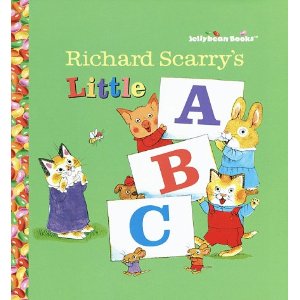
As a reader myself, sharing books with them was a big part of that teaching and communicating. I admit, however, when I first started reading aloud to my now-16-year-old, I was not a fan of the ABC and 1-2-3 books that we had to read OVER AND OVER. And over. And over. And … well, you get it. And over. Gah! Richard Scarry, cute. But I can only count so many bunnies and watermelons up till 3 or 4 or even 10 until my head’s about to explode like a ripe melon hit by a sledgehammer. I was SO excited when she got past that stage and I could read actual stories to her. Then we went through the stage of the very short stories that we read over and over and over. Even Dr. Seuss started to get on my nerves a bit. No, Mom, no. Don’t say that!
At any rate, I toughed it out and read to my girls every night. Unfortunately, I will also admit that as the third and fourth came along, I ended up getting a little busy and just overwhelmed to read to every single one of them every single night. My youngest hasn’t had the privilege of me reading to her every night before she nods off. The best she’s had was me reading to her in the middle of the day just before naptime. Now that this littlest one is in kindergarten, I’m going to have to figure out a good time to read to her and with her regularly. ‘Cause for a while there a few years back, I really was going bed to bed and room to room at 8:00 at night and reading with one girl at a time. An hour later, I was definitely ready for bed myself. Alone time with the husband? Important, yes. Did we get much of it? Not really.
So the routine’s gotten shaken up, but I’ve still logged many very pleasurable hours reading with the girls, at various stages and differing ages. Even my oldest enjoys having me come in at night sometimes as she’s finishing up schoolwork and Facebook-chatting and all that kind of teen stuff and lie down next to her on her double bed and read aloud as she winds down and relaxes to the sound of my voice. With her, I’ve read some of A Tale of Two Cities or Huck Finn or All Quiet on the Western Front, all assignments for classes, or we’ve pulled out a few old favorites for some fun. Maybe I’ll even read to her the night before she gets married someday. It’ll be the best way to remember our time together as mother and daughter at home.
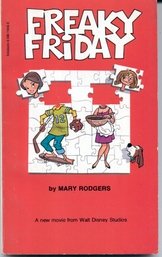
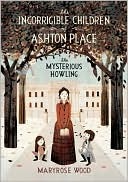
My third daughter is an absolutely voracious reader and has been wolfing down books this summer in particular. We’ve had fun with a few in particular: I read Freaky Friday, one of my favorites from when I was a pre-teen long ago, aloud to all of the girls who wanted to listen some months back, and we all laughed and chortled and chuckled together at all the funny things that happened (Boris and his beetloaf … funny stuff, man). This past month or so, this third girl and I have been reading the very charming and quotable books about the Incorrigible Children of Ashton Place by Maryrose Wood. I am of the opinion that read-alouds are most fun when they provide many opportunities for giggling and lines to quote later as a shared experience. Daddy has no idea what we’re referring to, which is different from all of our shared family movie quotes.
I read Eragon aloud with my oldest when she was probably about 10, and it took us six months to get through. But we enjoyed it. The movie version came out not long after, and she and I joined together in great distress and disgust when the movie version was absolutely horrible. What a shame!
I admit that though I do have children of varying ages, picture books up through teen and adult books, and I do a ton of reading on my own, young adult books aren’t my specialty. I have lots of blogger friends who really know a LOT about the middle-grade and young adult genre. So I think my last point here is: what do you think qualifies as great read-aloud material for middle readers, in particular? I think that something of a modest length and with some silliness is extra handy. More “serious” material is fine as well, but the silly factor makes it lots of fun. Any ideas?
So since I wrote about my take on NPR’s top-100 young adult books, I realized I had a lot more to say on the topic. First, I felt that there were a fair number of books on the list that were just so-so and wouldn’t really stand up in 20 years or more to be “classics.” So then I thought, “Hm. So what books are missing from this list that should be on it?” And I realized, looking through all of the books I’ve kept and lugged around with me through thousands of miles of moves and lots of years, that I didn’t really have a lot to add to the list, for a few reasons. First, some of the books I remember loving and reading over and over were actually more like middle-grade books, rather than for older teens. Second, I’d like to see more Madeleine L’Engle books on the NPR list, but at least her teen books were represented with A Ring of Endless Light. (The wonderful series that starts with A Wrinkle in Time, of course, is really more aimed at middle readers.) Third, I just couldn’t find any other books I’ve read and enjoyed that weren’t on the list already or were really what I’d call classics. Yes, there have been some great books written in the past 25 years or so since I wasn’t a “young adult” myself, but I think most of what I have read more recently as an adult has gotten represented. Honestly, though, I think the list would be better if it were just a “top 50.”
So I’m going to write today just a bit about some of the books that I did absolutely adore as a younger reader, books I either kept from buying them way back when or that I bought later on to have copies of in my home library. They’ll fit into a few different categories, but I’ll just kind of lop them together in this post.
Middle-grade books I adored and read and re-read: These are easy: The Chronicles of Narnia by C.S. Lewis and A Wrinkle in Time and sequels by Madeleine L’Engle. I have no idea how many times I went back to savor these. I will say now as an adult that I have read some with my daughters, and I still enjoy them for various reasons but am not quite as captivated. I’m guessing that has to do a little with the age level. Susan Cooper’s The Dark Is Rising sequence is so complex in its world and how it is written that it can be read by middle readers but still is great for older readers, and it’s held up well for me as an adult. I don’t think that this means anything negative about the middle-grade books I loved so much back then, but they were, I think, really well-aimed at those ages, rather than being for a broader age group. But others may very well disagree with me on that opinion.
On to L’Engle’s teen books: as I just mentioned, there is a definite difference in target audience between A Wrinkle in Time and the Austin family books, even though there are connections in characters who appear in the two major sets of books she’s written (about the Murrays and Austins). The characters are different ages, as are the target readers, and have different kinds of struggles and experiences because of their ages. I love how I was able to grow up with Madeleine L’Engle’s characters, moving from middle reader to teen.
On teen books that were my absolutely most-read: thank you, Beverly Cleary. She, like L’Engle, wrote books for a variety of ages of young readers, and I grew up with her characters as well. I enjoyed Ramona and then went on to gobble up her teen romance stories. I really could have added in Cleary’s teen romances to the great clean romance list I contributed to and wrote about here. I read two books countless times: Fifteen and The Luckiest Girl. They are so well-worn they’re soft to the touch. My 16-year-old, who has kind of grown out of gobbling up books the past few years, still has read and re-read Fifteen almost as many times as I read it (at least 15). Some teens today might think that the stories are dated, and while it’s true they are most definitely set in a “simpler” time, they are still swoon-worthy and absolutely delightful. They’re clean, romantic and absolutely true. I wish more books today were as good as those.
And there you have it. I may revisit the topic and talk more about middle-grade books in the future, but for now this is how I view some of my old faves.
So NPR just released the results of a poll it conducted asking people to nominate and then vote on finalists in the category of teen novels. I did see the poll soon enough to vote on the finalists. I found that I was a little surprised at some of the books that were nominated enough to make it to a finalists list of 235 titles. There were some fun books on there, but quite a few weren’t ones I would consider truly excellent or memorable. I do think that this final 100 is fairly good and mostly reflects books that will stand the test of time.
Some of my favorites on the top 100 are these:
Harry Potter. No question. These books were popular for a very good reason. Not only was the whole series complex, detailed and full of wonderful twists and turns, but it had great characters, an unforgettable world to visit and revisit, and cleverness and wit galore.
The Book Thief. Yes, it got a lot of attention and word-of-mouth when it was published a few years back, and rightly so. Many books have been written about the Holocaust, but this was one that was relatable for teen readers as well as adults and was beautifully rendered, powerfully affecting and vividly evocative.
The Giver series. I suppose that this was almost an early entry in the now-burgeoning sub-category of dystopian novels. But each of the novels in the series got my attention and made me think about the cost of “equality” and “perfection.”
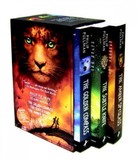
His Dark Materials series. When I finished the first book in this series, I was kind of scratching my head and not sure if I wanted to continue. But I’m so glad I forged on. The series was just so imaginative and deeply thought-provoking I wished I could just continue to experience it. And that is the hallmark of a great book: it creates a land you simply don’t want to leave.
The Dark Is Rising sequence. A never-to-be-forgotten school librarian introduced me to these books when I was only nine years old. I will forever be grateful. Even on multiple readings as an adult, I am still in awe at how well-written these books are and how complex. This is one of the best epics of good versus evil, light versus dark, EVER. Magic, Arthur and Merlin, the old hills in Wales … it’s all steeped in British legend.
Flowers for Algernon. Love, love, love this book. It can make me cry every time, too. What a lovely story about intelligence and humanity and gaining new skills and a new life and then losing them.
The Mortal Instruments and the Infernal Devices series. I absolutely adore these books by Cassandra Clare. When I found the first set a few years ago, I devoured them in no time flat. The story is good, but the characters and their dialogue and interactions are the best part. I loved how Clare could make me laugh out loud, and the romance between the two main characters is truly sizzling.
Anna and the French Kiss. I don’t know how much this completely compares to the others on my list here for utter staying power and memorability in, say, 20 years from now, but it absolutely delighted me. It’s a very fun teen romance.
If I Stay. Wow, what a great book. I loved the absolute real-ness of the whole story and its ability to make me root for the characters. The main character has such a beautiful relationship with her family members. I loved that the family unit was intact and that the parents and children loved each other so much. But at the same time, the main character has to decide if she should go with them or stay with her life and her boyfriend, who is a fine young man.
Feed. I really didn’t like the HUGE amount of strong language in this book. For me, it was really distracting. But the story is a really fine tale to get teens thinking, no question, about the amount of electronic interaction they have in their worlds. How far will we go as we allow electronics to become literally embedded in our lives?
The Hunger Games series. Yes, these are almost so ridiculously popular right now it seems silly to comment on them. But they are good books, and no doubt will become new classics.
A Ring of Endless Light. I read all of the Madeleine L’Engle books I could get my hands on when I was a teen. I will have to write about L’Engle in another post sometime. I just feel bad she didn’t get better represented on this list. She was amazing.
The Goose Girl. OK, I haven’t read this one. I must change that. I have read about five other Shannon Hale books, and I think she is an amazingly talented writer. She writes with a beautiful, lyrical style in the “serious” books, and she’s just got a great sense of humor in her lighter ones.
A few I thought were good but I don’t think will necessarily stand out from the crowd given a few years:
Divergent series. I did enjoy the first book, but I haven’t even felt compelled to read the second one yet. I may or may not get around to it.
Vampire Academy? Bloodlines? Wha? I don’t think so. I only think it’s on here because it and a bunch of other similar books are riding the popularity coattails of Twilight. If I’m wrong, please tell me I must read these and why. Same goes for House of Night series. Coattails.
Sarah Dessen books Just Listen, Along for the Ride, and The Truth About ForeverAND This Lullaby. Wow. Four whole books. Eh. I enjoyed reading Along for the Ride, and I wrote that it was good, but apparently it wasn’t great enough for me to want to rush out and read more, and now I barely remember it.
And then there are a few others that are kind of in the middle for me. I did enjoy the Shiver series by Maggie Stiefvater, but I don’t know if I’d call it among the 100 best. Hm. Same goes for Delirium. I admit I eagerly await the third book after finishing the second installment, but we’ll have to wait and see if it should also be among the top 100. I would probably put Uglies as a single book in the top 100 for sure, but as much as I really liked that book, I liked the series less and less as it went along. I just didn’t like the direction it ended up taking. I also read Before I Falland Unwind, which were thought-provoking in their own ways, but I don’t know if they’d get top billing. At the same time, though, I haven’t read any other Neal Shusterman, but I hear he is quite good, so he does probably merit a spot in the top list. As for the Gemma Doyle trilogy, I read the first book and was only mildly interested. Never read the rest.
I may very well need to make this into a series of reflections and think about some books I’d add onto the list if it were mine. But that is going to be for another post and another day.
While this topic may potentially offend some people or make me seem like a zealot or a super-strict mom or any number of other things, I think I’d still like to approach it because I think in our world of ever-dominant electronics devices, it’s a good idea to take a step back and think carefully about how we use them, where, and when.
This weekend we had a large gathering at church, one we do about twice a year, where all the members of our church in our area came together to listen to inspirational messages. As with most of our weekly meetings, the Sunday-morning meeting included adults and all ages of young people: babies, toddlers, teens and all in between. With a gathering this large, I had occasion to glance around me during the meeting to see how the young people were occupying themselves. Two- and three-year-olds were invariably snacking on Cheerios or other bite-size goodies or looking through quiet books; six- or eight-year-olds were either sitting mostly quietly or sometimes looking at books or drawing. Teens were listening to the speakers or sometimes supervising younger siblings. And in the hands of kids of any age I saw quite a few smart phones. Little kids were playing simple games; teens might be doing the same or texting. No matter the age, bright little screens were being employed in every row.
This is for illustration purposes only; the second I was done taking the photo, she had to give up the game. (ha!)
I had a few reasons for feeling dismayed at this sight. But first, I will explain my expectations, having four daughters myself. I definitely do not expect toddlers to sit still and do nothing but listen during any kind of church meeting. Three- and four-year-olds can often sit mostly still, however, and occupy themselves with books or coloring. And any kid older than eight is usually capable of sitting still and listening to speakers without needing distractions or toys. No, they won’t necessarily get a LOT out of the meeting, but they can pick up bits and pieces of truths that are imparted over the pulpit, and they can practice sitting still and being patient during a time they may still at that age consider to be “boring.” After all, they are at the age of eight already in school and heading toward a stage where they will frequently be sitting and listening to teachers “lecture,” at least for an hour at a time.
I can also make clear that I’m not a big fan of electronics for kids. Period. I do love gadgets (see my kitchen gadgets post and my ode to my Kindle), so I’m by no means a Luddite. I think that we have some amazing technology, and it’s very helpful in its way, at the proper places and times. But I also believe that children still need fairly limited times interacting with any kind of screens, be they TVs or computers or portable devices. Young children need time to be free and have opportunities to create and imagine and use their own minds to keep busy. It’s vital for their healthy development. Giving them a gadget of some type to stay busy with just trains them to turn to electronics whenever they’re bored. I try to limit the time my kids spend watching TV or movies or using the computer or playing on the Wii or Xbox, and they don’t get to play with my iPod Touch.
Now back to the church setting. It dismays me a bit to see iPhones or other little games in the hands of small children because it’s training them to turn to electronics rather than draw or create or read. But it doesn’t bother me a great deal because I respect that for some parents, it’s one of the tools in their arsenals to keep those little ones quiet and busy during a church meeting. Even though I haven’t chosen to have my little ones play on electronics devices, I appreciate it is useful for some other parents.
What bothers me the most is seeing teens or tweens using these gadgets at church. Kids of these ages are perfectly capable of sitting still and listening and getting something from a religious service, and allowing them to distract themselves via video games or texting or surfing the Web is depriving them of the opportunities to learn patience, sit still for an hour, and experience the peace and soul-satisfying feelings of religious worship. Some people out there may not consider faith or organized religion to be important, so they can probably just disregard this whole post. But for those parents who value the role of religion in their lives and the lives of their children, I say, make sure your children aren’t distracted so they can actually feel the good feelings that come from being in a religious meeting. I personally think it’s absolutely crucial that my daughters learn to feel the Holy Spirit, and understand how it can guide them in their lives. I want them to know that God and Jesus Christ are there and that they know them and want to help. Our family devotions of reading scripture and praying are part of that process of helping them to know those things and to turn to God for help. Church services are another piece of that important puzzle. I wouldn’t dare to distract them when they have the opportunity to experience peace and the Holy Ghost at church, and electronics are an easy distraction.
I don’t want to be judgmental, but at the same time, I wonder how many parents have given serious thought to how much electronics can take away from valuable experiences that require quiet and contemplation. Computers and the Internet and games and all of those things can be real sources of distraction, and it’s not a minor issue. I thoroughly enjoyed an article by David A. Bednar called “Things As They Really Are,” which addressed the issue of “cyberspace” interactions and experiences. In it, he said, “Sadly, some young men and young women in the church today ignore ‘things as they really are’ and neglect eternal relationships for digital distractions, diversions, and detours that have no lasting value. … A young man or woman may waste countless hours, postpone or forfeit vocational or academic achievement, and ultimately sacrifice cherished human relationships because of mind- and spirit-numbing video and online games.” And I think those last words are revealing: these devices are numbing. They do not challenge us or encourage us to grow in any way; they simply numb us and prevent us from feeling or thinking too much at all. And why do we attend church? To grow, to ponder, to commune with the divine. We go to be inspired. How can we do that when our minds and spirits are being numbed by electronics? Bednar went on to say: “Please be careful of becoming so immersed and engrossed in pixels, texting, earbuds, twittering, online social networking, and potentially addictive uses of media and the Internet that you fail to recognize the importance of your physical body and miss the richness of person-to-person communication. Beware of digital displays and data in many forms of computer-mediated interaction that can displace the full range of physical capacity and experience.”
As parents, let’s not get enmeshed ourselves in these potentially destructive uses of technology, which can really be a great blessing in so many ways. And let’s not allow and encourage our children, who are in such tender, formative stages of development, to be distracted and numbed, especially when they are in a sacred place like church, when they could be feeling the best of feelings and influences. Let’s think more carefully about how we use our electronics, when, and where.






 Life and Lims