Sometimes a movie is better than the book

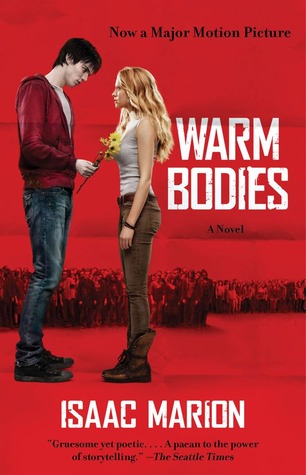
Warm BodiesSo I recently read Warm Bodies by Isaac Marion, after I’d seen the movie — twice (my teen daughter and I went to see it and then I took my husband for a date night too, since I’d ascertained he’d enjoy it). I was so thoroughly charmed by the movie, by the sweetness of the characters and the love story and the really clever witticisms sprinkled throughout that I was happy to see it in the theater twice. It was particularly a welcome good movie in the midst of what’s usually a film wasteland in January/February.

Naturally, as an avid reader, I had to check out the book. I downloaded it on my Kindle and set to it. I was dismayed primarily to find that there was A LOT of language in it (about 40 f-words: yikes!). But I also found it was a bit harsher and less “innocent” than the movie: the characters were more jaded, the dad really wasn’t a good guy even underneath his protect-everybody toughness, and it just didn’t have quite the level of sweetness and charm that I loved about the movie. Now, some people might find that welcome; I didn’t.

I can only think of one instance in which a movie was better than the book: the horribly cloying, simplistic and poorly written Bridges of Madison County was much better in film version, at least with two talented actors. I might be able to say the same for a couple of Nicholas Sparks movies, which weren’t too bad considering I really dislike his writing (I’ve already mentioned THAT).

I have yet to see “Beautiful Creatures,” but I’m guessing I may very well enjoy the movie better than the book, because I didn’t think the book was great. The supposedly intense love story lacked the sizzle and zing it should have had, and the details of the plot didn’t always come clear as they should. With the acting talent in the movie, I’m thinking it’ll be more enjoyable than the book was. But that’s just a guess.

So I’m going to be eagerly awaiting the DVD release of “Warm Bodies,” whereas I won’t be rereading the book.

My top books of 2012

Since 2012 is winding down very quickly, I thought I would jump on the bandwagon of “top of the year” lists with my top reads this year. Most are books that were also published this year. I’m not making it a top 10, just a top whatever. (I don’t want to give a couple of extra books kudos they don’t necessarily deserve just to make it an even 10. So there!)

So here goes:

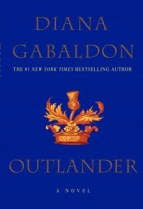
  1. outlanderThe Outlander series by Diana Gabaldon. (This is actually the only entry on this list that wasn’t published this year.) Another blogger mentioned these books, and I decided to try them out. I got hooked just as thoroughly as many other readers. Normally, I would say they’re too long and full of far too much detail, but the characters and the interesting premise kept me reading. I read four, dying to know what would happen next, and then did get slowed down in the fifth, (finally coming to a point that I felt I knew enough about what had happened to them) so I’ve put it aside in favor of other books. The only downside is the sex: there’s a lot and it’s described in a lot of detail. 
  2. Goodbye for Now, by Laurie Frankel. I just read this book and found it utterly charming and funny at turns and at other times sweetly poignant and heartbreaking. Frankel describes so perfectly how it feels to lose someone you love dearly. She balances grief and new love all in one lovely book that made me both cry and laugh out loud. Plus, it has a very clever premise.
  3. EdenbrookeEdenbrooke, by Julianne Donaldson. The first in a new “series” of books called “proper romances,” this book takes readers into Regency England and brings it to life with a sweet, clean romance almost as well as Austen herself. A really fine work that aspires to grand heights of Jane-dom and doesn’t disappoint.
  4. The Secret Keeper, by Kate Morton. I’ve become a Morton fan over the past few years she’s been writing her Gothic stories full of family secrets, and this newest novel just cemented my fanaticism. Always a pleasure.
  5. On the note of further books by authors I’ve come to appreciate is also the latest middle-grade book by Rebecca Stead, Liar & Spy. She was rightly awarded a Newbery for her fantastic book When You Reach Me (the plot revolves around A Wrinkle in Time: she got my attention right away), and this newest, though not so cleverly plotted, was still poignant in just the right dose and a charming read for young readers and adults alike.
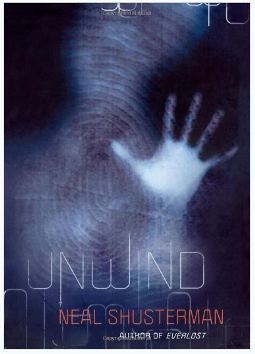
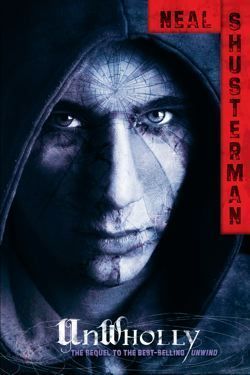
  6. Then there are the books that came next in series that lived up to the hype of the previous books. First, there’s UnWholly, an unexpected sequel to Unwind, a YA book with an incredibly thought-provoking premise that was packed with action to boot. I’ve already written in detail about these books, so just click here to read that post.
  7. Pandemonium was a great sequel to Delirium, another YA dystopian series, in which society has decided that love is a disease that can be eradicated. I thought that the sequel was just as entertaining and interesting as the first book, perhaps even better. I am now chomping at the bit to read the conclusion.
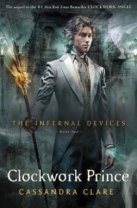
  8. Clockwork-PrinceClockwork Prince was one of two new books this year by Cassandra Clare. It was the second in her Infernal Devices series, and I enjoyed it even more than the first in the series, and definitely more than the fifth book in her Mortal Instruments series, City of Lost Souls, which was really disappointing. I love her combination of hot romance, supernatural demon-fighters, and wit. I just wish someone had made her take some time to make City of Lost Souls better. I hope that the last in the Infernal Devices series doesn’t disappoint.

Parents’ and schools’ responsibility to young readers

So I received an email through my Rated Reads site, asking me for guidance on resources that can provide information about content in books for younger readers. It got me thinking again about the place for parental involvement and potential restrictions on books for elementary-school students. I suppose I’m a little late to the game in terms of this topic because Banned Books Week was over a month ago, but here goes anyway.

Before I say anything else, I’d like to make clear that I am against “censorship” in general (let me restrict this discussion purely to books). That entails actually suppressing and forbidding the viewing or use of particular passages or entire books. It’s not my place to decide what kind of content should be completely forbidden, and it just sets a bad precedent. I wouldn’t want someone else to have the power to forbid what is viewable by me or my family members.

So while I am against forbidding things entirely to most readers, parents and educators do have a responsibility to young children to make sure they read material that is appropriate for them. Even then, I hesitate to ban books entirely because, while I wouldn’t want a child getting hold of soft porn, for example, I wouldn’t agree with those people who were eager to ban Harry Potter because of its theme of magic.

What I am a proponent of is information. That’s why I started Rated Reads, a modest effort though it is. But at least it’s something. We have nearly 1,000 books featured with content ratings and moderately detailed paragraphs explaining what kind of potentially objectionable content is in each book. I firmly believe that each reader and, in the case of children, each parent should be able to have resources to find information that will allow him or her to make a decision.

I would like to think that books that are selected for a children’s library are going to be appropriate for young readers and acceptable to most parents, both in thematic content and possible sex, violence, or bad language. But young readers who are ready for young adult books, for instance, deserve to not be shocked by what they read or to have their parents be shocked. There are a lot of great young adult books that are fine for younger readers, that don’t have strong language or detailed violence or sex scenes. But there are just as many that I wouldn’t want my younger kids reading.

Since elementary schools generally have limited space, I think it would be wisest to select books that will be most age appropriate and least objectionable to parents. But at the same time, there may be a few YA books that would be great reads, in terms of stimulating thought on various topics, that might be nice picks for those libraries. And some of those might have some violence or other scenes that could be objectionable to parents or their kids. In these cases, it seems it would be particularly smart for everyone to include a kind of electronic ping with further information for the student and her parent when it comes to checkout time. This would allow parents to give a yea or nay to their child reading that book; a note could be sent home before the book is approved for checkout, providing details about why that book could be a poor choice, including themes, sex, violence, and language.

Now there are going to be some parents who are very careful about using this system, saying no to some books and yes to others based on their consideration of the information provided; there are definitely going to be other parents who simply won’t care. And that is their business. If I were that child’s teacher, or a fellow parent, I might not agree with those parents’ decision, but it wouldn’t be my responsibility to override or actively disagree in some other way. As long as a parent hasn’t been declared unfit, it is his or her responsibility to make decisions regarding his child, and that needs to be respected.

But there is no doubt in my mind that more information should be available so readers and parents of readers can make more informed decisions. I don’t think it’s always possible or practical for a parent to read every book a child would like to read, becoming the child’s first reader. We just need more information. Again, that’s why I’m doing Rated Reads. But I’d love to see more coming direct from publishers or something similar (I suppose that’s kind of another topic, but in brief, I don’t see why it would be so hard for the editor to include a brief description that states how much language or sex or violence is in it…). There’s simply not enough information available about most books.

So. What are your thoughts? Do schools sometimes need to be more cautious about what they choose to stock in their elementary libraries? Do parents need more information, and how should it be provided? And what about junior highs/middle schools and high schools?
Review and thoughts on ‘UnWholly’ and ‘Unwind’

Although I write book reviews on my review website, Rated Reads, sometimes I’d just like to take a little time to write extra about the books I’ve read and put them in context in other ways. After reading Neal Shusterman’s UnWholly, the sequel to his young adult book Unwind, I find myself having to wax eloquent and enthusiastic about this series.

In brief, Unwind introduces a future in which there has been a war between pro-choice advocates and pro-lifers. It is ended when the two sides come to an agreement in which abortions are outlawed, but teens may be “retroactively aborted” or “unwound” by essentially donating their organs and ALL of their body parts. Whoa! What a concept! I love to read books that have compelling, original premises, and it thrills me when the authors are skilled enough to be able to execute those ideas perfectly. Neal Shusterman has written quite a few other young adult books, including the popular and well-regarded Skinjacker Trilogy (which I have yet to read but have heard good things about), and he also writes screenplays. So he was the right man for this job, with experience and skill.

I was introduced to Unwind by a friend, who had our book club read it, and it was a great book to use for that purpose: it’s interesting and fairly easy to read, but it is so thought-provoking that it provides plenty of material for discussion. UnWholly continues the series very well, keeping up a fast pace filled with action, and introducing new characters and new ideas that are ripe for dissection. What’s particularly interesting to me is that Shusterman doesn’t seem to have a clear “agenda” in that he’s obviously pro-life or pro-choice; he allows readers to just think about all the issues and ramifications of the choices that have been made by those two groups and society as a whole in this imagined future.

What’s nice is that Shusterman also chooses not to fill the books with bad language, vulgarity, sexual content or gore, which plenty of writers out there would certainly be tempted to do to give it “authenticity” (I’ve already discussed my feelings about THAT). There is occasional bad language and some violence, but it’s not too detailed or gross, just enough to get the point across and move along the action and plot. Good going, Neal!

This series is great for teens and adults alike, for entertainment and for the seeds of a good discussion about a variety of moral and ethical issues. Honestly, I think this trumps The Hunger Games for a few reasons and should get more attention because of that: it’s just as action-filled, compelling, and exciting, great for guys to read as well as girls (’cause honestly, there aren’t necessarily as many popular books out there geared towards teen males as there are toward female readers), but it has more elements that give food for thought. Hunger Games makes one think about the excesses of government and the concept of reality shows gone too far, but after that, it is just a good story. But Unwind and UnWholly continue to provide topics for discussion and pondering as the stories go forward, not just giving pause for thought with their premises. I’d definitely recommend this series for anyone who loved Hunger Games.

The magic of reading aloud to a child

I’ve been blessed with four amazing daughters, and I have to say that, despite my general unease and unpreparedness for being a mother when I first gave birth, one of the things I most looked forward to at that time was being able to read to my children. I wasn’t a big fan of newborns or even older babies; I was eager to teach and talk to little people. Over time I did get better at appreciating the fun parts of having babies around, but I still think that my favorite part of raising children is teaching them and interacting verbally. What fun!

As a reader myself, sharing books with them was a big part of that teaching and communicating. I admit, however, when I first started reading aloud to my now-16-year-old, I was not a fan of the ABC and 1-2-3 books that we had to read OVER AND OVER. And over. And over. And … well, you get it. And over. Gah! Richard Scarry, cute. But I can only count so many bunnies and watermelons up till 3 or 4 or even 10 until my head’s about to explode like a ripe melon hit by a sledgehammer. I was SO excited when she got past that stage and I could read actual stories to her. Then we went through the stage of the very short stories that we read over and over and over. Even Dr. Seuss started to get on my nerves a bit. No, Mom, no. Don’t say that!

At any rate, I toughed it out and read to my girls every night. Unfortunately, I will also admit that as the third and fourth came along, I ended up getting a little busy and just overwhelmed to read to every single one of them every single night. My youngest hasn’t had the privilege of me reading to her every night before she nods off. The best she’s had was me reading to her in the middle of the day just before naptime. Now that this littlest one is in kindergarten, I’m going to have to figure out a good time to read to her and with her regularly. ‘Cause for a while there a few years back, I really was going bed to bed and room to room at 8:00 at night and reading with one girl at a time. An hour later, I was definitely ready for bed myself. Alone time with the husband? Important, yes. Did we get much of it? Not really.

So the routine’s gotten shaken up, but I’ve still logged many very pleasurable hours reading with the girls, at various stages and differing ages. Even my oldest enjoys having me come in at night sometimes as she’s finishing up schoolwork and Facebook-chatting and all that kind of teen stuff and lie down next to her on her double bed and read aloud as she winds down and relaxes to the sound of my voice. With her, I’ve read some of A Tale of Two Cities or Huck Finn or All Quiet on the Western Front, all assignments for classes, or we’ve pulled out a few old favorites for some fun. Maybe I’ll even read to her the night before she gets married someday. It’ll be the best way to remember our time together as mother and daughter at home.

My third daughter is an absolutely voracious reader and has been wolfing down books this summer in particular. We’ve had fun with a few in particular: I read Freaky Friday, one of my favorites from when I was a pre-teen long ago, aloud to all of the girls who wanted to listen some months back, and we all laughed and chortled and chuckled together at all the funny things that happened (Boris and his beetloaf … funny stuff, man). This past month or so, this third girl and I have been reading the very charming and quotable books about the Incorrigible Children of Ashton Place by Maryrose Wood. I am of the opinion that read-alouds are most fun when they provide many opportunities for giggling and lines to quote later as a shared experience. Daddy has no idea what we’re referring to, which is different from all of our shared family movie quotes.

I read Eragon aloud with my oldest when she was probably about 10, and it took us six months to get through. But we enjoyed it. The movie version came out not long after, and she and I joined together in great distress and disgust when the movie version was absolutely horrible. What a shame!

I admit that though I do have children of varying ages, picture books up through teen and adult books, and I do a ton of reading on my own, young adult books aren’t my specialty. I have lots of blogger friends who really know a LOT about the middle-grade and young adult genre. So I think my last point here is: what do you think qualifies as great read-aloud material for middle readers, in particular? I think that something of a modest length and with some silliness is extra handy. More “serious” material is fine as well, but the silly factor makes it lots of fun. Any ideas?

Favorite teen books, part 2

So since I wrote about my take on NPR’s top-100 young adult books, I realized I had a lot more to say on the topic. First, I felt that there were a fair number of books on the list that were just so-so and wouldn’t really stand up in 20 years or more to be “classics.” So then I thought, “Hm. So what books are missing from this list that should be on it?” And I realized, looking through all of the books I’ve kept and lugged around with me through thousands of miles of moves and lots of years, that I didn’t really have a lot to add to the list, for a few reasons. First, some of the books I remember loving and reading over and over were actually more like middle-grade books, rather than for older teens. Second, I’d like to see more Madeleine L’Engle books on the NPR list, but at least her teen books were represented with A Ring of Endless Light. (The wonderful series that starts with A Wrinkle in Time, of course, is really more aimed at middle readers.) Third, I just couldn’t find any other books I’ve read and enjoyed that weren’t on the list already or were really what I’d call classics. Yes, there have been some great books written in the past 25 years or so since I wasn’t a “young adult” myself, but I think most of what I have read more recently as an adult has gotten represented. Honestly, though, I think the list would be better if it were just a “top 50.”

So I’m going to write today just a bit about some of the books that I did absolutely adore as a younger reader, books I either kept from buying them way back when or that I bought later on to have copies of in my home library. They’ll fit into a few different categories, but I’ll just kind of lop them together in this post.


  1. Middle-grade books I adored and read and re-read: These are easy: The Chronicles of Narnia by C.S. Lewis and A Wrinkle in Time and sequels by Madeleine L’Engle. I have no idea how many times I went back to savor these. I will say now as an adult that I have read some with my daughters, and I still enjoy them for various reasons but am not quite as captivated. I’m guessing that has to do a little with the age level. Susan Cooper’s The Dark Is Rising sequence is so complex in its world and how it is written that it can be read by middle readers but still is great for older readers, and it’s held up well for me as an adult. I don’t think that this means anything negative about the middle-grade books I loved so much back then, but they were, I think, really well-aimed at those ages, rather than being for a broader age group. But others may very well disagree with me on that opinion.
  2. On to L’Engle’s teen books: as I just mentioned, there is a definite difference in target audience between A Wrinkle in Time and the Austin family books, even though there are connections in characters who appear in the two major sets of books she’s written (about the Murrays and Austins). The characters are different ages, as are the target readers, and have different kinds of struggles and experiences because of their ages. I love how I was able to grow up with Madeleine L’Engle’s characters, moving from middle reader to teen.
  3. On teen books that were my absolutely most-read: thank you, Beverly Cleary. She, like L’Engle, wrote books for a variety of ages of young readers, and I grew up with her characters as well. I enjoyed Ramona and then went on to gobble up her teen romance stories. I really could have added in Cleary’s teen romances to the great clean romance list I contributed to and wrote about here. I read two books countless times: Fifteen and The Luckiest Girl. They are so well-worn they’re soft to the touch. My 16-year-old, who has kind of grown out of gobbling up books the past few years, still has read and re-read Fifteen almost as many times as I read it (at least 15). Some teens today might think that the stories are dated, and while it’s true they are most definitely set in a “simpler” time, they are still swoon-worthy and absolutely delightful. They’re clean, romantic and absolutely true. I wish more books today were as good as those.

And there you have it. I may revisit the topic and talk more about middle-grade books in the future, but for now this is how I view some of my old faves.

Best young adult novels?

So NPR just released the results of a poll it conducted asking people to nominate and then vote on finalists in the category of teen novels. I did see the poll soon enough to vote on the finalists. I found that I was a little surprised at some of the books that were nominated enough to make it to a finalists list of 235 titles. There were some fun books on there, but quite a few weren’t ones I would consider truly excellent or memorable. I do think that this final 100 is fairly good and mostly reflects books that will stand the test of time.

Some of my favorites on the top 100 are these:

  • Harry Potter. No question. These books were popular for a very good reason. Not only was the whole series complex, detailed and full of wonderful twists and turns, but it had great characters, an unforgettable world to visit and revisit, and cleverness and wit galore.
  • The Book Thief. Yes, it got a lot of attention and word-of-mouth when it was published a few years back, and rightly so. Many books have been written about the Holocaust, but this was one that was relatable for teen readers as well as adults and was beautifully rendered, powerfully affecting and vividly evocative.
  • The Giver series. I suppose that this was almost an early entry in the now-burgeoning sub-category of dystopian novels. But each of the novels in the series got my attention and made me think about the cost of “equality” and “perfection.”

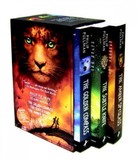
  • His Dark Materials series. When I finished the first book in this series, I was kind of scratching my head and not sure if I wanted to continue. But I’m so glad I forged on. The series was just so imaginative and deeply thought-provoking I wished I could just continue to experience it. And that is the hallmark of a great book: it creates a land you simply don’t want to leave.
  • The Dark Is Rising sequence. A never-to-be-forgotten school librarian introduced me to these books when I was only nine years old. I will forever be grateful. Even on multiple readings as an adult, I am still in awe at how well-written these books are and how complex. This is one of the best epics of good versus evil, light versus dark, EVER. Magic, Arthur and Merlin, the old hills in Wales … it’s all steeped in British legend.
  • Flowers for Algernon. Love, love, love this book. It can make me cry every time, too. What a lovely story about intelligence and humanity and gaining new skills and a new life and then losing them.

  • The Mortal Instruments and the Infernal Devices series. I absolutely adore these books by Cassandra Clare. When I found the first set a few years ago, I devoured them in no time flat. The story is good, but the characters and their dialogue and interactions are the best part. I loved how Clare could make me laugh out loud, and the romance between the two main characters is truly sizzling.
  • Anna and the French Kiss. I don’t know how much this completely compares to the others on my list here for utter staying power and memorability in, say, 20 years from now, but it absolutely delighted me. It’s a very fun teen romance.
  • If I Stay. Wow, what a great book. I loved the absolute real-ness of the whole story and its ability to make me root for the characters. The main character has such a beautiful relationship with her family members. I loved that the family unit was intact and that the parents and children loved each other so much. But at the same time, the main character has to decide if she should go with them or stay with her life and her boyfriend, who is a fine young man.
  • Feed. I really didn’t like the HUGE amount of strong language in this book. For me, it was really distracting. But the story is a really fine tale to get teens thinking, no question, about the amount of electronic interaction they have in their worlds. How far will we go as we allow electronics to become literally embedded in our lives?
  • The Hunger Games series. Yes, these are almost so ridiculously popular right now it seems silly to comment on them. But they are good books, and no doubt will become new classics.
  • A Ring of Endless Light. I read all of the Madeleine L’Engle books I could get my hands on when I was a teen. I will have to write about L’Engle in another post sometime. I just feel bad she didn’t get better represented on this list. She was amazing.
  • The Goose Girl. OK, I haven’t read this one. I must change that. I have read about five other Shannon Hale books, and I think she is an amazingly talented writer. She writes with a beautiful, lyrical style in the “serious” books, and she’s just got a great sense of humor in her lighter ones.

A few I thought were good but I don’t think will necessarily stand out from the crowd given a few years:

  • Divergent series. I did enjoy the first book, but I haven’t even felt compelled to read the second one yet. I may or may not get around to it.
  • Vampire Academy? Bloodlines? Wha? I don’t think so. I only think it’s on here because it and a bunch of other similar books are riding the popularity coattails of Twilight. If I’m wrong, please tell me I must read these and why. Same goes for House of Night series. Coattails.
  • Sarah Dessen books Just Listen, Along for the Ride, and The Truth About Forever AND This Lullaby. Wow. Four whole books. Eh. I enjoyed reading Along for the Ride, and I wrote that it was good, but apparently it wasn’t great enough for me to want to rush out and read more, and now I barely remember it.

And then there are a few others that are kind of in the middle for me. I did enjoy the Shiver series by Maggie Stiefvater, but I don’t know if I’d call it among the 100 best. Hm. Same goes for Delirium. I admit I eagerly await the third book after finishing the second installment, but we’ll have to wait and see if it should also be among the top 100. I would probably put Uglies as a single book in the top 100 for sure, but as much as I really liked that book, I liked the series less and less as it went along. I just didn’t like the direction it ended up taking. I also read Before I Fall and Unwind, which were thought-provoking in their own ways, but I don’t know if they’d get top billing. At the same time, though, I haven’t read any other Neal Shusterman, but I hear he is quite good, so he does probably merit a spot in the top list. As for the Gemma Doyle trilogy, I read the first book and was only mildly interested. Never read the rest.

I may very well need to make this into a series of reflections and think about some books I’d add onto the list if it were mine. But that is going to be for another post and another day.

A brief introduction to my favorite books

As a newspaper book reviewer for more than a dozen years, two of which I was the editor of a book page, and a member of the National Book Critics Circle, as well as having my own book review website, I think I could say I’m an expert on books. At the same time, the more you know, the more you realize you don’t know, so I hesitate to call myself much of an expert on anything at this stage of my life. I know how little I’ve read of so many things and would like to read more, but there’s only so much time, isn’t there? I’ve read a number of classics that have enriched my knowledge and understanding of all kinds of topics, but then I’ve missed out on a lot of them as well. So, that being said, I’ll talk a bit about what I enjoy reading, what moves me, enlightens me, inspires me, opens my mind, and just entertains me.

I read a bit of most everything. I like fiction and nonfiction and young adult literature. I still have a great fondness for the award-winning books I loved as a child, and it’s been a true delight to share those with my daughters as they’ve gotten old enough to appreciate them. I don’t think I read a lot of genre books, like science fiction, and even though I did get caught up in the Twilight books, I didn’t just jump on the paranormal bandwagon. I try to be selective about what I read, checking with friends and now GoodReads, for instance, to see what other people have said before I invest time in any book. I’ve collected quite a few books over the years I’ve been reviewing, since reviewers get free review copies, but I’ve also gotten rid of most of them except the ones I truly loved.

Sometimes I enjoy a book not so much for the story but for the way it’s written — poetic, lyrical, lovely, clever, full of great metaphors — and sometimes I just like it because it has fun characters or a super-clever or engaging plot. I love to be surprised, so I adore books (and movies and TV shows, too) that are able to pull off a great plot twist that I don’t see coming (but it has to make sense). I suppose that’s why I adore gothic stories; one of my absolute favorites is The Thirteenth Tale. Wowee. There just aren’t nearly enough good twists like the one Diane Setterfeld pulls off in this one. I don’t typically read a lot of sci-fi, but I have enjoyed a few good science fiction tales over the years (I do quite appreciate Orson Scott Card, even though I’ve still never managed to read what is by all accounts his best book, Ender’s Game). I like fantasy better than sci-fi, so I’ve read more of that (I loved Card’s Seventh Son series about Alvin Maker).

Sometimes I’m in the mood for a hefty tome that digs in deep to a topic, and sometimes I just need some good fluff. I’ve found that YA love stories satisfy me well on that latter count (I found Anna and the French Kiss to be delightful, for example, as well as I Now Pronounce You Someone Else). I like to learn about all kinds of topics, particularly science and health and different places (this book on memory research was fascinating: I didn’t realize just how complex it is to figure out biologically and chemically how our brains create memories), and I appreciate good memoirs (especially if they combine science and humor, like Richard Feynman’s wildly entertaining Surely You’re Joking, Mr. Feynman!). Any book that includes passages on grammar or punctuation earn points with me, as did one character’s two-page riff on a comma error in The Elegance of the Hedgehog, a great book even without that hilarious-to-a-copy-editor segment, and once I read Jon Krakauer’s riveting account of disaster on Mt. Everest (I was skeptical when a friend suggested I read it), I’ve found myself attracted to other mountain-climbing books.

I still have all the books I acquired as a child and teenager, and I’ve shared them with (sometimes foisted them on) my daughters. It doesn’t get better than Madeleine L’Engle’s A Wrinkle in Time or Susan Cooper’s The Dark Is Rising series. The latter especially has held up for me as an adult reader: the books are complex with lovely storytelling, great vocabulary and legend.

Ah, I could go on and on. But that’s what more posts are for. So stay tuned.