Just don’t say ‘if you just…’

Ever had a problem; been frustrated, angry or a little depressed; felt stuck? Ever had someone tell you, “Well, if you just did this ______, you’d be fine?”

I’ve had people say that to me. And it shuts me up. It doesn’t help me, but it stops me from talking to those people. I don’t know if I’ve ever said it to someone else; I hope I haven’t. I know I’ve thought it. But at least for a long while now, I’ve known better than to say it out loud. And I’ve tried to remind myself of the truth:

Any one of us can have problems and challenges that, compared with someone else, somewhere, can look tiny, easily surmountable. Sometimes it’s helpful to realize others have it worse. If we look at our lives with appreciation and gratitude for the good things we have, it can help. But usually, trying to tell ourselves logically (or have someone else “helpfully” do so) that our problems shouldn’t be such a big deal does squat for our feelings.

Here’s why: we are allowed to feel how we feel. We’re meant to feel. We’re meant to have feelings in response to life situations, whether they’re kind of everyday things or unusual things. We’re meant to have all kinds of feelings all over the spectrum of emotion. And those feelings include “bad” ones. We’re meant to just feel those feelings. And what usually happens is once we allow ourselves to feel them, really feel them, we can move on to other feelings about other life events.

The problem is when we stunt that natural process by telling ourselves we shouldn’t be feeling “so bad” or by having someone else tell us so. It stops us from moving through the feelings, talking or thinking through the ideas and emotions.

Same applies to things we could or should be doing or doing better, not just what we’re feeling. Likely we’re comparing something we’re just naturally not so good at with something that really is easy for someone else, so we feel inadequate. Or we could compare something that’s easy for us with something someone else finds more challenging. And we say those dreaded words: “Just do ___.”

We all not only have a complex mix of weaknesses, strengths, natural talents and acquired skills, but we are at different stages in life. Something that was hard for us 20 years ago might be much easier now. Ditto for those around us. And something that was easy for us a year ago might be harder now because our circumstances are more challenging in other areas or we’re struggling with events that are zapping our emotional strength.

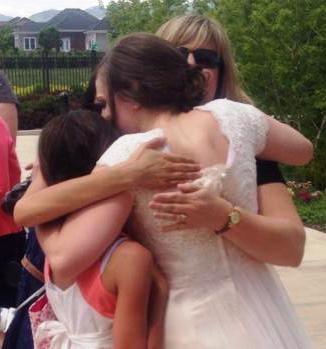
For me, I’m finding that I am feeling a general sadness in one layer of myself/my life because my oldest daughter got married a few weeks ago and moved out. But I hate to say anything to anyone because it just “seems silly.” She lives only an hour’s drive away and we can talk and visit. Every other parent my age has already had children go off to college or serve as missionaries for our church, during which time they’re gone for a solid 18 or 24 months and only generally in contact via email or letter once a week. So I feel ridiculous saying out loud that I’m grieving a little over the “loss” in a way of my first, amazing child. But it does make me sad she’s not around all the time anymore. I miss the daily interaction and talks and jokes and hugs and smiles and everything that was our relationship while I was raising her. Things are changing, have changed. It’s real to me. But I don’t want to say anything to anyone else for fear of being compared, of essentially having my feelings belittled because their “loss” is bigger. Their child is across the country or across the world … or something “bigger.”

I also find that I feel down on myself because I have generally been doing well with eating healthy, cutting out sugar and a lot of carbs, this past 10 months or so. But the past month, since right before my daughter’s wedding and since, I just haven’t had it in me to “diet” properly. I’ve been eating junk, and lots of it, and I feel physically yucky. I feel bad because I had done so well. But I also realize that circumstances are different: I’m “recovering” from all the work and stress of preparing for my daughter’s wedding; my kids are now out of school for the summer and my “alone time” is a lot less; I’m adjusting to the change of our family dynamics, and I’m trying to “play catch-up” for some work and things that got put on hold with all I did for the wedding (because I am not just an awesome mom but very capable in planning things and organizing, and the wedding was awesome too). In short, it takes a lot of work for ME to eat well. And even though I feel yucky physically and would really like to feel better, I have to have the emotional and mental energy to focus on taking care of myself, truly properly. Others might say (and heaven knows plenty of “professionals” and bloggers say) “just do it.” Just stop eating sweets. Just stop emotional eating. Right now, for me, it’s akin to saying, “Just stop smoking. It’s so easy.” I’ve never smoked, but I have certainly heard how hard it is to stop.

I’m trying to allow myself to feel, to validate my own feelings. I’m talking to a few trusted friends who are kind enough to listen and validate as well. I’m also trying to allow myself not to take it too hard that I’ve gained a few pounds and am having a hard time with the junk food. Because I also know that I’ll be fine soon enough and will get back to where I should be. If I’m not there at this very moment, today, it’s OK. I will be soon. And that’ll be OK.

In short, I’m giving myself permission to feel, to not be “my best.” And I strive to do that for others. When they talk about feelings or issues they’re struggling with, I know that even if they sound “easy” for me, they’re not easy for them. I nod, I listen, I hug. I say, to them and to myself, “That is hard. I’m sorry you’re going through that. I love you and care about you.” And it’s true, and that’s really all it takes.
Call me pro-people

We like to think our society in 2015 has made great strides in treating everyone fairly. Too often, however, we’re reminded that just isn’t the case, whether it’s in race or gender issues. And even saying you’re pro-whatever might brand you as something you’re not. For example, I guess I’m a feminist. I’m pro-life (anti-abortion), fairly conservative when it comes to politics or “values,” but I am a feminist. Pretty simple: I believe women should be treated with the same respect as men. Women should vote, hold office, run companies, raise families, … whatever they would like to do. Their opinions should be given the same weight as men’s. They shouldn’t be abused by men, they shouldn’t be raped. These are very basic principles. Goes the other direction, too, of course: women need to treat men with respect and kindness.

Same goes for color. I was raised just believing we’re all alike. Sure, we’re all different where it counts, in our personalities, our talents, our interests, etc., but how we look certainly has no bearing on those real matters of identity. Heck, I married an Asian, we have three half-Asian, half-white kids, and we adopted a black girl. I respect whatever cultures we bring to the table, but they’re not the defining things about who we all are.

I could go on and on. But I hope you get the idea: we’re all people. And all people deserve kindness, respect, civility, hope, opportunities, the chance to pursue happiness, and so on.

I’m always disappointed, however, when I see that other people apparently don’t see others of the human race that way. The latest story in the news is just that an 8th-grade girl’s T-shirt got Photoshopped out of a class picture because it stated that she’s a “feminist.” I’m still not quite sure what about that is offensive: like I said, if you believe women and men should all be treated with respect and have equal opportunities, it’s pretty simple.

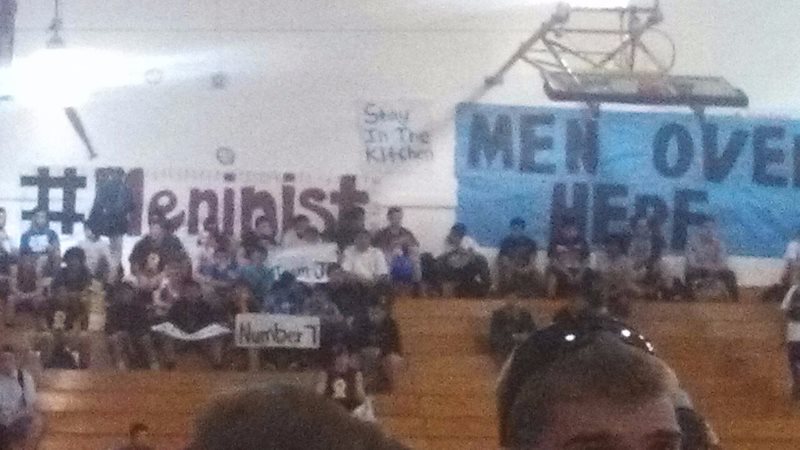
It struck home because right now I’m angry (yes, I got angry about this!) because my daughters’ high school allowed sexist (insulting, demeaning) messages on posters at a pep rally a few weeks ago. The student government/leadership group (ASB) led the charge on a “Battle of the Sexes” theme that’s been going on for some years (at least all four years my oldest, who graduated last year, attended). Done right, could be fun. But done wrong: ka-blooey. Here’s what some posters said, according to some students: “Stay in the kitchen,” “Female president? Nah” and “You woke up ugly”. Here’s a photo of one.pep rally

Anyone think these are respectful, fun, kind? This school and all the others in this system are always stressing how they are trying to instill character in the students, such as respect. The principal’s official online message even says this: “To help provide a safe and secure learning environment for everyone, staff members require students to treat every person at (our school) with respect, both in and out of the classroom.”

Hm. Curious. So in this situation, where the student “leadership” group’s members actively wrote and posted for the whole school to see messages that were disrespectful (and ridiculously antiquated: what decade IS this?), staff members who are required to be in place as overseers and advisers OK’d these messages.

I complained to the principal about this situation as soon as I could. We had a good conversation. I told him these messages were anything but respectful, and I said it would be a good opportunity for him and other staffers to use this as a learning situation for the students involved. Teach them what kind of messages we do want to send to others, whether it’s of the opposite sex or other races (can you imagine if the posters had been talking about race?!). Then have them take some responsibility for their poor choices and apologize themselves to the student body at the next rally.

Well, the next rally came and went last Friday, and the principal did none of these things. He stood up for three minutes and talked about how great the ASB is, how more students should be involved in it, and that some posters at the previous rally had bothered “some people” and he took “full responsibility.” The ASB teens were, after all, just 15- and 16-year-olds and didn’t really know what they were doing entirely. He pseudo-apologized and that was it.

This isn’t news because it’s unusual, just like the Ohio girl’s “feminist” message being censored from a class photo. It’s news because it reminds us just how much we still accept or gloss over disrespect to others, even when we know in some part of our brains that it’s “wrong” and we even get regular, “packaged” messages about respect. In practice, though, we treat people of other races differently and “less.” We accept all kinds of ridiculous messages in the media about how women should behave and look; we’re all about image, and the vast majority of us who don’t fit a certain image feel less than. Weight shaming is still tolerated. Commenters still somehow feel they’re perfectly entitled to comment online about how fat a certain celebrity is getting (see Pink or Kelly Clarkson, just in the past few weeks). In what universe does this all really seem OK? Ours, apparently.

When is this stuff going to stop? When are we going to put our collective foot down and say, “This is NOT OK!”? It’s not OK to body shame, it’s not OK to call names because of gender or race? It’s not OK to insult. Kindergarteners know this. Why do teens and adults seem to have forgotten?

When will we all just be people: people with all kinds of fascinating diversity of backgrounds and interests and talents and personalities, people who happen to look different because of color, because of disabilities, even?

I was hoping that day would come much sooner. In the meantime, I am putting my foot down, and I am saying loudly that respect to all matters. People matter.

Measles outbreak a sadly necessary wake-up call

My husband, who doesn’t follow news as closely as I do, has been commenting frequently this past week or two on the measles outbreak. It’s on his radar as much as it is on the radars of many other Americans who might not have realized how many people have been choosing not to vaccinate their children. Now, after measles has infected 102 people in 14 states just during the month of January, as the CDC says, the issue has been covered frequently in every kind of news outlet. Not a day has gone by that I haven’t seen at least one article on the topic just in my local paper.

Here’s what I have told my husband: Maybe it’s a good thing this has happened. Because, unfortunately, it usually takes a crisis to alert people to a problem. The problem is this: when a high enough percentage of the population isn’t vaccinated (a threshold we have reached now in the U.S.), diseases that used to be practically wiped out can pop right back up and infect — and kill — people.

I realize we are trying to tread a tricky line between individuals’ rights and government authority to compel people to do things. This is particularly challenging when those rights are ones that spring from religious beliefs. I am all too aware of how many religious beliefs have been trampled of late, but I think when it comes to the issue of vaccinations, the vast majority of those parents who are choosing not to vaccinate are not doing so because of religious beliefs. And their choice isn’t harming their own children; it is now actually killing others. That is when their right to choose ends: when it takes away someone else’s health or life. It’s as simple as that.

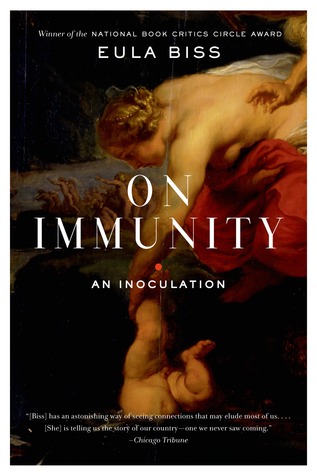
On ImmunityI reviewed a fascinating book fairly recently, On Immunity, a look at the history of vaccinations and the new class inequality created by those generally more upper-middle-class parents who are choosing not to vaccinate. It is a short book but one many more might want to check out now that the inevitable has occurred.

Some articles I’ve read most recently have indicated that some doctors are not accepting patients whose parents choose not to vaccinate or are having parents who had chosen not to vaccinate change their minds. That’s encouraging. I hope that this dangerous trend can be reversed before the situation gets worse.

A little can go a long way toward helping others

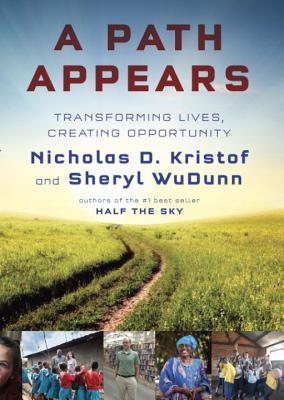
Path AppearsI’ve written before about how I wish I could do more to give to others, whether it’s money or time. So many worthy charitable organizations exist to address all kinds of needs, and so many individuals and families need all kinds of things. So I was heartened and inspired by a fantastic book I read last week, A Path Appears: Transforming Lives, Creating Opportunity, by husband-and-wife writers Nicholas Kristof and Sheryl WuDunn. In short, this couple wrote that they often long to give and help those in need around the world but have been unsure of the best ways to help and the best organizations to give to or through. So they’ve “done their research” and created a book that shares what they have learned.

Their conclusions: giving not only benefits others, but it is a source of great satisfaction and fulfillment for those who give. And, even better, just a small donation of time or money really can make an impact, more than we imagine. Then the authors give specific tips on finding a charity to hone in on: 1) “Find an issue that draws you in and research it. … Choose one that speaks to you.” Then do some research yourself to find “ratings, reviews, and critiques” of the charity. 2) “Volunteer, get involved, or do something more than just writing checks.” Use your talents and skills in a place where they will fit and can be “put to good use.” 3) “Use your voice to spread the word or advocate for those who are voiceless.” Kristof and WuDunn write that this step is often overlooked or given short shrift, but it is vital to not only “talk up” what we know and do some “PR” but also to “hold governments — our own and others — accountable for doing their share.”

Not only do they give tips on how best to get involved, but they share a list of “useful organizations” that “do strong work in education, crime and violence prevention, family planning, public health, and quite a bit more.” They emphasize that this isn’t a “screened list” but just groups they have seen personally doing “impressive work.” It’s a few pages long and certainly a nice place to start.

I wrote quite a bit about the book on my book review site, Rated Reads, so you can read more details there. I just can’t say enough about how inspiring this book is. The more of us who get inspired to help and figure out the best ways that we can make a difference, the better for the whole world!

Honoring the end of life

I’ve been able to attend two really beautiful funerals this year, both for people who were extraordinary, and who had wonderful families. I was struck both times by what a special experience it was to share in the remembrance and celebration of the lives of these people with their loved ones. At both, there were many, many experiences shared, sweet and tender memories and funny ones, recounted with laughter and tears.

But how often do you hear people say they enjoyed attending a funeral? That they looked forward to the funeral, that they cherished the time they took to be there?

Americans (and probably many in modern, Western cultures) are far behind some more “primitive” cultures: we do not appreciate the death process or anything surrounding it; we tread with great trepidation around death; and we don’t honor those who are aging, stepping ever closer to death each day. It’s a serious problem. We have become obsessed with youth, with appearance that speaks of youth, with the notion that all that attends death is blessedly far away from the young. I’ve written at length about the problems our image-consciousness (tied in part to the beauty of youth and unwrinkled, unblemished skin) is causing us as individuals and as a society. I’ve not written much about how it’s separating us from those in our culture who have the most to give and share with the rest of us: their wisdom, their fascinating experiences, their character.

Some cultures truly revere their elders. They hold them in high esteem, treat them with great respect, seek them out, not only include them in decisions but hold them as their highest decision-makers. Their middle-aged citizens and children look up to them and learn from them, seeking to be more like them.

In our culture, ageism is the rule. We hire young workers at the exclusion of older ones. We worry about the capacity for wisdom and clear thought of those who aren’t young any longer. We put them away. We don’t want them as leaders because we are sure they’re “out of touch” with “reality.”

And then there’s death. We fear it. We fear the process leading up to it; we fear what happens when and after we die. There is little of reverence and appreciation for the process, even when someone is able to leave this existence with a minimum of pain or discomfort. We are somewhat conditioned naturally to keep away from dead bodies, and we have very little cause to interact with them. I have had the opportunity, however, a few times in my church to help dress women for burial, and I have found it to be not “gross” or “weird” or “scary” but, instead, a privilege. I have found it to be a sacred experience and a lovely last opportunity to perform a service for women who have meant something to me in my church congregation. But, again, we hear little of this kind of experience and of reverence for those who have died.

One Foot in HeavenI was able to read a lovely book this year written by a hospice nurse about the experiences she’s had helping people and their families as they have passed from this life. In One Foot in Heaven, Heidi Telpner tells readers about “good deaths” and “bad deaths” and reminds us all that we all will one day experience death ourselves, and most of us will have to deal with family members’ or friends’ deaths in some way or another. As much as we may (mostly successfully) manage to evade staring down death during our lives, it is still there. It still happens to us all. And the more we are comfortable with it, the more we and our loved ones can experience “good deaths.” Telpner tells about the poignant experiences she has had getting to know good, interesting people with loving and supportive families and how their deaths have been sweet and calm. She also tells about the people who personally fought death or had family who fought the reality of impending death and made it difficult for them to die peacefully. It’s a fine primer for all of us, to remember that death is inevitable, but how we approach it can make all the difference in how we and our loved ones live — and how we prepare to die.

So I find myself still getting surprised looks from others at times when I mention how grateful I was to attend some really beautiful and inspiring funerals, that I have been blessed to be able to provide a service to a person whose body is being readied to be buried but whose spirit is still living elsewhere (as I believe). I’d love to see this change, to see our culture become more age-friendly and even elder-centric. But I’m not holding my breath: we have a long way to go.

Till we meet again

Earlier this year, I learned that a man who’s like a second father to me had cancer. He was doing so well for so long this year (from my standpoint of living at a distance from him) that I’d almost forgotten the clock was ticking on my time with him.

I was able to visit him for about an hour when I was in his state for a family event. I cherished those moments sharing him once again with two of my children, letting them spend a little time with this great man. I did know it was possible it was my last visit with him, but I hoped it wasn’t.

Now, his time on Earth is over, and he’s moving on to a new stage of life, one where he will be reunited with his sweet, sweet wife who died some years ago.

I met Robert Harbertson when I was assigned as a missionary for my church to the visitors centers at Temple Square in Salt Lake City. Rather than spending 18 months going “door to door,” as many are familiar with our church’s missionaries, I had the unusual volunteer opportunity of basically being a tour guide, of showing visitors from all over the world around Temple Square and introducing them to some of the history and beliefs of The Church of Jesus Christ of Latter-day Saints. This amazing, dear man was assigned to be in charge of all of us young volunteers (as well as the older ones, retired couples serving together). As such, he was an authority figure and a parental figure, who watched out for us and made sure we were safe and happy and thriving and getting along with each other. I saw him every day and knew he had absolutely my best interests at heart.

My 12-year-old says now her favorite story about him (I’ve told my children — and anyone else who will listen — plenty of good stories) is his opinion on the thickness of the peanut butter in my daily sandwich. Mind you, this same man handed down a rule that we young missionaries were not to comment on others’ food choices; we had missionaries serving there from countries all around the world, and sometimes they ate some strange-looking things to us Americans (or maybe vice versa). He didn’t want any comments on the “weirdness” of cultural food options to make anyone feel hurt. Even so, one day I was sitting at our lunch table and about to sink my teeth into a perfect peanut butter sandwich: it was made from the homemade whole grain bread provided in our break room and a very thick layer of creamy, gooey peanut butter. He reached around me and actually handled my sandwich, squished it, and said, “Sister Carmode! How much peanut butter did you put in that sandwich?!” I told him to mind his own business. Well, basically. We still had a good laugh.

President, as we just tended to call him, had a stern facade, which could be mighty intimidating if you didn’t know him, and if he had the need to make a point. But after just a short time of knowing him, I was wise to his game: just ready to pop out from behind the stern face was a huge, impish grin. He was also competitive, reminding us that he played college basketball, and we learned at the beginning of a spiritual address from a top church leader that President and this apostle regularly played a serious game of racquetball. I’m sure it was take-no-prisoners.

Here we are together at a 20-year reunion.

But at the heart of this stern, rule-making, authoritarian figure was a warm, gooey heart that held a spot for little ol’ me. He was in charge of probably 100 or more young women during his volunteer time, but he could make me feel I was the only one he had to take care of. Honestly, I love and miss my dad a great deal, but thanks to a very tough upbringing, Dad wasn’t a naturally, unconditionally-loving kind of person. So being in President’s care, having that place in his big heart, not just during the time he was assigned to watch out for me but in the two decades since, was a window into an experience I hadn’t quite had. It gave me a better understanding of what it means to be loved unconditionally and a boost to my feelings for myself.

When I was dating my husband, I took him to visit President and his wife, and he got their stamp of approval. It just so happened that was 2 1/2 months before my parents got to meet my then-future husband. I visited President on my way across country during one of our long-distance moves, with my firstborn baby girl. I’ve visited many times over the years and had little booster shots of that man’s love, all the while giving my girls the opportunity to experience it a little themselves.

We met in a place where a famous choir often sings “God Be With You Till We Meet Again.” Now, I sing it to President. I look forward to meeting you again.

Tips on preserving family memories

I’m presenting a class for a family history workshop on how to preserve various family memories: audio, video, documents, and photos. I thought some of my friends online might appreciate the information I’m sharing, so here are the basics:

Video

You can use a service to transfer film or VHS/Beta tapes to DVDs or do it yourself. Services are certainly easier but they’re costly.

First, the services I’ve found: Mail your materials in to MyMovieTransfer.com, ScanCafe.com, DigMyPics.com, iMemories.com, LegacyBox.com, or YesVideo.com.

Or go to Costco, Walmart, Walgreens, or CVS (these all use YesVideo service) to drop off your videos for transfer.

Next, DIY methods:

For VHS tapes, you can use a VHS-DVD burner combo player, an analog-to-digital adapter for your computer, or a separate VHS player and DVD recorder. These require various levels of know-how and equipment that might be pricey, but it might be cheaper even with pricey equipment if you have a lot to transfer. Plus, you can re-sell the equipment when you’re done to recoup some of the costs.

Digital Trends provides a nice online tutorial for DIY methods.

Once you’re finished getting your video onto DVD, then you can move on to getting it onto your computer hard drive in MP4 or similar format. For the future, it looks as if everything is going digital, so just go ahead and do it now. This also means you can have all your memories in one place. You can store on your computer and also keep a copy on a backup hard drive for safekeeping, along with all of your other digital copies of photos and audio, etc. I’ve used Xilisoft’s DVD Ripper and it’s fairly simple if you have some computer experience; standard version is $39.99. Other software includes Wondershare Video Converter starting at $39.95.

Digital Trends provides instructions for some free options.

Audio

Transferring cassette tapes onto your computer hard drive and into MP3 or similar digital audio formats is less complex than transferring video. It’s also pretty inexpensive. You just need a cassette player and an auxiliary cord to plug it into your computer, as well as software. The primary software I’ve seen (and used myself) is Audacity. Bonus: it’s free! Here are a couple of online tutorials:

http://www.cnet.com/how-to/how-to-turn-a-cassette-tape-into-mp3s/

http://www.wikihow.com/Transfer-Cassette-Tape-to-Computer

Photos

If you have photos in slide format, you can use a service, which can be quite expensive if you have a lot of them, or you can do it yourself. DIY is pretty easy and just requires a slide scanner, which can be purchased for around $80 to $120.

Loose photos or photos in albums are easy to scan with a regular scanner. Many of us now have combo printer/scanners. If you don’t have one yet, you can purchase a good-quality one for as little as $50. Only drawback is it’s time-consuming. If you’re trying to scan in photos that are still in old albums, you’ll have to scan in each page, make copies of the image on your computer, then crop down to each photo. Afterward, you can use your favorite photo-editing software to clean them up.

There are also apps for this project, such as Pic Scanner, which can be downloaded from the iTunes app store. It’s free for the first 10 scans of album pages and $2.99 after that. Pros: Makes it easy to just “take a picture,” and it isolates the separate photos for you without you having to copy and crop. Con: I liked the quality of my scanner better.

If you do want to use a service, there are lots out there, such as ScanCafe.com, DigMyPics.com, FotoBridge.com, iMemories.com, LegacyBox.com, and YesVideo.com.

Documents

Don’t forget to scan in old family documents as well. Same process goes here for photos. Use a scanner.

Now, going the other direction: many of us have photos from the past 5 to 10 years strictly in digital format. That’s great for storage, but you’ll also want to have some actually in hard copy form. I’ve found it’s nice and pretty easy to make photo albums on my computer using various photo-album services and then just have them printed and bound for me. No printing of individual photos and then assembling into albums. I’ve used Shutterfly, MiniBox, and MyPublisher and have been satisfied with their products. There are also a number of other services I haven’t tried: PhotoBook America, Peggy Bank, and AdoramaPix, for a few examples.

Deals

If you’re going to do any of these projects with services available, make sure you get the best deal you can! Groupon and LivingSocial are handy for this. Sign up for their emails and you’ll get heads-up on the various deals that might involve these kinds of services. I’ve gotten good ones from MyPublisher and am up to date on all my family photo albums thanks to them.

I also like to use Ebates to get cash back and coupons for services. Create an account and you can search for all their participating merchants.

Some current deals (local to my area in California):

ScanMyPhotos.com

Digital media services from Southtree

Video and image digitization services from Peggy Bank 

Groupon for 40-page photo books from PhotoBookAmerica

Groupon for photo books from AdoramaPix


5 years of missing a giant personality

Next week will mark five years since my dad’s death. I expected I’d write a post then to observe the occasion, but I’m finding I’m missing him a great deal right now, so that anniversary post is happening now.

Dad’s death was unexpected and a completely devastating experience I was wholly unprepared for. I felt sure I had a good decade or more with him so I wasn’t at all ready to face the possibility of him not being in my life. His loss upended me, changed me utterly, and created a crater in my very self, as if a fiery asteroid had crash-landed in my torso. Time passing and the reality of no more phone calls or visits or little notes or pictures in the mail have forced me to accept his absence, but the crater is still there. Only problem is that it’s somehow been covered up over time by the accumulating detritus of life, so few observers have any idea it’s there, this charred chasm.

Dad and Cathy LOVEDad and I were close. I have come to appreciate that calling him one of my best friends is not an exaggeration. He really was. He also could be completely exasperating and sometimes annoyingly clueless. He was a hypochondriac and an over-sharer, and loving completely unconditionally did not come naturally to him, thanks to a difficult upbringing. He was obsessed with taking care of his health and was a bit underweight, and he focused overmuch on other people’s appearances. Thanks to that, in part, I am overly concerned with how I look, a frustrating shortcoming that can sometimes take me away from what’s truly important in this short life. Honestly, I could write a few more paragraphs about how he could make me crazy, sometimes even angry.

Nonetheless, I adored him. I have so many treasured memories of time with him, daddy-daughter time. He taught me so much and transferred so many of his own “likes” and preferences to me that I feel sometimes I can just channel him. Dad took me to cultural events: orchestra and band concerts, ballet performances, plays (because he was a university professor we had access to some great performances at the various universities where he worked. And if they were free or a very low price, all the better: he really disliked spending money). He instilled his love of music and his humor. I can still almost hear him laugh. Just … almost … the sensation, the sound, is just out of reach, like a word on the tip of my tongue. I can imagine his reactions to just about anything. He loved card games and was quite competitive. He had so many distinctly-him mannerisms. I can practically bring him to life any moment by repeating something he’d typically say or by aping a habit. My oldest daughter in particular remembers those things pretty well and can accurately mimic him too, repeating how he’d bug the poor front-line workers in a McDonald’s about “What kind of oil exactly do you use in your fries?” or deliberately and dramatically placing a card down on the table when playing a game.

I’ve read over the years how those who are grieving do want to talk about their loved one who has left this mortal existence, that asking questions or talking to them about the person who’s died is actually a welcome activity, not an intrusion or painful reminder. No, we already know that the person we love is gone. We can’t possibly be “reminded” any more. It’s SO true that what I want to do is just talk about him. I want to tell everyone about him, to just talk endlessly about all his quirks, all his high notes, all characteristics in between. In talking about him, I’m bringing him to life for someone else, keeping his memory alive for myself.

I am at peace entirely with my beliefs on where he is now and what he is doing. I’m happy for him to be in this next stage of what I know is an eternal existence. He gleaned what he needed to from this stage of life, and he’s learning more and doing more where he is now. But that peace, knowledge, and happiness that I have for him doesn’t change how desperately I miss him being here, with me. I still miss him every day. I still wish I could pick up the phone and talk to him, maybe get his advice and input, just hear his voice. He was such a vibrant, oversize personality: he was impossible to miss. He spoke loudly and commanded attention (he taught TV broadcasting and spoke accordingly). He was funny and appreciated good humor. Not having that presence around now creates a Dad-size hole that won’t go away until I am reunited with him someday.

I miss you, Dad. It’s as simple as that. My heart will ever be broken till we meet again.

A wedding is a promise of best days to come

The wedding of my littlest sister gave me the opportunity to remember the start of "best days" in my life.
The wedding of my littlest sister gave me the opportunity to remember the start of “best days” in my life.

This weekend I had the privilege of witnessing a wedding. Weddings are such happy occasions, filled with love, friendship and support and the opportunity to further cement ties of various kinds. At one point after this wedding, someone commented that the day would be the “happiest day” of this young couple’s lives. I thought immediately, “You know, it is a great day, but there will be many more and even happier days to come.” I can definitely say my wedding day was not the happiest or best day of my life; it was 21 years ago, and I was 23, and I loved my husband and was excited for the day and all it meant, but I have had so many wonderful days, better days, since.

The groom in this scenario was the next-to-youngest of eight children, and his parents were blessed to have all their older children married already, and these couples were all in attendance. I’d venture to say, from my own experience, that this day may very well have been one of the best days of the groom’s parents’ lives to date, as they were able to celebrate a beautiful, meaningful occasion not just as a couple, but as a family: the family they themselves created and nurtured.

My view is that marriage isn’t just about putting a legal or cultural stamp of approval on a romantic relationship. It’s meant to be the start of a family. And my faith teaches that families are forever: that marriage is a vow between a man and a woman that can be “sealed” in the presence of God in a temple and last forever, more than just “till death do you part.” And that promise to be faithful to each other and support each other and grow together includes having children and teaching them and loving them. That big picture, the years spent growing together as a couple in love and being able to rear children, is what brings the best days of all.

I definitely appreciate the sentiment expressed by Bruce Hafen in one of his excellent books, The Broken Heart: “One new bride reportedly said to her mother on her wedding day, “Oh, Mom, I’m so happy! I’m at the end of my troubles.’ ‘Yes, dear,’ replied the wise mother, ‘but which end?'”

A wedding day may seem the culmination or the end of a courtship, the fulfillment and denouement of romantic love. But it’s really just the start of something much bigger, deeper, and wider. I’ve enjoyed some wonderful days with my love of 21 years, as well as a bunch of stinky ones. We’ve had our share of troubles and stresses and real difficulties. We’ve had our share of disagreements and I’ve had moments or even hours during which I’ve been very frustrated with him (and I’m sure he’s been in the same boat with feelings about me), to the point where I was beside myself and unsure where to go next, how to resolve our problems, how to feel less angry or disappointed. But I’ve had moments of pure contentment, absolute satisfaction, utter bliss. I’ve been satisfied that despite the difficulties, I made a good choice of spouse and that despite everything, I still just LIKE him a lot almost all of the time.

We’ve been blessed to have four daughters, three biological and one adopted. And we’ve had days and weeks of frustration in parenting, of being at wits’ end, of not knowing how to proceed with parenting challenges. As our kids have gotten older, these moments have become more frequent and intense, because they’re more and more their own people with distinct personalities and very definite plans to exert independence. They can and do make their own decisions, and it’s our job to guide them and provide meaningful consequences, discipline and teaching, combined with big doses of love and compassion. But the whole job has gotten almost exponentially harder and more challenging with each year each gets older.

At the same time, these independent people we’re rearing are also sources of immense joy and happiness. At the best of times, when everyone is getting along, when we’re just having fun, simply being ourselves together and laughing and being distinctly us, the unit that is uniquely the Marce and Cathy Lim family, it is the best of anything I’ve ever experienced. It really does feel like heaven on earth, the best version you can dream up.

Here’s why these years can contain the best days I’ve ever had: there are more of us than just the two we started out with. Our little couple expanded into a sixsome composed of some amazing people who are wonderful to be around as individuals but even better when combined. I cherish our wedding day as the start of what we have now. But it was just a seed, an embryo, of what we were meant to be and to have. And as time goes on past today, past this year, past these moments where I can enjoy other young couples’ “seed” days of weddings, our Lim tree is growing and growing. There are far more “best days” ahead, and I look forward to them with great anticipation.

‘Color-blind’ relations have a long way to go, especially in the South

I was appalled, but not surprised, to read this morning about Alabama state Rep. Alvin Holmes’ comments during an abortion-related debate last month. As Yahoo Shine wrote, “In addition to claiming that 99 percent of white legislators would force their daughters to have an abortion if impregnated by a black man, Holmes also said, ‘I will bring you $100,000 cash tomorrow if you show me a whole bunch of whites that adopted blacks in Alabama.’ … Now he may need to head to the bank, as families who have done just that staged a press conference at the Alabama State House Wednesday.”

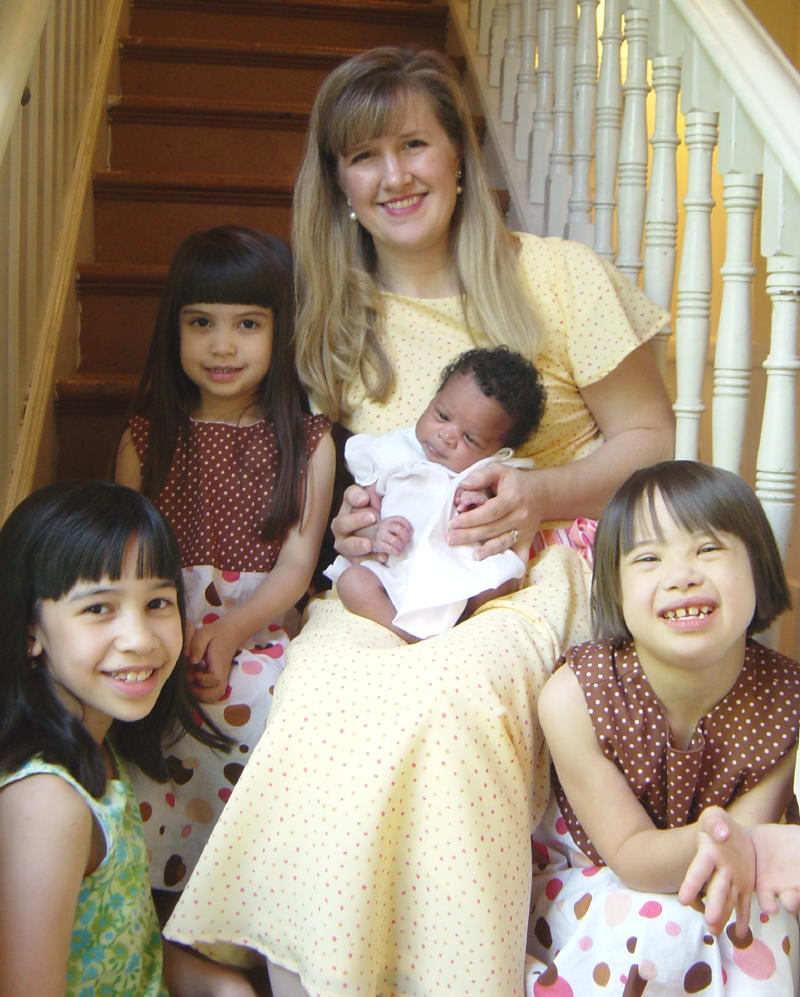
Mothers Day 2007As a family who ourselves lived in Alabama for 12 years and, while living there, adopted a black baby (born in North Carolina), I have so much to say about this topic (and all the topics branching out from it) that it’d fill pages and pages of blog posts. But I think what I’d like to focus on today is racism. That’s at the core of this.

Here’s where I come from on race: I am white. I come from a very white family raised in the Northern United States. My parents are from Ohio and I lived the first 10 years of my life in Pennsylvania, where I remember seeing so few blacks that each “sighting” was cause for actually remembering each incident. This was in the 1970s, mind you, and things likely have shifted since then, but this, again, is my story. Then I moved to Mississippi when I was 10 and then on to Kentucky. But I had plenty of opportunities to spend time with blacks from then on. My take was this: hey, they’re people, and they have a different skin color. OK. So? On to other things.

My husband is Filipino. Asian. Not white. He felt keenly enough at certain points in his life the fact that he was a “minority” in the United States in the places he lived, particularly his two years in Utah, where we met at college. He stood out among the majority of whites there and was all too aware of that. Funny note about that: when we met, he owned and frequently wore a black cap with an X on it in reference to Malcolm X. Suffice it to say because of his minority status, he empathized with African-Americans in America and their history and status. When we dated, I read The Autobiography of Malcolm X and Coretta Scott King’s story, My Life with Martin Luther King, Jr. and found them fascinating and informative.

My husband was always a bit surprised that I just didn’t “care” or “notice” that he wasn’t white like me. Despite my Northern, white, homogeneous background, my parents had still taught us that people’s race just didn’t matter: we’re all people and deserve to be treated as such, equal human beings.

Then he and I moved to the South together. We ended up spending 12 years in Alabama, mostly in a small-ish town called Anniston. There, my husband had his first experience living in a place where the so-called “minority” was actually in equal numbers to the “majority.” Don’t ask me census numbers, but there were plenty of blacks.

There, we saw how separate the races still were in many ways, how many of the poorer, not-middle-class blacks lived on one side of town and the whites on the other. How the schools had essentially become segregated again because the middle-class whites had moved to different areas and were joined by some blacks who were also middle class and well-off enough to do so. We lived “in town” and went to those schools that were majority black. And I was fine with that. I refused to be part of “white flight” for a number of reasons.

But we also saw the other side of the story, one few people talk about, that blacks themselves are far from being immune to racism. On far too many occasions, blacks would look at my husband, the Asian who was truly a minority there, and call him names related to his race. I was absolutely shocked. How could these people who had been so horribly mistreated and still were largely in worse shape economically than whites in that area of the country not have more compassion, more understanding, more empathy, for the feelings and perspective of someone also a minority? When given the opportunity, they acted just as badly.

It’s great that there are black leaders in government. That’s the whole idea, that the U.S. has a representative government. But if black representatives, who supposedly speak for their constituents and act on their behalf, have such ridiculous notions of race relations as Rep. Holmes (and believe me, this is not an isolated incident), what are their constituents thinking and feeling and saying? (No, I don’t think all his constituents agree with him, but I doubt it’s just a really tiny number that do.)

Yes, the United States, particularly the American South, has an abominable history when it comes to race relations and the treatment of blacks. I just happen to be in the middle of reading Sue Monk Kidd’s latest novel about slavery in the early 1800s, The Invention of Wings, and the unspeakable things that were done to humans then still astonish me and cut me to the core. There are no words for how I feel about those things. But human beings, with our capacity for love and goodness and wonder, still have ugly capacities as well. And those capacities did not end with the abolition of slavery or with the Civil Rights laws enacted in the 1960s or anything that has improved since. Whites and blacks and any other race still have the capacity for ignorance and prejudice and saying and doing ridiculously stupid things. Holmes is just the latest example of this. When we push and hope for a “color-blind” society, our efforts can’t be focused just on whites; blacks and any other minorities need to be included as well.