How much should we really say ‘anything is possible’?

I’ve thought about this idea a lot, but seeing this little article reminded me: “Do we really want cartoons telling our kids they can do anything?

Now, I haven’t been thinking a lot about the idea in terms of cartoon or movie themes, but the media portrayal of this concept is one facet to consider. I can’t count how many times I’ve seen motivational posters, pins, memes, etc. online or somewhere out and about that say something to the effect of, “If you work hard enough, you can do anything you can dream of!” In the case of this article, it addresses the related but even less likely trope, “If you dream it and believe hard enough, it can happen.”

I don’t believe either one is right, true, or even healthy. Let’s just think about this: how many people do you know of who dreamed of being NBA stars or actors? How many of them actually achieved their dreams? My husband played basketball in high school and was pretty talented. Problem: he’s only 5’8″. I think there have only been a handful of players in the past few decades of NBA history who have been that short. So my husband still sighs sometimes: “If only I’d been taller.”
I also happen to know a couple of people personally who became actors. And they’re not even particularly well known. But they are making a living in the movie business.

pie in skyI’m in no way saying we shouldn’t encourage each other, particularly children and teens, to dream big. But at the same time, we’re doing them a disservice if we tell them “all they have to do” is believe hard enough or work hard enough and their dreams will come true. Because in reality, those kinds of pie-in-the-sky dreams don’t usually come true for most regular people. Even those who dream of going to a particular university (which isn’t quite as lofty or nearly-unattainable) quite often can’t, no matter how talented or hard-working they may be. Sometimes we may try and try and work really hard, but things just don’t fall into place; there are mountains in the way that we simply can’t climb over or move.

Even as I write this, I must clarify that I’m an optimist. I love to encourage people and to shoot for the stars myself. But I’m also midway through my life, and through personal experience and plenty of observation, I know what reality tends to be. What the odds are. Sure, we hear of stories of people who “beat the odds.” But the nature of “the odds” is that one person is the exception to the rule, while the rule comprises a million others. Only a few win a million bucks in the lottery; the rest lose lots of hard-earned cash.

Let’s still encourage each other and young people to work hard, to do their best, to dream, to envision futures that will please them. But let’s also help them to shape goals and futures that are realistic, that have a touch of “dream” to them but still a good chunk of attainability. Because don’t we want more people to really be able to achieve their goals and find that glowing, wonderful satisfaction in reaching that star, even if it’s still in our own galaxy?

Perspective is everything

I’ve always known that each of us has a different way of seeing life and the world based on our own unique background. Our opinions come from what we’ve read, seen, heard and learned, all steeped in our own self-hoods, our childhoods, our family and friends, what we’ve had or not had. So I definitely respect the fact that we won’t all see life very much the same at all. And that’s OK. It makes life and interactions with each other interesting.

sunsetBut a pertinent layer of the package of beliefs that each of us carries is that of how we see our life in an even bigger potential picture. Some of us have no belief whatsoever that anything exists outside of the 20, 40, 60, 80, or 101 years we might live on this Earth. But others of us believe that mortal life is just a part of our whole existence. For instance, I believe in the doctrine of the Church of Jesus Christ of Latter-day Saints, which is that we were created as spirits by a loving God and we lived as spirits with Him and learned what we could before we were born on Earth, which is a vital and necessary part of our learning and growing process as people. And after we die, we have a whole eternity ahead of us. This life may be 10 or 100 years long (and whatever it is, it can feel like a very long time), but it’s still a tiny portion of our whole life. Not to say that it’s not very, very important, but it’s short when you look at the big picture.

I’ve definitely come to appreciate recently just what a huge difference just this one facet of belief about life, which we all experience but experience differently, makes in who we are and how we approach life and other people in our world. We may debate about politics or moral issues and have vastly different ideas about how things should be legislated — or not. But if we don’t appreciate even a little each other’s backgrounds, it makes it impossible to understand the other’s point of view. It also sometimes means that, once we learn and understand a little about the “other side,” we likely will still stay in our own corner, sure of our own way of thinking. But at least we will have had the time to “travel,” to walk in someone else’s shoes.

I know many people don’t agree with some of my opinions, just as I don’t agree with theirs. That’s OK. But I know where I belong in the “big picture,” and having an eternal perspective makes all the difference for me.

Yes, it ‘can happen to us’

For a long time, I was young enough that I could still think “that (fill in the blank with anything particularly tough or tragic) can’t happen to me.” Then, as I got older, got married, and started having children, those things did start happening, either to me or to someone close to me, so that lovely delusion of the young went “poof.” Bubble popped.

Marissa babyI definitely never expected to be “one of those people” who had a child with Down syndrome. I knew a few people over the years, through church congregations actually, who had a youngster or teen with Down’s in their family, and I really, really never expected to be in that position myself. It was something that happened to other people. Only when I was pregnant with my second child and I picked up the newly delivered copy of the Reader’s Digest that featured the story of Alabama football coach Gene Stallings having a son, John Mark, with Down’s that it hit me — hard — that I could have a child with Down’s too. And sure enough, soon after I had blood work results indicate an amniocentesis would be useful, which confirmed my gut feeling. Yes, I grieved. I was worried, I was sad, I was surprised. But soon after, I accepted this new reality, and, well, you can read a little bit more about my wonderful teen on some other posts.

Dad's camera photos Oct 09 041I also thought my parents would live forever. Only other people’s parents died. When my husband’s mother died just a year after our first child was born, I was sad for my husband and myself, but I still thought it would be a VERY VERY VERY LONG TIME before my parents left this life. It still was 12 years later that I had to go through that heart-rending experience, but it was still far, far earlier than I’d expected to lose one of my parents. My dad was only 71 at the time and very healthy, though a bit of a hypochondriac (yeah, it’s true, Dad.). Now I know just how fragile and unexpected life can be.

This year, a family member ended up paralyzed from the mid-torso down after a surgery. That’s the kind of event I have certainly never pictured happening to me, and to have it happen to someone I care about is something that weighs on my mind. My thoughts are with her so much. Sure, you read about these kinds of things, but … having it happen to someone close is still unthinkable. Until it happens, and it’s always in your thoughts.

I’ve now had friends lose children, a very particular kind of heartbreak. We lost the bishop of our ward, our local church congregation, three years ago this month, to a fatal shooting. It was headline-grabbing news, the kind that strikes your heart when you read about it happening to strangers. Having it happen in your own church building, to someone you know, to a family that’s extraordinary … well, it strikes your heart and stays there permanently.

Yep, here I am in my 40s and I’ve left behind those days of “it happens to other people.” Whatever “it” is, it can happen to me, my family, my friends. Life is fragile. It’s unpredictable. It can bring tragedy and pain and grief. Yet, at the same time, every day of life is also a miracle. It can bring refreshing rain or warming sunshine. It can even create rainbows. And when life offers up “those things” to each of us, we face the grief, we work through the pain, we move on. But we don’t have to do any of it alone. I find it such a blessing every day to know I have friends and family to turn to when life serves up the unexpected. And I try to make sure I’m there for them when they face “those things.” When “it can’t happen to us” turns into “it does happen to us,” we have each other.

The light feeling of forgiving

Several experiences and conversations lately have reminded me of just how much good forgiving others can do for our own hearts, and, conversely, how much holding on to anger, hurt, and blame can just drag us down, mire us in bad feelings, and darken our hearts and minds. It harms relationships and our own worldviews.

I won’t elaborate on the situations, but there have been a few instances in my life that have led to some serious anger and heartache on my part. The ways I was treated certainly “justified” my feelings, and they were natural reactions to the things that were said and done to me. And honestly, I didn’t want to forgive and let those hurt feelings go. It’s just so much easier (and oh-so-satisfying) to point a finger at someone else and say (either to someone else or just internally), “Look what that horrid person did!”

But there did come a point I realized I didn’t want to carry around that baggage anymore. It just wasn’t doing me any good, and I didn’t like the visceral reaction I had inside every time I just heard the perpetrator’s name or some other reminder brought them to mind. Not only that, I consider myself a follower of Christ, and holding on to truly ugly feelings against someone else (no matter their crimes against me) certainly didn’t make me Christ-like.

I did find, though, that the lightening of that burden of hurt and anger didn’t just happen overnight. In one case, it’s taken me several years to find that I must have, somehow, really forgiven someone. But that realization did strike me fairly recently, and I was amazed to have confirmed to me that it really had happened. I remember reading this beautiful description of that dissipation in Khaled Hosseini’s fine book The Kite Runner, and I was so happy to find that it had come to my life:

forgiveness

Because I never noticed the night it slipped away, I didn’t realize it had happened. But it had. And that right there is a miracle, no question.

It takes a village to keep me (mostly) sane

Life can sometimes be stressful. Life can sometimes be sublime. It can also, on rarer occasions, be unrelenting in its attacks, throwing punches from the left, right, above and below and behind — any which way — to try to knock one out, making the simple adjective “stressful” woefully inadequate.

It’s been like that for me the past month or two: life has nearly knocked me out. I suppose that any of the somewhat small things that has happened to me could just be easily shaken off; it would be laughable to think that any would really make me want to walk a ledge. But the constant barrage has cumulatively made me angry, frustrated, exhausted, utterly drained and significantly less able to function.

As time has worn on and I’ve become worn out, but I’ve still had to just keep on moving forward because circumstances have simply not allowed me to stop moving, I have come to appreciate just how much I appreciate those who are willing and ready to step in and help lend a hand or just offer moral support as I try to put one foot in front of the other.

This past week I’ve been traveling, visiting family and friends and attending the college graduation of a nephew and his wife. I was already at my wits’ end before the traveling began, so being in the car for hours on end (with three of my four children all cooped up in the small space with me and my husband) and sleeping in different places and all the other things that go along with road trips have made me even more tired and nearly feeling rather out-of-body.

Even so, seeing these special people has been a little boost. We visited for a short time with my husband’s oldest niece, a sweet young woman who was just a kindergartener when we married 20 years ago. Seeing her reminded me just how much I am grateful for her influence in my husband’s life: when she was an infant, he had just returned from a two-year LDS mission and was starting to get back to school and work. But he had plenty of time to help baby-sit her while his sister worked. He loved the experience. By the time we had our first child, I was still adjusting to the whole concept of parenting and all that went with it. But he was just ready to go. He changed diapers and clipped tiny fingernails before I even did. He held her and rocked her in the middle of the night to try to get her to sleep. Even for me, spending time with her as a five- and six-year-old was so enjoyable that I began to look forward to having a small child of my own to do things with.

Spending time with my grown nephew was rewarding because he fits in so well with my little family: my children adore him and his wife, and we enjoy their company so much. It also gives me great hope for his generation of our family and makes me want to be the best influence I can be. I don’t want to disappoint him.

Sitting with my wonderful, dear friend who lives a day’s drive away is always a blessing. We get to have so little time together, but when we do, it’s renewing and enriching. I can be utterly myself with her; I never fear how I may come across. I can unburden myself and she will listen and support without judgment and with love and compassion. She can encourage me to have hope and to do better without making me feel chastised or preached to or lacking or bad about myself. She has a real gift. She’s like my friend soul mate, and I am absolutely blessed to have her.

Last, I’ve had a great deal of practical help from friends in our hometown while we’ve been gone. My oldest had to stay behind because of a school commitment, and our absence, combined with all the things that had already gone wrong before our trip, required us to ask for a lot of help for her with rides, a place to stay so she won’t be alone, and lots of other little things. A number of friends have gladly and willingly stepped in to take care of her and figure out how to solve little problems while we’re gone. Their help has eased my mind greatly on her account. My mind has been racing so much and has been so burned out by all I’ve had to keep track of and fix, etc., that I don’t know if I could have done what needed to be done for her had people not just volunteered and helped her without my even being involved.

Sure, it does take a village to raise a child (a child just thrives and learns the best with a mom and dad and extended family and friends and teachers and all kinds of other people in a community). But it also takes a village to keep an adult functioning. We’re really all interdependent. The better connected we are, the better we can keep on keepin’ on. I’m just incredibly blessed to have some good people in my life and incredibly grateful to them for helping me to survive the toughest periods of my life.

Handy-dandy European travel tips

Some planning can help bridge the gap when traveling across the Pond.

Since I’ve just returned from a meticulously planned and busy but fabulous trip to England and Paris, I am feeling magnanimous, so I am going to share a few of the things I learned while traveling there this time around. Those of you who might be traveling that direction for the first or second time might find some of what I picked up useful. Those who have done more traveling might find this simplistic, or it may still be helpful in some ways. Either way, have fun!

  1. Get the right outlet converter. outlet adapterYou may know, as I did years ago when I first traveled to Paris, that electrical outlets/plugs are different there than they are here in the States. We use two- or three-pronged 110-volt outlets and cords, and the Europeans use 220-volt outlets. So when I went on that first trip 9 years ago to Paris, I picked up a voltage converter at Radio Shack. Worked just great. Back then it allowed me to charge my laptop quite easily. Well, here’s the kicker: England is, once again, different than the Continent and different from here. Just as those wacky Brits drive on the left side of the road, opposite of the States and the rest of Europe, they also use a different plug. I thought that I was all prepared for all of our trip using the old voltage converter, but no. England uses a big three-pronged plug that’s different than what we use here in the U.S. and different than the tiny two-pronged plugs in France and Italy, for instance. Next time we go, I will make sure I have a converter that works for each place we visit. (We happened to get lucky, however, in our nice hotel in London: that blessed place had a whole variety of outlets behind the desk in the room, including an American-style outlet, so I was able to charge all of my gadgets. Yay for the Rembrandt!) Also remember that even if you do get the right converter, if it only has a two-pronged “in” for your gadgets, you might be out of luck with your three-pronged grounded items. I found this to be true when I got to Paris. Yes, my old converter worked, but it was only two-pronged, and my newer netbook has a three-pronged plug, so I wasn’t able to charge it anymore once we left our posh London hotel and got to our less-nice Paris digs.
  2. Prepare your credit card. Here in the States, we swipe magnetic strips on our credit cards and then sign for them. In England and Europe, they have moved on from swiping to using chip-and-PIN cards. A special chip is embedded in the middle of the card, and you must use a PIN to be able to use the card once the card is inserted in the card reader. If you want to be able to charge purchases on your trip, call your credit card issuer and request a chip-and-PIN card. Otherwise, I don’t think it’s possible to use the old swiping-style there anymore. And you’ll be up a creek. Also, when you call your company, let them know that you’ll be traveling, where and when, so your card won’t trigger fraud alerts or not be authorized. That should smooth the way for your travels and ease your mind so even if you plan to use mostly cash, you can still use that credit card in a pinch.
  3. For clothes, pack in layers. Weather could easily be very different from your home town, so be sure to check the weather. Even then, pack light jackets and prepare with layers. I took short-sleeved shirts and tanks and then layered with short-sleeve and long-sleeve light sweaters and jersey “cardigans.” I kept the long-sleeved cardigans in my carry-on and could swap out with the short-sleeved if necessary.
  4. For heaven’s sake, make sure your passport is up to date. Passports are issued for 10 years. But if you’ve had one for a while, make sure it hasn’t expired. Otherwise, you have about 4 to 6 weeks to get a new one. If you’ve never gotten one before, apply in person. Most likely, your local Post Office has a spot for doing that. If you need to renew, all you have to do is send in the proper paperwork along with the old passport through the mail. For more details, go to the State Department’s website.
  5. To make things a little easier, get a feel for local currency before you travel. I knew what the exchange rate was for dollars to pounds before we traveled, so that was helpful in judging how much things were “really” costing me in dollars when I made purchases. But when I pulled out my cash, I was embarrassed at how long it took me to pick out the right coins for the job. One time, a cashier just picked out the coins from my hand. I’m guessing he was being honest. 🙂 After a week in England, I still felt a little shaky over the sizes of the coins. It might have made things easier if I’d taken the time to acquaint myself with the coins before I left. Not crucial, but nice, and a little less embarrassing.
  6. Make sure your suitcase(s) and carry-on(s) are easy to carry/wheel around. If you’re anything like us, you’ll end up on a lot of trains and/or taxis and subway cars, and having a suitcase and carry-on that are in good condition and wheel comfortably, etc. will be a godsend. my suitcaseI did some shopping a few months before the trip on Overstock for a new suitcase that would be a few steps up from the cheap set I bought at K-mart years ago, and I’m so glad I did that. One, my new suitcase and matching tote had very bright, multicolored stripes, making them easy to spot on the luggage carousels and easy to spot when my husband was taking a turn wheeling one around. I always knew where he and the luggage were. More importantly, the newer and nicer case had a much higher quality set of wheels and telescoping handle, making it easier and lighter to wheel around. We took those suitcases everywhere and on all kinds of transportation and in between, on planes, trains, taxis, ferry, underground, metro, and on lots of sidewalks in between. I’m SO glad I spent an extra hundred bucks on the nice case. Take a look at mine: (but don’t buy the same exact one, people. We’re trying to stand out here, right?)
  7. I highly recommend making a day-to-day detailed itinerary for yourself of where you’re going, when, and how. I printed up about 10 pages of fairly detailed instructions for myself for every stage of the journey. Since we did so much traveling from town to town via lots of modes of transportation, it was SO helpful. First page was my first flight, then my second flight, then the arrival time and the train we were supposed to take to the next destination. Then I had the hotel information for our first night, then the transportation info for the second day’s travel to the next stop. I just checked off where we were/what we’d done and flipped the page. It really made the journey a lot easier to look to that main itinerary.

Above all, my last “tip” is simply to relax and enjoy yourself. No matter how much time you allot yourself, you won’t possibly see everything there is to see or everything you’d like to see. Just pick a few highlights that are most important, and give yourself plenty of time to enjoy them. And if you get worn out and have to take a nap at the hotel, don’t beat yourself up that you’re not seeing more sights. Just remember, IT’S YOUR VACATION. You’re meant to be having fun, relaxing, and enjoying yourself. If you have to take pit stops to rest and regroup, then do it and don’t feel guilty. Now go out there and have a great time.

Making memories: priceless.

TuileriesI’ve long since decided that it’s far better to spend money on doing things, rather than acquiring things. Sure, if I spend $5000 on an amazing diamond necklace, I’ll be able to keep wearing it for the next 40 years, but if I spend the same amount on a trip, I’ll be able to keep the memories of that trip FOREVER. Even better, while there’s a possibility someone could always take a necklace or any other tangible item, no one can take my memories from me. They’ll always be with me.

I just spent 8 days in England and France with my husband celebrating our 20th wedding anniversary. I worked RIDICULOUSLY hard to get the trip planned. We did all kinds of interesting things and went a few places that weren’t the typical tourist haunts, so it wasn’t as simple as just buying a package deal from some travel site. I had to plan every last detail. But we went, we spent a ton of time on trains and planes and ferries and the Underground and Metro and even a few taxis, and we saw all kinds of gorgeous scenery and cool sites. Now we’re back, and life is just the same as it was 10 days ago, with food to be bought and prepared, laundry and dishes to wash, kids to care for, and all kinds of other responsibilities, but now my brain is full of new memories that just weren’t there a week and a half ago. It’s kind of amazing.

One thing I’ll cherish is the memory of green: green leaves, grass, shrubbery. In England, especially at this time of year, green washes over everything on the landscape. From the sky, I could savor the patchwork patterns of green fields broken up by low stone walls. I soaked up the sight of rolling hills and shallow valleys layered with green grass and dotted with newly-leaved trees, fresh and new in the springtime, a different shade of green from the more mature colors later in the summer.

I spent the first 10 years of my life in Pennsylvania, which I previously suspected but now know for certain is a fine replica of England, the same rolling hills and patchwork fields with even the same low stone walls. Since I’ve now spent some years in the West and live in the state that’s euphemistically called “Golden” (but is just frankly “brown”), I miss the landscapes of green that surrounded me in earlier years. So this time in England recharged my green batteries for a little while, allowing me to store up memories of more soothing colors for the harsh, dry, brown summers here in central California. I even had a lovely day in Paris, which treated me to some rain along with alternating cloudy and sunny skies. I spent an hour just sitting on a chair in the Tuileries, soaking in the vivid greens dotted with bright splashes of reds and magentas. It was a feast for the eyes and for my memory.

No, I could have stayed home and bought that amazingly delicate and exquisite necklace I spied at the jewelry store. But I wouldn’t have these absolutely irreplaceable memories, stored up in my mind and heart, accessible at a moment’s notice on some future dry, brown, even stressful day. I’ll take the memories. They’ve expanded my whole mind and heart.

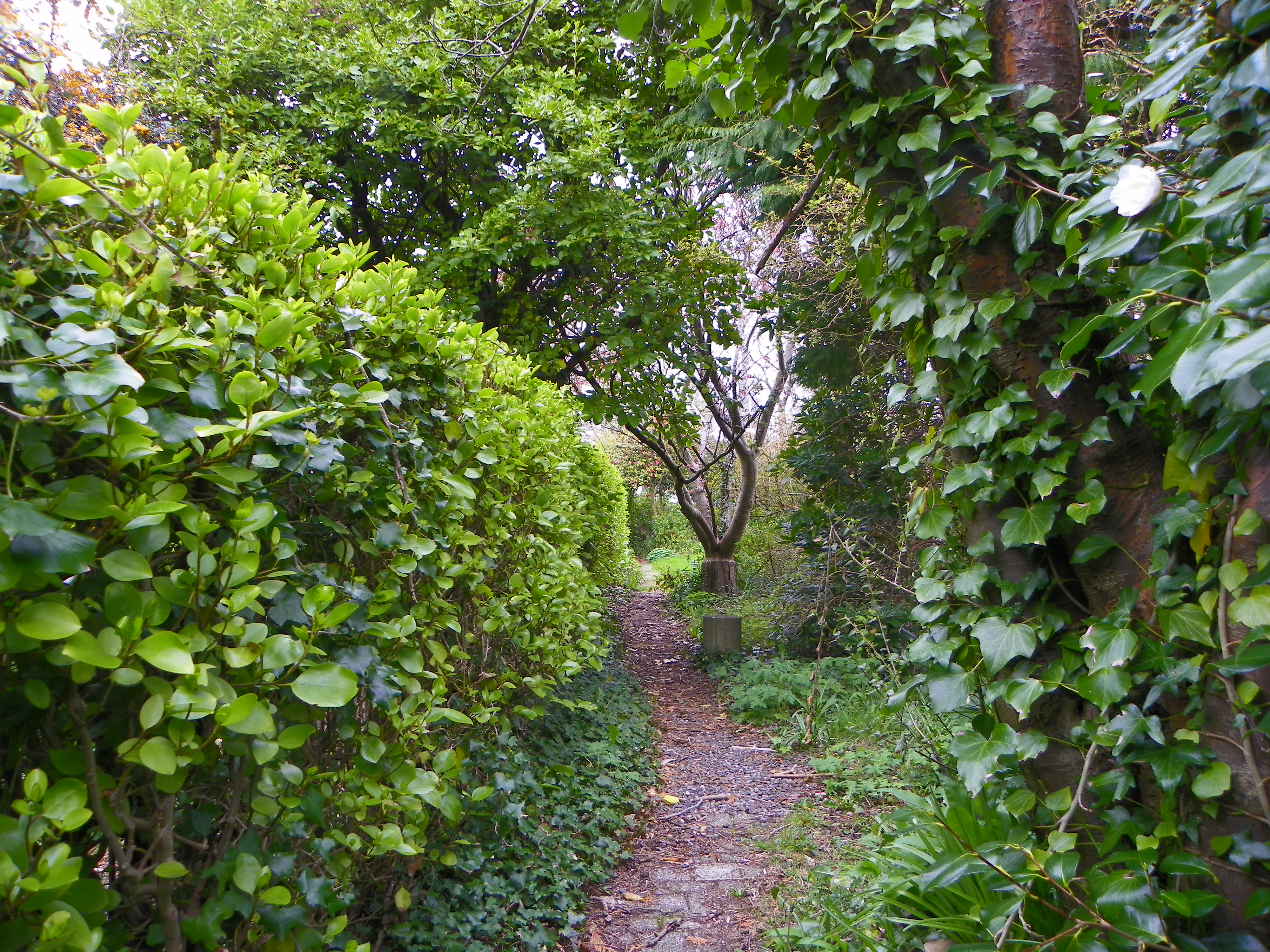
Now if I could just re-create this Secret Garden-y entryway in my front yard, I would be ecstatic. But I have the memory - and the photo.
Now if I could just re-create this Secret Garden-y entryway in my front yard, I would be ecstatic. But I have the memory – and the photo.

Brilliant! no, barmy. no, lovely. Ah, cheers.

So I’ve been vacationing in England for three days with my husband, and we’re getting the biggest kick out of British English and our lack of understanding of it, being American and all. You’d think that being somewhat of an Anglophile (I love reading books set in England; I watch foreign films, indies, what-have-you), I’d be a bit better prepared for the difference in vocabulary, let alone the accent. I mean, I already knew that “biscuit” really means “cookie” and that “crisps” are “chips” (and “chips” are french fries).

But it honestly takes us a couple of “excuse me”s to understand people’s meaning around here. The accent and dropped letters make it hard to clearly understand the meaning of words we actually do share, and then different words entirely make it extra-challenging.

We have observed that “brilliant” is a lovely all-purpose word to say that any service was great. Dinner? Brilliant. Sights? Brilliant. And the all-purpose word for anything else? Cheers. Hanging up? Cheers. Buy something? Cheers. Not sure what else to say to anything? Cheers.

Guess what these are. You'll never guess. Really. (Brits, no cheating.)
Guess what these are. You’ll never guess. Really. (Brits, no cheating.)

Food has been fun. I thought that it was a little challenging choosing food from the menu in Paris when we went there 9 years ago. But it’s been just as foreign ordering from British menus. Baps? Queenies? Bangers? And I finally had to ask, What the heck is treacle? I’ve read about treacle tarts for years. Then we went to a pub that served treacle bread. It was just a nice wheaty bread. Hm. What could treacle be if it’s in regular bread and tarts? The answer: it’s a sugary syrup of some kind. Huh. Okay. Then I bought a little collection of chocolates on the Isle of Man, and one was toffee that had treacle in it. My husband and I finally figured out what treacle really is when we popped the toffee in our mouths: it’s molasses, or something darn near like it. Huh. Molasses bread: fine. Molasses toffee: eh. Molasses tart? I’m not gonna try it.

Last of my observations: the Brits can sure conjure up some hilarious-sounding phrases. The one I’ve loved the best so far I saw on a sign in a train station: “lovely jubbly.” Lovely jubbly to you all, fair readers. Cheers.

Princess Bride and Star Wars mashups

OK, people, this post is purely for fun and just because we are those kinds of people. We love to quote movies, and “Star Wars” and “Princess Bride” are some of the best of them all to quote (well, particularly “Princess Bride”). This little post is the result of a little riffing our family did while driving. Sit back and enjoy, and if you like, email me with suggestions and I’ll make some more mashups.

Inigo and Darth

Six fingers

as you wishr

guide my sword

mask


Let’s fix our health care system before it breaks entirely

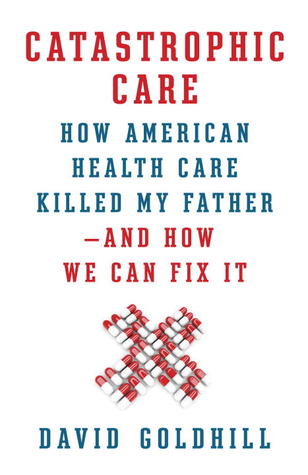
Catastrophic CareI just finished reading David Goldhill’s excellent book Catastrophic Care: How American Health Care Killed My Father — and How We Can Fix It. I don’t say this often, but EVERYONE must read this book. MUST.

It’s important to note that Goldhill is a Democrat and a liberal, as he states in the book. He wants everyone to have access to health care, at reasonable prices for them. But even he is clear that the American health care system as it has evolved over the past 40 years or so is broken and that having our government step in and use the current messed-up system to provide more care is not a viable solution. Indeed, the costs of this bloated, convoluted system are already at levels that can’t possibly be sustained, and as time goes on, the whole system will hit a critical level at which it can no longer function, and no one will receive adequate care.

There are a lot of problems going on. One is that we’re already getting poor care from the system; hundreds of thousands of Americans die every year from medical errors. Most of us have cause to complain about our insurance or health care (which are not synonymous but which are essentially tied together in a sick, symbiotic beast), but we feel helpless to DO anything about it. Goldhill writes that the problem there is that we as patients are simply not the consumers/customers of the business of health care: the insurance providers are. The system itself has pushed us out of the loop so we feel we can’t demand better care or prices.

Goldhill makes his case very clearly and simply and walks readers through how we got where we are today; read my review of the book for more information, but then read the whole book to really get the idea. That background of health care/insurance’s history then allows us to understand why the government “fixes” are just going to make the problems even bigger and worse. By the end, Goldhill even comes up with his own plans for making health care available and affordable to everyone in this country, even for rare and costly illnesses.

I can’t emphasize enough that we as consumers and patients and citizens of this country need to get better informed and then act to change the situation. Only if we all urge our political leaders to make an overhaul — and then prepare ourselves to take more responsibility on ourselves as consumers — will the system change and be something that will give us better care, prices, and customer service. Unfortunately, it may well take a terrible catastrophe or crisis (not too far off in the future) before we decide to act. I only wish we could act before that happens.