Honoring the end of life

I’ve been able to attend two really beautiful funerals this year, both for people who were extraordinary, and who had wonderful families. I was struck both times by what a special experience it was to share in the remembrance and celebration of the lives of these people with their loved ones. At both, there were many, many experiences shared, sweet and tender memories and funny ones, recounted with laughter and tears.

But how often do you hear people say they enjoyed attending a funeral? That they looked forward to the funeral, that they cherished the time they took to be there?

Americans (and probably many in modern, Western cultures) are far behind some more “primitive” cultures: we do not appreciate the death process or anything surrounding it; we tread with great trepidation around death; and we don’t honor those who are aging, stepping ever closer to death each day. It’s a serious problem. We have become obsessed with youth, with appearance that speaks of youth, with the notion that all that attends death is blessedly far away from the young. I’ve written at length about the problems our image-consciousness (tied in part to the beauty of youth and unwrinkled, unblemished skin) is causing us as individuals and as a society. I’ve not written much about how it’s separating us from those in our culture who have the most to give and share with the rest of us: their wisdom, their fascinating experiences, their character.

Some cultures truly revere their elders. They hold them in high esteem, treat them with great respect, seek them out, not only include them in decisions but hold them as their highest decision-makers. Their middle-aged citizens and children look up to them and learn from them, seeking to be more like them.

In our culture, ageism is the rule. We hire young workers at the exclusion of older ones. We worry about the capacity for wisdom and clear thought of those who aren’t young any longer. We put them away. We don’t want them as leaders because we are sure they’re “out of touch” with “reality.”

And then there’s death. We fear it. We fear the process leading up to it; we fear what happens when and after we die. There is little of reverence and appreciation for the process, even when someone is able to leave this existence with a minimum of pain or discomfort. We are somewhat conditioned naturally to keep away from dead bodies, and we have very little cause to interact with them. I have had the opportunity, however, a few times in my church to help dress women for burial, and I have found it to be not “gross” or “weird” or “scary” but, instead, a privilege. I have found it to be a sacred experience and a lovely last opportunity to perform a service for women who have meant something to me in my church congregation. But, again, we hear little of this kind of experience and of reverence for those who have died.

One Foot in HeavenI was able to read a lovely book this year written by a hospice nurse about the experiences she’s had helping people and their families as they have passed from this life. In One Foot in Heaven, Heidi Telpner tells readers about “good deaths” and “bad deaths” and reminds us all that we all will one day experience death ourselves, and most of us will have to deal with family members’ or friends’ deaths in some way or another. As much as we may (mostly successfully) manage to evade staring down death during our lives, it is still there. It still happens to us all. And the more we are comfortable with it, the more we and our loved ones can experience “good deaths.” Telpner tells about the poignant experiences she has had getting to know good, interesting people with loving and supportive families and how their deaths have been sweet and calm. She also tells about the people who personally fought death or had family who fought the reality of impending death and made it difficult for them to die peacefully. It’s a fine primer for all of us, to remember that death is inevitable, but how we approach it can make all the difference in how we and our loved ones live — and how we prepare to die.

So I find myself still getting surprised looks from others at times when I mention how grateful I was to attend some really beautiful and inspiring funerals, that I have been blessed to be able to provide a service to a person whose body is being readied to be buried but whose spirit is still living elsewhere (as I believe). I’d love to see this change, to see our culture become more age-friendly and even elder-centric. But I’m not holding my breath: we have a long way to go.

One of Robin Williams’ final gifts? Getting us talking about mental health

I love this tribute to Williams by Disney.

Four days after the devastating news of Robin Williams’ suicide, I’m still feeling the loss of someone I never even knew personally. Perhaps it’s because his genius acting work has been a part of my life pretty much ever since I can remember (oh, yes, I was watching when he first hit the airwaves with “Mork and Mindy”). I can mark important times in my life with what movie he was doing at the time; for instance, my husband and I saw “Aladdin” on our first date nearly 22 years ago. Even now, our family quotes from that movie.

But another part of the reason this event has affected me so deeply is that it strikes close to home. I started this blog to write, in part, about mental illness, to just put my own experience out there. And Williams’ death has had me thinking a great deal in relation to how I can understand it and how I want to be able to continue to share my feelings with others. There have been some poignant tributes and some spot-on blog posts and articles about suicide, about depression, about the almighty struggle some experience with their mental health. I don’t think I can do any better, but I can just share my viewpoint.

Just a few weeks ago, I participated in a study focusing on cognitive issues in women who have breast cancer (I was part of the control group). I was happy to do my part for science, even if I had to drive a few hours away to get to Stanford University. Since the study is looking at cognitive effects of cancer or the treatment for it, it included questions and assessments not only about impairment of cognitive processes overall but also about emotional status. Since I had indicated on the questionnaires and intake forms that I take medication for depression, the researcher who worked with me asked me at the end of our time a little bit about my feelings and opinions on it. She said she focuses on psychology and has noticed in her time studying it that there are still not nearly enough treatments available for depression and other mental illnesses. Some people in the blogosphere and media have wondered why Williams, for example, didn’t just “get help.”

Here’s the sad truth: there isn’t nearly enough adequate “help” out there, whether it’s in the form of medications and other medical interventions and treatments or it’s in the form of professionals and non-professionals who really are good at what they do and can give superior guidance.

There is still an epic shortage (in my experience and opinion) in the number of qualified professionals who can treat people from all economic and health-care-coverage situations. This is particularly true in the case of the number of doctors or other practitioners who specialize in and are licensed to provide medications. In my experience, for instance, there are three psychiatrists covered by my health insurance (which might also be the total of all the psychiatrists in my city), and only one is taking new patients. That one I didn’t particularly like, and it’s crucial to have a certain level of rapport with someone who’s treating you for your brain chemistry. So I was lucky enough to hear about another provider who ended up being a better fit for me, but her office is an hour’s drive from my home, and her practice is not covered by my insurance. I am also lucky enough to be able to afford paying out of pocket for her care. But what about those who don’t have insurance at all, who can’t afford out-of-pocket costs, who don’t have access to transportation, etc.? There are a LOT of people not being served.

Then we move on to the issue of actual treatments available, even when one has unlimited access to doctors, therapists, and whatever medical intervention is available. And as the researcher and I discussed a few weeks ago, there are far too few options. I’m on an antidepressant that’s worked well enough for me the past couple of years to get me to where I can cope adequately with life’s challenges without being taken down completely. But there have been times medications weren’t doing enough for me, and it was hard.

There have been at least the number of times I can count on one hand, and possibly up to two hands, moments I’ve been in the blackest and deepest abyss and felt suicidal, even if it was only briefly. And I could go on and on about how if you haven’t been there, you can’t possibly know what it’s like. Logically, in a part of my brain, I knew I didn’t want to hurt my loved ones, didn’t want to deprive them of me. (That’s addressing the “selfish act” observation…) But it was a very distant part of my brain and one that was clouded over by the overwhelming despair and hopelessness of my feelings. As I’ve written before, it’s those times and others that I now feel my brain chemistry betrayed me. And it’s a very weird, unnerving feeling to have your brain working against itself and yourself. Even though I could logically call to mind times I enjoyed life and felt fulfilled and useful and vital and important to others, to the world, I just didn’t FEEL it. And it became impossible to imagine or believe I would feel that way again.

No amount of love and support and encouraging words from others (assuming the best, that one does have that kind of support system — believe me, there are plenty who don’t have that, making things even worse) can make that feeling go away. If your brain chemistry is off, it’s off. And that’s why we absolutely MUST find more options to treat that chemistry. There are far too few options now.

I appreciated this one article on Mashable, for example, that asserted, “Finally, We’re Talking About Mental Illness Like Adults.” People have generally been very thoughtful this week as they’ve discussed Williams. I sincerely and strongly hope that this discussion can continue, that a few important good things may come from this tragedy: 1) Let’s stamp out the stigma for good. Let’s work towards a culture in which people who experience any kind of mental illness can talk openly about it without fear of being judged or misunderstood or mistreated. Let’s make it as easy to talk about as any other illness that’s more “physical.” 2) We need to push for more research into more varied medications. There are a number of drugs out there (but not nearly enough) that are made for the treatment of mental illnesses, but a lot of them are similar to each other and work the same way. Pharmaceutical companies need to branch out and work on far more kinds of medications that attack mental illnesses in different ways, from different directions, etc. 3) We need more doctors. We need more prescribing practitioners available everywhere to everyone. This will not only be the kind thing to do, but one that will contribute to reducing many other existing societal problems: homelessness, joblessness, some violent crimes.

These aren’t easily attainable goals. But we certainly need to work towards them. It will make a world of difference to millions.

I’ll never have a thigh gap, but I am experiencing a big gap between ideals and reality

You know when you dream about eating something off-diet and demanding of some complete (thin) strangers walking by, “Do you ever eat?!”, you’re self-conscious (and frustrated) about your weight.

I’m half-proud, half-embarrassed for myself that I embarked on a strict diet last week, mainly because, yes, I want to look better. And I want it to happen fast. Here’s the thing: I have felt very self-conscious about my weight in photos of late, and I have several big events coming up for which I’ll be in numerous photographs, and I don’t want to look fat.

Yep, there it is.

Yep, my self-image is pretty distorted right now.

As much as I talk about self-image and how bad our society is about focusing on looks, whether it’s regarding weight, age, or relative size of body parts, I still struggle with it myself. Sometimes not so much, other times mightily. As I most recently mentioned to my therapist, “I feel horrible about how I look.” Her response: “Right now you’re very stressed and not feeling good about yourself in lots of other ways, so that’s not surprising.” Meaning, essentially, try not to worry about it; it’ll pass when you manage to process everything else that’s had you down.

So I kind of feel like a hypocrite when I’m urging everyone, male and female, to be more aware of how media and society all around us dose us liberally and continually with the religion of thinness and image, of airbrushed (impossible-to-achieve) perfection, and I am struggling with it so much still.

It’s complicated by the matter of health: when I’m stressed, I eat sweets. I overeat. That’s simply not good for my body, and that’s important. So I do also want to work on that. I want to break my physical and emotional addiction to sugar and my reliance on food as a crutch. But I would like to figure out how to separate that out from my worries about how those habits affect my LOOKS.

Here’s another thing: plenty of people out there have far worse eating habits than I do, but they’re thin. So their health might be in need of improvement, but they either don’t worry about it, or they don’t worry about others seeing them as fat. Because don’t we tend to judge people who are overweight? We automatically think, They need to eat less. They need to have better self-control. They need to take better care of themselves. But health and thinness are not always directly correlated.

That’s not to say I excuse myself for slipping into bad habits. I can do better by my body sometimes. But our society judges on appearance, and I judge myself. I have a lifetime of negative messages to overcome. And that simply makes it much more difficult to just take care of myself the way I should because I’m devoting so much emotional energy to the image part of the equation, which is NOT the important part; overall health is.

I have had a lot to deal with the past months, the past year, with a few breaks in the onslaught of expectations, responsibilities, and struggles to catch my breath. I anticipate having some breaks to catch my breath and focus more accurately on taking care of my health — emotional, mental, spiritual and physical — fairly soon, but in the meantime, I’m just getting through it as well as I can.

And dieting. Like I said, I’m a little embarrassed because I’m doing it almost exclusively for the reward of looking better in pictures. It’s not the example I’d like to set but I’m doing it anyway, just because right now so much has beaten me down I don’t feel good about myself in many ways; I feel weak and run-down and just not up to snuff. I feel like I’m letting people down left and right because I simply can’t do everything everyone needs me to do at all times. So that feeling extends to how I look.

I’m going to keep working on my self-image, my self-esteem, the ways I look at myself and talk to myself. I’m going to do better. Just forgive me the lapses right now in my actions and how they don’t match my ideals. It’s a process for me, and it’s a process for us all as individuals and as a society. For me, this topic mixes my mental health awareness-raising with my awareness-raising about society and image. The intersection is a little delicate, and I’m navigating it as well as I can in this tricky time. I hope I’m making progress in it all because all I can do is just hope I’m slowly doing better. I’m going to just try to remember to pat myself on the back for what I’m doing better: life isn’t about improving overnight. It’s a journey with all kinds of intertwined paths leading to a place where we’re our best selves in all aspects.

Safe, healthy food a must for everyone

I wrote recently about how we as individuals and families need safety nets and support from extended family and society around us. What’s on my mind the most is that of all the issues we as families (and in my case, being the mother and “home manager” of a family of six) face, it’s impossible to fix them all or deal with them all on our own.

As just one example, I have many concerns about public education, but I can’t change them alone; I can only try to speak up when I can and get involved in the big picture (higher levels) in what are fairly limited ways at this stage of life. I also have decided I am not capable (mentally, mostly) of home-schooling my kids, so I send them to public school and try to be involved and aware at the school level.

Health is another big topic. Health care and health coverage systems are a part of that. I’ve written a little about that and found one book really a great overview and resource: Catastrophic Care, by David Goldhill. Another issue we face that is part of our health is that of our food supply. Obesity in the U.S. and in other developed nations is a huge problem, and one I’ll admit I personally struggle with. (And might I point out that I exercise daily and cook healthy meals at home almost daily, and I’m STILL significantly overweight. What about all those out there who don’t exercise at all, who don’t cook, who eat junk food, etc.?) Yes, there are some “obvious” issues, such as the easy availability of food that’s bad for us, sedentary habits, and the heavy marketing and research done by large food corporations (just read Salt, Sugar, Fat by Michael Moss: Yikes!). But there are also more insidious things going on with our food supply that are affecting everyone: hormones and antibiotics and other fatteners being fed to the animals that we eat for meat, pesticides, and even sugar substitutes (just to get a taste of these problems, read a recent article on Salon).

If we’re having a hard time as a country educating individuals and families about healthier ways to eat, just putting together balanced meals at home with vegetables and lean proteins, etc., as well as getting people to just move more, it’s going to be a pretty hard sell to get everyone to eat organic and/or locally produced food, including dairy and meat, which either costs more money and/or takes an extra trip (or two or three), to get to farmers markets or specialty stores. Again, I consider myself to have the motivation, interest, and time (as well as a decent income) to be able to shop well and cook well on the first count. But I admit I balk at spending three times or more the amount on produce and meats and dairy to get foods that supposedly come without coatings of pesticides or added hormones or antibiotics, though that would certainly be ideal.

I'm working on being more involved in our backyard garden and learning more about it. This way, we get fresh, healthy food we like right from our own yard.
I’m working on being more involved in our backyard garden and learning more about it. This way, we get fresh, healthy food we like right from our own yard.

There are possibly some alternatives to the above pricey/time-consuming options for me and others who might have the time and at least a little extra cash to put towards them, such as growing your own food (if you have the time, the space, the know-how, etc.), contributing to raising a community garden, or just shopping local. But these options, again, are ones that are going to work when education efforts get past just the simple things of getting people to eat better, cook, and exercise.

No, this goes back to our society as a whole, including how our government is involved in regulating (or not overseeing) our food supply. It’s becoming more clear and more substantiated that these pesticides, hormones, antibiotics, plastics, etc., are contaminating our food and introducing all kinds of chemical problems into our bodies, making us fatter and just less healthy, maybe causing cancer. But government is slow to regulate and corporations are certainly not going to change of their own accord unless we as consumers really get educated and speak up with letters/phone calls to these companies or at the very least speak with our wallets by not buying their products. But that latter option leads again to this issue: what are average Americans going to buy if most of the big food producers aren’t providing healthy food? Most can’t afford organic or specialty stores.

As a mom and home manager, I am daunted and sometimes overwhelmed by all that is wrong and all I have to “protect” my family from, all that I need to “fix” or address in some way. What about all those others who don’t have even the luxuries of time and some extra money that I have? I feel a responsibility to do all I can not just to make life better for my own family, but for them. But I don’t have THAT much time or extra cash.

Yes, government can and must do better. Companies can and MUST do better to be responsible to consumers. Those with greater wealth and time to do good can do better to help those who don’t have what they have. Each of us can do a little something to spread the word, to raise awareness about whatever issues we’re facing, and to just speak up and let our voices be heard: voice our discontent, ask for specific things to be changed and improved. It comes back to my starfish post: I can’t save everyone, but by doing a few small things, they might add up to saving at least a few others. Give back by doing just a little, just whatever you can do.

Safety nets and support systems

A few weeks ago, an outspoken acquaintance was ranting about public education, among other social issues. The married man in his mid-30s (who has no children, mind you) said, “Anyone who sends their kids to public school is a neglectful parent.” Bold — but undeniably hyperbolic — words. And while I appreciated the kernels of insight (far) below them, with many frustrations of my own about public education, I had to disagree for a number of reasons, aside from the obvious point that there are plenty of us very good parents who still are sending our kids to public schools.

Then I was talking with my mom about my grandma, who’s 97 and in probably better health than I’m in, and living in a nice retirement community. She recently fell a couple of times and got an infection, so she spent a few days in the hospital and now is in transitional care and needing a bit more attention, rather than being pretty much independent. My mom has been with her there (visiting from the town she lives in about a 6-hour drive away) and has been outraged at the lack of attentive care she’s been witnessing — and this is with my mom there near her, at a highly ranked facility, and my grandma has very good insurance and financing. We’re not even talking about a not-so-great facility paid for by Medicare.

I won’t go into all my concerns about public education, about health care, about elder care. They’re each deserving of thousands and thousands of words. What strikes me, though, is that as a 40-something woman who has children at home, one daughter about to attend college, and a mother who’s retired and a grandma who’s quite old, I am in that spot of life where there are plenty of people to worry about and take care of on some level. And as much as I’d love to be the kind of person who could home-school my kids, I’m just not. Plus, I still want them to have the opportunities for learning about the world that exist outside my home. And I wish my mom and grandma could live with (or nearer to) me and I could help watch out for them.

We all need safety nets.

Here’s the thing: none of us in our society today is capable of doing it all. In fact, no one ever has been able to “do it all” as we see it in our contemporary society. We have so many opportunities for self-actualization and fulfillment (which can be “bad” or “good,” depending on to what lengths we go to achieve them) and for involvement in the world around us today. But we depend on our public-sector system to provide certain services to take care of our wide and varied needs, like education and health care. Decades ago, extended families lived either in one home or very close by, and they worked together, sharing all the duties. Communities were truly communal; everyone did something to take care of someone else, essentially. Today, extended families are often distant. My mother is 2000 miles away from me, as well as most of my siblings. It’s my job and my husband’s to take care of my children; he provides most of the money from his 40-hour-a-week job to buy what we need, and I carry out many of the functions at home (another blog post entirely, too…). I feel we’re actually blessed to be able to have that setup (I am pleased with it, let’s make a note of that, too); I have flexibility to be able to be there for my girls when they need me throughout the day and to be involved in educational and extracurricular activities. I also am able to pursue some of my own interests, which makes me feel “me” and better able to take care of my family.

“It takes a village” has now become a bit of a trope, but it’s still true. Individuals need systems around them to allow them to live and thrive. Nuclear families best provide individuals with what they need, and extended families best support nuclear families.

So what’s wrong now? I am positive much of it is the breakdown of nuclear families; we have so many single-parent families today. Extended families are just as broken in many respects; some aren’t broken, just distant because of necessity. The basic solution is twofold: do all we can as a society to support the nuclear family, helping and encouraging the formation and permanency of families, and then to make sure the public-sector services are good and dependable. Everyone, every family, needs to know that education is well funded and well run. And families who are responsible for their elder members need to know they will be supported in those vital endeavors as well.

I’m not “for” government running everything. I am “for” programs that will provide help to families, who are the backbone of our society. I am “for” making sure there are safety nets and support systems in place, not to replace the work of families, but to help them do their work better. Because if our families are struggling, our whole society is in a real pickle.

Issue of body image is not a trivial one

So I’ve noted a few occasions recently in which I’ve just felt I had to explain why I feel strongly about the topic of body image (particularly as it pertains to women). Those occasions have been offhand comments or posts or cartoons or what-have-you that indicate that the desire to change how our society perceives women (as objects or bodies) is trivial or silly or not as important as other issues that could garner support or activism, etc. (such as some of the ignorant comments I saw about the Representation Project’s “NotBuyingIt” campaign and hashtags that call out sexism and demeaning portrayals of women in the media, most recently during the Super Bowl, and don’t get me started on Sports Illustrated teaming with Barbie this year!).

I’m not saying there aren’t SERIOUS, very troubling things happening all around the world (wars, disease, repression, abuse, sex trafficking, crimes specifically against women and particular ethnic or religious groups) and that we in the United States and other less-troubled places can’t mobilize to do something to help. But even as we may realize that our problems in the West are “first-world” troubles, it doesn’t mean they are trivial or not worthy of attention and activism.

I’ve never considered myself “a feminist” (a word that over the years has certainly accrued a lot of not-necessarily-positive connotations and associations), nor am I a “liberal.” I tend to be mostly conservative politically. I care deeply about social justice and helping to improve people’s lives but I have more conservative views as to how those things should be accomplished (because my experience has shown certain methods to be more useful and successful than others). I am a stay-at-home mom who does some freelance work from home and haven’t worked outside the home full-time since the early years of my now 20-year-plus-long marriage. Those facts, along with my religious beliefs, might indicate to outsiders that I am not big into “women’s issues.” Those outsiders, though, if coming to that conclusion, would be wrong.

Beauty Redefined is a great resource for learning more and fighting back.

I care very much about my fellow women and how we get to function as real people in society. (I care about men being allowed to be fully functioning members of society as well, but historically in our culture, they’ve been given these rights for centuries, so they’re mostly “all set.”) The fact of the matter is that our Western, 21st-century culture diminishes the wholeness of women every single day, everywhere we turn. Media from every angle throw back very limited, definitely-not-varied, two-dimensional views of the ideal female, reducing 50% of the population to mere objects. These images and opinions are so deeply embedded in our psyches that we essentially have all tacitly agreed that they are truths. These beliefs lead men to treat women they know on some level and in some degree as less-thans, expecting their wives/girlfriends/daughters/sisters to be shaped and sized a certain way at the very least, and they lead women to act as if they are 75% (or more) what they look like and 25% a collection of their personality traits and actions.

These false beliefs have been and are continuing to be so thoroughly perpetuated that though we may pay lip service to the notion that they are false, we act as if they are true. Extreme examples are the continuing massive growth in cosmetic surgeries, particularly among “normal,” “average,” everyday women (not celebrities, not the rich, not people you might consider to be particularly vain). In the interviews I conducted with women in Utah who are moms and generally have a strong foundation of faith and have always been taught they are daughters of God worthy of love and respect for who they innately are, I was amazed how many felt bad enough about their “outsides” to undergo surgery, which is always risky, costs a pretty penny, and is just unnecessary. While I understood the feelings that led them to make the decisions they did (for getting breast augmentations or full “mommy makeovers,” for instance), I felt sad that our culture creates, fosters and intensifies those feelings of insecurity — all over their breast size or perkiness or the size of their waist or hips.

Yes, this may seem a minor issue: what does it matter if we care a lot about how we look? Here’s a short breakdown: it causes us as women to spend precious time and energy and brainpower on something that simply doesn’t matter very much. It takes those resources away from the things that really matter: our spouses, our children, our friends, our families, our work, our joys, our passions, our life purposes. And how many of us have time and energy to spare?

Focusing on our appearance reduces us to objects. Statues and photographs and machines are objects. They’re nice to look at and they might even get things done, but they aren’t human beings, with glorious origins and endless potential and utter uniqueness. Humans are imperfect, frustrating, very different from each other. But we’re so interesting and fascinating and have so much to offer! Is that true, can it be true, about mere objects? No way.

When we consider each other (or ourselves) objects, we treat each other (or ourselves) differently. We don’t expect the best, we don’t reach towards our limitless potential, we don’t care for each other as precious souls who deserve respect and love and fair and equal treatment. Men in our society, who are swimming in this media ocean of images and objects, are prone to some level of treating women as less-than themselves, because men aren’t reduced to objects nearly as often or as prevalently as women. Pornography is one more extreme example of how women are reduced to being objects, even parodies of womanhood, and it skews men’s attitudes and actions toward the women in their lives even further.

I can’t possibly explore all the angles here. There are tons of scientific studies, books, etc. that speak with authority on this subject. Suffice it to say, this is not a silly or trivial topic. It’s one that must be shared and discussed and changed. How women view themselves and how they are treated (as whole, real, full and complex individuals with unique gifts and talents and attributes) is at stake. I wouldn’t call that minor. It’s a huge battle to fight because the messages that pick women apart and reduce us to body parts, that make us less valuable than men, are constant, ubiquitous, and insidious. They’re so prevalent as for us not to even notice them anymore. If you pass the same billboard featuring a bikini-clad woman biting into a huge, juicy hamburger every single day, you’ll begin to tune it out and not even realize the damage it’s doing. But that message is still burrowing its way deep into your every cell.

I would love to make things better in so many ways, in so many places, for so many people. Right now, what I can do is write and speak up. I can say, “Hey, look at that billboard. Isn’t that insulting? Maybe we can even get it taken down. Maybe we can get the advertiser to stop objectifying women.” I can’t change the world. But maybe I can change your mind and remind you that you are far more than just what you look like.

Running too fast makes you … tired.

The older I get, the more I realize there are certain lessons I’m just not learning, despite life’s intentions otherwise. One big one is this: I fall victim to one of the classic blunders—the most famous of which is, “Never get involved in a land war in Asia”—

Oh, whoops. I mean, I fall victim to one of my own classic blunders: trying to race through a marathon when I should be walking steadily, turtle-like. A scripture I find quite true but somehow manage to keep ignoring says to serve others, feed the hungry, clothe the naked, visit the sick, etc. But very wisely it goes on to say, “And see that all these things are done in wisdom and order; for it is not requisite that a man should run faster than he has strength.”

Lately, all in the name of doing good for others, I have been running mental and emotional marathons, at the rate of probably 50 miles a day, and stopping only very briefly for breaks. A little water and food here and there, maybe a quick bathroom stop. I’ve almost managed to keep running at this crazy and unwise pace. I’ve powered through walls, I’ve kept going in hopes of second winds, I’ve told myself that I’m “almost there” a hundred times, only to find that the race is far from over. And sure enough, I’ve now managed to spectacularly flame out. I’ve collapsed in the middle of the road, nearly getting trampled by other runners, and I’m just getting myself over to the sidelines, where I can continue to heave and pant and moan.

empty track
The road’s looking a little fuzzy from where I am right now…

Yes, I have four daughters — plus an exchange student — living at home. One is a senior in high school and is in the middle of applying to colleges. The second has Down syndrome and certainly causes some excitement (see my previous post if you don’t know what I mean). The third is a precocious sixth-grader, the fourth a six-year-old who has very definite ideas about how she wants to live her life, which tend to run contrary to how the rest of us see things. My responsibilities toward these growing people are certainly demanding enough, so when you add in my own interests (editing for pay, writing for fun, running a book-review website for the benefit of other like-minded readers, reading, exercising, spending time with my husband of 20 years) PLUS the commitments that I’ve perhaps foolishly made (the past couple of years it’s been a hefty investment of time and energy to the band boosters, to just name one), it’s more than this one woman can carry.

People who don’t know me well (maybe) keep telling me they “don’t know how I do it.” Others who do know me well keep telling me I need to start saying “no.” The answers: I’m not doing it: I’m coming apart at the seams. To those who tell me to say no, I’ve only been able to reply (wail?), “But how???” Because that has been the question of the year. I’ve had no idea how to stop what I’ve already started.

So what’s happened now is I’ve fallen apart and found myself unable to continue. So instead of even walking slowly along the race route, I’m splayed out on the ground. I’m hoping that soon I can regain my wits and strength and start limping again, slowly making some progress.

I’ve had to quit the band boosters mid-year because I simply can’t function anymore; someone else will have to step in. Today, I went to see my therapist a week and a half earlier than I had scheduled because I had to have someone to talk to, to think aloud with, to vent to; to tell about my frustration, my disappointment, my exhaustion. I have an appointment in two days with my psychiatrist, who monitors the medication that keeps me (mostly) “normal” or what I would call on a baseline with others who don’t have the mental-health challenges I have. Perhaps I’ll find some ways to really recuperate and regain my strength so I can once again take up the baton and jog a little down the race course.

I’d like to think I’ll learn something from this latest flame-out. I know I’m trying. Balancing all the responsibilities in life and my desires to do good and make a difference with my own body’s mental and physical needs is a very, very delicate job, and it’s one I’m far from mastering. The problem is when I have some spare energy, I immediately want to use it to do something good for someone else, when perhaps I should be keeping some in reserve. I have to remember the rainy days and save for them in my mental-health bank even when the skies are perfectly clear and blue right now. That’s hard.

I’m likely going to need the rest of my life to learn how to balance, to keep energy in reserve, to really carefully exercise wisdom to gauge when to say yes and when to say no, to keep running or kick in a burst of speed or slow down to a trot or a walk. But I’m going to keep trying.

Whatever her intentions, fit mom’s photo still misguided

I’ve watched the past few days as different people and media observers have discussed the backlash as well as support for the very fit mom of three boys who posted a picture of her scantily clad self with the title “What’s your excuse?” I’ve wanted to say so many things to respond to so many other people who have added their own reactions to the whole thing.

you are capableHere’s the lowdown, though: practically no one has gotten down to the nitty-gritty of the real issue here. There have been two primary reactions: “her story is inspiring, as she meant the post to be” or “it’s shaming.” The latter response has skirted it but hasn’t fully developed it. But the great ladies who started Beauty Redefined and who work tirelessly to spread their message about women have already addressed this topic on their blog and have revisited it many times: We as women are capable of more than just being objects, of just being something to look at.

They discuss the topic of “fitspiration” in a blog post they wrote almost a year and a half ago. Here’s one point: how do you (if you are a woman) feel when you look at this incredibly fit woman? Do you feel inadequate, less than worthy, embarrassed about your own body? Because I think that for the majority of us who aren’t this incredibly toned and fit, that is the real reaction we have immediately, whether or not we talk ourselves through it, even very quickly, to a place where we think the more acceptable “oh, that’s so inspirational.”

Let’s be real here: yes, many of us in the U.S. could do better to take care of our physical health. Too many of us are overweight, don’t eat enough of the healthy foods our bodies need and too much of the foods our bodies don’t need; too many of us don’t exercise regularly, even if it’s just for 20 minutes. HOWEVER, even if all of us did eat healthier and spent 30 minutes exercising four or five times a week, which is essentially what most experts on health recommend, we would not look like this woman. There’s this thing called genetics, and some bodies are just not built that way. But eating right and exercising will make those bodies healthy and strong, which is the real goal of fitness and taking care of ourselves.

What this photo does is tell us that if we don’t look like this, we’re clearly NOT doing the right things. This woman, Maria Kang, has said she spends about an hour each day working out. I don’t know what her diet plan is; it may be healthy and satisfying; it might be pared down to a small number of calories. Whichever it is doesn’t matter here; what does matter is that her eating and hour of exercise lead her to look like a model. I can honestly say that if I eat the number of calories I should (which I admit I have been overdoing a bit for some stressful months here) and continue the hour of exercise that I already do incorporate into my life five to six times per week, I WOULD NOT LOOK LIKE HER.

And that’s OK. Isn’t she saying we’re supposed to make ourselves a priority and exercise? But what the picture tells us is that the point is to LOOK a certain way, not have our own version of good health, which is often correlated with appearance but not entirely. Yes, diets lead to “looking” thinner. But if she and other “fitspiration” advocates, as well as their supporters, truly just wanted us all to be healthier, there would be no need for pictures that make women feel bad.

The truth is this: our society is still firmly entrenched in certain results, in appearances, in what we consider an ideal, which today is being very trim, with firm and hopefully large-ish breasts, not just thin but toned. (Fifty years ago the ideal was different; one hundred years ago it was very different.) Just because this is TODAY’s ideal doesn’t mean it’s some kind of eternal, absolute Truth.

I’m sure that Kang did want to inspire. But she bought right in to our culture’s damaging belief about appearance being paramount. It’s so prevalent that it’s almost invisible. We can’t see that it’s there right in front of our eyes because it’s been “taught” to all us, male and female, since we were born into this world. The only way to notice it is to start taking action, to respond in positive but strong ways that women are more than objects.

How about the radical notion that, rather than stripping down and showing off her abs and thin but toned thighs, Kang posted some information about her actual health: cholesterol levels, healthy blood sugar, etc.? Because that’s what health is about, what the fitspiration posters SAY they want to promote. So stop the shaming photos of ideals that really are not possible for at least half the population (and I’m being conservative here). Talk about health and measure it.

The women who did complain about Kang’s post are experiencing shame twice now, once as they felt bad about themselves when seeing Kang’s perfect body, and a second time by being called “catty” and “jealous.” They should be supported as they remind us all that shame is not an effective motivation, not in the long run. It’s “counterproductive, … debilitating and discouraging,” according to an excellent post on shame at Beauty Redefined. Please take the time to read that post because it is absolutely crucial in understanding what’s going on in our culture. The more that we can talk about this issue, the better. All in our culture, women and men, need to change their mindset, need to totally rewire their brains when it comes to how they think about appearance. Let’s unlink “health” from “appearance.” Let’s stop thinking of our bodies, our appearances, as the most important part of our SELVES. Let’s compliment ourselves and others for more important things than how we look.

Let’s have this conversation and do it right. Be an advocate. Share these “radical” ideas. Kindly challenge and help remind others, wherever you are, whether it’s online (Facebook, Pinterest, Instagram) or in person, that we are capable of being more than looked at. Start changing how YOU think, the horrible messages society has drilled into your brain for years, and help others to do so too. We can all do it if we just speak up.

Down syndrome ‘cure’ research creates flurry of questions

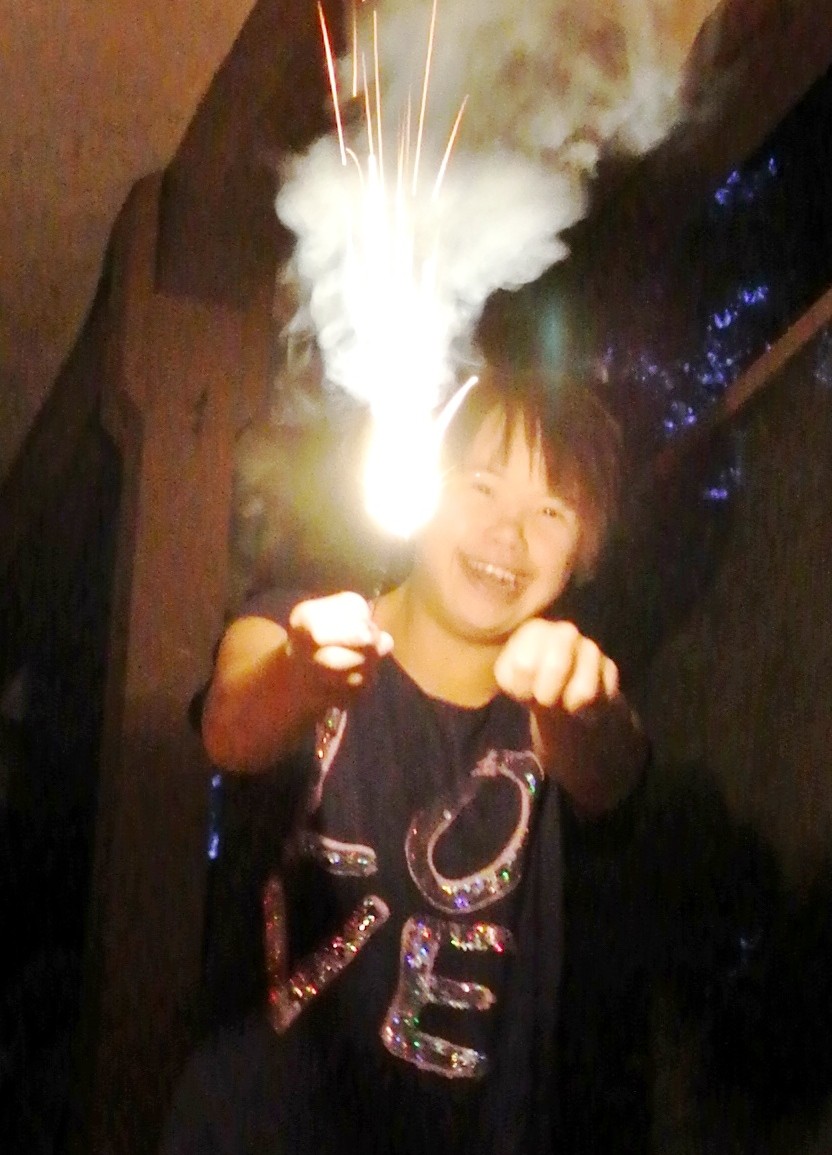
Yes, she lights up our lives just as she is, but any improvement for her would be great too.

I have a child with Down syndrome, but I’m not involved in the “community” in any way at this stage of our lives. (When she was little, I was on the board of directors of the local Arc, which advocates for and serves people with disabilities, but that’s pretty much been the extent of my activism or involvement.) I get a monthly email from the National Down Syndrome Society (or is it Congress? see: I don’t pay a lot of attention), and I sometimes read it. But generally, I don’t pay a lot of attention to the latest news.

This month, I’m late to the party in hearing about this latest bombshell of research: scientists have found a way to “silence” the extra chromosome that causes trisomy 21 in the lab.

Whoa, dude.

I’m still trying to get a handle on what the research really means. But essentially, it could mean there could be some kind of treatment developed in the future to help reverse some of the symptoms associated with people having a whole extra chromosome. Biggies: maybe reducing the likelihood of heart problems or even the cognitive delays that affect all people with Down’s. Apparently, it couldn’t “cure” DS before birth, but it would be a treatment sometime during a person’s life.

Of course, people who have children or other family members with Down syndrome, or who are self-advocates, have varying opinions about this news. Some worry that “curing” DS would remove a valuable segment of the population that arguably helps teach others about love and understanding.

Here’s my take: if it’s possible to give my daughter a better life, I’m all for it. Of course, I love her just the way she is, and I love how she is just herself and how she contributes in her unique way to our family. But I have every confidence she would be just as wonderful and a delightful contribution to our family and to the community if she didn’t have Down’s. I am not actively seeking or hoping for a cure. No, but if this research were to lead to some improvement in her life, even a drastic change, I’d still take it. If it allowed her to be able to (finally) understand math, for heaven’s sake, I’d take it. Why not?

I don’t expect that this research will lead to any real change or treatment within her lifetime, really. But in the land of what-if’s, I’m firmly on the side of taking a cure. I don’t think Down’s makes her the delightful, amazing kid she is; I think she’s just that person anyway. And if she could lead an even more productive and healthy life, I’d let her. Doesn’t every parent want the best for their child? I know I do.

As for the idea of taking away a whole “culture,” I still feel there are plenty of other people with disabilities of varying types that still teach us that extra love and compassion. I don’t see us curing any of those things wholesale. It would just be a strange kind of selfish to just keep people with a disability disabled if they didn’t have to be, just so we could have another way to help people be compassionate. That just seems upside-down and weird to me.

I’ll be interested to see what comes of this research. I won’t hold my breath for a cure or any real life-changing treatment from it. But it’ll certainly be interesting to see what happens.

Glad to read about others’ experiences with mental illness

So I was appreciative this week to receive a book to review called Pros of Prozac: A Faith-Based Memoir of Overcoming the Stigma. Given my experience in book reviewing and my personal interest in mental health issues, this book was a welcome read.

Pros of Prozac

It’s a little slip of a book, just over a hundred pages, which the author says is mostly intentional, so someone interested in the topic can just get a quick overview of her experience. So I read it in one sitting this afternoon. Beca Mark writes about her experience with postpartum depression after the birth of her first child, struggling with mood and depression, and finally deciding to seek professional help and take medication for her depression. It took 15 months to choose to take Prozac, and Mark discovered two things: one, why did she wait so long while suffering so much? and two, she realized that she had actually been struggling with depression her whole life but hadn’t known it until Prozac made her feel really good and really herself.

Mark’s experience is actually what I would call fairly straightforward. She was really struggling, and then struggled with just the concept of taking medication because of the stigma it has in our society (and the real lack of open discussion of the topic in her otherwise close-knit, very large family), and then finally decided to give in and take the medicine. And in fairly short order, she just felt a whole lot better. And she has felt consistently better in the years she’s been taking it, which I’m guessing is probably about five. She makes clear that it hasn’t made her life easy-peasy or super-simple or solved all her problems. It has simply made her more able to think clearly and be motivated and to just be her best self. As I put it, it’s helped her to be able to cope in the way that most “normal” people (i.e. those who don’t have depression or other mental-health struggles) do.

Mark says this is a faith-based memoir, but it’s really not very heavy on the faith angle. I think her beliefs and the culture that surrounds those faith beliefs give a frame to her story, but even those who don’t consider themselves very religious can find a lot of value in her story. All in all, this is really a simple tale, and one that seeks simply to provide some basic information and encouragement to those who may find themselves struggling emotionally but feeling hesitant to accept that there might be a “label” for what they’re experiencing and that medication might help. Our culture at large still places stigma on mental health issues, as well as taking psychiatric medication. And individuals within faith communities may very well sometimes compound that stigma by saying that if a sufferer could just be more self-reliant or more faithful, they wouldn’t suffer.

I heartily support Mark’s goal to contribute to the general discussion and bring this topic “out of the darkness” into the light of day. The more those of us who do struggle with emotional challenges really talk openly about this and show that we’re pretty normal, typical, “good” people, and not weird or weak or something negative, the more others will be better educated, aware, and accepting — and supportive. And, even better, the fewer the number of people who do suffer from mental health issues will feel marginalized or hesitant to seek treatment. Mark really doesn’t want more people to suffer in silence and without treatment. Why should they? It’s pointless to suffer when there is help.

In applying Mark’s story to my experience, I find that mine is a bit more complex. (She does say that mental illnesses are complex in cause, etc.) Because I have bipolar issues, finding medications and treatments to keep me on an even keel can be trickier. Antidepressants help the most, but they tend to “poop out” after a year or two. I’m in that spot right now, I think. I have been on a number of different medications over the years, and it hasn’t been as “simple” (that’s relative, I know) as being able to get on Prozac and stick with it for years. I would like that a lot if it were that comparatively simple.

When it comes to the faith angle, I just wrote that there really isn’t a lot of it in here, so this book is really accessible for everyone. I wouldn’t have minded seeing more, personally. I have written about how my faith informs and is affected by my mental issues, too, and I don’t think Mark really digs into that as much as I have, even.

But bottom line: a good read, particularly for those who are “new” to the idea of having possible emotional struggles, and one that’s simple and straightforward and encouraging. Kudos to Beca Mark for putting her story out there and just being honest. The more of us who do so, the better.