I’m coming to the end of my parenting-kids-in-school era. My oldest is 27 and youngest is 16, and the latter is my last still in (K-12) school. (I’ll just refer to her as R.) R has ADHD and takes medications to bolster her mental health as well, so we’ve been constantly looking for ways to support her in life and school. She has some wonderful talents and gifts and we know she will succeed in life and in a career, but getting her through school has been an almighty challenge.
R has a 504 plan and is a junior in high school. It’s been CONSTANT work to make sure she is staying on top of classwork and sometimes just passing classes. Math has been a huge trial for her; she’s failed every semester so far in high school and has had to do summer school or “credit recovery” after the fact to make up the worst grades and pass with a D. Some classes she does well in, with Bs and As.
I was the “model student” in high school, with all As and academic awards, graduating as valedictorian. I loved to work on my own and get ahead to stay busy in classes like algebra. At the time, I didn’t appreciate that my particular brain and way of learning fit perfectly into the style of school our country presents to all students.
However, now, after having one daughter with Down syndrome and an IEP go through the system and now having one with ADHD and a 504 in it, I so appreciate how many different kinds of learning styles and students there are, and the system caters to one kind. ONE.
After watching my bright, talented and clever child struggle for so long in school, I am annoyed. Frustrated. Angry. Why do we still insist on having one system for everyone? Why do we essentially say, OK, we know there are lots of learning styles, and kids and people in general think in many ways and approach learning in many ways, but … oh well. We’re going to just stick with one method of teaching.
So what’s happened is that we have codified — in long-set, cracking concrete — one style of educating, and it only really works well for a small portion of students. It works mostly OK for a good chunk of the others, and not well at all for another chunk. So rather than changing the approach and integrating different types of classes or changing the system entirely, we have put Band-aids on it, jerry-rigged it (badly and ineffectively) by making some concessions to “different” types of learners by using IEPs and 504s.
Can’t we change the system rather than putting little fixes in? I know the answer to that is no. We also can see that our health care system doesn’t serve a lot of people really great either, but a radical overhaul will never happen. Meantime, Band-aids.
And what that means is millions of kids grow up not learning as well as they could. They aren’t as well prepared for adulthood and careers. (Don’t get me started on how we’ve pushed higher education for everyone, either, when that’s a terrible idea for so many reasons…) They’re growing up feeling less-then, inadequate, stupid.
I’d love to see things change. I’d love to see school set up in a way that works for my child with ADHD. For the whole environment (in the classes that she attends) to be styled in a way that allows her to think the way that works for her.
Don’t tell me that “the real world” doesn’t work that way. I may agree that in some ways, no, it doesn’t. But we all get to choose careers that not only are interesting to us, but fit our style of working/thinking. Whether we’re sitting at a desk at home or an office, whether we’re driving around, whether we’re interacting with people a lot or keep to ourselves, whether we have a 9-5 workday or a schedule we set ourselves… work life is really varied. It’s easier to find a career that “fits”. But finding a good fit in schools, where everything is made one way and the environment is the same across the board? Not nearly as easy.
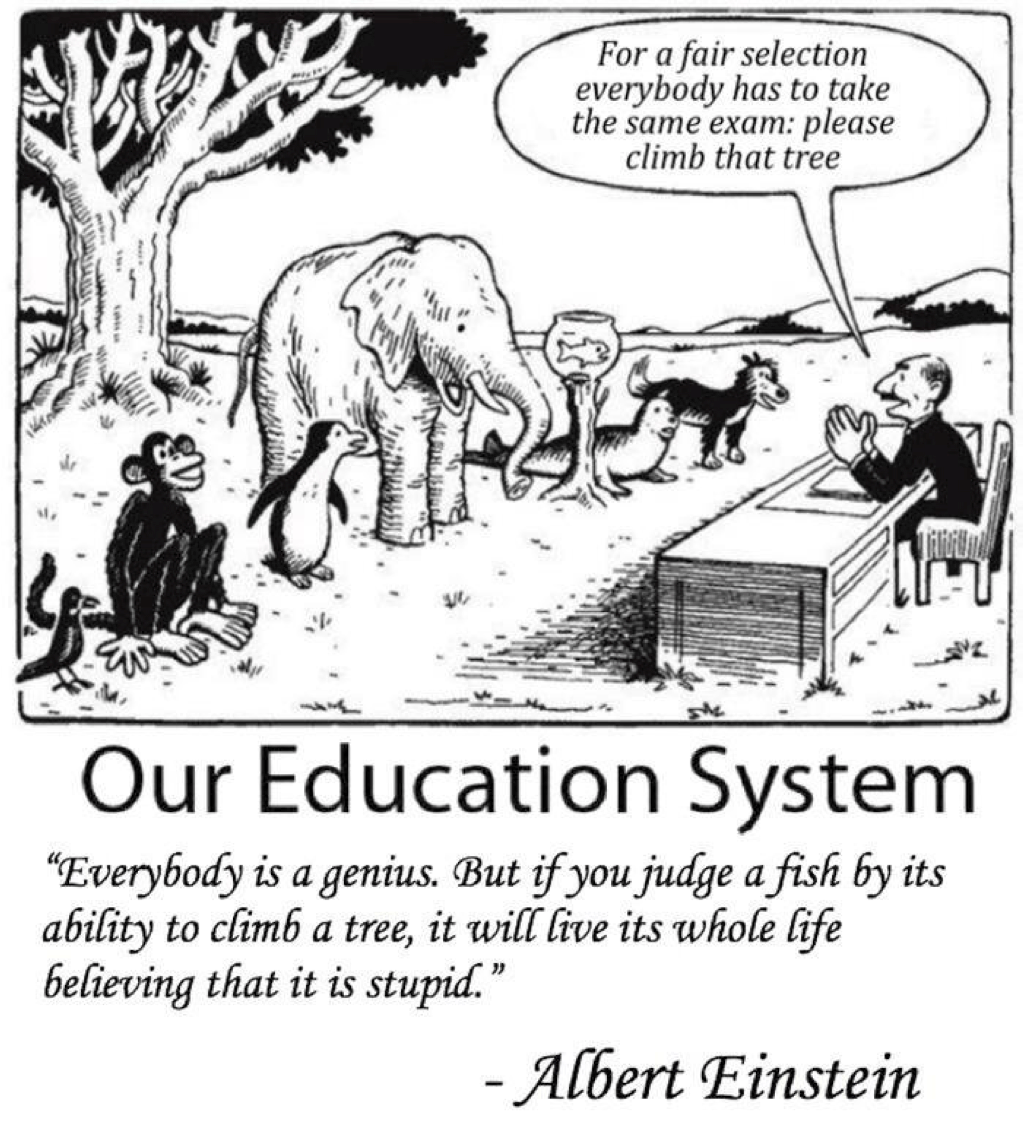
The old cartoon about Einstein’s quote really really still fits what we’re dealing with. The quote has been around for a century and the cartoon… well, a while. And nothing’s changed. It’s past time to do something about it.
 Night Film, by Marisha Pessl:
 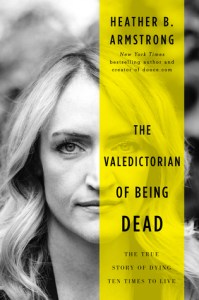 The Valedictorian of Being Dead, by Heather B. Armstrong:
  The Start of Me and You, by Emery Lord:
 So we visited a few weeks ago, and talked for a while. She is fantastic because she’s very thoughtful and discusses the issues with me, asks probing questions, revisits assumptions, etc. We’re partners in my care, and I really feel she’s very knowledgeable, and she’s sensitive as well. That’s a biggie. She said to me that perhaps I’m not really on the bipolar spectrum at all. All she could say was that I’m just my own thing. So there might not be either a diagnosis for whatever I present as yet, or because mental health really is so varied and unique to each of us, maybe there isn’t or won’t be, if that makes sense. All we know is there have to be some kinds of ways to help me with some kind of existing medication so I can function better. So she said she’d try something, a medication that psychiatrists sometimes use to help with that part of mood. It’s a seizure medication used off-label in this way. She tried me on a very small dose, and I actually do feel it’s helping. My life is still CRAZY BUSY!, but I feel a little less like I have to work hard to manage my mood even while I’m managing my life. So I’m feeling hopeful and a little happier, just to have an extra tool in my arsenal, and to know that my practitioner is really awesome at her job.
 Illusions of Fate, by Kiersten White: This was practically perfect. I borrowed it from the library but then had to buy it because I loved it so much. Kiersten White has created a world not unlike ours, set in a time much like that of the early 20th century, but has imbued its nobility with magical powers only they know about and use. Her heroine is smart and courageous and all too human, and though she is “just an ordinary girl,” she is a force to be reckoned with. That’s what makes her — and the book — so great. I just lost myself in the setting, the characters and their interactions with each other, and the story. I absolutely adored this book. Bonus: it’s clean. I rated it Mild on
  The Weight of Feathers, by Anna-Marie McLemore: The prose in this Romeo-and-Juliet tale set in the Central Valley of California that swings between two carnival families is just so, so lovely, and the writing is so masterful it’s hard to believe this is a debut novel. It’s gotten some hype, and it actually lives up to it. I rated it Moderate on
 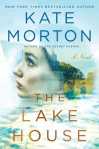 The Lake House, by Kate Morton: Yes, I adore Kate Morton’s books. This one did not disappoint. Morton is a master at crafting these kinds of novels: long and richly detailed stories of family secrets that span generations and decades, that have long-reaching consequences. As I reluctantly and slowly closed the back cover, I was overcome by that sadly delicious, mixed feeling of completion that means a book has brought me much gratification as I’ve taken it all in but regret that the experience is over and can’t be duplicated. And it’s clean reading: I rated it Mild on
 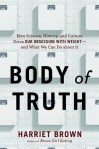 Body of Truth, by Harriet Brown: I have not yet posted a review of this on Rated Reads, but it’s coming soon. I’m also hoping to write a nice in-depth analysis on here in coming days. It’s that important. Brown shares what she’s learned in a decade of examining research on weight, obesity, eating disorders, etc., as well as from interviewing hundreds of women and scientists. The reality is this: our society is completely obsessed with weight. And though the media and doctors tend to go on certain “truths” as givens, those are not necessarily true or even based on solid research. Weight is a very complex matter, and we still know far too little about how best to regulate it. We certainly know far too little about how to help people lose weight and keep it off “for good.”


 Life and Lims