We never fully know what we’re getting into, do we?

In some of my most challenging hours, I’ve told my husband I feel it’s unfair to him he’s had to deal with me and my mental health issues. (This cuts both ways, though, since I’ve also told him during similar moments that if he thinks it’s hard to deal with me — which he’s never said but which I assume he must think, since that’s how I roll [and we know what they say about assuming] — that it’s even more difficult to be me and to deal with me because I have to be with myself 24/7. Wouldn’t it be nice if I could just leave the room or the house and leave myself behind sometimes? Sigh.)

Sure, we’d talked about my issues before we married. Sure, he seemed to be OK with them. But honestly, how much experience did he really have with them? Even I hadn’t had a whole lot of experience with them — at 23, looking back, at least, I was just in the early years. Yes, I’d had some bad episodes, but in part I think I felt they were behind me because they came after some really big challenges, including a major heartbreak and beyond-disappointing treatment by the best friend I thought I’d marry. I really had no idea just how much a part of me those episodes would become, that they’d keep visiting, keep creeping down on me from the darkened attic in which I’d locked them away. But as in those gothic tales I love, the crazy wives in the attic never stay away permanently. Mine screams and yells and sometimes escapes, even setting fire to my life on occasion. No, I might lock her up again, but I can hear her every so often up there, pacing the floorboards and sometimes even moaning.

Nope, if I had no idea what I was in for, there is no way my husband did. And my heart aches for him because of that. At those times of difficulty, when I’m overtaken by darkness and crying hopeless, bitter sobs, I wish he could have a wife who’s not incapacitated for hours or a few days at a time. I just feel bad for him. He’s a great guy. He’s a great husband and has been unflaggingly supportive. I know he’s felt utterly helpless, unable to do anything for me, but he’s there, always hovering and ready to do whatever he can. I always appreciate that. Lesser mortals would have packed up and left long ago, I feel.

But it makes me realize that none of us ever has any idea what life will hold. We can make the best plans, predicated on our best educated guesses and experience, and we can move forward with certain expectations. But life always has surprises up its sleeve. At this stage of my life, I know that spouses can be unfaithful; they can leave; they can change their personalities and life goals entirely; they can even die far too young. Despite great education and job training, unemployment can strike for months, even a couple of years. Illness or disability can effectively rob someone of a functioning spouse. Things happen. And not just little things.

I had no idea what hand I’d be dealt in life when I was still growing up in my parents’ home; I still had little idea when I was a young adult. Even now, I’ve got a better idea, but I also am much more aware that plenty can life ahead of me, supposedly halfway through this mortal existence. Yeah, I wish my husband hadn’t gotten handed the mentally-ill me. But he did also get the really amazing me, who’s capable and really useful and fun and cute to boot. I’m not as thin as I’d like, but I look pretty young still and I’m attractive. Not bad, I think! 🙂 Plus, I cook, I bake, I am a great gift-giver, I’m clever and creative, I pay bills, the list goes on … I’m really handy to have around.

So life has its challenges. It delivers a lot of unpleasant surprises. That’s the case for both me and my husband. But life has also been really good to us in so many ways, and we still have each other. There are yet many good and bad surprises ahead. In some ways, I’m not really eager to find out what they are. Yep, the disturbed wife in the attic will keep re-emerging; I’ll keep locking her up. And all kinds of strange things will emerge from the closets and from behind the bushes outside, even. But I’m just going to keep going and do the best I can to handle whatever comes a-knockin’. ‘Cause that’s life. And since I’ve made it this far, I’ll just try to make it further. 

When I’m boiling over, just grab some oven mitts

I’ve just had another week (couple of weeks? month?) that ended horribly for me mentally. I ended up nearly incapacitated with hurt, anger, and hopelessness, curled up on my bed in a puddle of tears and surrounded by tissues that I’d flung wherever. And something that has struck me (yet again) is how difficult it is to explain this outcome and all the little triggers, inner and outer, that lead to it. I still am convinced that most people do not have the least idea how to deal with someone in this situation, or clearly on their way to it. This even (maybe especially?) includes family members, who have known me for years and have varying levels of knowledge about the struggles I face periodically, but who still just don’t KNOW what it’s like to be me at those moments or how to be WITH me.

I can’t blame them, most of the time, honestly. In their place, I might be unsure what to do or say (and how to handle any lightning bolts that come zinging my way out of the storm) and possibly just find it easier (safer?) to wait until that storm was over, the clouds all blown away, until I came near again. But when it comes down to it, in my own place, I can’t help at those times but feel angry and resentful that few people do know how to approach, how to offer support. And if family members, who are supposed to love me and be there for me, just as I’ve always tried to do the same for them, cannot be there for me, what does that say about them, or even about me? Those moments leave me mostly alone, feeling abandoned. I mentioned on Facebook, to friends, that that medium is a dicey place for trying to reach out for true support. How in the world do we use the one medium that keeps us in touch most readily to really connect, to really help each other, when it generally is limited to use as a place for sharing mundane details of day-to-day life, news of our kids’ accomplishments, and photos that show us in vacation spots or in our best moments? I do appreciate that when I put out that little message, some friends offered their support and care, just saying they were thinking about me. That did mean something. A lot, really.

But in real life, how in the world do I get support from those whom I need when I’m giving off a really bad, hopeless, negative, angry, and, yeah, even “crazy,” vibe? Most normal people would run away, far and fast. This is been one of my biggest concerns over the years as I’ve struggled with this beast of mental illness. I’m a pretty “normal” person most of the time, and people say they find me to be upbeat, happy, blessed with a great smile. I care and really put myself out there to help others. I do spend a lot of my time and energies trying to help those around me. But sometimes life just gets to me or I end up spending too much of my energies on others and then run dry in my own well.

boiling waterIt’s kind of like I’m boiling water on the stove, and as long as there’s still water in the pot, even if it’s only a half-inch of water, everything’s fine. But the second that water boils off, the pan is in big trouble. And despite my best efforts to balance my life (ha!) over the years, it’s still a really tricky act to pull off successfully, and I burn out sometimes. The pan bursts into flames as soon as it gets dry, and I need to be removed from the burner, cooled down, and filled back up again with water. Those are the times I need loving friends and family who, armed with oven mitts, are willing to help me cool off and refill my reserves. I sit on the stove sometimes and whistle like crazy, wondering where my mitted friends are, because it’ll take a lot longer to get myself filled up on my own merits. If left for too long, I stay hot and just get angry.

I know it’s hard to come near me at those times. I realize that. But I know I’m worth the effort. I know that I am a good, genuinely caring person who uses my talents and resources to be helpful to others. I’m fun, I’m generally kind, I’m pretty handy to have around in a lot of ways. So I give. Even just in a balance-sheet kind of way, I’m worth the investment. But during all those good moments, I still fear that those I care about aren’t taking the time to find out more about the few really bad, challenging moments that are my reality just as much as they are the good ones. I want my friends and family to want to really get to know me, to understand me a little better, so when the storms come, they’re ready for a little lightning. Because when the sun comes back out again, it will warm them even more radiantly.

All in all, this is probably true for every single one of us, whether we have mental illness or not. We need people in our lives who really get to know the whole us so they’re ready for the times we’re not our best selves. But it’s just magnified a lot more with mental illness, and society still places a stigma on it, where many people misunderstand and avoid in their ignorance. I wish we could all do better to stop this from happening. I would be happy to keep all this to myself. I’m not proud of who I am in my dark times. But that’s my reality, one I’m trying to mitigate and improve, bit by bit. So in the interest of increasing awareness and helping others, just by being open and sharing information, here I am, baring my soul. And thanks, from the bottom of my hot saucepan, to those dear friends who have braved the storms and held me until they’ve cleared. The world is brighter in so many ways because of you. Thank you, my dear ones.

Building bridges to others’ islands

bridgeStill thinking about the Sandy Hook Elementary School shootings. Not just for itself, but for all the implications of the tragedy and what our society should take away from it to improve. I’ve also had some family issues that have played into this topic that have weighed on my mind quite heavily. Again, as I wrote about the other day, I am not going to go into issues of gun control versus unfettered gun availability. It’s an incredibly divisive topic and one that both can’t be solved (most likely) and can’t solve all the problems we’ve been seeing in our society.
Individuals’ mental health and happiness is what either makes our society better for everyone or, conversely, makes it more difficult for everyone, if it’s not tended carefully enough. I firmly believe that families are the central unit of society, and I don’t think that there would be too much argument with me when I say that the family is breaking down. We have many single-parent families and many children who simply are not getting the nurturing they need for a LOT of reasons. Families provide an automatic place of refuge and help when any member has a need of any kind. So what happens when families throughout society are broken? Many individuals have no one to go to for help. Fortunately, some have friends and other caring people in their lives who can be a second line of “defense,” but many others do not have that. What’s left is either no one or the government. Neither is an adequate source of complete help. As much as we try to shore up and improve government programs, they simply cannot replace or do as good a job as families, in most cases.

Yeah, yeah, I’m being an idealist here. But what’s wrong with trying to reach for the best, with trying to get our society back to a place where it truly could make people better and happier? Why can’t we improve those lines of defense and help, and shore up families? It would help so much more than anything stopgap we could create through government (and no, I am NOT saying there should be no government programs; I am saying they cannot replace the ideal).

The truth of the matter is that each of us needs a group of people who care for us and about us and who can be depended on in times of need. Sadly (and please, if you are my friends or family, do not take this as an indictment or rebuke but maybe just a little hint of encouragement), there have been times I’ve felt alone and misunderstood, particularly when I’ve been in my worst places mental-health-wise. I know that it can be difficult to understand and really help me at those times, but it’s still worth a try. (I think I’m worth it! 🙂 ) I so appreciate family members and close friends who have reached out at those times to just talk, listen, or do something encouraging and supportive. Every little gesture means a lot.

I suppose that’s why I feel so sensitive to those around me. I can just feel their pain and loneliness and helplessness sometimes, and I want to be able to help. Sometimes I can do something useful; other times I can’t. But I try and I pray.

Each of us needs help, and those in our circles need help, at one time or another. The people who have done the most heinous crimes in society (particularly who have histories of mental illness that’s unchecked/untreated) have needed someone to pay attention and do something. As I wrote before, sometimes even with our best help, because of society’s lack of understanding of mental illness and the current regulations and laws that are in place, the family members and friends of those who are struggling simply have their hands tied and can’t do a darn thing. But in other cases, something could change if a few more people just listened and saw a few signs.

No man is an island. No child, no woman. We’re all connected, and while we can’t possibly help everyone out there (I’ve written about that too!), we can each do a little better to pay attention and be sensitive. We can’t solve others’ problems, but we can provide an idea or two if appropriate or we can simply listen or say something kind or encouraging. We can reach out. Build a bridge to someone else’s island.

That can begin in our families. No doubt that if we are related somehow, we should be there for a family member in need, if at all possible. And those in our other circles can benefit from our improved “radar.”

Just do a little better. Keep your eyes open and your ears listening a bit more. Say something, do something. It’ll benefit our whole society.

Yes, guns are an issue in shootings, but what about mental health?

After a horrific mass shooting that took the lives of primarily young children, many people’s thoughts turned to the inevitable questions of “why” and “how.” I also noticed, unsurprisingly, many people discussing in social media and analysts addressing on news outlets the issue of gun control. I’ll save my opinions on that topic and address what actually came to my mind immediately after or right before the gun issue: mental health in America.

I read a fine article by a psychiatrist on CNN that was written after school shootings in Ohio, and he made some fine points about major mental illness and how it is handled here in the U.S. He briefly alluded to the changes that occurred in mental health care in the past decades. Basically, people with serious issues were once confined for life to institutions, usually far from home and their families. In trying to change this system, many of these institutions were closed and their inmates sent home for treatment. While this was certainly a more compassionate and family-centered way of helping, it created many holes in the care of those with serious problems.

I want to tread carefully here. As with so many other issues, this is a complex one, with many facets that need to be considered and weighed. I suppose I should backtrack a bit and talk about why mental illness came to mind after these latest shootings: honestly, with most of these events, it is discovered during investigation that the shooter had major problems. Often, these mental problems were insufficiently addressed. I do believe that evil exists and that crimes are committed by evil people and those who are extremely selfish to the point of disregard for others’ lives. But I also have seen in the news just how often these kinds of horrific crimes are committed by people who have major mental illnesses. This isn’t to say that mental illness can’t overlap with evil, but people with mental illness can do some horrible things while basically not in possession of their “right minds.” This is why we have an “insanity defense” in our legal system, and for good reason. Those who truly experience times they are essentially just not themselves or their minds are completely not their own, once treated with medication and therapy, can experience horrible grief and remorse at what they did while under that “alternate influence,” one could say. My heart goes out to not just their victims but themselves because of what they have to live with.

Our society is still not nearly where it could be in not just treating and caring for the mentally ill, but in just understanding it and accepting it as another illness that some encounter in the course of life. I’ve often said it would be a lot easier for others to understand what I go through if I just had diabetes or cancer or something more “straightforward” or strictly “physiological,” rather than something that affects the mind. Too many people simply don’t appreciate what it’s like to experience mental issues, and too many just write them off as something kind of made-up or “all in our head” (that one’s a bit ironic). That creates a society in which those with mental illness don’t really care to admit to themselves that they have problems that could improve with proper treatment, and in which there just isn’t enough support and help for them among the general population and in health care or other parts of society. All too often, those with mental illness fall through the cracks, even more than those with other more “understandable” illnesses (heart disease, diabetes, what have you) don’t get sufficient treatment if they can’t afford it, etc.

I don’t want to see our country go back to institutionalizing everyone with major mental issues far away from society, away from their families and support systems. But I am positive that we need more real help locally, and more firm but compassionate laws that would help those who might be a danger to themselves or others. It just seems that so many who commit crimes that become publicized were schizophrenic or bipolar and weren’t taking medication at the time of the crime. And yes, in these diseases, even those who are receiving care tend to want to quit taking their meds. I hate to say that we should force medication on these people, but sometimes that seems to be one of the best ways to prevent these kinds of crimes. How we do that or at least make tighter regulations on this is, yes, complex and needs to be carefully considered and applied.

My church congregation experienced our own violent crime a mere two years ago, in which a man came into our church building after services and ended up shooting and killing our bishop. It was a horrific tragedy, and one that again showed that these kinds of things can happen anywhere, even safe places like schools and churches. We were all comforted by our faith and pulled together in this event, but it left its mark. And yes, the shooter ended up forcing a confrontation with the police in which he was killed by them, and I’m fairly confident that was his aim, to end up dead. And yes, he had mental illness for which he wasn’t taking medication at the time.

We don’t yet know if this latest mass shooting was tied to a shooter with mental illness. But I’m willing to bet it will be. And while we can rightly discuss gun control, we as a society and government would be very misguided to skip over a well-needed discussion about mental illness in America. This protester may have been addressing guns, but let’s please, please, please apply this to mental illness as well. The fate of more people hangs in the balance.

sandy hook shooting


That traitor the brain

I’ve been fascinated for years by how our own minds can turn inside-out on us. Memories can and often do turn out to be slippery and even downright wrong in any “normal” individual. Brains getting eaten up by dementia lose familiar people and chunks of time entirely. Brains that are schizophrenic or otherwise split can create whole other lives out of nothing.

Stories that take those quirks of the human mind and turn them into horror tales or mysteries are particularly gripping for me. The movie Memento is just one example of a story that turned a character’s reality on its head once it played itself out. Oh, what horrors our own brains can subject us to!

But those stories generally just get me thinking about the mysteries of our minds and the reality of life and its quirks. One tale that shook me and just felt more personal, however, was the true story of mathematician John Nash in the movie A Beautiful Mind. For those who haven’t seen it, skip over this paragraph. But those of you who have will know what I’m talking about: Nash is schizophrenic and ends up realizing that he’s created people and scenarios in his life that are completely fictional — nonexistent. The story here is that Nash, against all advice, decided to just will himself into getting rid of his symptoms, telling himself over and over again that the people he thought were friends simply were not there, even though he could see them.

I love how Ron Howard fashioned this film: he takes the viewers right into Nash’s “reality” and makes us believe that what he sees is real. And it’s not. It’s absolutely shocking, jarring, to find out that what we saw and accepted as truth was not real.

As I’ve learned over the years that some of the feelings I experience — depression, despair, racing thoughts, and so on — are actually just symptoms of out-of-whack brain chemistry, I’ve come to appreciate just how scary it is to be under the control of a brain that is not in itself in control. At times, I’ve been able to kind of step away from my own feelings for a bit and coolly and rationally observe that they are simply constructs of my biology. Some moments I’ve felt extreme sadness or irritability have had no logical basis in reality; they haven’t been caused by any external event that would normally make someone feel sad or angry. I’ve found some comfort in those times I’ve been able to do that; it hasn’t changed entirely how I felt, but it’s made me realize that my biology has hijacked my mind and that I don’t have to be completely a slave to it.

But it’s unnerving nonetheless to know that my brain — basically the seat of who I am — is a traitor. It takes me places I don’t want or need to go. It terrorizes me.

No, I don’t hallucinate. I don’t experience some of the particularly challenging effects of certain brain disorders. But from my own experience, and thanks to that window into Nash’s world that Howard created, I can certainly empathize with those who do experience that. It’s harrowing.

We rely so much on our mind, on our memories, on everything that we’ve stored within and taught our brains. We expect our minds to be infallible, to always tell the truth. We expect them to reflect reality. Because reality is what we think we’ve always lived. But what if our minds aren’t storing memories quite as neatly as we’d thought? What if they are reflecting to us a life in a funhouse mirror?

I guess I’d like to thank my brain for mostly getting it right (I think …). And I’d like to make others aware that some people’s brains just don’t do what they should. That reality is not always real for everyone, that even depression is a state that feels absolutely and terribly real to its sufferer but looks very different on the outside in everyone else’s reality. That sometimes we have to visit someone else’s world so we can help them leave it behind. A bridge must be made between the two realities.

I’m grateful for the people who have taken the time to try to understand my reality, to try to empathize so they can offer the right words or gestures of help. I’m hoping that in writing about my particular mind and where it’s led me, it might help others as they build those bridges.

Backtracking here … some official words about mental illness

I realized the other day that though I started this blog in part to share my experiences with mental illness, I haven’t necessarily given some good definitions of the term or the different kinds of illness that people may experience. As I have written about how I feel and continued to get feedback from friends, I realize that I haven’t made clear enough what exactly “official” mental illnesses do, and how they are different from the regular ups and downs that everyone experiences in normal life. So here goes.

From the National Alliance on Mental Illness comes this information about depression:

Unlike normal emotional experiences of sadness, loss or passing mood states, major depression is persistent and can significantly interfere with an individual’s thoughts, behavior, mood, activity and physical health. …

Depression occurs twice as frequently in women as in men, for reasons that are not fully understood. For more please visit NAMI’s section for Women and Depression. More than one-half of those who experience a single episode of depression will continue to have episodes that occur as frequently as once or even twice a year. Without treatment, the frequency of depressive illness as well as the severity of symptoms tends to increase over time. Left untreated, depression can lead to suicide.

Major depression, also known as clinical depression or unipolar depression, is only one type of depressive disorder. Other depressive disorders include dysthymia (chronic, less severe depression) and bipolar depression (the depressed phase of bipolar disorder). People who have bipolar disorder experience both depression and mania. Mania involves unusually and persistently elevated mood or irritability, elevated self-esteem and excessive energy, thoughts and talking.

Now for a definition of bipolar disorder, also from NAMI:

Bipolar disorder is a chronic illness with recurring episodes of mania and depression that can last from one day to months. This mental illness causes unusual and dramatic shifts in mood, energy and the ability to think clearly. Cycles of high (manic) and low (depressive) moods may follow an irregular pattern that differs from the typical ups and downs experienced by most people. The symptoms of bipolar disorder can have a negative impact on a person’s life. Damaged relationships or a decline in job or school performance are potential effects, but positive outcomes are possible.

Two main features characterize people who live with bipolar disorder: intensity and oscillation (ups and downs). People living with bipolar disorder often experience two intense emotional states. These two states are known as mania and depression. A manic state can be identified by feelings of extreme irritability and/or euphoria, along with several other symptoms during the same week such as agitation, surges of energy, reduced need for sleep, talkativeness, pleasure-seeking and increased risktaking behavior. On the other side, when an individual experiences symptoms of depression they feel extremely sad, hopeless and loss of energy. Not everyone’s symptoms are the same and the severity of mania and depression can vary.

More than 10 million Americans have bipolar disorder. Because of its irregular patterns, bipolar disorder is often hard to diagnose. Although the illness can occur at any point in life, more than one-half of all cases begin between ages 15 and 25. Bipolar disorder affects men and women equally.

As I do believe I have mentioned, it seems apparent (as much as is possible with these complex brain issues) that I have a form of bipolar disorder. One doctor, who has written a fine book and puts information on a website as well, has a great explanation that is quite detailed showing what a broad “spectrum” of symptoms people can experience anywhere between the “unipolar” extreme of clinical depression and the other extreme of “bipolar I,” which includes manic episodes and full delusional mania. For a really detailed explanation, visit Dr. Phelps’ site on this particular topic. In other words, I’m somewhere in the “middle of the spectrum.”

I’d say I’m typically a fairly “normal” person. When I’m feeling pretty normal, I manage to weather ups and downs of life with maybe a little complaining and some irritability. I think most people understand what THAT’s like! But when I’m pushed outside of those “normal” chemical boundaries, then I find it either impossible or much more challenging to weather the regular ups and downs with my regular coping tools. I am on medication that makes it much easier for me to stay in the “normal” frame of mind most of the time. But even so, medication doesn’t put me in that “normal” place 100% of the time. I still end up in an extreme irritable state or depressive place every so often.

One point I’d like to make clear is this: as Dr. Phelps says:

Depression is Not a Moral Weakness.

It Has a Biological Basis. 

He shows there are real proofs to back up this statement.

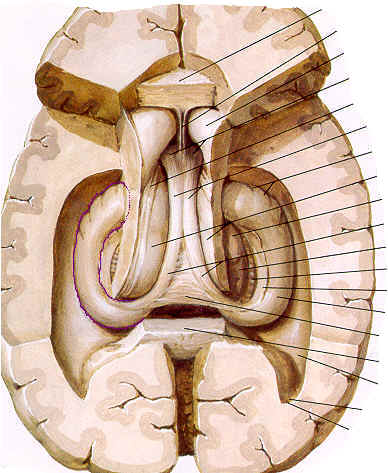
A view of the hippocampus from Psycheducation.org

The other point to make clear is this: doing the normal things that “normal” people do who are facing some sadness or frustration won’t kick someone who has a brain chemistry problem back into healthy chemistry and normal ways of seeing things. Trying to put a smile on your face or just counting your blessings or looking at all the positives won’t do the trick entirely. I’m not saying they’re not worthwhile, but if someone has gotten into clinical depression, those “tips” won’t fix it.

That’s why I am writing about this topic. I’d like more people to understand what it feels like, what it means, to grapple with a mental illness. If you haven’t grappled with it yourself, it’s hard to grasp what it’s like. So I hope that by writing here, I can bring more understanding to those of you who know me or someone else who does have a chemical/biological issue. I’d like to feel that when I say I’m getting depressed, I’m not just complaining about how life is a little extra hard. I’m actually saying I’m struggling and I need support. I’m asking for help. (And honestly, I don’t do that very often, I think. I like to go out and help other people, but I hate feeling “weak.”) And I think this is what many others in my situation are trying to express as well. I don’t want to be seen as a whiny complainer who needs to just buck up and get a stiff upper lip and understand that life can be hard. I just want to be understood a bit more as someone who has a particular biological problem that sometimes makes life a little more challenging to deal with than usual.

I don’t know how successful I’ll be. I just hope that I can reach a few people. If I do, I suppose that’ll be success. Thanks for trying to learn more and understand!

Too depressed to think of a name for this post

Sometimes the depression end of the mental illness that I get to enjoy hits me like a nice thick fog with claws. I can hear it coming but still can’t quite escape its nasty grip. It grabs on and envelops me, surrounding me in a dark cloud no matter which way I try to turn. But pretty soon I don’t try to turn any way anymore.

This ugly depression erases companionship out of my life and surrounds me with a dark cloud, and, to add insult to injury, it zaps me of the motivation to make a nicer-looking illustration with Photoshop.

It’s sadness and frustration and hopelessness all rolled into one entity. It’s wishing all that feels wrong could just wink out of existence, that somehow I could wave a magic wand and have everything better. On extreme times, it’s wishing I could wink out of existence. The cloud allows me to see out, and I know others can see in just fine, but they can’t tell that anything’s happening. It somehow eerily makes others blind to my inward suffering. I end up feeling alone, isolated, and misunderstood.

I want to scream and cry sometimes. I want to talk it out. But talking doesn’t help because there are no solutions, and the people around me have nothing to say that can change the stark reality of the dreary fog. I want someone to have answers. I so desperately want that. I want someone to fix it. When I’m pushed into the depression it’s usually because circumstances in my life have become a bit too much for me to be able to handle anymore. This time around, it’s all the things I wrote about earlier in the week. It’s not having any time to myself to think or write or just care for my inner self for the whole summer. It’s having huge expenses and a bunch of seemingly nonstop little ones drain my bank account this year and make me nervous about spending any little sum, so I don’t even want to take all of my kids to see a full-price movie for a nice change of pace (even at matinee prices, it would cost almost 40 bucks for the five of us to see “Brave.” I mean, come ON!). It’s this darn broken foot. It’s the frustration of having no control over almost anything in my life lately. So many things have conspired to drain me of my resolve and my strength, and now I am down to the level of near-hopelessness.

Oh, I wish a miracle would happen. I wish my blog and website could be wildly successful. I wish I could get some time and inspiration to write the book I’ve been planning and researching for months now: and to feel that it’s even possible to get it published if I do manage to get that mythical time and inspiration together. I wish that I could find the motivation in myself to lose some weight. But with a broken foot, the exercise part of the equation is more than challenging: the recumbent bike sessions I’ve been doing this week aren’t going to cut it.

I wish that I could feel comfortable enough with more people to really say how I feel, but I don’t trust many people to do so. I’m pretty much afraid of how people will respond. My husband at least has learned over the years to stop saying anything that I could remotely construe as platitudes (because those make me go from 0 to 60 in angry miles almost instantaneously), but now he just says nothing. That’s only a slight improvement on the cliches and pep talks; I just wish he could say something that would really comfort me or encourage me. I wish I could find it in me not to feel at all resentful that he can’t do this for me, because it’s really not his fault. Very few people are very good at dealing with someone who’s laboring under the fog of depression and that utter hopelessness. That’s what’s so frustrating: it isolates so quickly and easily. No one knows how to respond. I know. I get that. But it still makes me feel alone, and angry, and doubly sad. I am deathly afraid of people’s judgment, of their fear, of the possibility that they’ll think I’m weak or that I am just a complainer. (I usually feel fairly strong. That’s the problem: I’m too strong. So even when I feel weak and hopeless, everyone else still thinks I’m fine and just leaves me alone.)

I’m afraid. I’m tired. I’m exhausted. I’m actually just overflowing with “sick-and-tired”-ness. I’m at wit’s end. I’m utterly sick, sick, sick of feeling like this on a somewhat regular basis, of feeling that life has me cornered, that I have no control over my own destiny, that I’m Sisyphus pushing, pushing, pushing on that rock. I’m SICK of looking at that rock.

That’s the thing: I’m not the type of person who expects to have anything handed to me on a silver platter. I don’t think the world owes me a living. It’s the opposite, really. I work hard all the time to take care of myself and my kids and my husband. I work hard in volunteer roles to help other people. My heart goes out to everyone else I hear about who’s in need in any way and I wish I could help. I am always doing something that’s practical in some way. But when I get into this down mode, I wish that all of my efforts would finally bear fruit, that the rock on the hill I constantly am climbing would just sprout some legs already and MOVE, dammit. My arms are tired.

Again, I guess that’s why I’m writing this blog. I want to put into words what I experience, in the small hope that what I say can be of help to someone else out there climbing their own hill, pushing on their own insurmountable, immovable rock. Man, I wish I could just pick up your rock for you and toss it away, let it crumble into a million pieces as it rolls down and hits the valley floor. I wish you could do the same for my rock. And I wish that I could help everyone out there feel more comfortable talking to someone in my position right now, make you feel able to say something encouraging, able to sit it out and not run away cringing. I want to feel less alone. I want others like me to feel less alone.

It might be another thing that’s impossible, but like all the other goals in my life that seem impossible right now, I just have the tiniest hope that they might, might, MIGHT be possible, in some other universe in which I am happy and capable again.

The best moms … know their limits

Much talk has been made over the years and even recently about “good moms” or moms who “do everything for their kids” and so on. The Time piece titled “Are You Mom Enough?” stirred quite a bit of controversy and buzz. But there are clearly as many ways to parent out there as there are parents. I would venture to say that a number of those methods employed by some parents are probably not so great, but in general, most parents get the job done passably well. But I think what bugs me the most is when people make judgments about parents whose kids are doing just fine and start saying that their parenting style is lacking. About a month ago, right around the time I was in dire need of a little me time, a Facebook “friend” posted that she was so disappointed in all the mothers who were complaining that their kids were driving them crazy. She ended by saying, “It’s about attitude!” I gently responded with a couple of kindly worded comments to the effect that just because some of us mothers were rightfully saying our kids were making us nuts (this is summertime, people!), it doesn’t make us bad parents. Just normal. A few hours later, my comments (which were completely appropriate) had been deleted. What the heck, man?! But that’s a whole other story.

Let’s just say that I consider myself in many ways a pretty normal, typical mom. For years, women have dreaded the summer months in which a passel of kids would be constantly underfoot and looked forward to school starting again (even a popular Christmas song refers to the relatively short winter break: “And mom and dad can hardly wait for school to start again!”). So feeling nutty here at the end of the summer does not make me an unusual mom, let alone a bad one.

I will say that what makes a good mom, I think, is knowing your limits. I figured out long ago that, given my personality and my mental health issues, having consistent and dependable time alone, preferably weekly, can keep me going at my best. I’m a gas-guzzling, large-capacity van, let’s just say, at this stage of my life, and I need frequent infusions of gas, oil, and water to keep me running effectively and continually transporting my load of children through their lives. I also need good quarterly maintenance.

Unfortunately, the summer months disrupt my fairly well-planned and nicely balanced routine that keeps me at my mothering best. I know this going in and start feeling a little nervous come May. But I do the best I can to plan and make allowances. And then I still end up running low on gas and oil and burning out at least once, sometimes twice, usually in the middle and at the end of the summer. A month ago, I felt myself snapping, stretched to my utter capacity for patience and sacrifice, and I scheduled a Saturday for myself. I hadn’t had more than an hour to myself in about two months. I hired a niece to babysit for the day and I went for a lovely bike ride and then had lunch and manicures and facials at the beauty school with a friend. It was wonderful. And not nearly long enough. I was not ready after merely seven hours to get back into the grind. The timing the next day of that Facebook post of my friend (unnamed here) was very unfortunate. I thought it was insensitive and judgmental. After having my comments deleted, I deleted the friend (this was not this person’s first “offense” at overreacting to innocuous comments, either). At the time, I felt it was the simplest and quickest solution to help reduce the negative influences in my life. Again, I suppose that’s a whole other story.

Mama’s stretched to snapping: it’s not a pretty picture.

A month later, I am back at snapping point. Having four children with all their demands (and whining and fussing amongst themselves, which can just grate on one’s nerves) around nonstop; then having to make sure the two older ones get to a girls’ camp; then the oldest, who can actually babysit, be gone for an entire week at band camp; then breaking my FOOT and being unable to do the things I need and want to do; then not having any time or brain-space for thinking clearly in order to work on the writing projects that mean a lot to me personally; having other big responsibilities on my plate that still need to be taken care of, broken foot or not (band boosters [the band director needs us to raise $150,000 for new instruments over the next three years?], being in charge of my university’s local alumni chapter, other volunteer things); then throw in PMS, and it’s a recipe for burnout. (Not to mention having all kinds of large and small expenses pop up until the point of ridiculousness this past four or five months, and the astonishing number of things that have kept breaking down on me the past few months till where I’m begging the financial universe for mercy…) It’s the rubber band being stretched entirely too far. It SNAPS.

I wish I could be the kind of mom who enjoys every single moment with her children. I wish I could savor every moment during the summer with them. I have done some fun things with them here and there. I just haven’t been their everything for every moment. (Nor do I think that is good for them, anyway.) I am still absolutely ASTONISHED at the amazing journey a dear friend took this summer with her seven children. They drove in a pop-up camper all the way from the western United States to Alaska and spent two months making the trip. I would have gone nuts probably on the second week, the third at the latest. How she did it is beyond me. But I am in awe and I tip my hat to her. What an amazing experience for them all. But me, I’m just getting my kids through the summer at home, barely gripping on to my sanity.

I am still trying to figure out right now how to just survive the next eight days until my children start school. It sounds silly now that I’ve managed to get through a whole summer, but the last days are seeming like an eternity because I’ve already snapped. I have no spring left. I pretty much want to curl into a ball in my bedroom, take some kind of sleeping pills so I can coast through the next days mostly unconscious, and lock the door.

I would probably be a slightly more “normal” mom if I didn’t have my mental health issues. But I do the best I can to stay on top of them. I take medication, check in with my psychiatrist, and have regular visits with a therapist. I try to be reasonable in my expectations. I’ve been trying to repeat all kinds of useful and inspirational mantras the past weeks to keep myself positive enough to survive until I have some time alone to just regroup in pretty much every way. I just don’t know who or how to ask for help. And unfortunately, when I mention my feelings and am aware that I am being stretched too far, I end up with mostly unwanted advice (one-sentence cliches that too often start with “just”… if you’d just do X, Y or Z, you’d be fine. Or just “let go and let God.” Yeah, I know all that. Doing it is really the battle, isn’t it?) I don’t want advice. I want support and practical help. Someone want to take my girls on a vacation for a few days? That would be most welcome. No mantras, no judgment. Just support and caring.

As you can see from this long post, my manic side is coming out a bit. Sorry ’bout that. But it’s my reality. I am who I am, and I’m daily trying to improve the parts of me that can be improved, and manage the things I can’t change (genetics, brain chemistry: I’m talking ’bout you). But I’m still working on it. I’m going to fall down a lot and fall short a whole lot. I just wish I were better able to figure out ways to practically deal with the snapping of the rubber band before it stretches too far. My aspirations for being a great mom are simply in knowing my limits and not pushing past them. I’ve given my children so much and taught them so much and love them a great deal. Yeah, I need some time alone, away from them, sometimes in order to be able to continue to be a good mom to them. I just want to be able to stave off the snapping.

Spirituality and mental illness

As a faithful follower of Christ my entire life, my spirituality and connection to the divine have always meant everything to me. My life would not be what it is without my knowledge of and faith in God, my Heavenly Father, and His Only Begotten Son, Jesus Christ. I have always depended on the great gift of the Comforter that Christ left with his disciples, the Holy Ghost or the Holy Spirit. I’ve been taught since I was young how to understand what the Spirit is trying to communicate to me through his still, small voice. It is explained to people in various ways because it can affect and teach each of us a little differently, so each of us must learn exactly how he sounds to us. A scripture in my faith’s canon says that the Holy Ghost will speak to me in my mind and in my heart, and that really rings true in my experience. I can often just feel ideas popping into my head, and I can feel in my heart a good feeling that confirms they are from a trusted source.

But my challenges with my mental health over the years have thrown wrenches into that beautiful process off and on, in various ways. The depression, irritability and anger I’ve felt have blocked that positive flow of messages from a loving God, leaving me to feel adrift and alone and cut off. I’ve sometimes felt that there are just no answers coming to prayers, and I’ve given up asking. I’ve even gotten angry at the heavens then for leaving me in that isolated state, with no communication coming my way. All of it leads to me feeling that I’m alone and undeserving of God’s love, that for some reason he just isn’t paying attention.

Even medication I’ve taken has caused difficulties of its own. As I wrote in my previous post about my long list of medications over the years, when I tried Abilify for a few months about a year and a half ago, I felt absolutely numb. It was unnerving because I’m usually a bubbly person who often sees the bright side of things and, in terms of faith, relies on (even might take for granted) the wonderful peaceful feeling that comes from turning to prayer and scriptures and other messages of a spiritual nature. I know that when I listen to good music that reminds me of God and Christ or when I read a scripture or an inspirational magazine article, I’ll feel uplifted and recharged. I’ll feel the influence of the Holy Ghost, a marvelous gift. So for the few months I took that medication, I didn’t feel anything, including those spiritual feelings. I didn’t feel bad, but I didn’t feel good. I didn’t feel peaceful or Spirit-filled whenever I did all the things that would normally make me feel that influence. It bothered me a great deal. It was a strange feeling to go to church, where I would normally feel happy and inspired, and just feel … nothing. A black hole where there would normally be gardens in bloom with all colors of gorgeous flowers of faith.

What got me through that time was just the knowledge I had still in my mind about all the experiences I could remember. My brain had stored away the memories of knowing that God had answered my prayers at specific times and that I knew that the Holy Spirit had usually been in my heart. I couldn’t feel it then, but I trusted in my head that it had happened before and would come back to me, no matter what wacky tricks this medication was playing with me. And sure enough, when I got off that medicine and got to mostly myself again, I did feel that peace again. The black hole was gone, filled again with light.

So the wrong medication can play tricks on faith. Depression and other mental illnesses can do their own brand of damage. I’ve been through that emptiness before and am kind of feeling it again, and I’m sure I’ll keep experiencing it throughout this mortal existence. It’s not pleasant, and I’d rather not have to go through this. But my feeling is that this is my cross to bear, so I’m doing the best I can to handle it gracefully. Saying I’m doing my best is the truth, but even then it feels silly to say because “my best” can sometimes not be a whole lot. I feel alone inside of myself and that God isn’t sending me answers or the positive feelings I need. But I know in the part of my brain that’s not “messed up” somehow that he’s still there.

I think what I want most to do here is connect with other people who experience these feelings. I think that faith communities are slowly doing better at directly and publicly addressing matters of mental health in the context of religious belief, and that’s wonderful. But depression and other mental illnesses work hard to isolate their sufferers. Those of us who know in our minds and in our hearts that God is aware of us and loves us but sometimes don’t really “feel” it the way we should because of neurochemical vagaries can talk to each other to buoy each other up not just in our specific trials but in our faith. We’ve been given a great gift to have a Savior and the good news of the gospel he has taught. I believe there are still miracles today. Honestly, though, some days, amid the clouds that create a darkness of despair in my heart and head, I don’t feel a conviction that God will work a miracle in my life. And since I know that isn’t true, deep down, I have to work hard to combat the feeling that is false. A dear, dear friend of mine told me a couple of times that she and her mother were able to talk to a well-known Christian writer of our faith after he gave a talk they attended. She wrote me to remind me what he had told them: “He suffers from depression and told my mom and me that being faithful means that you remember the Lord is with you and mindful of you even when the depression doesn’t let you ‘feel’ it. He is still there!” I just cling to that like a little round life saver thrown to me in an ocean of big waves. Eventually the waves die down, and I’m still clinging on for dear life: alive and well yet again. Still.

Medications and me

Having a mental-health concern (that seems most likely now to be a bipolar disorder) for the past 25 years or so has naturally led to my being on various medications to try to improve my quality of life. I’ve already discussed a bit how it’s been a challenge to figure out exactly what I’ve been up against over the years (just some depression? anxiety? postpartum depression or PMS? bipolar disorder? nothing at all?), so I’ll try to go back and address what kinds of medications my doctors and I have tried to use to help me feel a bit more “normal,” or, more accurately, just better able to cope with the usual stresses and strains of life.

The first I ever took some kind of an antidepressant was toward the end of my LDS mission when I was feeling serious stress. The resident older missionary/retired doctor prescribed me a medication that would supposedly help with that. At this point, I honestly don’t remember what it was he gave me. What I do remember is that I was in pretty bad emotional shape and just going about my regular busy schedule just with a new medication didn’t help me feel any better. Besides, it usually takes a few weeks for those kinds of medications to even start making a difference, and in the meantime, I just kept feeling stressed — and guilty or bad about being stressed while I was supposed to be happy and spiritual and serving God and my fellow beings. It just wasn’t a good recipe for success as a missionary or a happy human being. So I ended up having to leave the mission behind and go home to seek help in a different environment (already talked about how that went).

I was next put on lithium when hospital doctors decided I was bipolar. I took that for a bit less than a year, I think. I felt better as time went on, mostly, but I also went back to college, where I felt more at ease and myself and had my friends around me. I am sure that the medicine must have helped though, looking back, because otherwise I probably still would have been seriously depressed/angry/stressed. But the change of environment did contribute, and after a time, I just felt that 1) the diagnosis of bipolar disorder couldn’t really fit me because I didn’t fit the “classic” signs of the “full-fledged” disorder and 2) lithium is a serious drug to be on: it can potentially damage the liver. I was having my blood tested every few months to make sure my liver was fine, but it was still a real concern. So I went off the lithium. During all this I was seeing a counselor at school, so I didn’t do all this just on my own without any professional support, but I don’t know if I had a psychiatrist on my “team” at that time.

After I married and moved to California with my husband, I know I ended up seeing a psychiatrist regularly, but I cannot remember if she had me on any medication. I know I didn’t go back on lithium. She might have put me on some kind of antidepressant, if anything, but I don’t remember for sure, and I have no idea what it was if I did take something. I do know that the first year of my marriage was very rough for me emotionally, and I prefer not to think about the way I acted. It’s too embarrassing. Luckily, my husband stuck it out with me. I also know that I was on hormonal birth control pills for the first two years of our marriage, and I am convinced that fiddling with the sensitive balance of my hormones was not a good thing for me emotionally.

I know that there were months and years I didn’t take any kind of psychiatric medicine, and there were other months and years that I did. It was always some kind of antidepressant. I took Zoloft and Wellbutrin at a few different times off and on after and between pregnancies. I took them together for a year or so, mainly because Zoloft did take away my sexual response. That’s something that’s a warning when you take that and various other medications, such as Prozac, and it’s definitely true for me. It can seem like a small price to pay, but it’s actually a pretty big sacrifice when it comes to a full intimate life with your spouse, so it bothered me greatly. Taking the Wellbutrin with the Zoloft took that side effect away.

After probably my third pregnancy, my gynecologist prescribed me a new medication, Lexapro. He said it worked well and had no significant (definitely not sexual) known side effects. I was eager to sign up. The morning after I first started taking it, I got out of bed in the morning to use the bathroom and then ended up passing out on my way back to bed. I was so scared about the weird feeling I had during that few moments that I told my husband to call 911. The paramedics came out and pronounced me fine. They said I’d most likely rubbed the back of my neck or something and had some kind of vagal episode. OK. Fine. Unfortunately, over the next 5 or 6 days that I took the Lexapro, I still felt weirdly faint and out-of-body-ish, and I figured the only thing that had changed in my life was that new medication. I visited with my general doctor, who told me that was ridiculous. But I decided it was the cause, and I stopped that Lexapro. I instantly felt better, well, fainting-wise. (The lesson here: even if your doctor says you’re being ridiculous, you still should trust your instincts.) So I went back to Zoloft or something similar, I think.

I started going to a psychiatrist again, which I hadn’t done for quite some time, just getting antidepressants from my gynecologists or general physicians, although I had still gone to see counselors for talk therapy more regularly. The psychiatrist I saw at that point, probably in 2007 or so, put me on Effexor eventually, which worked well for me for a while. He did suggest I might be experiencing bipolar disorder and might benefit not from lithium, but Lamictal (lamotrigine). He even gave me a sample pack. Even though I did consider that option, I told him that since I was feeling pretty good taking the Effexor, it seemed silly to stop taking something that was working just to try something else. He thought that was reasonable and kept me on the Effexor.

Then in 2008, my family and I moved to California from a long stint in Alabama, and life became unbelievably stressful. I’d also been taking the Effexor for probably a year or maybe a little less. At any rate, I’d probably only done well on an antidepressant for a year or so at any time I’d taken one, either because after a while, my life had settled down and I’d gone off a medication and been fine, or the medication had seemed to stop working. In this case, I just kept taking the Effexor, but my new general physician upped my dose. Shortly before another momentous, life-changing event for me, the death of my beloved dad, I started trolling the Internet and found the site I’ve mentioned already by Dr. Jim Phelps, which made me start to seriously consider the possibility that I really did have a bipolar disorder. But this psychiatrist was making the point that there was a wide spectrum of bipolar disorders, not just the “biggie” in which people stay up without sleep for a few days at a time, go on wild shopping sprees and spend tons of money, and do otherwise really foolish things they wouldn’t otherwise do. So I found a psychiatrist in my new town who was on my insurance list and made an appointment. He put me on Lamictal, which my previous physician had suggested a couple of years before. It did seem to slowly make a difference, and I was happy to be off the Effexor, although it did take a solid two or more months to very slowly wean off of that very addictive medication. (If I didn’t get a dose, I’d start feeling kind of headachy and light-headed, in a distinctively Effexor-less way.)

So I think the Lamictal gave me some relief and some hope that I was on the right track, but a couple of months into that, my dad died and sent me spinning. My psychiatrist asked me at the first appointment after Dad’s death (merely two or three weeks afterward, mind you), “So, how are you feeling?” Uh. BAD. My dad died. I’m miserable. Hard to say how the medication is working. I’d feel rotten no matter what. And that’s how it went.

A few months after that, I mentioned to some people in my church congregation that I was struggling with mental illness, and a few recommended I try a different option, a natural formulation called EMPower that was sold by a company called Truehope. The company says that the formulation contains micronutrients that are found to correct the imbalances found in those with bipolar disorder and other mental issues. I have always felt that ideally, it would be nicest to treat the actual cause of a problem rather than just the symptoms, if at all possible. This sounded like a very reasonable option, and Truehope has actually been doing scientific studies showing the benefits of EMPower.

I felt that I needed to at least give this option a shot. If I didn’t, I would never know if it could have helped me or not. So I went in to my psychiatrist, who naturally told me he didn’t agree with my decision and that he couldn’t continue to see me if I went off my prescription and took EMPower instead. I knew he’d say that, and I was ready to say, “OK. I won’t be back.” He said he knew I’d be back in a few months in even worse condition.

I tried the supplement, which is actually pretty expensive (probably about $100 a month, and not covered by insurance, of course), for about six months. I felt at first it really did help, but after a few months, I was just not feeling good enough. I tried a few adjustments and options after some phone calls with the company’s support techs, but I finally had to make the decision to end my own personal “drug trial.” I am sure that the supplement truly does help lots of people, but as with anything, nothing helps everyone. I did struggle, however, with what to do next. I firmly did not want to go back to my previous psychiatrist. He was too abrasive, and I felt I couldn’t work comfortably with him to find the best options to treat me. I finally decided to go see a nurse practitioner working in psychiatry 45 minutes away from my town because my therapist had heard good things about her from several other clients. I felt that it was going to be best for my mental health process to work with a psychiatrist who I felt comfortable with, that we were really a team, that she would be supportive. So I made the appointment. This new person, who I still see almost 2 years later, turned out to be a really good fit personality-wise, which I think makes a big difference in getting the best care possible. The only drawback is that my insurance doesn’t cover her, so I have had to pay entirely out of pocket. Luckily, I have had the spare funds to be able to pay for the visits, and it has been a good choice for me.

I’ll just call my nurse practitioner by her first name for ease of writing. Susan really went into a lot of detail with me, talking to me about the options and what she thought might work to help me, even explaining why she felt that way. I personally have really liked her approach. I like to feel that we’re on the same page, and knowing her reasoning helps me to feel more confident that is happening. We tried probably four or five different medications over the course of probably four to six months, during which time I’d go back every month to see her and check in. We tried Abilify, Prozac, and maybe Celexa. I can’t remember exactly. I did notice Prozac didn’t make me feel any better, and it just made me feel completely dead sexually, which was super-frustrating for me. So that was a no-go. I also know the Abilify didn’t do it on its own, and it actually made me feel, rather than “more normal” or “more like myself,” just kind of numb emotionally. I wasn’t stressed, kind of, but I was just dead. I didn’t feel anything. I felt like a zombie. I absolutely did not like that. She ended up adding in Cymbalta, which felt pretty helpful. Eventually, we took out the Abilify to see if that would help me feel less numb. And it did work. The Cymbalta, at the time, on its own, was a good fit for me. I’ve now been on that for perhaps 18 months.

Unfortunately, I’m afraid that now we’re getting to a point we need to tweak again. I’ve been on just antidepressants before, and I’ve either just gone off them or they’ve stopped working, and I fear this is happening now. I’m just feeling unhinged. The stresses and huge demands on my time are taking a huge toll on me, and I’m not proving up to the challenge of dealing with them in an appropriate manner. I’m coming up in a few weeks on another check-in with Susan, and I think this time we’ll have to address now how to change my dose or try something else. It’s been nice, though, for the past year, feeling pretty good and “myself.” Descending back into my “crash” mode is a scary and upsetting thing, for me and my family, and it’s nerve-wracking for me to ponder how much trial-and-error it’s going to take to get me back to happy. Will it take a couple different medications again and weird feelings of numbness or just not-effectiveness (so I’ll just feel unable to cope for a few more months? Yikes!)? My main fear is looking ahead at a few months of not being myself, far from it, especially with summer months coming on and my kids being out of school and all the stresses that places on me every summer. It scares me.

So that’s where I am, medication-wise. I’ve been a bit of a guinea pig for the past 20 years. It’s difficult because treating any kind of illness can be tricky and require some finesse. The basic stuff is kind of straightforward (infection? take an antibiotic; cold? take some antihistamines and Sudafed and wait it out), but other health issues take some trial and error. Then when it’s mental health, which is still a kind of slippery creature in the early 21st century, and every person’s needs and body chemistry is unique, it’s a science that’s more art than anything else. Being the doctor is probably a challenge, but being the patient is truly difficult. Being that guinea pig, the one on different kinds of medicines, is tricky and frustrating as all get-out. I’ve said for ages I wish there were a control group for me. But there isn’t. Good science requires a control group and an experimental group, and in this case, giving just me a medication and seeing what happens isn’t truly good science. And the onus is still on me as the patient to make the judgment calls, to figure out what’s changed, what to tell my health-care provider, about what might be significant. Do I feel better taking Lamictal even though my dad just died? Can I possibly separate out the effects of that from my normal stress reactions? Can I say I feel better on something even though a bunch of stuff has been happening in my life? If I could put myself in a quiet room without any interference from outside sources, I could judge better. But that’s never possible. (And if I could be by myself in a quiet place — resort, maybe? that would be amazing — I may very well be able to get to feeling better without the medication. Maybe. At least I wouldn’t be bothering anyone else.)

This post is incredibly long; perhaps I should have separated it into a few parts. But it’s the best answer to those who would like to know what my experience is with medications. I hope it might be of some use to those of you who struggle with similar problems and need to figure out how to look at your own situations with more clarity. Perhaps it will just make some of you more sympathetic with those in your lives who have challenges similar to mine. Or maybe those who know me but don’t know all these details about me will feel more empathetic with me. Either way, I hope this is of use to someone out there. This is an ongoing story, so I will need to update as the next few months come along and I visit my nurse again.