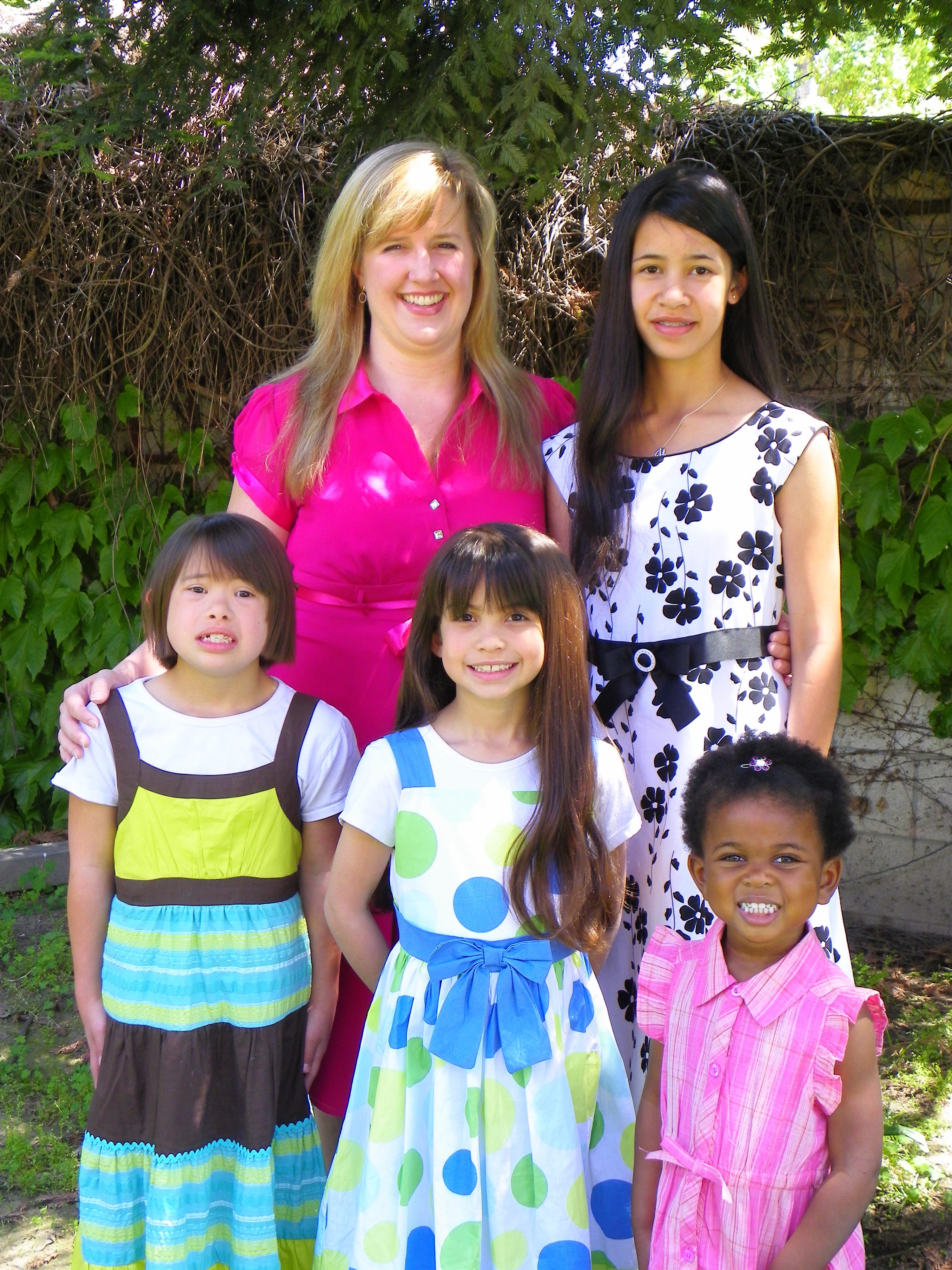
It’s high time to stop objectifying women and girls

What’s it going to take for our society to just STOP seeing women, and even girls, solely as sex objects?

This past couple of weeks, one woman’s blog post asking Target to stop the miniaturization (i.e. sexy-fication) of young girls’ clothing went viral. Rightly so. I have four daughters, ages 18 down to 7, and I have long chafed over the fact that retailers simply make girls’ clothes shorter, tighter, and smaller than boys’ clothes.

(Unfortunately, the one place this doesn’t seem to apply is in the waist and hips, because it’s dang hard to find a good variety of slim pants sizes for my slim girls. JCPenney makes them; Gap and Old Navy make some slim sizes; online retailer Lands’ End makes them. But this being a slightly-related but not completely-related topic, I’ll just keep it to this: can’t we have more sizing options? Yes, I know that, one, people — including kids — come in all shapes and sizes, and two, there are more and more heavy kids in what’s becoming an obesity epidemic, thus necessitating the plus sizes in kids’ clothes, but there still are some children out there who eat fairly healthy and are naturally slim. Argh.)

My oldest, in Bermuda shorts.

Anyway, back to the topic: Just because teen girls seemingly prefer short-shorts instead of Bermudas doesn’t mean mothers want to buy Daisy Dukes for their toddlers and elementary-school-age kids.

This goes as well for all the junior-department dresses that are about 16 inches long, particularly formals, that are strapless and end mid-thigh. Pair these with the also-trendy stilettos or huge platforms, and we have the stereotypical image that’s traditionally been reserved for prostitutes.

And look at what a really gorgeous and fun but not-skimpy dress we found for prom.

Mind you, I do like style, particularly dresses. I adore dresses! They’re so fun and girly and there are just SO many styles and interesting looks. I love to shop for myself; I love picking up new frocks for my girls (on sale, naturally; the better the bargain at a nice retailer, the bigger the smile on my face). But there is no reason for such a high proportion of dresses to skimp so much on fabric. And taking the sexy styles of teens (which are too sexy for girls who haven’t even reached adulthood yet) and adapting them into preteen styles is just NOT COOL.

More of us parents and shoppers should be ACTIVELY doing more to contact retailers and demand change. So kudos to this blogger. See? One person asking for change can make a difference.

Then there are the constant stream of images in the media, whether it’s music videos or movies and TV shows (to which our girls are looking for inspiration or, at the very least, simply can’t NOT see in their digital lives). The latest, apparently, is a horrific video by Maroon 5, “Animals,” featuring Adam Levine as a butcher who stalks a female customer. Oh, yeah. Let’s glorify the “fantasy” of a male stalker — a butcher surrounded by bloody carcasses, no less — with an “animal” lust that can’t be controlled.

What continues to elude me is why women who are participants in these blatant displays of demeaning women are willing to sign on. The Maroon 5 video features Levine’s new wife, Behati Prinsloo. No doubt the honeymoon phase hasn’t worn off yet. Otherwise one would hope she would be the first to say, “Look, Adam, honey, I don’t think that’s a great idea. Let’s try something else, shall we?”

Then there are Jennifer Lopez and Iggy Azalea celebrating their barely-clad backsides in “Booty.” (Let me note that I have not watched these videos, just seen a few screenshots. I do NOT care to put any more images in my head of these things.) They are the stars of their own shows; J.Lo, with her clout, arguably does or could control her image and what kind of music she sings and videos she shoots, so I hold her more responsible. I believe the typical argument goes like this: “I’m a strong, empowered woman, and I’m taking control of my own sexuality and am CHOOSING to show my sexual side.”

My only response to this is this: Baloney.

You know that you’ll get lots of attention and more money by using your sexual side to sell your “brand.”

Think what these empowered women could do if they really put their money where their mouths are and CHOSE to send different messages, messages about how richly talented and diverse and interesting women and girls all are, starting with themselves. And think what we as consumers could do if we sent a message the other direction to these celebrities and the media who promote them: What if we truly did not buy their products? What if millions of us rose up in protest and sent emails and letters, showing that we really don’t want what they’re foisting on us?

In an age when many of us really are trying to teach our girls something better, to rise above worries about trivial matters of our appearances, why are the music industry, the film and TV industries, working so hard against us? (Rhetorical question, folks.)

I heartily agree with this sentiment expressed by a parenting researcher and author in The Daily Telegraph: “I am sick of trying to teach my daughters how much they have to offer the world, only to have everything I say undermined by the sleazy, unhealthy messages that someone with no respect for womanhood promotes to the mass market to make some more money. The wellbeing of our wives, sisters, and daughters is worth more than that. It’s not OK.”

Today we recognize the amazing determination of one teen girl in pushing for education for girls in her native Pakistan. Malala Yousafzai was awarded the Nobel Peace Prize: one of the finest achievements anyone could aspire to, and she’s only 17. We aren’t all in awe of her for her booty, her figure, her beauty, or her style; far from it — she covers her head in public with colorful scarves. She bears scars from being shot in the head for campaigning for girls’ right to education. No, everyone is impressed with her convictions and bravery to do the right thing, despite almost being killed.

That’s what matters. That’s what we want to encourage our girls to embrace about themselves: their strength, their bravery, their determination to find the best in themselves and make it better and share it with others, conviction to make the world a better place. They’re all different sizes, different colors, different backgrounds. But they all have so much to give! I speak from experience because I have amazing girls.

It is high time we ALL spoke up for the amazing girls and women of this world and helped them reject being reduced to mere one-dimensional sex objects.

Parents who don’t hover are the ones in danger, not their kids

I’ve read a couple of articles lately that have reminded me just how tough it is to parent these days. And not in the ways you might think.

First, I read a great column about one woman’s experience, When kids were unbreakable, remembering her “dangerous” childhood and giving her kids some more opportunities for freer play. I think most of us who are in our 40s and up fondly recall hours of free play when we were growing up. I was particularly lucky to live “out in the country” most of the time before I turned 10, after which point I was more in neighborhoods. In both living situations, though, I was away from my house (and my watching mom) for hours at a time, playing in the dirt and in creeks, exploring the woods, walking along dirt roads, riding bikes along suburban streets or cutting through unfenced yards to walk to friends’ houses. I rode my bike with no hands a number of times, and once I ended up needing stitches in my elbow because of it (and I didn’t do it again). I don’t remember a lot of other dangerous things I must have done, just that I had lots of fun, was mostly smart about it, and paid attention to what was going on around me. Dad taught me to shoot a rifle in the backyard a few times (in the country); Mom taught me how to use a knife (and lots of other tools) in the kitchen.

The short story is this: my mom and dad didn’t watch my every move. I wasn’t penned inside my house; I wasn’t watching TV or any other screens very much. I ran and played. I breathed fresh air. I invented all kinds of fun games by myself and with friends and (if forced 🙂 ) my younger siblings. I made something fun out of “nothing,” the materials at hand. My mom felt fine — and was a perfectly great parent — letting me go outside her supervision for those hours.

Today, things are far different. We live in a hyper-vigilant society, in which we have 24-hour news coming at us from TV and the Internet and smartphones. Every instance of bad things happening to kids is reported to us. We fear strangers and are sure if we aren’t watching our kids every moment, that someone will likely snatch them. We live in a time when we are told to know the signs of child abuse. This is a good thing; abuse is not pushed under the rug as much and is better reported. But it’s made us all wary of being the kinds of parents who let our kids have free creative time to explore and imagine and play, without being within 10 yards of them at all moments. We fear that our kids might get kidnapped and/or abused. We fear that we’re not being “engaged” with our kids, providing them lots of fun play options. We fear we’re not good enough. I’m fairly sure that these weren’t concerns for our parents.

Which brings me to the second, and very disturbing but not surprising, article, Woman Calls CPS After Seeing Kid Play Outside. It upsets me to read it because I’ve been in a similar position. When my first two were only 2 years old and a few months old, I was reported (anonymously, though I was able to piece together who it was because I knew her personality and modus operandi) to CPS because someone was concerned they were undernourished and one had a raw, chapped rash between her lips and her nose. Here’s what the circumstances were: my kids were and still are, many years later, petite. The infant had Down syndrome, and many people don’t realize that children with Down’s have their own growth chart. My pediatrician measured her growth against other DS kids. She was fine and perfectly healthy. In fact, we’ve always been blessed that she’s been remarkably healthy, with no heart problems, no digestive problems, almost no ear infections, even. But she looked, to one too-sensitive observer, to be “too small.” My 2-year-old just had a bad (and difficult to break) habit of licking above her lips and that small area was for a fairly short period of time just red and chapped, and I did everything I could think of to make it better. This apparently also made me an object of concern.

A case worker came out to our house and questioned me and looked at the kids, and I was lucky enough that that was the end of it. My kids also were too young to know anything was going on. But it was extremely upsetting for me. I was scared and just sick to my stomach. Raising my kids was hard, and I was always grateful for a break and me-time, but I certainly didn’t want them taken from me!

It was also my introduction to the brave new world of Big Brother: everyone is watching you. And they are given the power over your life to call a number and anonymously report the possibility of you being a Bad Parent. Then you are thrown into what I have discovered is not just a flawed system, but one that’s in some places openly hostile and dangerous to normal, good parents. I don’t have space to tell all the stories, but I could relate a number of them, of good and loving parents who have ended up having to take time-consuming and unnecessary parenting classes, hire attorneys, and be in genuine fear for their parenting and working lives because someone misconstrued something they did in public. It is terrifying.

We have become a nation of helicopter parents, it’s true. And we’ve become a nation of people who are quick to jump to conclusions, who are quick to call “the authorities” on the basis of a tiny possibility of a problem, who don’t know their neighbors from Adam, who have no idea of any context of the lives of the people they’re reporting on. If we knew each other better, knew that our neighbors were good parents who love their kids, whose parenting styles assuredly are different from ours but are NOT BAD, who support their kids and teach them and are making them into responsible adults, we’d be far less likely to go straight to the government with a concern rather than talk to our neighbors first, if we do anything. But we don’t. We are very connected with disembodied people via smartphones and tablets and computer screens, and with talking heads on the news, but not truly interconnected with a community of real, living, breathing people. We’re taking a quick way out to call the authorities and assuage some kind of guilty conscience (for not being better involved, for not knowing Mr. and Mrs. Smith and their two kids next door) or to pat ourselves on the back for “doing the right thing,” as the government and news outlets repeatedly tell us.

Would it be possible at this point to go back a little, to recapture the sense of community we had as neighbors, to support each other in the tough job that is parenting, and to let our kids have the space they so desperately need (as studies keep proving) for free play and imagination and learning how to navigate the world? I’m a little worried that it’s not, that we’ve gone too far. But I desperately hope we haven’t.

Education problems? Families are the solution

If you’ve read my blog much at all, you may have noticed that I have a few passions: I care about and advocate for mental health issues, education, and other issues related to the media (content that’s suitable for families and kids, better accountability on issues like image and portrayals of women).

In the 14 years or so I’ve had kids in school, I’ve been involved in different aspects of education. At times, I’ve attended school board meetings and advisory meetings; at other times, I’ve been involved with specific organizations like the band boosters. I’ve always gone to my kids’ parent-teacher conferences and back-to-school nights and open houses and so on. I’ve helped out in classes sometimes and gone to activities. In all this time, I’ve observed all kinds of problems, some of which I’ve written about.

But in all I’ve done to participate, read, ask questions, and educate myself about education in the United States today, I’ve realized one thing underlies most of the problems and concerns: families aren’t playing the role they should in the development of children and their overall education.

I’ll say that again: Taken on the whole, families (i.e. parents) in this country aren’t teaching, supporting, and nurturing their kids. Why? Lots of reasons. But to be brief and try to get at a core issue, families simply aren’t “whole” anymore. I read a great overview of how there is no “average American family” anymore and it provides a few revealing statistics, taken from a new book: “Take 100 children who are representative of American life, … and 22 live in families where mom stays home and dad earns the income — the ‘typical’ family experience of 65 percent of kids in the 1950s. Another 23 live with a single mother; it’s a 50-50 proposition whether that single mom was ever married. Seven live with a cohabiting single parent and three each are being raised by a single dad or grandparent.”

If many kids are living with just one parent, and that parent has to do the job of two parents, and is necessarily away from the home working to provide for the family, it follows that those kids won’t have the level of involvement in their day-to-day lives and school lives as a household in which there are two parents. And in those households in which both parents are working (because that’s their choice or because of economic necessity), kids will have more involvement in their lives than the families with one parent around, but they simply won’t have the time dedicated to them that a family has with two parents with only one parent working outside the home. I’m not casting blame here at all; I’m simply looking at the realities of time constraints and what kind of actual QUANTITY time kids have with parents, as opposed to the oft-talked-about “quality” time.

The reality is that quality is great, but a certain amount of quantity is vital. As a stay-at-home parent (I do editing work from home on my own schedule, which is a luxury I really appreciate), I get lots of face time with my kids, who are all in formative periods of their lives. They come home from school and have questions or comments or needs, and I’m there for them. They are lucky to have a parent there to help them with needs and to do informal teaching. Kids’ learning really happens during moments they have questions and someone can answer tailored to their interests.

So with the new reality being kids living in homes with single parents who must be absent and with two parents who are both often absent (during those crucial times of afternoon into early evening), kids aren’t getting as much time for informal learning from their parents. That learning includes all kinds of topics: building character, learning to manage finances, learning about interesting topics that schools don’t necessarily provide classes in, getting opportunities for family “field trips.”

Schools are places to learn the sciences, literature, math, writing, history, etc. I was quite good in all the school subjects when I was growing up, but I wouldn’t feel comfortable teaching advanced math or sciences to my kids; I’d rather they have teachers who specialize in each subject and who are particularly adept in those to help them learn about those topics.

I guess I sound rather old-fashioned. But the reality is that it’s not the job of schools to teach character, for instance. Schools can’t take my kids on trips very often at all to learn about different areas of our state or country. Schools can’t teach faith, and they don’t often have time to focus on basic life skills that are more easily learned informally at home.

Character Counts is a nice program, but it isn't enough to replace parents teaching their kids about character 24/7.
Character Counts is a nice program, but it isn’t enough to replace parents teaching their kids about character 24/7.

Time in school is finite, and as I’ve observed at a variety of meetings with other parents and educators, it’s becoming more and more difficult to fit in during a school day all the core subjects, let alone other things schools are having to teach kids because their families aren’t doing it very well or at all. In our town, elementary schools focus on a different character trait every month to teach students: respect, responsibility, caring, trustworthiness, fairness, citizenship. Why? The “Character Counts” program was started to “combat youth violence, irresponsibility and dishonesty” by stressing positive character traits. This means that the community and schools were finding that kids and teens were acting badly and needed to be taught values; families weren’t doing the job.

Over the past dozen-plus years I’ve been actively participating in community education, I’ve seen all the problems that exist. I’ve also seen all the programs school systems have started or turned to to combat the problems. I’ve seen how little time and money exist for schools to be able to surmount all these issues by themselves. And the simple fact of the matter is this: no matter how much schools try to do to “raise” kids into good, contributing members of society, they simply can’t parent kids. Parents parent. And no one else can do that very challenging, intense, nonstop, VITAL job.

I’ll continue to be involved in school meetings and advisory panels and so on. I’ll continue to give ideas on how better to teach and support all kids, mine and everyone else’s. But nothing I or the schools can do will take the place of the home. The solution is to support families and homes. Our nation, our communities, absolutely must find ways to strengthen families. In the article I mentioned earlier, Brad Wilcox, director of the National Marriage Project at the University of Virginia, says this: “Kids raised by their own intact, married parents are more likely to flourish. Given that, public policy should help strengthen both the economic and the married foundations of family life for kids in the United States.”

Until we change our attitudes about marriage and family life, our children (including their education) will continue to suffer.

A wide-open summer: great for kids — and Mom

This past year has been an incredibly busy one for me and my family, full of activities, travel, work, volunteering, and everything else expected of a mom with kids at home. Our family had a daughter who was a senior in high school, who stayed busy with extracurriculars, and I was involved in many ways myself. We also decided to host an exchange student, and she lived with us for the entire school year. Thus, we had an extra teen and high school student in the house in addition to all our usual stuff. It was busy but fun and great in many ways.

Now that the school year is over, the senior daughter has graduated high school, and the exchange student has returned to her home, it’s summer, and a very quiet and empty one, uncharacteristically so. We have nothing planned! It’s a wonderful feeling. And whereas last summer I had some (what I thought were) modest goals, which I didn’t really achieve, this summer I have none. Well, aside from getting through it with my sanity intact. And that can be a biggie.

My parenting philosophy has always been taken from that of my mom and my own childhood: Mom isn’t responsible for keeping kids from being bored. That includes not scheduling stuff, or at least not much. I’ve always felt it was important for kids in many ways to be reared with this kind of parenting, mainly because it teaches them responsibility for themselves from an early age. They learn the world doesn’t exist to make them happy or fulfilled. It’s on them. And it allows them to just develop their creativity and thinking skills, given a sufficiently “stocked” environment. (In my feeling, this includes a mom who’s willing to spend some time reading with them, taking them to the library, and providing them some raw materials for play.)

I am not at all surprised when I read that studies bear out my (my mom’s) philosophy. This article on The Atlantic mentions several benefits for kids, such as learning “self-direction” and “self-regulation.” My job as a mom is to grow independent adults. It takes ’em a while, but I want them to be able to take care of themselves when they leave the nest. That is the idea, isn’t it?

I’ve never been a big “scheduler,” in part because I don’t want my kids to not have free time and this opportunity to self-direct, and in part because I don’t want to overschedule myself and our family as a whole. I admit that I did “schedule” my younger girls to have some summer classes in the mornings to give myself a little guaranteed time to myself and to give them the feeling that they have some balance of scheduled (but both fun and educational things) and nice wide-open afternoons. It’s a nice balance for us all so far, as I’m finding here at the end of “summer week 3.”

100_5213
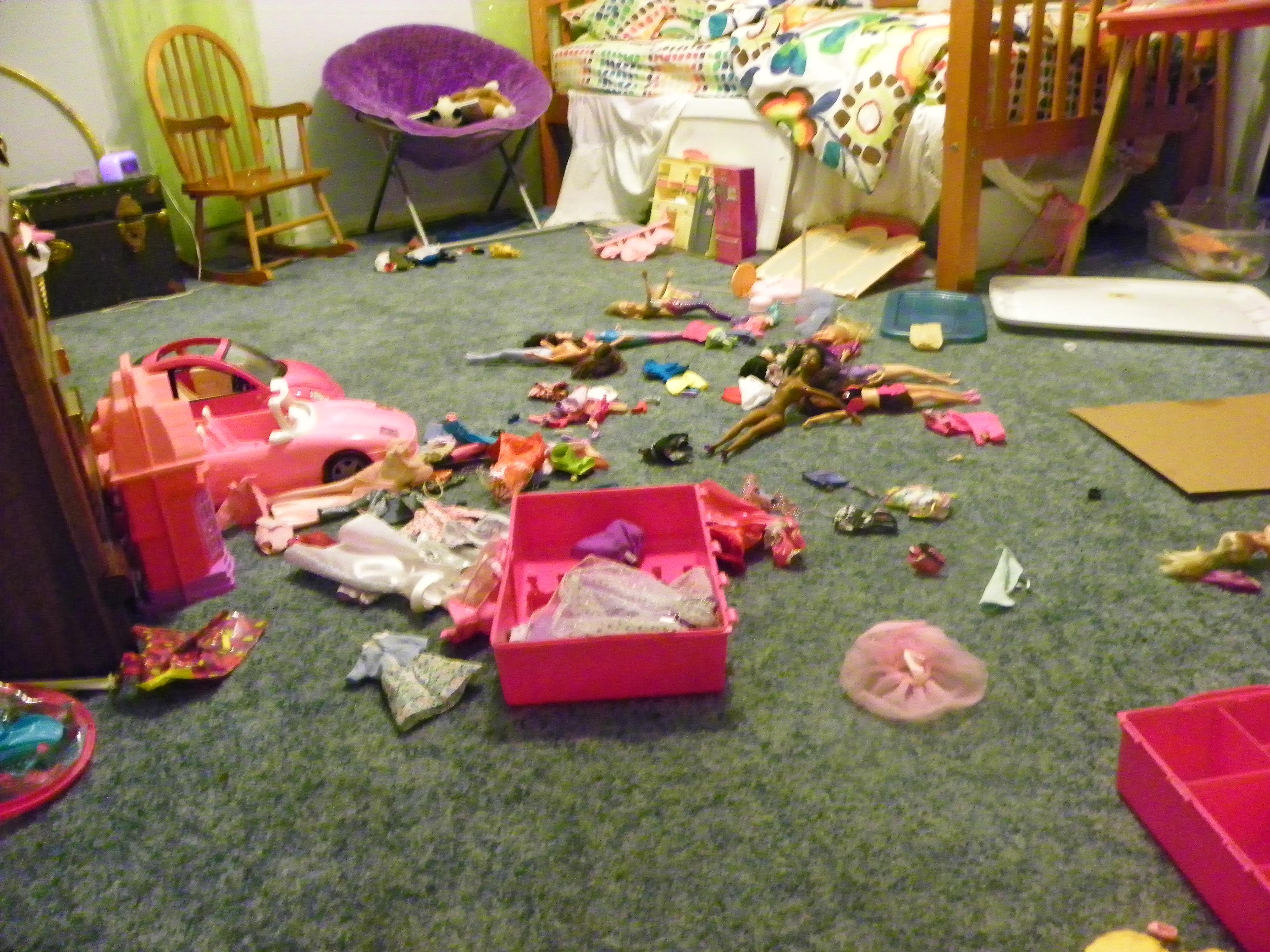
Yes, they have toys with which to keep themselves busy.

Here’s what I said at the beginning of the summer, and which I occasionally repeat as a gentle reminder of the “rules”: “I have generously paid for you to enjoy some fun things in the mornings (for five weeks). In the afternoons, and on weekends and other days you’re not in school, I have provided you plenty of options for things to do. Your rooms are now organized and reasonably stocked with art supplies, books, and toys; there are board games; we have things to do in the yard. I will go outside with you for some time most afternoons and watch you so you can swim. You have the responsibility of figuring out exactly what you’re going to do and when during all those off hours. I will not choose for you. Now, go and have fun!”

So far, the rules are working fairly well. I’m getting my paid freelance work done, I’m finally getting to the “eventually-to-do” lists (woot!!!), and everyone is mostly happy and well adjusted. I think my parenting philosophy is benefiting my kids, whether the studies bear me out or not. But they do. Ha!


A wedding is a promise of best days to come

The wedding of my littlest sister gave me the opportunity to remember the start of "best days" in my life.
The wedding of my littlest sister gave me the opportunity to remember the start of “best days” in my life.

This weekend I had the privilege of witnessing a wedding. Weddings are such happy occasions, filled with love, friendship and support and the opportunity to further cement ties of various kinds. At one point after this wedding, someone commented that the day would be the “happiest day” of this young couple’s lives. I thought immediately, “You know, it is a great day, but there will be many more and even happier days to come.” I can definitely say my wedding day was not the happiest or best day of my life; it was 21 years ago, and I was 23, and I loved my husband and was excited for the day and all it meant, but I have had so many wonderful days, better days, since.

The groom in this scenario was the next-to-youngest of eight children, and his parents were blessed to have all their older children married already, and these couples were all in attendance. I’d venture to say, from my own experience, that this day may very well have been one of the best days of the groom’s parents’ lives to date, as they were able to celebrate a beautiful, meaningful occasion not just as a couple, but as a family: the family they themselves created and nurtured.

My view is that marriage isn’t just about putting a legal or cultural stamp of approval on a romantic relationship. It’s meant to be the start of a family. And my faith teaches that families are forever: that marriage is a vow between a man and a woman that can be “sealed” in the presence of God in a temple and last forever, more than just “till death do you part.” And that promise to be faithful to each other and support each other and grow together includes having children and teaching them and loving them. That big picture, the years spent growing together as a couple in love and being able to rear children, is what brings the best days of all.

I definitely appreciate the sentiment expressed by Bruce Hafen in one of his excellent books, The Broken Heart: “One new bride reportedly said to her mother on her wedding day, “Oh, Mom, I’m so happy! I’m at the end of my troubles.’ ‘Yes, dear,’ replied the wise mother, ‘but which end?'”

A wedding day may seem the culmination or the end of a courtship, the fulfillment and denouement of romantic love. But it’s really just the start of something much bigger, deeper, and wider. I’ve enjoyed some wonderful days with my love of 21 years, as well as a bunch of stinky ones. We’ve had our share of troubles and stresses and real difficulties. We’ve had our share of disagreements and I’ve had moments or even hours during which I’ve been very frustrated with him (and I’m sure he’s been in the same boat with feelings about me), to the point where I was beside myself and unsure where to go next, how to resolve our problems, how to feel less angry or disappointed. But I’ve had moments of pure contentment, absolute satisfaction, utter bliss. I’ve been satisfied that despite the difficulties, I made a good choice of spouse and that despite everything, I still just LIKE him a lot almost all of the time.

We’ve been blessed to have four daughters, three biological and one adopted. And we’ve had days and weeks of frustration in parenting, of being at wits’ end, of not knowing how to proceed with parenting challenges. As our kids have gotten older, these moments have become more frequent and intense, because they’re more and more their own people with distinct personalities and very definite plans to exert independence. They can and do make their own decisions, and it’s our job to guide them and provide meaningful consequences, discipline and teaching, combined with big doses of love and compassion. But the whole job has gotten almost exponentially harder and more challenging with each year each gets older.

At the same time, these independent people we’re rearing are also sources of immense joy and happiness. At the best of times, when everyone is getting along, when we’re just having fun, simply being ourselves together and laughing and being distinctly us, the unit that is uniquely the Marce and Cathy Lim family, it is the best of anything I’ve ever experienced. It really does feel like heaven on earth, the best version you can dream up.

Here’s why these years can contain the best days I’ve ever had: there are more of us than just the two we started out with. Our little couple expanded into a sixsome composed of some amazing people who are wonderful to be around as individuals but even better when combined. I cherish our wedding day as the start of what we have now. But it was just a seed, an embryo, of what we were meant to be and to have. And as time goes on past today, past this year, past these moments where I can enjoy other young couples’ “seed” days of weddings, our Lim tree is growing and growing. There are far more “best days” ahead, and I look forward to them with great anticipation.

Guilt and mothering: like peanut butter and jelly

So Mother’s Day in the United States has just passed, a day in which millions of women received handmade cards with paint-stamped body parts in shapes of hearts and various forms of breakfast, either in bed or at the table. It was a day in which mothers smiled and were gracious about the efforts of their young progeny, same as pretty much every other day of the year.

It was also a day that induced or amplified all kinds of emotions in women of all ages and stages of life, ones who have children and those who do not. So let me address one of those emotions that tends to rise to the surface yet again for some mothers on the second Sunday in May: guilt.

Yep, one of my obligatory Mother's Day photos, in which at least one kid is making a funny face.
Yep, one of my obligatory Mother’s Day photos, in which at least one kid is making a funny face.

Here’s one scenario of feelings that can play out that Sunday, particularly if one attends church, where people stand at the pulpit and talk about their angel mothers: I am not good enough. As a mother, I do not sound at all like the description often made of those amazing moms whose stories go down in the history books of being completely self-sacrificing, completely loving and giving, completely kind and always up for listening to a child’s ramblings, no matter how constant or stream-of-consciousness they may be. These women never seem to snap, never seem to request a break just for some peace and quiet, never ask for “me” time, never tell a kid to come back later.

If, for some reason, a woman doesn’t hear those kinds of talks or they just don’t bother her, then there’s still the rest of the day to barrel through, which invariably also means her husband and children are eager to make her happy. If you’re like me, someone who can get overloaded and overstimulated seemingly far too easily, and you just made a T-shirt quilt for the high school band director so her senior daughter and fellow seniors could have a personalized gift to give him before graduation, and you hosted a before-prom dinner for 16 students at her house the night before Mother’s Day (just as two examples), you probably just want to be left alone for an afternoon and evening to sleep and collect your thoughts again (and gear up for more events and to-do-list items begging for your attention). But your children and husband know it is their DUTY to MAKE YOU HAPPY that day. To them, just leaving you alone and letting you sleep, etc., translates into profound failure on their part, because MAKING YOU HAPPY means being with you every moment, attending to your every supposed need and loving on you.

So as a mother, you’re stuck. Either you take the needed time to just be alone and manage to rest up enough so you can forge on with your selfless mothering duties for the rest of the week, month, year, and lifetime, for all those other days for which you are supposedly celebrated and venerated on the one Sunday, OR you suck it up and spend time with the kiddos doing things they enjoy because they think it’s stuff you enjoy and that will make them happy.

Let’s just say that mothering guilt will inevitably occur. No matter what, you’re back at that familiar rock and hard place.

Let’s just posit this idea: women generally are and want to be selfless when it comes to their families, except for those women who truly are just bad mothers (they do exist, you know). They do make sacrifices, some seemingly bigger or more story-worthy than others, at different levels that are unique and personal and necessary for each (some even sacrifice too much, honestly, more than is good for their own mental and emotional health). So the reality is that there’s going to be at least some level of guilt on the day they’re celebrated, at some moment or hour during that day. There’s going to be guilt because there’s guilt 365 days a year; there are just a few new twists on it on Mother’s Day, in addition to the regular ol’ garden-variety guilt.

How about we just declare the day “Mom, don’t feel guilty” day? How about we ban guilt for one day? It’s a bold and wacky idea, but maybe we can give it a try. It might be very liberating.

Financial advice to a kid who’s getting ready to be an adult

In talking about education, and many of public education’s failings, the notion that kids simply aren’t taught about real-world, practical personal finance has come up a few times. I know people who are really great at handling money, regardless of how much they make. They make wise decisions in budgeting, spending, and saving, and they feel secure. Then I know plenty of others who really don’t know how to handle money, and it’s cost them, literally. The problem is usually this: no one ever taught them how to do it right. I don’t think many people really WANT to be “bad” at handling their money, but they just didn’t learn basic skills and rules.

I was blessed to be taught by my parents about wisely using my resources. For instance, I am a really great shopper (just ask me about all the dresses and other clothes I’ve gotten for myself and my kids at top-notch stores for totally cheap!). I also have been very careful going into any situation that might require me to take out a loan. My husband and I are now on our third house, and I think we’ve done pretty well each time we’ve purchased a home (with a mortgage, mind you). I don’t follow Dave Ramsay; I do respect the advice he gives when I read it and am thrilled he is a source of basic information for many who just didn’t know any better up until they came across him.

dollar light bulbSo I’ve been working over the years to make sure I consistently talk to my girls about money, with appropriate information at appropriate ages. With the oldest in high school, I’ve definitely given her very specific information and directions. I’ve talked to her about how banks work, about how loans and interest work. I’ve shown her how I budget for the month and how I pay bills. I am not sure how much she remembers, so I need to follow up again. But here I’m going to share a few of the top pieces of advice I hammer home to her.

  1. Learn how to make a budget, at least a fairly simple one. First, figure out what you have to spend monthly or yearly or at other regular intervals, and then break those things down to per-month units. If you don’t know how much you spend on food or incidentals or entertainment, keep a little booklet and write down every time you spend in whatever category you want to track. After a month (one that’s an “average” one, ideally, and try two, even, to get a better idea), tally it up. Enter that into your budget. You can use just a list in a Word program; you can use Excel or any other kind of software that makes you happy. You can have a paper list in a file folder. Doesn’t matter the type; just do it, whatever you like the best. And then — ONLY SPEND WHAT’S IN THE BUDGET (or less).
  2. Do not get a loan for anything you don’t absolutely need. Houses, cars, and education qualify. Pretty much everything else does not. Whenever someone gives you the option of paying for something on an installment plan, just firmly say “no, thanks.” If an appliance is more than you can afford with cash you’ve saved for a certain amount of time, for example, buy a simpler one or start with a used one. When I was first in a rental townhouse that provided washer/dryer hookups, for instance, I was thrilled just to not have to go to a laundromat. But I didn’t go and buy a new washer and dryer. I bought used ones at a local store that sold used appliances, and they worked great. In fact, I had used washer/dryers for probably a decade.
  3. Going along with point 2, if you’re buying a big-ticket item, do not allow the salesperson to give you numbers broken down according to “installment thinking.” If you have the money to pay for the item up-front, just say so and buy it. If you do need a loan, negotiate on the full price of the item (let’s think “used car” here, because that’s an acceptable option for something you can buy with a loan) and get the lowest possible interest rate. Shop around for this: there are plenty of options, like local credit unions, your bank, or even sometimes the credit available through the sales place (car dealership, for instance). Don’t let the person sweet-talk you by using monthly payment numbers. Tell him firmly you want interest rate deals and settle on the price of the item. If after all that, you find that the monthly payment is too much, you need to get a different car, one that costs less. Sorry if it has to be kind of a junker.
  4. Used cars are almost always the best deal. Even if you’re far enough along in your adult financial life that you have cash to pay for a car up-front, buying one that’s just a year old will likely be your best bet over the long haul. Homes generally hold their value or go up in value. You can buy one for $100,000 and sell it later for a profit, especially if you’re in it for a long time and there’s no recession. Cars automatically lose their value. New cars lose value the moment you drive them home. You can’t turn around and sell a car you bought new on the lot a month later for the price you paid for it, or even close. You’ll lose a lot.
  5. Don’t feel you have to have the newest of anything, particularly technology. Like cars, which depreciate immediately, brand-new technology immediately is eclipsed by better models. You can shop around and compare and figure out just what you need in a new TV or computer, and a month later you’ll wish you’d waited because technology evolves that quickly. But it’s OK. You don’t NEED those improvements. In fact, you’ll be fine without them for a good number of years. Unless your paid work is in the technology field, you don’t need to have or use the latest stuff at home.
  6. Watching money pile up in savings is a thrill. Spending can certainly be a thrill, too. But consciously socking away money you could have spent on something you didn’t need, for a particular purpose, whether it’s saving for something fun like a vacation or something necessary like a newer, better-running car or a newer appliance, is long-term satisfying. Nowadays, it’s easy to just go online at home and transfer money you were thinking about spending from your checking account into savings. And just enjoy watching your own dollars do a little work for you. That’s where interest comes in. …
  7. Interest can be your worst enemy. Or it can do your bidding. Unfortunately, the sad truth is that today, you don’t get paid much in interest for savings accounts. But at least you’re letting it work for you rather than being its slave. Loans always come with interest attached (unless you’re buying a brand-new car with a deal of 0% interest, which might sometimes be OK, but in general let’s stick with used, shall we?). And that interest keeps building the longer you have the loan, the longer you draw it out by paying the bare minimum or as little as possible. The concept of “compound interest” is essentially this: over time, a $1000 loan (let’s say) accrues interest, which then is added on to the original $1000, and then interest builds again over that sum that’s greater than the original. If you pay the tiniest amount (this is the worst when it comes to credit cards or consumer loans such as those at stores rather than banks), your $1000 will only decrease by that small amount you pay, even while interest is adding back onto it. Then interest is calculated on that. And on that bigger number. And so on. (Note that I am not a financial expert and am not trying to explain this from that kind of viewpoint. This is just basic advice.)
  8. Make sure you learn how to balance a checkbook/checking account/savings account. Whenever you write a check or take money out of the account by debit card (which are linked to checking accounts, by the way, and are not like credit cards except that they are the same size and shape) or transfer (hopefully to savings!!), WRITE IT DOWN and do the math. Subtract right then and there, or do it every evening if you make purchases/pay bills regularly during the day. If you get a deposit, then add! (Even better!) But then every month you need to do the double-checking. Your bank will give you a statement. Make sure you check off your own register, comparing it with the items on the bank’s statement. Sometimes you might have forgotten to write something down, you might have made a math error, or the bank might actually have made a mistake. So check as soon as you get the statement and compare and “balance.” You can avoid a lot of problems this way.
  9. Buy used for big items when you’re getting started. But in certain cases, when you have to buy something new, buy a good-quality (even more expensive) item. Then shop for a deal. Certain items are cheaper over the long run, when you have a little more money available in your budget, if you get a higher quality item now and then you won’t have to spend again to replace the item too soon. Shoes work this way; some kitchen items and technology work this way. It might be worth paying double or at least 50% more to get a really good-quality item that will last and perform better in the meantime than a cheaper one that is less well made and will need to be replaced sooner (and more frequently).
  10. The shopping strategy of buying higher quality goes along with this advice that might shock a lot of people: it is often cheaper to shop at nicer department stores that run regular sales than at cheaper all-purpose stores that don’t run sales. For example, I am a huge fan of Macy’s. It’s long been my go-to store for clothing and shoes. I’ve been able to come out of Macy’s with some nice-quality dresses or shirts for a quarter or less of their original “regular” price. (That leads to another note: most “regular” prices are just listed as a way for people to think they’re getting a great deal when the item is discounted, so don’t go too crazy.) What’s more, the final price is far less than I would have paid for a similar item at a store like Target or even discounters like Marshall’s or Ross. Sure, the latter stores are “always” discounted, but if you pay attention to sales, you can get a nicer item that’s not been run through the mill or was destined for a discounter from the beginning. And you have a much more pleasant shopping environment! 🙂 (Let me also note that I very rarely shop outlet stores for this very reason: the “discounts” aren’t any better than what you’d get by good shopping at the regular store, and often the products have never actually been in the real store; they’ve been made cut-rate specifically to sell at outlets.)
  11. When buying any item, keep track of the regular, everyday prices for things you buy on a regular basis (I just know in my head the usual prices for everything I buy regularly, but if you can’t do this, write it down!). This mostly applies to food and toiletries and cleaning supplies. But it works for clothes (note No. 10 above). This is important because when you’re shopping and see something you use a lot and can stock up on (pantry items, cleaning supplies, for instance) on sale and discounted significantly, you already know it’s a good deal and can buy a bunch and save yourself money in the longer run. I find this is far simpler than keeping track of coupons. Most coupons anymore don’t apply to my regular purchases, so I end up clipping very few coupons from the newspaper and mailed flyers.
  12. Credit cards aren’t necessarily bad. But this really depends on your personality. If you know you’re going to go crazy and just spend because it’s easy when you have “plastic,” then don’t use them. If you are pretty careful, though, they’re a valuable tool. They are (somewhat unfortunately, in reference to those who aren’t careful with their use) a vital part of building credit, which is important if you do need to take out a loan (for house or car or education…) in the future. They are also pretty handy for emergencies, traveling, or other situations where you need to pay for something but didn’t expect to need to do so. But don’t let “exceptions to the rule” become the rule and mess up your budget and/or credit. Make sure you budget a certain amount for the items you get regularly and can use a credit card for. Then pay that balance EVERY MONTH IN FULL. I do this. I have a budget with my couple of main credit cards and know I will buy certain things with them (toiletries and cleaning supplies and some food at places like Target and Wal-Mart; gasoline for the cars; online purchases; gifts, etc.). I know what I need to buy and how much I spend monthly on average, and I stick within that. Then, I get points for my purchases, and I can get cash back. I’m not paying any interest but I get extras. I also can keep my check register from being full. I really like simplicity in there. But that’s just me.

Last, when in doubt, ASK FOR HELP! Ask your parents if they’re good at finances. Ask someone you know from school or a church or community group. If you have enough connections, it’s highly likely you can pretty easily find someone who’s willing to give you some input before you make, particularly, a big decision.

Safe, healthy food a must for everyone

I wrote recently about how we as individuals and families need safety nets and support from extended family and society around us. What’s on my mind the most is that of all the issues we as families (and in my case, being the mother and “home manager” of a family of six) face, it’s impossible to fix them all or deal with them all on our own.

As just one example, I have many concerns about public education, but I can’t change them alone; I can only try to speak up when I can and get involved in the big picture (higher levels) in what are fairly limited ways at this stage of life. I also have decided I am not capable (mentally, mostly) of home-schooling my kids, so I send them to public school and try to be involved and aware at the school level.

Health is another big topic. Health care and health coverage systems are a part of that. I’ve written a little about that and found one book really a great overview and resource: Catastrophic Care, by David Goldhill. Another issue we face that is part of our health is that of our food supply. Obesity in the U.S. and in other developed nations is a huge problem, and one I’ll admit I personally struggle with. (And might I point out that I exercise daily and cook healthy meals at home almost daily, and I’m STILL significantly overweight. What about all those out there who don’t exercise at all, who don’t cook, who eat junk food, etc.?) Yes, there are some “obvious” issues, such as the easy availability of food that’s bad for us, sedentary habits, and the heavy marketing and research done by large food corporations (just read Salt, Sugar, Fat by Michael Moss: Yikes!). But there are also more insidious things going on with our food supply that are affecting everyone: hormones and antibiotics and other fatteners being fed to the animals that we eat for meat, pesticides, and even sugar substitutes (just to get a taste of these problems, read a recent article on Salon).

If we’re having a hard time as a country educating individuals and families about healthier ways to eat, just putting together balanced meals at home with vegetables and lean proteins, etc., as well as getting people to just move more, it’s going to be a pretty hard sell to get everyone to eat organic and/or locally produced food, including dairy and meat, which either costs more money and/or takes an extra trip (or two or three), to get to farmers markets or specialty stores. Again, I consider myself to have the motivation, interest, and time (as well as a decent income) to be able to shop well and cook well on the first count. But I admit I balk at spending three times or more the amount on produce and meats and dairy to get foods that supposedly come without coatings of pesticides or added hormones or antibiotics, though that would certainly be ideal.

I'm working on being more involved in our backyard garden and learning more about it. This way, we get fresh, healthy food we like right from our own yard.
I’m working on being more involved in our backyard garden and learning more about it. This way, we get fresh, healthy food we like right from our own yard.

There are possibly some alternatives to the above pricey/time-consuming options for me and others who might have the time and at least a little extra cash to put towards them, such as growing your own food (if you have the time, the space, the know-how, etc.), contributing to raising a community garden, or just shopping local. But these options, again, are ones that are going to work when education efforts get past just the simple things of getting people to eat better, cook, and exercise.

No, this goes back to our society as a whole, including how our government is involved in regulating (or not overseeing) our food supply. It’s becoming more clear and more substantiated that these pesticides, hormones, antibiotics, plastics, etc., are contaminating our food and introducing all kinds of chemical problems into our bodies, making us fatter and just less healthy, maybe causing cancer. But government is slow to regulate and corporations are certainly not going to change of their own accord unless we as consumers really get educated and speak up with letters/phone calls to these companies or at the very least speak with our wallets by not buying their products. But that latter option leads again to this issue: what are average Americans going to buy if most of the big food producers aren’t providing healthy food? Most can’t afford organic or specialty stores.

As a mom and home manager, I am daunted and sometimes overwhelmed by all that is wrong and all I have to “protect” my family from, all that I need to “fix” or address in some way. What about all those others who don’t have even the luxuries of time and some extra money that I have? I feel a responsibility to do all I can not just to make life better for my own family, but for them. But I don’t have THAT much time or extra cash.

Yes, government can and must do better. Companies can and MUST do better to be responsible to consumers. Those with greater wealth and time to do good can do better to help those who don’t have what they have. Each of us can do a little something to spread the word, to raise awareness about whatever issues we’re facing, and to just speak up and let our voices be heard: voice our discontent, ask for specific things to be changed and improved. It comes back to my starfish post: I can’t save everyone, but by doing a few small things, they might add up to saving at least a few others. Give back by doing just a little, just whatever you can do.

Education system leaves kids behind left and right

I haven’t been a fan of “No Child Left Behind” since it started. It’s clear to me that essentially saying, “We’re going to make education the same for all kids and make them all perform well” isn’t going to work. I have two major gripes, addressing kids on both ends of the spectrum — and I know whereof I speak. I have a child with Down syndrome whose IQ and certain academic abilities are far below normal. Yes, she is a bright, alert and involved girl who’s eager to work and do lots of things, but she will never grasp certain concepts, at least not well enough to pass a test on par with her non-disabled peers. Though I do want to push a little to see where my daughter’s boundaries (and full capacities) lie, that doesn’t mean there aren’t some real limits to what she can do compared with people who don’t have her intellectual disabilities.

On the other end of the spectrum, I have daughters who do not have that genetic limitation, and they are very intelligent and talented. Problem is, though they have been tested and shown to have high capacities (IQ, academic abilities, creativity, what-have-you), there are no active programs to encourage them as they develop those skills. Our school system in this city has what’s called a Gifted and Talented program (GATE), but it’s essentially just a pretty, shiny sticker to put on my girls’ academic folders. It means absolutely nothing because it has no funding and no activities besides maybe a field trip once a year to see colleges or something similar.

I have to chuckle when I think about the contrast here with my experience in the great gifted program I enjoyed in my middle school years. Here’s why: it was in Mississippi, which many basically consider the educational laughing-stock of the country. But despite the truths and/or misconceptions in that assumption, it provided for the gifted students. We spent a good part of one day per week exploring other parts of our brains, creating and thinking differently. It was challenging, interesting, and lots of fun.

My oldest daughter has enjoyed the fun and creative challenge of the Odyssey of the Mind program.

Now I find it extremely frustrating to have children who have the need to explore, create and “think outside of the box” but have no program that addresses those needs. My oldest has been lucky the past two years to get involved with a program called Odyssey of the Mind — but only because she had a friend who was already involved at another school. She was allowed to participate in the program by special arrangement, because she attends a different high school in the district. Thank goodness that was allowed to happen. This is a really neat opportunity for her to create, stretch herself, think outside the box, and so on. Now I would like to see my younger daughters involved. But I’m thinking the only way that’s going to happen is if I pay for the program and take charge of it myself. (I may very well do that.) It fits very nicely into what I envision as being a perfect GATE program. Why doesn’t our district use it?

So this has been on my mind for years, literally, and for the past few weeks I’ve been thinking about how to improve things a bit just here in my younger girls’ schools (middle school, elementary). But, again, this is a much bigger problem that’s not affecting just my kids; it’s affecting all the high achievers throughout the country. I read a great piece in the Boston Globe on the topic today, and I sat here nodding my head, shaking with frustration. Why can’t we actually tailor education to different kinds of students with differing natural abilities? Why do we have to act as if students all can be equal if we just say it’s so or should be so? (That’s another topic as well….)

Here’s a great excerpt from the article:

In 2002, President George W. Bush signed the No Child Left Behind Act, which penalizes public schools that don’t bring the lowest-performing students up to grade level. The federal Individuals with Disabilities Education Act regulates special education and provides schools with more than $11 billion annually. A provision of federal education law called Title I allocates some $14 billion to schools that have a higher proportion of students from low-income families, to pay for programs designed to keep them from falling behind.

The smartest kid in class, by contrast, is not an expensive problem. A boy or girl who finishes an assignment early can be handed a book and told to read quietly while the teacher works on getting other children caught up. What would clearly be neglect if it happened to a special-needs child tends to look different if the child is gifted: Being left alone might even feel like a reward, an acknowledgment of being a fast learner.

Not surprisingly, programs oriented toward gifted children get barely any federal funding.

Once again, we see a problem that affects kids from varying economic and social backgrounds. There are bright, capable kids from immigrant families, from families that are poor, from families that aren’t well educated. But they could really over-achieve and give back to society in a big way if given extra attention. Problem in our current climate is this: if they were underachieving, they’d get more attention. ISN’T THAT INSANE?

I am lucky to be able to give my daughters lots of enrichment because I’m college educated and well-to-do enough to have the funds to introduce them to museums, good classic films, art, books, etc. I also have time to spend with them. That’s great for my girls. But, as I said in my previous post, it would sure be nice if I didn’t feel I HAD to provide all their enrichment because the schools are shorting them. Given these issues, again, Why can’t education be tailored to kids with different abilities? Why can’t we say, Yes, these kids could use some enrichment and encouragement in their naturally gifted ways? And other kids who have disabilities need special help and concessions, and we need to help them reach their highest potential, but not expect that potential to necessarily be the same as kids who don’t have those intellectual disabilities?

Gah! It’s enough to make a mom and concerned citizen scream.

Safety nets and support systems

A few weeks ago, an outspoken acquaintance was ranting about public education, among other social issues. The married man in his mid-30s (who has no children, mind you) said, “Anyone who sends their kids to public school is a neglectful parent.” Bold — but undeniably hyperbolic — words. And while I appreciated the kernels of insight (far) below them, with many frustrations of my own about public education, I had to disagree for a number of reasons, aside from the obvious point that there are plenty of us very good parents who still are sending our kids to public schools.

Then I was talking with my mom about my grandma, who’s 97 and in probably better health than I’m in, and living in a nice retirement community. She recently fell a couple of times and got an infection, so she spent a few days in the hospital and now is in transitional care and needing a bit more attention, rather than being pretty much independent. My mom has been with her there (visiting from the town she lives in about a 6-hour drive away) and has been outraged at the lack of attentive care she’s been witnessing — and this is with my mom there near her, at a highly ranked facility, and my grandma has very good insurance and financing. We’re not even talking about a not-so-great facility paid for by Medicare.

I won’t go into all my concerns about public education, about health care, about elder care. They’re each deserving of thousands and thousands of words. What strikes me, though, is that as a 40-something woman who has children at home, one daughter about to attend college, and a mother who’s retired and a grandma who’s quite old, I am in that spot of life where there are plenty of people to worry about and take care of on some level. And as much as I’d love to be the kind of person who could home-school my kids, I’m just not. Plus, I still want them to have the opportunities for learning about the world that exist outside my home. And I wish my mom and grandma could live with (or nearer to) me and I could help watch out for them.

We all need safety nets.

Here’s the thing: none of us in our society today is capable of doing it all. In fact, no one ever has been able to “do it all” as we see it in our contemporary society. We have so many opportunities for self-actualization and fulfillment (which can be “bad” or “good,” depending on to what lengths we go to achieve them) and for involvement in the world around us today. But we depend on our public-sector system to provide certain services to take care of our wide and varied needs, like education and health care. Decades ago, extended families lived either in one home or very close by, and they worked together, sharing all the duties. Communities were truly communal; everyone did something to take care of someone else, essentially. Today, extended families are often distant. My mother is 2000 miles away from me, as well as most of my siblings. It’s my job and my husband’s to take care of my children; he provides most of the money from his 40-hour-a-week job to buy what we need, and I carry out many of the functions at home (another blog post entirely, too…). I feel we’re actually blessed to be able to have that setup (I am pleased with it, let’s make a note of that, too); I have flexibility to be able to be there for my girls when they need me throughout the day and to be involved in educational and extracurricular activities. I also am able to pursue some of my own interests, which makes me feel “me” and better able to take care of my family.

“It takes a village” has now become a bit of a trope, but it’s still true. Individuals need systems around them to allow them to live and thrive. Nuclear families best provide individuals with what they need, and extended families best support nuclear families.

So what’s wrong now? I am positive much of it is the breakdown of nuclear families; we have so many single-parent families today. Extended families are just as broken in many respects; some aren’t broken, just distant because of necessity. The basic solution is twofold: do all we can as a society to support the nuclear family, helping and encouraging the formation and permanency of families, and then to make sure the public-sector services are good and dependable. Everyone, every family, needs to know that education is well funded and well run. And families who are responsible for their elder members need to know they will be supported in those vital endeavors as well.

I’m not “for” government running everything. I am “for” programs that will provide help to families, who are the backbone of our society. I am “for” making sure there are safety nets and support systems in place, not to replace the work of families, but to help them do their work better. Because if our families are struggling, our whole society is in a real pickle.