I’m that kind of mom

As I pulled the peanut butter muffins from the oven the other night at 9 p.m., I thought, “Now, this is the kind of mom I am.”

Yes, I am that mom who bakes. I’m also the mom who cooks dinner every night. I “spoil” my family a bit by making them breakfast, too. Sometimes.

muffins
Yes, I bake. A lot. Muffins are a breakfast favorite.

But I don’t make breakfast every day, at least on school days. And I do NOT get up early so it can be fresh. No, if I feel like making breakfast on a school day for my husband and kids, I make it the night before so I can sleep in. Muffins will still be tasty but not hot from the oven, guys. Either you eat them cold, or you can have them warm if you give ’em 12 seconds in the microwave.

I’m the kind of mom who does things on my own schedule, at least when it’s possible.

I’m not the kind of mom who does everything I find on Pinterest. It’s fun to browse and get ideas for cool projects or decoration or holidays or … whatever. But I’m not fool enough to think I need to actually DO all that stuff. Honestly, I think Pinterest has just upped the ante yet another 10 notches on what seems to have become competitive parenting.

I am the kind of mom who reads to my kids, or has read to them for much of their young lives. I can’t help it; I love books. I have shelves and shelves of them. There are bookshelves in all the bedrooms, as well as the living room and office.

I’m not the kind who schleps my kids to all kinds of activities and lessons. Two of my girls take piano lessons. And that’s it on the scheduled stuff. My philosophy is the old-school one that holds that kids need plenty of free time to find their own way, be creative, play, figure things out on their own. Plus, I just don’t have the money to pay for gymnastics, dance, etc., and I don’t have time and energy to taxi them around nonstop after 3 p.m. They don’t play organized sports, either. I love to exercise, and I want them to be active, but I admit I’m personally not very good at sports. So, yeah, that’s kind of influenced my parenting. But my girls have plenty of opportunity to play and be active. We have a pool in the back yard, a swingset and slide, a basketball hoop, and other outdoor play stuff.

I’m a mama bear when I need to be. Some things that happen to my kids (at school, primarily) make me instantaneously morph into werebear. But the rest of the time, I try to let them figure things out themselves. I am not going to step in and take care of little details. I don’t have time and energy for that, and they need to learn. Simple as that.

I’m the kind of mom who still spends plenty of time reading. If dinner’s half an hour later than our “usual” time sometimes, so be it. If I’m sitting at the computer writing or doing my freelance editing, they know they will not get a welcoming response if they ask me something that isn’t truly urgent. And it almost never is, believe me.

It’s difficult to have a “life of my own” (which is still a fluid concept, open for definition and tricky to pin down) with four daughters, from a high school senior down to a first-grader. But I certainly do try. If I don’t get some free time, some quiet time, some space to myself to regenerate and let my mind wander and my body rest, I am a prickly, mean mom. So for the happiness of everyone, I need that time to myself. Balancing the right amounts of that is, again, tricky. But they know that I need it and I know they feel the difference in the atmosphere when I haven’t had “me” time.

I’m that kind of mom. I nearly wear myself out for my family much of the time. I’d do whatever is necessary to do what’s best for them. I absolutely ADORE my girls. I am in awe of them. They are beautiful inside and out and amazing and talented and funny and sweet.

But I’m the kind of mom who will never say “my children are my life.”

Right now, of necessity for their well being, their needs take up much of my time and energy, but I am still ME and have a SELF that’s not defined by being their mom. I have a life, and my children are a big part of it. I love that. I chose that. It’s seriously hard work. But I’m the kind of mom who values my individuality and still has goals that don’t directly involve my kids.

Yep, I’m all kinds of things. On some fronts, I’m the kind of mom who “does it all.” On others, I might seem to do too little. But I’m a great kind of mom.

My favorite books of 2013

So it’s time to jump on that bandwagon and share what I enjoyed the most in 2013. Of course, since I didn’t read all the new and hyped books of the year, I can only include my opinions on what I did read, but I think it’s a pretty good list nonetheless. So let’s get right to it:

The best

Escape from Mr. Lemoncello’s Library, by Chris Grabenstein. A friend who really knows her YA/middle-grade stuff loved this, so I thought I’d check it out for myself and my 11-year-old. I got it from the library, handed it over to my young book-devourer, then enjoyed it after she did. It’s everything you’d want from a book for young readers: fun, clever, kind of adventurous, and highly imaginative. It made me and my daughter both wish there was a real library as amazing as the one imagined by Grabenstein. Every town needs a Mr. Lemoncello with deep pockets and a desire to give back to the community via a well-appointed library.

Just One YearJust One Year, the follow-up to Just One Day, by Gayle Forman. Forman can do no wrong when it comes to young adult/new adult books. They are utterly real and honest, with characters who are just as real. The stories are moving and touching without cheaply playing on heartstrings. This latest pair of books focus first on the young woman who falls for a guy during a trip to Europe and the one day they have together, then the guy. We get each of their perspectives and see how they come together initially, but, more importantly, how they grow individually so they could stay together.

Mortal Fire, by Elizabeth Knox. Knox proved she has solid writing talent with this first new book since her YA “duet” of Dreamhunter and Dreamquake. I can’t recommend her enough. The stories are mysterious and fascinating while delivering big on setting. Like Forman’s books, there is poignancy and sweetness without overdoing it. I gobbled them up. I wrote a whole post about Knox.

Me Before You, by Jojo Moyes. This British book was actually published earlier but hit it big this year through word of mouth in the U.S. — and rightly so. It’s a sweet story of two unlikely people falling for each other: a formerly successful businessman-turned-quadriplegic and the woman who’s hired to care for him and lift his spirits. It really tugs on the heartstrings and makes you think. Get a box of Kleenex ready.

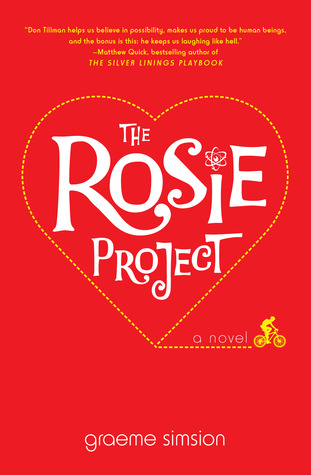
Rosie ProjectThe Rosie Project, by Graeme Simsion. Here’s another that sparked lots of word of mouth, months before it was published. I was forced to wait to read it closer to its pub date, and let me say it was worth the wait. This was another story of unlikely love, this time between a man with Asperger’s and a girl who is definitely not the type of woman he’d expected to fall for. Clever, sweet, funny, insightful. I laughed, I read cute segments out loud to my daughter. When I feels the need to read passages out loud to family members, you know it’s good. Only drawback: a couple dozen f-words.

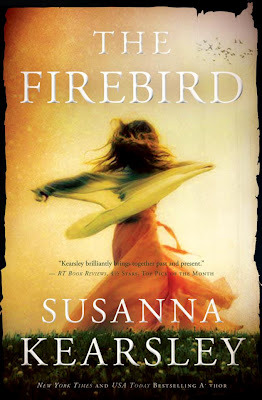
The Firebird, by Susanna Kearsley. I ran across the gothic-y The Shadowy Horses on my library’s e-book website and gave it a try. Definitely enjoyed it. Then when I saw this new book would be following one character from that book later in life, I felt I must read it as well. After being caught up in the two parallel stories in this newest book for a very enjoyable 500 pages or so, I wished there was more. Luckily, Kearsley has plenty of other books for me to enjoy in the same genre, and I got extra-lucky a few days ago to get some e-copies for a special $1.99 on Amazon. Life is good. If you like clean gothic tales, Kearsley is a must-read. And read a bit more about her and other fave authors on this post.

Now for some nonfiction:

The World’s Strongest Librarian, by Josh Hanagarne. I laughed, I was fascinated, I learned. This memoir took me inside the head and life of a really cool and smart guy who happens to wrestle with Tourette syndrome. It was so interesting and entertaining that I introduced it to my book club, and it made for a great discussion. Read more on my post about it.

Catastrophic Care, by David Goldhill. I already wrote a long post about this book on our health care system and what we deem to be “health insurance,” but what should be more precisely termed “health coverage.” In short, this book is what I think EVERYONE should read when talking about health care in the United States and the Affordable Care Act or Obamacare. It might take a little concentration for some readers, but this is another I read out loud from a bunch and dog-eared and underlined a ton. Just a must-read.

The most disappointing:

Life After Life, by Kate Atkinson. I have seen this on a number of “best-of” lists this past couple of weeks and still am stymied as to why that is. I sometimes think that editors and critics jump on bandwagons just because everyone else seems to think the book “should be” good. I thought the premise of this book was fascinating but that its execution wasn’t so hot. It just didn’t seem to “mean” anything. If everyone supposedly loved it because the premise was great but thought they were the only ones who didn’t “get” the bigger meaning and didn’t want to admit it, I wouldn’t be surprised. If you’d like to read more about my disappointment with this book, look at my original post.

Bellman and BlackBellman and Black, by Diane Setterfield. Dang it, this was so disappointing. I guess it was almost inevitable. I count her first book, The Thirteenth Tale, as probably my favorite gothic book. So that’s a lot to have to live up to. But this second book just didn’t deliver any big twists or messages. It kind of just went along, told its story, and said goodbye. Ah, well. Maybe she can write a third somewhere down the road and redeem herself just a bit.

There you have it, folks. I’m eager to see what 2014 brings in the way of great new books. Happy reading.

Favorite authors

The FirebirdSo I just finished reading The Firebird, Susanna Kearsley’s latest novel. This being the second book of hers I’ve read (after The Shadowy Horses), I am finding she is probably being added to my mental list of favorite writers (perhaps I should make an official list on GoodReads…).

I enjoyed The Firebird so much that I read all the back material about the history and her research and even her bio. I read that she’s been compared to Daphne du Maurier, Mary Stewart, and Diana Gabaldon, all of which are on my list already! Well, there ya go. I was only in my early teens when Mary Stewart became part of my favorite-authors list: I read her amazing set about Arthur and Merlin, which begins with The Crystal Cave, and found myself transported. Almost any other book about Arthur has let me down since then. I read probably four of her other books in my teens, whatever I could find in the local library or at used-book stores. Of course, I loved du Maurier’s Rebecca, that being essentially THE classic gothic tale, as I see it. And I’ve now read half of Gabaldon’s very entertaining (but lengthy) Outlander books.

When I was a young reader, I gobbled up everything I could find by Agatha Christie (I collected probably 20 or 25 of her books and read far more from the library) and by the awe-inspiring Madeleine L’Engle. I adored Susan Cooper’s The Dark Is Rising sequence but never found anything else, at the time, that she had written (I’ve since seen more but haven’t tried reading any).

In between, I’ve swallowed whole most of Michael Crichton’s books (they were almost all gripping, more intelligent than many other best-sellers, and based on fascinating science), Amy Tan’s beautiful stories of Chinese mothers and daughters, and a fair number of Orson Scott Card’s novels, mostly the fantasy ones and not the sci-fi (I’m just now getting around to reading Ender’s Game, and at the halfway point, I’m just mildly interested).

Most recently, I’ve become a huge fan of Cassandra Clare (yes, her Shadowhunter books are deliciously entertaining), Carlos Ruiz Zafon, Elizabeth Knox, and Kate Morton (yep, Zafon and Morton both write what I consider to be gothic tales, or close to it). Of course, I think it goes without saying that I loved J.K. Rowling’s Harry Potter books, but I was very disappointed by her first adult novel, The Casual Vacancy, and I haven’t tried her detective novel written under a pseudonym.

I think what I love most about these authors and their writing is their ability to really take me somewhere far, far away. Most have some elements of magic or something supernatural, or the hint of there being a possibility. There are deep, dark secrets and mysteries, long buried. There are thrills that keep me hooked till the very end. Many are set in other countries besides my own (I love England; the very soil seems to be soaked with layer after layer of story). The writing is beautiful and carefully crafted; the characters are ones I want to know. Ah, to be able to just open a simple book, step into it, and be completely enveloped, surrounded by other places and times!

There are always new books and new writers that impress me. Some I admire; others I adore. Thank you for sharing your gifts.

Books that spark the imagination

It’s no secret I love to read. I am in awe of the amazing imagination of so many writers. But some books aren’t just imaginative in and of themselves; some actually stimulate and feed imaginative thought. For some reason, I’ve found these books tend to be ones aimed at middle readers (maybe it’s because that was a time in my life I felt most free to explore and imagine: now that might be another topic to consider). A couple of cases in point:

Chasing VermeerAnything by Blue Balliett. Reading her books is like attending a class for gifted students. I can say this because I myself had the privilege of going to special “gifted and talented” classes when I was in my middle-school years, and they were fun and fascinating and inspired us to think “outside the box.” I LOVED them. Balliett’s books feature protagonists who either attend a special school that focuses on inspiring kids to think differently while learning (in Chasing Vermeer, The Wright 3, and The Calder Game) or whose parents inspire them to imagine and think creatively (Hold Fast). She introduces all kinds of fun and interesting concepts to young readers, many of whom might not have had the opportunity to attend these kinds of enrichment classes. Her writing truly gets those brain juices flowing and makes all of the topics come alive, whether it’s art or architecture or the rhythms of poetry or the things you can do with pentominoes. She uses puzzles and riddles and hidden messages and makes readers do a little work, though it’s too fun to really think of it as such. Reading these books makes me feel like a kid again, set loose in a gifted-classroom setting.

The other book that gave me that same wonderful feeling is one a friend reviewed for my website, Rated Reads. As soon as I read the review of Chris Grabenstein’s Escape from Mr. Lemoncello’s Library, I knew I had to get a copy from my city library, first for my 11-year-old to read, and then for me to escape into.

LemoncelloThis one centered around the amazing resource that is a library, and it incorporated similar mind-expanding elements: riddles, puzzles, mysteries and clues to piece together. It featured the most amazing library that any kid (or kid at heart) could pretty much just live in, if given the opportunity. Just reading about the cool gadgets and state-of-the-art electronics incorporated into this fictional library made me almost drool with jealousy for the kids in the book who got to use it. And it features a rich, eccentric game-manufacturing benefactor who makes it all possible, á la Willy Wonka. Only this is better — as much as I love chocolate, this library sounds far more like a dream come true to me. Games, prizes, and a night spent locked in an amazing library? Yes, yes!

If you want to reawaken the creative kid in yourself, read these books. If you want to do so for your child, hand the book over to him or her.

Amazon ‘Kindle MatchBook’: great idea that more publishers need to support

MatchBook_logoSo Amazon (aka the Book Behemoth) has announced a plan to offer cheaper Kindle versions of physical books customers have already bought. Seems pretty fair. If I’ve already paid $15 or more for a hard copy of a book, for instance, it does seem only right that I should get the ebook version for a small fee, rather than paying the full Kindle price.

Only problem? Publishers and agents have to get on board. So far, Amazon says, “Over 10,000 books will already be available when Kindle MatchBook launches in October.” That sounds like a large number at first glance, but really, it’s a tiny amount compared to all the books that are out there, just even those published in the past couple of years. I’m sure the problem of getting all books (or a majority, at least from the big publishers) available for this great bundling offer is the desire for publishers and agents to have a chunk of that income, even though it will be fairly small (the Kindle versions offered this way will be $2.99 or less). That’s fair, too, sure. But given what I’ve read about how hard they’ve fought Amazon on all kinds of other ebook policies and pricing (and, sure, that’s only right, too, for them to have their fair share, and it’s not like Amazon isn’t a bit like the Wal-Mart of online book selling), sometimes seeming overly greedy themselves, I doubt it’s going to be anytime soon that they’ll come to an agreement that everyone can be happy with.

That’s a shame, though, because this is a fantastic idea. I know that even though I have a Kindle, I still enjoy having some books in hard copy format, and it can be tricky to choose how I want to spend my reading money (oh, if only I had an unlimited budget just for books!). If I knew I could spend an extra $2 or so and get both the hard copy and ebook, I’d be happy to do so. I do enjoy having well-loved books sitting physically on my bookshelf, but being able to have them on my Kindle if I feel like reading them again when I’m “out and about” is also wonderful. The Kindle has some great advantages, as I’ve already written, and I’m not too much of a purist to spurn it.

OK, publishers and agents: get on board with this bundling plan, and do it fast.

GO SEE ‘The Mortal Instruments: City of Bones’. That’s an order.

So I’ve written a few times about my (mostly happy) love affair with Cassandra Clare’s Shadowhunter books. Most recently, I wrote about the Infernal Devices series, which was completely satisfying and just right. And at the end, you may notice I wrote about my eagerness to see how the movie version of City of Bones turned out.

Here’s what I thought was kind of funny initially, before the movie even started: Since I’m quite a fangirl when it comes to this series (although I refuse to shell out $2.99 per story for the Bane Chronicles; all together, that’s going to be a lot of moolah), I honestly expected to see crowds out front of my local theater when I dashed out to see it last night, right after it opened (but, admittedly, on a Thursday, before weekend busy-ness). After all, Twilight fans were lined up for hours ahead of each show. And honestly, this series is even better: it has action, hot romance, supernatural elements, and wit. But when my husband and I got there, 35 minutes before showtime, there were two other people seated in the theater. Wha? By the time it started, there was a reasonable small group in there for a Thursday night, but I sat there thinking, I hope that audiences do not miss this movie. 

So I’m recommending it to everyone.

The movie did not disappoint. It stays true to the story without taking too many liberties but not, however, being so faithful to the book that it bogs down the pace of the action and plot; the action is engaging enough for male viewers to be able to get into it (come on, you know that Twilight the movie wasn’t exactly geared toward the men); the romance is still scorching hot (the great kiss scene in the middle is even better on film than it is in the book, which is saying something); the story and the world building are interesting, as in the book; the sets are great. I loved seeing everything I imagined (and didn’t get around to imagining, apparently) come to big, beautiful life on the screen.

City-of-Bones-Movie-JaceCasting: When it all comes down to it, the most important casting pick was for one crucial character. The actor (Jamie Campbell Bower) who portrays the central character, Jace Wayland, is honestly just about a perfect choice. I admit I don’t think he’s great-looking (and yes, I do think that RPatt is just to die for when it comes to looks, not to mention how funny he is in interviews), but the character isn’t really either. It’s all about presence. Jace is intense, moody, and utterly irresistible because of how he emotes. And Bower nails this. He has screen presence galore. He smolders up there on the screen. His hair looks terrible. But it simply doesn’t matter. His whole body, his face, his eyes show who the character is and what he may or may not feel or believe. And when he looks at Clary, his face near to hers, temperatures rise. Yikes.

Now I did mention in that previous post that my main concern would be the humor. The books are laugh-out-loud funny in the banter between the characters and some of their one-liners. The movie just did an OK job on capturing this wit. There were a few good lines, but still, as I feared, that delicious banter isn’t in constant supply. The action and romance win out, and the wit came in last. Even so, it wasn’t a complete bust. I really felt that the Harry Potter movies suffered in comparison to the books because they really did sacrifice most of what I saw as clever and funny in the books. I didn’t feel that this movie did quite so badly.

Overall, a great adaptation and a movie I’m going to have to watch a few more times on the big screen. I liked it that much. Now pardon me while I get ready to head to the theater, this time with my oldest daughter.

Does editing out offensive language help?

So I’ve read a few good books lately that have just had more strong language (a nicer way of saying “the f-word” or rarer vulgarities) in them than I would like to see (and honestly, I’d really rather there be none, but occasionally I can understand one or two uses). One I thought was fantastic was Josh Hanagarne’s The World’s Strongest Librarian. Great book. Only drawback? About 14 f-words. Really? Why did he have to put those in there? He could have quoted some odd characters without using their exact words all the time, and he could have made clear perfectly adequately they were colorful without using all that strong language. I am that confident in his descriptive skills as a writer.

Since I wanted to share the book with my book club, the women in which share my sensibilities about vulgar content, I felt an obligation to (a) warn them about the language and (b) share with them my whited-out personal copy so they didn’t have to see all that vulgarity right there in black print. (Yes, I used a Wite-Out pen to “erase” all those f-words.) I figured if someone else had read it first and recommended it, I’d prefer to read the edited version.

whited out textSo here’s the question: does it make a difference “whiting” or “blacking” out bad language, so you can tell it was once there? Will your mind immediately fill it in anyway? Or does it make a difference not to actually see that offensive kind of content, even if you know it was there? In a similar vein, does listening to a popular song that has some bad language edited out, a quick silence in its place, or watching a movie on TV that’s been edited (let’s just say language been “quieted out” rather than replaced by less bad language), feel not much different than just hearing the language anyway? Does the silence get filled in in your brain? Or are you grateful just not to hear it in reality, even if you know that’s what’s been taken out?

I also wonder if we all might have different reactions to this because of how our brains process information. Some of us learn and remember in a more visual way and others via audio. (I just see and remember things; my husband remembers everything he’s heard, for instance.) If we’re visual, will we just fill in a blank when we know something’s been taken out in print; or if we’re audio, will we fill in with audio? Or vice versa? Or does it matter?

Obviously, it would just be nicer for those of us who do have more sensitivity to language in books or music or TV/movies if those media came without the vulgarity in the first place. But since some do, does it help to edit them and leave obvious holes that we could possibly fill in mentally, or is it just best to avoid them altogether?

Just curious about what you all think. Of course, if you don’t care about bad language or vulgar content and don’t really consider it too offensive, all of this is a moot point, so don’t make arguments about the basic concept. But if you do care about this, either for your own reading/viewing or for that of a child, I’d love to hear what you think.

This author is on fire!

I admit I enjoyed reading the Twilight books. No, they’re not great literature or written with great skill. But they were a lovely escape, and I had fun. There. But I’ll give this to Stephenie Meyer: she has a great imagination and is truly a good storyteller (this comes even from her own mouth: she’s said she’s more a storyteller than she is a writer). She is also a fine judge of other books. Five summers ago on her website, she recommended the now ridiculously popular The Hunger Games. I went out and read it and found it fascinating, thought-provoking and gripping. Most everyone else seemed to agree.

But she also not too much later recommended a fine “duet” of books by Elizabeth Knox called Dreamhunter and Dreamquake. I went out and got those at the library and found myself utterly transported. The books had such an interesting premise: in a slightly different world than ours back in the early 1900s, an area appears which only certain people can enter. Those people can go in to this area, lie down and sleep, and “catch” dreams, which they can then essentially “broadcast” to a sleeping audience in a dream theater. Interesting idea in itself. But what became even more fascinating was the mystery of why the Place came to be in the first place, and if it has some kind of purpose. By the time the whole reason behind the Place is revealed at the end of the duet, after two wonderfully rich and complex books that were a little dreamlike themselves, I was absolutely blown away. It’s so satisfying as a reader to see bits of a mystery come together magically and then just be solved. But this also had such a powerful poignancy to it that I felt my heart seize up a bit. And the setting and tone, the whole feel of the books, was superb. Original, so real, so powerful.

Mortal FireSo I was thrilled to find out a couple of months ago that a new novel was coming from this superlative author, Mortal Fire. I let myself dip into the waters of this new book and its setting and feel, relishing the opportunity to visit Knox’s world again (this book is actually set in the same general place as the other two but 50 years later, and it’s mostly unconnected with the plot of those books, so it’s not necessary to read them first). But as I continued reading and the plot thickened, I found myself gobbling it, not able to put it down. I just rushed headlong to the end, and it was just as satisfying. What a fascinating premise! What a cool way of weaving the threads of story together and making it all make sense at the end! And the setting: again, just so vivid. I came inside (after sitting outside alone reading for two hours) just babbling about how much I loved the book. And a few days later, I still feel the rush of the thrill of discovery and the power of how it all hit me, not just in how it sent my mind spinning, but how it struck me smack in my chest.

What’s interesting to me is that all these books were recommended by Stephenie Meyer, but I haven’t heard a peep about Knox’s from other readers, whereas The Hunger Games became pretty much ubiquitous, not quite annoyingly so. Sometimes I wonder why these outstanding books don’t get more attention. (I think this is also the case with Susan Cooper’s The Dark Is Rising. I am always surprised at just how many of my well-read friends have never even heard of this series, let alone read the five books, either when they came out when I/we was/were young or now.)

At any rate, Elizabeth Knox, you are amazing. I don’t lavish praise on many authors, but you have joined the elite list of authors who really impress me. I hope more discerning readers discover your books.

Witty librarian writes a strong memoir

So I finished reading Josh Hanagarne’s excellent memoir last week and am still feeling the urge to gush. This book just works on so many levels that I feel compelled to recommend it to a lot of friends, for all kinds of reasons. I’ve written a full review on my review website, Rated Reads, but I’ll share a bit more here.

First, I like to laugh, and this book made me laugh. Check. Second, I felt I had a bit of insider’s knowledge because Hanagarne was raised Mormon and talks a lot about Mormonism, such as scripture stories, the experience of serving a mission for the Church of Jesus Christ of Latter-day Saints, and a lot of other little cultural touchstones. Since I’m LDS myself, I felt I could really appreciate what he was talking about. At the same time, he explains things so well that readers who aren’t Mormon won’t miss out. I think he handles that really nicely. But I got a big kick out of some of his stories, like the one when he’s a young boy talking about Ammon and all the cut-off arms in his Sunday school class. (See my review on Rated Reads for more information or the original account in the Book of Mormon, Alma 17: 18-39, and you can better appreciate the humor).

I also enjoy learning about what it’s like to deal with particular life challenges. In this case, Hanagarne helps readers get a little idea of what it’s like to live with Tourette Syndrome. He explains it really well and makes it funny as well as informative. His way of telling his personal experience with this syndrome helps readers appreciate what it’s like without feeling sorry for him. We just get to know Josh, who has these annoying tics and outbursts.

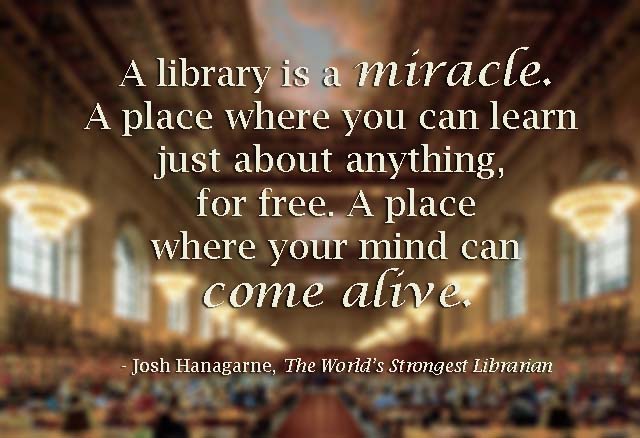
He has loved to read for pretty much his whole life, his mom being the great kind of mom who took him to the library at a really early age and read to him and with him. So he talks about favorite books and authors. He is now obviously a librarian, and he shares stories about all the wacky people and situations he encounters working at a large library in downtown Salt Lake City. He so clearly loves books and being able to work in a stronghold of information (despite the wackiness) that it’s just great fun to read what he writes about books and libraries. Great quote from the book:

A library is a miracle

Last, and this ties in to my previous point about his faith background: he has struggled with faith off and on for a lot of his life, wanting to have the strong faith that his mother so clearly has and wants to instill in her family, but just not always “feeling it.” Faith involves both knowledge and feelings, essentially, and he talks a lot about how he has often wondered about what he feels and doesn’t feel in that regard. I liked that rather than being at a point of anger at God or bitterness about organized religion or the LDS faith in particular, he is at a point of just not knowing, of being uncertain. He wants to “feel it” and can cite several specific (and beautiful) examples of when he did have a prayer answered or a concern addressed by God, but for much of his day-to-day life, he just doesn’t feel a connection with the divine when seeking it through prayer or other religious activity.

Hanagarne shows no antagonism but expresses more of a sense of loss, of the “pieces of his life” not “fitting together” and meaning the big thing they used to mean. He worried that his mother, especially, would be angry or distraught (“I’d pictured a maternal rebuke, disappointment and tears, … a guilt trip…”) when he told her he was going to stop going to church because he wasn’t “getting anything out of it anymore,” but she just told him, “The older I get, the more I see that people just have to live their own lives and make their own choices. I’d be lying if I said I like this. I don’t. … But you’re my son and whatever happens, we’ll all still love you and that won’t change.”

I love how he expresses his search, his experiences, his feelings and non-feelings, and his uncertainties. I love his dialogue with his mother. It’s all so honest and real, and what I’d say is a view on an ongoing process. I love how supportive and still hopeful (I thought) and faithful his mother is as they talk.

I feel hopeful for him, too. He is blessed, and we’re all lucky enough to be able to read about his story, the warmth, the wonderful family love, the fun, all mixed in with the challenges of regular life and the specific challenges of Tourette’s.

If I’m going to take a “personality” test, of course it’s going to be literary

So I was reading Josh Hanagarne’s blog, World’s Strongest Librarian, and he posted about using a fun little site called I Write Like, which uses an algorithm of some sort to analyze whose writing style your writing most resembles. Now I typically don’t get caught up in those cutesy types of things everyone posts on Facebook (which Jersey Shore person you’re most like or which reality show you’d be best on, etc etc.), but this certainly hooked my interest. I mean, I love to read, and I love to write. And having myself compared to a famous author can only stoke my writer’s vanity, right?

So I eagerly tripped right on over to the site and pasted in a few different paragraphs from my blog and from my reviews on Rated Reads. I clicked the “analyze” button and only had to wait a second for the site to spit out its conclusion: I write like Vladimir Nabokov. Ohhh-kaaay. Haven’t read any of his work, actually (no, I’ve never been interested in reading Lolita, thankyouverymuch). But it was a fun game to play.


I write like
Vladimir Nabokov

I Write Like. Analyze your writing!


Hanagarne noted that he hadn’t seen any female writers pop up so far, and my sample certainly lines up with that. Anyone else care to give it a shot?