Rolling on in to middle age

Recently I took my girls roller skating. The 12-year-old had been going somewhat frequently of late and had gotten pretty good but the 7-year-old and 15-year-old (my child with Down syndrome) hadn’t been in ages and were like baby deer out on the rink. But they got better and enjoyed themselves during our two-hour visit.

As for me, I love donning the wheels and racing around the rink. It was my weekend social activity when I was a tween, and decades later, I still can hold my own. It’s an interesting/frustrating kind of challenging to “race” around when the rink is full of little kids — it’s like a slowly shifting obstacle course. So I was excited when the DJ announced it was backwards-skate time. I can still do it, after all these years, and since most of the little people jamming the floor could barely move forward, let alone go backwards, the time meant I had a much emptier space for skating. Yes! Only difference at this stage in my life is that I wasn’t just focused on my skating: I was also looking around to see where my kids went. And that meant loss of focus on the specialized form of backwards skating. As Queen sang so often when I was skating socially, I bit the dust. Big-time. And falling when going backwards means a particularly spectacular, unbroken-by-arms fall. OUCH. I got up and kept on going and my lack of focus had me back on the hard floor pretty quickly. I could feel my brain shaking around in my head, so I decided it was time to remove myself from the floor for a while.

A little while later, my perceptive and sensitive 12-year-old looked at me with concern and said, “Mom, people were laughing at you.” I realized then that it just didn’t matter. It didn’t bother me at all. I told her so. Maybe it’s because they’re a bunch of kids and it doesn’t matter to me if a bunch of snotty kids are laughing at me, or maybe I’ve finally started reaching a point where it doesn’t bother me quite as much what other people think. I just told my daughter, “You know what? It doesn’t matter to me. I was having fun. Don’t you worry about what people think about me.”

It’s made me think more about how I’m at an age where I can and should stop worrying about what other people think. I’ve read so often about how older women say they live so much more freely and contentedly because they just don’t care about how they look or what other people think, and it seems like a great thing to me. But as our society holds on so tightly to youth and beauty, allowing/encouraging women my age and even into their 50s and 60s to still look “traditionally” young and beautiful, i.e., desirable, sexy, etc., I wonder if that transition into that delightfully free mindset will take even longer.

‘Cause here’s the thing: how long do any of us really need to be beautiful, to have that be one of our defining characteristics? On one hand, I felt uncomfortable in my skin, didn’t feel thin and pretty, when I was growing up, but then around the age of 17 or so I grew to appreciate that I was attractive, that a fair number of guys considered me pretty. And I realized I could use that, I could “work” it. I could flirt, I could be cute and attractive. I could just have fun dating. My attractiveness was a tool, one of the arrows in my quiver. The quiver also included my smarts, my talents, my wit, my personality, my character. But my “beauty” was almost of equal value at that stage in my life as any of my other arrows. I carried around that awareness of its presence for a long time, even past its “usefulness” in “securing a mate.” (That’s a topic for a whole other blog post, methinks.) Two decades into my marriage and my parenting life, it’s honestly just not necessary or important, definitely not like the other valuable arrows I have cultivated. But everywhere I look in our society, I still see messages that tell me my beauty should be treasured above all, should be curated, should be preserved. There are plenty of options for that preservation, after all, and whole multi-billion-dollar industries begging for my attention and money.

No, society today is not at all supportive of a gracious and peaceful acceptance of aging, of losing youth and “beauty.” We don’t get to just comfortably slide into older age. We fight it, we see others fighting it, we are encouraged to fight it. But eventually, whether we get to slide comfortably and willingly, or we fight it the whole way, all of us who make it to old age will be old. We will lose our youthful appearance. What if we actually just accept and embrace the inevitable instead of fighting it tooth (yellowing) and nail (thinning and cracking)? What if we came to appreciate all the other things that make us who we are and stop worrying about the thin veneer of attractiveness, of appearance? What a world that would be! Think of the inner peace! Think of all we could do in the world without using up our (yes, finite) energies on something ridiculous like how we look!

So I’m encouraged a bit by my reaction to my ridiculous-looking falls at the roller rink. Maybe I am just starting to accept the fact that I’m middle-aged. Maybe I’m starting to not worry so much about how I look and how I think others think about me. Maybe. Because I’d like to use my limited energies on the things that matter the most to me, and there are lots. My family, my friends, worthy causes deserve my full attention. And all they need of my appearance is my smile. I still have that, and the only thing I need to do to keep it in top condition is keep using it.

I’ll never have a thigh gap, but I am experiencing a big gap between ideals and reality

You know when you dream about eating something off-diet and demanding of some complete (thin) strangers walking by, “Do you ever eat?!”, you’re self-conscious (and frustrated) about your weight.

I’m half-proud, half-embarrassed for myself that I embarked on a strict diet last week, mainly because, yes, I want to look better. And I want it to happen fast. Here’s the thing: I have felt very self-conscious about my weight in photos of late, and I have several big events coming up for which I’ll be in numerous photographs, and I don’t want to look fat.

Yep, there it is.

Yep, my self-image is pretty distorted right now.

As much as I talk about self-image and how bad our society is about focusing on looks, whether it’s regarding weight, age, or relative size of body parts, I still struggle with it myself. Sometimes not so much, other times mightily. As I most recently mentioned to my therapist, “I feel horrible about how I look.” Her response: “Right now you’re very stressed and not feeling good about yourself in lots of other ways, so that’s not surprising.” Meaning, essentially, try not to worry about it; it’ll pass when you manage to process everything else that’s had you down.

So I kind of feel like a hypocrite when I’m urging everyone, male and female, to be more aware of how media and society all around us dose us liberally and continually with the religion of thinness and image, of airbrushed (impossible-to-achieve) perfection, and I am struggling with it so much still.

It’s complicated by the matter of health: when I’m stressed, I eat sweets. I overeat. That’s simply not good for my body, and that’s important. So I do also want to work on that. I want to break my physical and emotional addiction to sugar and my reliance on food as a crutch. But I would like to figure out how to separate that out from my worries about how those habits affect my LOOKS.

Here’s another thing: plenty of people out there have far worse eating habits than I do, but they’re thin. So their health might be in need of improvement, but they either don’t worry about it, or they don’t worry about others seeing them as fat. Because don’t we tend to judge people who are overweight? We automatically think, They need to eat less. They need to have better self-control. They need to take better care of themselves. But health and thinness are not always directly correlated.

That’s not to say I excuse myself for slipping into bad habits. I can do better by my body sometimes. But our society judges on appearance, and I judge myself. I have a lifetime of negative messages to overcome. And that simply makes it much more difficult to just take care of myself the way I should because I’m devoting so much emotional energy to the image part of the equation, which is NOT the important part; overall health is.

I have had a lot to deal with the past months, the past year, with a few breaks in the onslaught of expectations, responsibilities, and struggles to catch my breath. I anticipate having some breaks to catch my breath and focus more accurately on taking care of my health — emotional, mental, spiritual and physical — fairly soon, but in the meantime, I’m just getting through it as well as I can.

And dieting. Like I said, I’m a little embarrassed because I’m doing it almost exclusively for the reward of looking better in pictures. It’s not the example I’d like to set but I’m doing it anyway, just because right now so much has beaten me down I don’t feel good about myself in many ways; I feel weak and run-down and just not up to snuff. I feel like I’m letting people down left and right because I simply can’t do everything everyone needs me to do at all times. So that feeling extends to how I look.

I’m going to keep working on my self-image, my self-esteem, the ways I look at myself and talk to myself. I’m going to do better. Just forgive me the lapses right now in my actions and how they don’t match my ideals. It’s a process for me, and it’s a process for us all as individuals and as a society. For me, this topic mixes my mental health awareness-raising with my awareness-raising about society and image. The intersection is a little delicate, and I’m navigating it as well as I can in this tricky time. I hope I’m making progress in it all because all I can do is just hope I’m slowly doing better. I’m going to just try to remember to pat myself on the back for what I’m doing better: life isn’t about improving overnight. It’s a journey with all kinds of intertwined paths leading to a place where we’re our best selves in all aspects.

Safety nets and support systems

A few weeks ago, an outspoken acquaintance was ranting about public education, among other social issues. The married man in his mid-30s (who has no children, mind you) said, “Anyone who sends their kids to public school is a neglectful parent.” Bold — but undeniably hyperbolic — words. And while I appreciated the kernels of insight (far) below them, with many frustrations of my own about public education, I had to disagree for a number of reasons, aside from the obvious point that there are plenty of us very good parents who still are sending our kids to public schools.

Then I was talking with my mom about my grandma, who’s 97 and in probably better health than I’m in, and living in a nice retirement community. She recently fell a couple of times and got an infection, so she spent a few days in the hospital and now is in transitional care and needing a bit more attention, rather than being pretty much independent. My mom has been with her there (visiting from the town she lives in about a 6-hour drive away) and has been outraged at the lack of attentive care she’s been witnessing — and this is with my mom there near her, at a highly ranked facility, and my grandma has very good insurance and financing. We’re not even talking about a not-so-great facility paid for by Medicare.

I won’t go into all my concerns about public education, about health care, about elder care. They’re each deserving of thousands and thousands of words. What strikes me, though, is that as a 40-something woman who has children at home, one daughter about to attend college, and a mother who’s retired and a grandma who’s quite old, I am in that spot of life where there are plenty of people to worry about and take care of on some level. And as much as I’d love to be the kind of person who could home-school my kids, I’m just not. Plus, I still want them to have the opportunities for learning about the world that exist outside my home. And I wish my mom and grandma could live with (or nearer to) me and I could help watch out for them.

We all need safety nets.

Here’s the thing: none of us in our society today is capable of doing it all. In fact, no one ever has been able to “do it all” as we see it in our contemporary society. We have so many opportunities for self-actualization and fulfillment (which can be “bad” or “good,” depending on to what lengths we go to achieve them) and for involvement in the world around us today. But we depend on our public-sector system to provide certain services to take care of our wide and varied needs, like education and health care. Decades ago, extended families lived either in one home or very close by, and they worked together, sharing all the duties. Communities were truly communal; everyone did something to take care of someone else, essentially. Today, extended families are often distant. My mother is 2000 miles away from me, as well as most of my siblings. It’s my job and my husband’s to take care of my children; he provides most of the money from his 40-hour-a-week job to buy what we need, and I carry out many of the functions at home (another blog post entirely, too…). I feel we’re actually blessed to be able to have that setup (I am pleased with it, let’s make a note of that, too); I have flexibility to be able to be there for my girls when they need me throughout the day and to be involved in educational and extracurricular activities. I also am able to pursue some of my own interests, which makes me feel “me” and better able to take care of my family.

“It takes a village” has now become a bit of a trope, but it’s still true. Individuals need systems around them to allow them to live and thrive. Nuclear families best provide individuals with what they need, and extended families best support nuclear families.

So what’s wrong now? I am positive much of it is the breakdown of nuclear families; we have so many single-parent families today. Extended families are just as broken in many respects; some aren’t broken, just distant because of necessity. The basic solution is twofold: do all we can as a society to support the nuclear family, helping and encouraging the formation and permanency of families, and then to make sure the public-sector services are good and dependable. Everyone, every family, needs to know that education is well funded and well run. And families who are responsible for their elder members need to know they will be supported in those vital endeavors as well.

I’m not “for” government running everything. I am “for” programs that will provide help to families, who are the backbone of our society. I am “for” making sure there are safety nets and support systems in place, not to replace the work of families, but to help them do their work better. Because if our families are struggling, our whole society is in a real pickle.

Issue of body image is not a trivial one

So I’ve noted a few occasions recently in which I’ve just felt I had to explain why I feel strongly about the topic of body image (particularly as it pertains to women). Those occasions have been offhand comments or posts or cartoons or what-have-you that indicate that the desire to change how our society perceives women (as objects or bodies) is trivial or silly or not as important as other issues that could garner support or activism, etc. (such as some of the ignorant comments I saw about the Representation Project’s “NotBuyingIt” campaign and hashtags that call out sexism and demeaning portrayals of women in the media, most recently during the Super Bowl, and don’t get me started on Sports Illustrated teaming with Barbie this year!).

I’m not saying there aren’t SERIOUS, very troubling things happening all around the world (wars, disease, repression, abuse, sex trafficking, crimes specifically against women and particular ethnic or religious groups) and that we in the United States and other less-troubled places can’t mobilize to do something to help. But even as we may realize that our problems in the West are “first-world” troubles, it doesn’t mean they are trivial or not worthy of attention and activism.

I’ve never considered myself “a feminist” (a word that over the years has certainly accrued a lot of not-necessarily-positive connotations and associations), nor am I a “liberal.” I tend to be mostly conservative politically. I care deeply about social justice and helping to improve people’s lives but I have more conservative views as to how those things should be accomplished (because my experience has shown certain methods to be more useful and successful than others). I am a stay-at-home mom who does some freelance work from home and haven’t worked outside the home full-time since the early years of my now 20-year-plus-long marriage. Those facts, along with my religious beliefs, might indicate to outsiders that I am not big into “women’s issues.” Those outsiders, though, if coming to that conclusion, would be wrong.

Beauty Redefined is a great resource for learning more and fighting back.

I care very much about my fellow women and how we get to function as real people in society. (I care about men being allowed to be fully functioning members of society as well, but historically in our culture, they’ve been given these rights for centuries, so they’re mostly “all set.”) The fact of the matter is that our Western, 21st-century culture diminishes the wholeness of women every single day, everywhere we turn. Media from every angle throw back very limited, definitely-not-varied, two-dimensional views of the ideal female, reducing 50% of the population to mere objects. These images and opinions are so deeply embedded in our psyches that we essentially have all tacitly agreed that they are truths. These beliefs lead men to treat women they know on some level and in some degree as less-thans, expecting their wives/girlfriends/daughters/sisters to be shaped and sized a certain way at the very least, and they lead women to act as if they are 75% (or more) what they look like and 25% a collection of their personality traits and actions.

These false beliefs have been and are continuing to be so thoroughly perpetuated that though we may pay lip service to the notion that they are false, we act as if they are true. Extreme examples are the continuing massive growth in cosmetic surgeries, particularly among “normal,” “average,” everyday women (not celebrities, not the rich, not people you might consider to be particularly vain). In the interviews I conducted with women in Utah who are moms and generally have a strong foundation of faith and have always been taught they are daughters of God worthy of love and respect for who they innately are, I was amazed how many felt bad enough about their “outsides” to undergo surgery, which is always risky, costs a pretty penny, and is just unnecessary. While I understood the feelings that led them to make the decisions they did (for getting breast augmentations or full “mommy makeovers,” for instance), I felt sad that our culture creates, fosters and intensifies those feelings of insecurity — all over their breast size or perkiness or the size of their waist or hips.

Yes, this may seem a minor issue: what does it matter if we care a lot about how we look? Here’s a short breakdown: it causes us as women to spend precious time and energy and brainpower on something that simply doesn’t matter very much. It takes those resources away from the things that really matter: our spouses, our children, our friends, our families, our work, our joys, our passions, our life purposes. And how many of us have time and energy to spare?

Focusing on our appearance reduces us to objects. Statues and photographs and machines are objects. They’re nice to look at and they might even get things done, but they aren’t human beings, with glorious origins and endless potential and utter uniqueness. Humans are imperfect, frustrating, very different from each other. But we’re so interesting and fascinating and have so much to offer! Is that true, can it be true, about mere objects? No way.

When we consider each other (or ourselves) objects, we treat each other (or ourselves) differently. We don’t expect the best, we don’t reach towards our limitless potential, we don’t care for each other as precious souls who deserve respect and love and fair and equal treatment. Men in our society, who are swimming in this media ocean of images and objects, are prone to some level of treating women as less-than themselves, because men aren’t reduced to objects nearly as often or as prevalently as women. Pornography is one more extreme example of how women are reduced to being objects, even parodies of womanhood, and it skews men’s attitudes and actions toward the women in their lives even further.

I can’t possibly explore all the angles here. There are tons of scientific studies, books, etc. that speak with authority on this subject. Suffice it to say, this is not a silly or trivial topic. It’s one that must be shared and discussed and changed. How women view themselves and how they are treated (as whole, real, full and complex individuals with unique gifts and talents and attributes) is at stake. I wouldn’t call that minor. It’s a huge battle to fight because the messages that pick women apart and reduce us to body parts, that make us less valuable than men, are constant, ubiquitous, and insidious. They’re so prevalent as for us not to even notice them anymore. If you pass the same billboard featuring a bikini-clad woman biting into a huge, juicy hamburger every single day, you’ll begin to tune it out and not even realize the damage it’s doing. But that message is still burrowing its way deep into your every cell.

I would love to make things better in so many ways, in so many places, for so many people. Right now, what I can do is write and speak up. I can say, “Hey, look at that billboard. Isn’t that insulting? Maybe we can even get it taken down. Maybe we can get the advertiser to stop objectifying women.” I can’t change the world. But maybe I can change your mind and remind you that you are far more than just what you look like.

Marriage is for all of us

When the “Marriage Isn’t for You” blog post by Seth Adam Smith started appearing on friends’ Facebook feeds the last week or so, I didn’t really read it, just took a quick look. It just seemed so simplistic and obvious that I thought it was kind of silly people were making a big deal out of it. Yes, marriage is about selflessness. It doesn’t work too well when two people are selfish. OK.

I suppose I’m still a little flabbergasted by how big it’s gotten. I mean, 24 million views (as of two days ago)? That’s ridiculous.

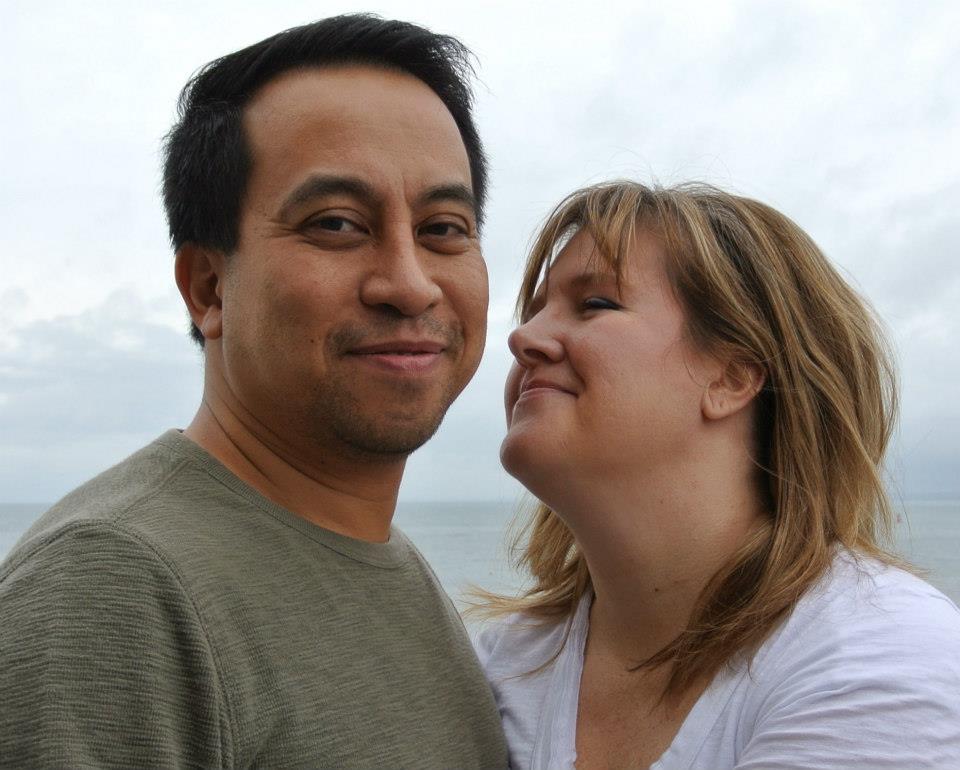
Here I am with my husband. He's often more self-sacrificing than I am, but we've taught each other.
Here I am with my husband. He’s often more self-sacrificing than I am, but we’ve taught each other.

I think what the success of this post tells us is that people in our society have lots of differing views of marriage, in addition to just wanting to clarify a couple of things in this simple post. One point is this: the post was written by a man, and as one woman wrote on Bustle, that’s kind of why it’s gotten so much attention. Women generally have been expected to be the ones to sacrifice, to give all of themselves, for their spouses and families. Men have been asked to provide. So for a man to say he needs to remember to be self-sacrificing is news (as goes the old journalism trope: it’s not news if a dog bites a man; it is news if a man bites a dog).

Another big point people are wanting to make is to clarify that we can’t do well in marriage if we ONLY focus on our spouse; we still have to do what’s important for our own well-beings. I don’t think that Smith meant to say that we shouldn’t be whole, mostly mentally sound people on our own or that we shouldn’t continue to make ourselves the best we can be as individuals; he just was making the point that in our society today, too many of us probably worry too much about ourselves without taking sufficient care to be selfless. This brings up a point I’ve thought about frequently after reading it in a book years ago: when someone is given advice, it’s tailored specifically for them and what they lack and could be totally wrong for someone else.

As an example, my parents never needed to lecture me about being more responsible. I was so overly responsible and focused on planning for the future that they had to encourage me to relax and have some fun in the moment. When I went to prom, they stood at the door and admonished, “Do NOT come home before midnight!” Now this would have been the opposite of what they would have done for my sister, who was more of a have-fun-in-the-moment kind of gal. She was better (and still is, I think) at carpe diem-ing. She’s been a good example to me in that way.

So what I am saying is that this young man needed to hear the advice his dad told him to stop with the anxiety about whether his upcoming marriage would be right for him and to consider more how he could give to his future wife. That’s what he needed to hear and it made such an impact on him that he felt the need to share it on his blog. And there are rightly going to be plenty of people who read his blog who are like him and will need that reminder; others will not need it for themselves because they are already very self-sacrificing. Those readers need a different, almost opposite, reminder that they should take time to make themselves more well-rounded, more complete, etc. And those people (or those who know and love them, it seems), who may very well be primarily female, are those who responded so strongly that Smith shouldn’t forget that point of view.

At the same time, I suppose I shouldn’t have been surprised to read from other bloggers that marriage isn’t about family and children. One guy writing for SFGate.com said this: “Many people enter marriages without a desire to procreate and this just doesn’t hold water for the ever-growing numbers of childless by choice couples.” I can only say that I essentially consider this to be just plain sad. I am still of the belief that marriage really is about creating families, about having children and rearing them to be great people and contributing members of society. (I won’t even get into the problems that this attitude is having on society, just one of which is that countries with low birthrates are now facing serious issues with there being too many elderly and not enough young people.) Yes, I do believe that a very few people really are not cut out to be parents, it seems, but far more who choose never to have children thinking that they fall into this category very likely would be the ones shocked to find themselves enjoying, appreciating, and learning from the experience of parenthood. Through parenting, we contribute to society and we grow as people through both the challenges and the joys we experience. I am one of those who really does consider those who choose deliberately never to have children to be a bit too selfish.

So marriage is for all of us. It’s for husbands and wives, it’s for children, it’s for society. Each of us can stand to do a little better to be selfless and help others; some of us can do a little better in developing ourselves as individuals.

Building bridges to others’ islands

bridgeStill thinking about the Sandy Hook Elementary School shootings. Not just for itself, but for all the implications of the tragedy and what our society should take away from it to improve. I’ve also had some family issues that have played into this topic that have weighed on my mind quite heavily. Again, as I wrote about the other day, I am not going to go into issues of gun control versus unfettered gun availability. It’s an incredibly divisive topic and one that both can’t be solved (most likely) and can’t solve all the problems we’ve been seeing in our society.
Individuals’ mental health and happiness is what either makes our society better for everyone or, conversely, makes it more difficult for everyone, if it’s not tended carefully enough. I firmly believe that families are the central unit of society, and I don’t think that there would be too much argument with me when I say that the family is breaking down. We have many single-parent families and many children who simply are not getting the nurturing they need for a LOT of reasons. Families provide an automatic place of refuge and help when any member has a need of any kind. So what happens when families throughout society are broken? Many individuals have no one to go to for help. Fortunately, some have friends and other caring people in their lives who can be a second line of “defense,” but many others do not have that. What’s left is either no one or the government. Neither is an adequate source of complete help. As much as we try to shore up and improve government programs, they simply cannot replace or do as good a job as families, in most cases.

Yeah, yeah, I’m being an idealist here. But what’s wrong with trying to reach for the best, with trying to get our society back to a place where it truly could make people better and happier? Why can’t we improve those lines of defense and help, and shore up families? It would help so much more than anything stopgap we could create through government (and no, I am NOT saying there should be no government programs; I am saying they cannot replace the ideal).

The truth of the matter is that each of us needs a group of people who care for us and about us and who can be depended on in times of need. Sadly (and please, if you are my friends or family, do not take this as an indictment or rebuke but maybe just a little hint of encouragement), there have been times I’ve felt alone and misunderstood, particularly when I’ve been in my worst places mental-health-wise. I know that it can be difficult to understand and really help me at those times, but it’s still worth a try. (I think I’m worth it! 🙂 ) I so appreciate family members and close friends who have reached out at those times to just talk, listen, or do something encouraging and supportive. Every little gesture means a lot.

I suppose that’s why I feel so sensitive to those around me. I can just feel their pain and loneliness and helplessness sometimes, and I want to be able to help. Sometimes I can do something useful; other times I can’t. But I try and I pray.

Each of us needs help, and those in our circles need help, at one time or another. The people who have done the most heinous crimes in society (particularly who have histories of mental illness that’s unchecked/untreated) have needed someone to pay attention and do something. As I wrote before, sometimes even with our best help, because of society’s lack of understanding of mental illness and the current regulations and laws that are in place, the family members and friends of those who are struggling simply have their hands tied and can’t do a darn thing. But in other cases, something could change if a few more people just listened and saw a few signs.

No man is an island. No child, no woman. We’re all connected, and while we can’t possibly help everyone out there (I’ve written about that too!), we can each do a little better to pay attention and be sensitive. We can’t solve others’ problems, but we can provide an idea or two if appropriate or we can simply listen or say something kind or encouraging. We can reach out. Build a bridge to someone else’s island.

That can begin in our families. No doubt that if we are related somehow, we should be there for a family member in need, if at all possible. And those in our other circles can benefit from our improved “radar.”

Just do a little better. Keep your eyes open and your ears listening a bit more. Say something, do something. It’ll benefit our whole society.

‘White bias’ hits ‘favorite teen books’ list

A friend drew my attention to the voting for NPR’s “best ever” teen books some months back, and I gleefully voted. Then I wrote a post about the final picks. Now a friend has alerted me to the latest “buzz” about the NPR list: it’s the “whitest ever.”

To be completely honest, I suppose my first reaction as a white person was: “So?” I think that if this list is what the most enthusiastic readers (who were aware of the NPR poll in the first place) voted for, then so be it. Can we not talk about race all the time? I am not going to say that our society has evolved to a level at which race is no longer an issue. In fact, I can say for sure that it’s not. If we were at that wonderful place where we could say race just didn’t matter anymore, we wouldn’t ever have to talk about it. It simply wouldn’t be an issue anymore. (For instance, when Barack Obama was running for president and then elected as president of the United States, everyone talked exultantly about how wonderful it was that our country was open to a black “leader of the free world.” It was talked about a LOT. Right there, I felt confident in saying, No, we’ve made strides, but we have not reached that ideal point yet because if we had, no one would have talked about his race AT ALL. It would never have been brought up. Merely stating that it was great we were electing a black president showed that it was still an issue.) So that’s my take on the race topic in general. Someday we will truly be color-blind as a society, and that will be the day when no one even thinks about someone’s color or ethnic background, let alone talks about it in the media.

Let me also clarify this point: I am white, but my husband is Asian, and my three older daughters are half-Asian. The youngest is black. And they’re just people to me. It just never occurred to me that my husband’s race could be any kind of topic. He just was and is who he IS. But from the things we talk about now and again, I do appreciate that he feels somewhat of an outsider sometimes in our culture at large, especially in certain areas of the country.

But on to the actual “best” list. The list was compiled in a non-scientific manner, and it was answered by NPR readers/listeners and those who heard about it from readers/listeners. NPR is clearly known to have a white, older audience. For its poll to skew white was a “duh” to me. If it had been otherwise, I would have been surprised.

I also observed that probably half of these books are from years back (one to two generations), and the diversity in books representing more of the American experience wasn’t there decades ago like it is now. So if we were to post a list that just contained new and current books, that wouldn’t skew quite as much to the white past.

I should also note that I am not an “expert” on YA. I just love to read anything; I remember with great fondness the books I read when I was young and still want my daughters to read because they just hold special meaning for me; call it nostalgia. And I do read a fair amount of newly-published YA, but I also read a lot of “adult” fiction and nonfiction. I don’t specialize in YA. But from what I can gather, it is still true that a lot of the most popular books even now in the YA market have white protagonists. Yes, there are lots of other books that have non-white protagonists and are well written, but they’re simply not getting the attention. Look at the best-seller list: Twilight, Hunger Games, Harry Potter. The main characters are all white, with some sprinklings of other ethnicities as secondary characters.

Which brings me back to my earlier point about our society and color-blindness. We’re not there yet. While definitely pretty well mixed in terms of diversity, our society is not thoroughly past a white-dominated era. This is reflected in media. I think as we continue to move forward, that will slowly change and diversity will be better reflected in all media, including the best-sellers in YA. It’s still good to have conversations about race and how we as people view it, but I do think that these kinds of large tectonic shifts just take time. Maybe in twenty or fifty more years this list will look much more diverse. In the meantime, this is a reflection of our society as a whole (and, again, just the white-skewed NPR; the source is not diverse, and the methods for gathering the “top” picks were hardly geared toward getting diverse answers).

What do you think?

Mama bears unite

Education nowadays is topsy-turvy.

I ran into a friend in a Wal-Mart parking lot yesterday after dropping off my youngest at kindergarten. She asked how I liked the teacher, and we ended up launching into a fiery discussion about the schools. Issue after issue arose, and we resolved to get more involved and have a say by going to school board meetings.

This isn’t the first time the education of my little ones has caused me to rise up in righteous indignation. Before we moved to California, we lived in a small town in the South in which there were a number of problems with the school system in town. One big problem was that of “white flight,” quite honestly. Even though the town was maybe half and half whites and blacks, with a very small sprinkling of other minorities thrown in (which included our family since my husband is Filipino), a huge percentage of the students in the system were black. Now I had no problem with that at all except that things basically had split along economic lines. Many whites and the more educated and better-off-economically blacks had moved to different neighboring towns or the county (which all had separate school systems: don’t get me started on the craziness of that: what a waste of resources), and most families left behind were poor. Again, not a problem in terms of how I viewed them, but it definitely had an impact on the system and how things ran. Before I end up having to write a lengthy discourse on all the issues, let me just cut it short here by saying there were many issues, and I started going to school board meetings and speaking up. I didn’t want to just join in the “white flight”; I wanted to see if I could stay and make things better.

Needless to say, I realized that it was a fight I simply couldn’t fight alone. We ended up moving to California, where we found a great neighborhood to live in and in which the school setup is a much better one, with small neighborhood elementaries that seem to work well. But that doesn’t mean that all is great.

First off, the economy is bad. Like THAT’S a piece of news for everyone. But it certainly has affected our schools. In California, the economy and the schools have been hit particularly hard. What once was a wonderful, thriving system is now scraping by.

I could write a whole doctoral thesis on each of the facets of the larger issue here, but let me just say a few things as I see them.

First, there is no question that the breakdown of the nuclear family has contributed to the difficulties we face in schools today. Divorced and single parents have it harder in terms of trying to parent their kids and be available for them when it comes to schools. The economy has made it incredibly challenging as well. When every parent out there is working and no one is able to stay home even part-time, it makes it difficult to have the parental support needed for great education (volunteering, fund-raising, time just spent teaching children at home casually). Collapse of family structures has led to children not being taught or modeled all the things they need to help them be secure, (somewhat) well-behaved citizens of society. What has happened is that schools (and teachers) are now expected to teach young people EVERYTHING they need to know to be good members of our society. And that is impossible. Historically, families have nurtured and taught children, and schools have simply focused on making sure they know how to read, write, do math, know history and science. Now the schools have to teach citizenship and get kids to learn to behave, when that should have been a priority at home. Again, simplifying here tremendously, but this is the Cliff’s Notes version. Suffice it to say I have heard so many stories from teachers about the issues they have to deal with and what they are expected to do to, basically, parent children. Teachers have never been paid enough for the work they do, and they certainly aren’t paid enough to parent 30 or 100 kids.

Second, I have had to conclude that the more the federal government has tried to get involved, the worse schools’ situations have become. It’s been well-intentioned, I’m sure. But as more and more laws and guidelines have been created and passed down (with badly needed federal dollars attached by a thousand strings), the more hamstrung districts, individual schools, and teachers have become. They’ll do anything to qualify for those federal monies. What infuriated me yesterday was learning that our school system had instituted a new teacher-inservice time that’s incredibly inconvenient for just about anyone (parents and teachers alike, as far as I can tell, and any parents, whether working or stay-at-home) just because having the meeting every Monday morning from 8 to 9 a.m. would allow fewer kids to arrive late to school. Yes, they’d had such problems with students arriving late that the district then could not count the students as present. And an absent child means no money that day from the government. So the district thought, “Hey, we’ll have this meeting at this precise time so kids won’t be late and we’ll get the money.” I can appreciate that in some way, but it just riles me up that 1) the district had to inconvenience everyone with this new stupid plan and 2) the district is in such dire straits and in such desperate need of every penny from the government that they’d have to do this. Again, the government should not have such power over the schools as to cause this kind of stuff to happen.

I could write pages here. But what makes me angry is that as a parent who cares deeply about my children’s education, I have had to put in a ton of time and effort to make sure that it’s a decent one and they’re getting all they need. I shouldn’t have to check up on every little thing or be mightily inconvenienced. Education should be something that I can trust in. But I have to figure out how to squeeze in yet another thing in my already heavily-loaded schedule (which, might I add, is not full because of trips to the spa; it’s loaded with things that benefit my four children, who range in age from high school junior down to kindergartener) to just be sure that crazy things aren’t going on.

Sure, there are definitely places and people who have it worse. Sure, I’m grateful that we have a free country and one in which it’s a priority to provide a free education to all citizens (and non-citizens…). I’m generally glad to participate in the process and do my part to volunteer. But my mama-bear instincts sometimes make my claws come out when I find out about all the problems that exist.

I don’t know for sure how to solve the problems. I know one solution would be to strengthen families. But that’s certainly a big one, isn’t it? Another is to get the federal government less involved in education and cut a lot of the strings tying funding to a ton of regulations. I’ve learned that No Child Left Behind has flopped. There are still tons of children being left behind. More testing of students, more teachers being judged by frankly meaningless numbers, and more oversight by big government isn’t going to fix anything. It’s just made things worse.

Yep, this mama bear is super-busy already. But now I’m going to figure out how to find some time to get even more involved. I wish it were possible for more people to do the same.