Issue of body image is not a trivial one

So I’ve noted a few occasions recently in which I’ve just felt I had to explain why I feel strongly about the topic of body image (particularly as it pertains to women). Those occasions have been offhand comments or posts or cartoons or what-have-you that indicate that the desire to change how our society perceives women (as objects or bodies) is trivial or silly or not as important as other issues that could garner support or activism, etc. (such as some of the ignorant comments I saw about the Representation Project’s “NotBuyingIt” campaign and hashtags that call out sexism and demeaning portrayals of women in the media, most recently during the Super Bowl, and don’t get me started on Sports Illustrated teaming with Barbie this year!).

I’m not saying there aren’t SERIOUS, very troubling things happening all around the world (wars, disease, repression, abuse, sex trafficking, crimes specifically against women and particular ethnic or religious groups) and that we in the United States and other less-troubled places can’t mobilize to do something to help. But even as we may realize that our problems in the West are “first-world” troubles, it doesn’t mean they are trivial or not worthy of attention and activism.

I’ve never considered myself “a feminist” (a word that over the years has certainly accrued a lot of not-necessarily-positive connotations and associations), nor am I a “liberal.” I tend to be mostly conservative politically. I care deeply about social justice and helping to improve people’s lives but I have more conservative views as to how those things should be accomplished (because my experience has shown certain methods to be more useful and successful than others). I am a stay-at-home mom who does some freelance work from home and haven’t worked outside the home full-time since the early years of my now 20-year-plus-long marriage. Those facts, along with my religious beliefs, might indicate to outsiders that I am not big into “women’s issues.” Those outsiders, though, if coming to that conclusion, would be wrong.
Beauty Redefined is a great resource for learning more and fighting back.

I care very much about my fellow women and how we get to function as real people in society. (I care about men being allowed to be fully functioning members of society as well, but historically in our culture, they’ve been given these rights for centuries, so they’re mostly “all set.”) The fact of the matter is that our Western, 21st-century culture diminishes the wholeness of women every single day, everywhere we turn. Media from every angle throw back very limited, definitely-not-varied, two-dimensional views of the ideal female, reducing 50% of the population to mere objects. These images and opinions are so deeply embedded in our psyches that we essentially have all tacitly agreed that they are truths. These beliefs lead men to treat women they know on some level and in some degree as less-thans, expecting their wives/girlfriends/daughters/sisters to be shaped and sized a certain way at the very least, and they lead women to act as if they are 75% (or more) what they look like and 25% a collection of their personality traits and actions.

These false beliefs have been and are continuing to be so thoroughly perpetuated that though we may pay lip service to the notion that they are false, we act as if they are true. Extreme examples are the continuing massive growth in cosmetic surgeries, particularly among “normal,” “average,” everyday women (not celebrities, not the rich, not people you might consider to be particularly vain). In the interviews I conducted with women in Utah who are moms and generally have a strong foundation of faith and have always been taught they are daughters of God worthy of love and respect for who they innately are, I was amazed how many felt bad enough about their “outsides” to undergo surgery, which is always risky, costs a pretty penny, and is just unnecessary. While I understood the feelings that led them to make the decisions they did (for getting breast augmentations or full “mommy makeovers,” for instance), I felt sad that our culture creates, fosters and intensifies those feelings of insecurity — all over their breast size or perkiness or the size of their waist or hips.

Yes, this may seem a minor issue: what does it matter if we care a lot about how we look? Here’s a short breakdown: it causes us as women to spend precious time and energy and brainpower on something that simply doesn’t matter very much. It takes those resources away from the things that really matter: our spouses, our children, our friends, our families, our work, our joys, our passions, our life purposes. And how many of us have time and energy to spare?

Focusing on our appearance reduces us to objects. Statues and photographs and machines are objects. They’re nice to look at and they might even get things done, but they aren’t human beings, with glorious origins and endless potential and utter uniqueness. Humans are imperfect, frustrating, very different from each other. But we’re so interesting and fascinating and have so much to offer! Is that true, can it be true, about mere objects? No way.

When we consider each other (or ourselves) objects, we treat each other (or ourselves) differently. We don’t expect the best, we don’t reach towards our limitless potential, we don’t care for each other as precious souls who deserve respect and love and fair and equal treatment. Men in our society, who are swimming in this media ocean of images and objects, are prone to some level of treating women as less-than themselves, because men aren’t reduced to objects nearly as often or as prevalently as women. Pornography is one more extreme example of how women are reduced to being objects, even parodies of womanhood, and it skews men’s attitudes and actions toward the women in their lives even further.

I can’t possibly explore all the angles here. There are tons of scientific studies, books, etc. that speak with authority on this subject. Suffice it to say, this is not a silly or trivial topic. It’s one that must be shared and discussed and changed. How women view themselves and how they are treated (as whole, real, full and complex individuals with unique gifts and talents and attributes) is at stake. I wouldn’t call that minor. It’s a huge battle to fight because the messages that pick women apart and reduce us to body parts, that make us less valuable than men, are constant, ubiquitous, and insidious. They’re so prevalent as for us not to even notice them anymore. If you pass the same billboard featuring a bikini-clad woman biting into a huge, juicy hamburger every single day, you’ll begin to tune it out and not even realize the damage it’s doing. But that message is still burrowing its way deep into your every cell.

I would love to make things better in so many ways, in so many places, for so many people. Right now, what I can do is write and speak up. I can say, “Hey, look at that billboard. Isn’t that insulting? Maybe we can even get it taken down. Maybe we can get the advertiser to stop objectifying women.” I can’t change the world. But maybe I can change your mind and remind you that you are far more than just what you look like.

Beyond compare

The past months have just seemed nonstop stressful (well, to be completely honest and accurate, they’ve been nearly-nonstop stressful; I’ve had a few days here and there that weren’t). With the holidays and some big projects wrapped up, I now stand at the beginning of a new year.

While I’m not striving for a “new year, new me” (I cringe every time I see that in any media source the first few weeks of any January), I really have been searching within to figure out what I can do a bit better for myself, so I can feel less stressed even as life is most definitely going to continue to be hectic. After all, I’m launching an adult into the world in mere months, to provide just one example of the life experiences I’m going through. (Giving birth is a big job and one that launches a new person into the world after nine months of gestation; at this stage, I’ve been actively parenting for 18 years to make sure this person can be a full-fledged independent being. It’s exhilarating and all of a sudden terrifying.)

I’ve noted, not for the first time, that I compare myself, my strengths, weaknesses, abilities, energies, visible-to-others “products” (children, writing and editing projects, volunteering efforts), etc., to those of others all the time. Social media is a blessing in many ways, connecting me at least in small part with far-flung friends who bring various gifts into my life, but it can also be a nasty tool for comparison. Day in and day out, I see photos of friends my age who still have the same figure (at least what I can see) they had 20 years ago; I see perfect family portraits; I see kids of these friends who are doing unbelievably impressive things in music or sports. It’s easy to look askance at my own figure, which is now no longer the one I had even a decade ago; to briefly (and, honestly, selfishly) wish I’d put my kids in more activities and lessons so they could do more with their own talents; to wonder why I cannot get just four kids to smile normally all at the same time.

Even worse, I compare my current self, at age 43 years and 8 months, to the self I was (or at least imagined I was, which might be more accurate) a decade or two ago. This body is 50 pounds heavier than it was at those times, when I wore a size-6 dress and had a great figure and pretty, shapely calves. To be honest, my habits aren’t much different. I have exercised an hour every day for 20 years. I have generally eaten healthy. But I now struggle mightily with my weight. (I emotionally eat and always have, and at times it’s worse than others, but it hits me harder now.)

In examining myself, I feel weak, impatient, tired, not nearly as capable as I used to be. I almost felt I had the parenting thing down somewhere in the middle of this 18-year mothering journey I’ve been on so far: I had fewer worries for my girls and felt I’d hit my stride. Now that they’re older and the stakes feel higher somehow, it’s a whole new world and I once again feel inadequate more than I’d like.

I mostly pinpointed maybe 10 years ago the kinds of mental challenges that are my particular “cross to bear” and have been on medication pretty much ever since, have consistently gone to counseling, have tried to stay aware of where I am so I can stay or get balanced. But even with the awareness, the knowing, I am honestly terrible at balancing out my capacity to give and do with what I think I need to do and be. My mental mouth is always bigger than my emotional stomach: I put so much on my plate and live to regret it. (I either metaphorically stuff myself or throw the plate against the wall…)

I guess I feel frustrated with myself because I still somehow don’t get it yet. I don’t feel a whole heck of a lot different, stronger, wiser, than I did when I was younger. I’m just older and tireder and flabbier.

I see people around me who have double the number of kids I do. I see peers who have experienced the death of a child or a spouse, who have gone through cancer, who have what I’d term other real crises or catastrophic events. One part of me thinks when considering those things, “I should feel more appreciative of what I have” (and I really am appreciative and grateful), and another part speaks up: “I can barely handle the challenges I have, and they don’t seem nearly as ‘big’ or ‘bad’ as those others’ challenges. Man, I’m a mess if I fall apart at stupid little things.” I compare my trials to others’ trials and come up feeling inadequate! Now that’s pretty ridiculous.

So that’s where I’m at. At least part of me is an optimist, someone who’s very grateful and happy for all I have and get to experience in life. I readily smile; it truly is the natural and comfortable way for my facial muscles to arrange themselves. Even so, I can easily feel disappointed in myself for just not “getting it,” even after what should be plenty of opportunities to do so.

I guess the truth is that I really have grown stronger and more resilient as life has thrown me the same kinds of trials, just constantly tweaked, over and over. I just can’t tell. It’s not obvious. Maybe if I were able to put my current self back into what I thought was a difficult time 15 or 20 years ago, I’d sail right through without batting an eyelash. But life doesn’t usually give us that kind of opportunity. It keeps upping the ante, tightening the screws, adding on five pounds of weight to the stack as we lift.

Meantime, I keep lifting. I will also keep working on rewording my thoughts and inner instantaneous reactions so I don’t compare my right-now self to my earlier self or anyone else. I suspect I won’t be completely successful in this life, but I’ll edge ever so closer.

Media portrayals of women won’t change until we demand them to

… and that means women need to teach girls to expect better of the media

The latest Photoshopping news item to grab online attention is proof that a magazine tweaked a cover photo of Jennifer Lawrence. Rightly so, people were outraged.

Question is this: will this just die down and go away and be forgotten? It’s already been a couple of days since the story hit the ‘net and I don’t hear much talk about it anymore. People’s attention spans are short, and the next juicy item follows behind so quickly. Today, it’s all about the Duck Dynasty gay-comments issue with Phil Robertson. Tomorrow, who knows?

So, really, since human nature, at least in our 24-hour-news-cycle age, means we’ll forget most outrages in a matter of hours, will this information change anything?

Sadly, I doubt it.

Here’s what needs to happen, though: both women and men need to consciously work to keep this topic in the forefront of their minds. And they need to act. We all need to stop buying and reading the magazines that Photoshop women (which is pretty much all of them, even the health and fitness ones). Stop watching the movies and TV shows that make women secondary characters and, then, feature them only as sexual beings, as scantily-clad “pretty props” or set dressing. With the media, the only way to make a change is to vote with your pocketbook. Stop feeding the beast. And speak out, directly to each media company, and discuss with friends and family.

After years of living in a world saturated with media images portraying women as sex objects and set dressing, it’s taking a while to get older, more experienced women (and men) to realize what’s been happening. We need to keep getting the word out to them (I firmly fall into that category: at 43, I’ve been marinating in this lopsided, demeaning, and oppressive culture for decades).

At the same time, once we older people get the idea, we absolutely must teach our younger family members and friends to see the truth. The media loves the young folks: they’re the ideal demographic, so everything is skewed to their supposed tastes. So if we’re going to get a message out to the media, we must make sure the young people understand it, get it, and act on it.

It would take many, many blog posts to “prove” just how damaging this Photoshopping nonsense is to girls and women, and not only to females, but to males. It changes everyone’s expectations and core beliefs for the worse. There are plenty of resources out there that talk about this. Beauty Redefined is a great one, but there are others (check out BR’s posts related to “recognizing” what’s happening to get a good start). So this little post is just another part of the call to action. Don’t just cheer internally for Jennifer Lawrence’s ideals (not liking Photoshop, wanting to get rid of body shaming, sending a better message to young girls about image) — take a stand and do something. Write to magazines and ask that they stop Photoshopping. Stop watching movies that relegate women to sex objects. Talk about the topic with young people, both boys and girls, and keep it in the forefront.

The media won’t change without huge pressure to do so. Be part of that change. It takes one person at a time, but one person and another and another all add up. Take that first step. Hey, even reblog/post this. Let’s just bombard people with this message. Maybe someday, maybe even by the time my teen daughters are mothers of teens themselves, our culture won’t be marinating us in negative portrayals of women anymore. It could happen.

(For ideas on “resisting” negative body-image messages in the media and our culture at large, read Beauty Redefined posts related to that topic.)

AND AS AN ADDENDUM, another great resource from a woman who’s “been there, done that” when it comes to being ultra-toned. Taryn Brumfitt at Body Image Movement says this (in a blog response to fit mom Maria Kang): “I AM a health advocate. I run, I lift weights, I eat healthily but I also have a cookie with my soy latte and knock back the odd burger or yiros when I feel like it. It’s called balance. And whilst I am getting on my soap box (I’ll just be here for another minute) health is not dictated by your looks. Health is physical, emotional and spiritual and so much more that is not visible and not always obvious to others” (emphasis was added by me). She also told the Daily Mail: “If what you value is your health then you’ll treat your body like a vehicle, not an ornament.” I LOVE that.

Value your body for what it can do, not for how it looks. I think it’s pretty simple.

Whatever her intentions, fit mom’s photo still misguided

I’ve watched the past few days as different people and media observers have discussed the backlash as well as support for the very fit mom of three boys who posted a picture of her scantily clad self with the title “What’s your excuse?” I’ve wanted to say so many things to respond to so many other people who have added their own reactions to the whole thing.

you are capableHere’s the lowdown, though: practically no one has gotten down to the nitty-gritty of the real issue here. There have been two primary reactions: “her story is inspiring, as she meant the post to be” or “it’s shaming.” The latter response has skirted it but hasn’t fully developed it. But the great ladies who started Beauty Redefined and who work tirelessly to spread their message about women have already addressed this topic on their blog and have revisited it many times: We as women are capable of more than just being objects, of just being something to look at.

They discuss the topic of “fitspiration” in a blog post they wrote almost a year and a half ago. Here’s one point: how do you (if you are a woman) feel when you look at this incredibly fit woman? Do you feel inadequate, less than worthy, embarrassed about your own body? Because I think that for the majority of us who aren’t this incredibly toned and fit, that is the real reaction we have immediately, whether or not we talk ourselves through it, even very quickly, to a place where we think the more acceptable “oh, that’s so inspirational.”

Let’s be real here: yes, many of us in the U.S. could do better to take care of our physical health. Too many of us are overweight, don’t eat enough of the healthy foods our bodies need and too much of the foods our bodies don’t need; too many of us don’t exercise regularly, even if it’s just for 20 minutes. HOWEVER, even if all of us did eat healthier and spent 30 minutes exercising four or five times a week, which is essentially what most experts on health recommend, we would not look like this woman. There’s this thing called genetics, and some bodies are just not built that way. But eating right and exercising will make those bodies healthy and strong, which is the real goal of fitness and taking care of ourselves.

What this photo does is tell us that if we don’t look like this, we’re clearly NOT doing the right things. This woman, Maria Kang, has said she spends about an hour each day working out. I don’t know what her diet plan is; it may be healthy and satisfying; it might be pared down to a small number of calories. Whichever it is doesn’t matter here; what does matter is that her eating and hour of exercise lead her to look like a model. I can honestly say that if I eat the number of calories I should (which I admit I have been overdoing a bit for some stressful months here) and continue the hour of exercise that I already do incorporate into my life five to six times per week, I WOULD NOT LOOK LIKE HER.

And that’s OK. Isn’t she saying we’re supposed to make ourselves a priority and exercise? But what the picture tells us is that the point is to LOOK a certain way, not have our own version of good health, which is often correlated with appearance but not entirely. Yes, diets lead to “looking” thinner. But if she and other “fitspiration” advocates, as well as their supporters, truly just wanted us all to be healthier, there would be no need for pictures that make women feel bad.

The truth is this: our society is still firmly entrenched in certain results, in appearances, in what we consider an ideal, which today is being very trim, with firm and hopefully large-ish breasts, not just thin but toned. (Fifty years ago the ideal was different; one hundred years ago it was very different.) Just because this is TODAY’s ideal doesn’t mean it’s some kind of eternal, absolute Truth.

I’m sure that Kang did want to inspire. But she bought right in to our culture’s damaging belief about appearance being paramount. It’s so prevalent that it’s almost invisible. We can’t see that it’s there right in front of our eyes because it’s been “taught” to all us, male and female, since we were born into this world. The only way to notice it is to start taking action, to respond in positive but strong ways that women are more than objects.

How about the radical notion that, rather than stripping down and showing off her abs and thin but toned thighs, Kang posted some information about her actual health: cholesterol levels, healthy blood sugar, etc.? Because that’s what health is about, what the fitspiration posters SAY they want to promote. So stop the shaming photos of ideals that really are not possible for at least half the population (and I’m being conservative here). Talk about health and measure it.

The women who did complain about Kang’s post are experiencing shame twice now, once as they felt bad about themselves when seeing Kang’s perfect body, and a second time by being called “catty” and “jealous.” They should be supported as they remind us all that shame is not an effective motivation, not in the long run. It’s “counterproductive, … debilitating and discouraging,” according to an excellent post on shame at Beauty Redefined. Please take the time to read that post because it is absolutely crucial in understanding what’s going on in our culture. The more that we can talk about this issue, the better. All in our culture, women and men, need to change their mindset, need to totally rewire their brains when it comes to how they think about appearance. Let’s unlink “health” from “appearance.” Let’s stop thinking of our bodies, our appearances, as the most important part of our SELVES. Let’s compliment ourselves and others for more important things than how we look.

Let’s have this conversation and do it right. Be an advocate. Share these “radical” ideas. Kindly challenge and help remind others, wherever you are, whether it’s online (Facebook, Pinterest, Instagram) or in person, that we are capable of being more than looked at. Start changing how YOU think, the horrible messages society has drilled into your brain for years, and help others to do so too. We can all do it if we just speak up.

American black babies being adopted outside the U.S.

So I read another article that just made my jaw drop. It said that while international adoptions are becoming more difficult, and thus are dropping in numbers, would-be parents from other countries are finding it fairly easy to adopt babies from here in the U.S. — and many of those are black babies, because there are more of them in the “waiting child” category.

Yikes. The article actually reminds readers that racial prejudice is still an issue here in the U.S. and that some black birth parents hope that by letting foreigners adopt their babies, that their children might face fewer racial issues in other countries, such as the Netherlands.

Here I am the first time I met my gorgeous baby Charlotte, the day after her birth.

As the wife of an Asian man and the mother of three biological children who are mixed-race (Caucasian and Filipino) and one adopted black daughter, I am certainly sensitive to racial issues. Most of the time, however, since I personally just don’t see any difference in who people truly ARE at their core regardless of what they might look like on the outside (and I suppose this also extends to disabilities, since one daughter has Down syndrome…), I tend to not think about racial issues too much. I’m not saying I’m being insensitive; I guess I just don’t think about it frequently because of my attitude about people and race.

But this article, though a bit shocking, isn’t a complete surprise; when we adopted our daughter, we heard that some other prospective parents weren’t interested in adopting a baby who didn’t share their race (i.e., since many were white, they wanted a white baby). And I knew there were some agencies and services out there that specifically work on finding homes for black or mixed-race babies (in addition to children with special needs), because they’re harder to place.

Again, as with so many issues today, even though we’ve come a long way as a country when it comes to race, we’re not color blind yet. And don’t even get me started on the hateful comments some people made about one of Mitt Romney’s sons adopting a black baby (as if it were for political purposes!). I just wish that prejudice and all the assorted other hatefulness out there didn’t have to affect babies.

Hair-raising school policies

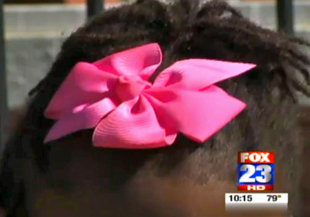
Photo from Fox 23 News

So I saw this Yahoo news item about a little black girl whose parents withdrew her from a charter school whose dress and grooming policy forbids dreadlocks. Here’s what happened: Tiana, age 7, sometimes wears her hair styled in short, skinny dreadlocks. The school told her she didn’t look “presentable.” She cried on camera about it. The parents chose to take her out of the school and send her to a different neighborhood school, where there is no policy against dreads.

Of course, as the parent of a little 6-year-old black girl, I had some immediate knee-jerk reactions: “How dare they?!” “They must not know how difficult it can be to style black hair.” “That poor little girl!”

But here are the facts: the school is a charter school, which can set whatever policies it feels are best. The policies have been in place for a while, and parents have read them and are aware of them. According to comments from other readers, the school has mostly black students, as well as an “all-black” school board.

So that rules out racism, as well as school leaders not understanding what it’s like to style black hair. What this boils down to now is a parent knowing full well what the policies are (ludicrous as some seem to many of us, including me), ignoring them, and throwing his child to the wolves. When he sent his daughter to school in violation of the rules, he was the one who exposed her to school leadership telling her that she couldn’t wear that hairdo and it wasn’t “presentable.” His actions led to her crying.

Also to note: the school didn’t toss her out; her parents chose to withdraw her because of that hair policy.

Honestly, I don’t quite understand what the school board’s problem is with that particular way of styling hair; it seems neat and not “faddish” to me (a big “fro,” however, I can see as being faddish and more likely to attract attention and therefore distract from schoolwork). But the board must have some reasons for the decision they made. If Tiana’s parents disagreed with the policy, their first responsibility was to go discuss it with the board and even rally support to possibly have that particular part of the policy changed. Then, if the board still stood its ground, the parents would have had a decision to make: either follow the policy, disobey it, or leave the school. In this case, they just went straight to disobeying it.

Schools can be crazy, and school policies can seem completely random. And so many things about rules and school leadership can make ME crazy. But the only thing we as parents can do is to address the policies we disagree with with school leadership and try to make change. If the problems are bigger, we can address those with political leaders. We can then try to raise awareness in the community, in part by bringing the item to the attention of news outlets.

I think in this case, the parents went straight to disobedience of a policy and then whining to the media. I definitely understand their concerns, but they didn’t handle them well.

Sure, the new prince is getting attention, but so is the royal post-baby belly

royal baby bumpYes, the world has gone crazy over the royal baby. And people have plenty to say about how this very soft news has eclipsed some other very important news. I could say lots about that, being a journalist myself, but for right now let me just say that even as a journalist who does like to stay informed about vital news events, who doesn’t like to take a little break from all that is depressing and frustrating to enjoy a cute little baby? My own four daughters are now getting sadly far past the baby stage, the youngest now going into first grade (!), and I find myself missing a little bit those sweet days of their infancies. So yeah, I’m feeling a little nostalgic and enjoying the baby photos.

A secondary focus of talk around the blogosphere has been Kate’s post-baby belly. There are many who are applauding her willingness to just let everyone see the reality that is a woman’s belly right after birth: it’s still quite large. I remember looking down at my own belly after giving birth each time and thinking it looked like a huge lump of bread dough (enough for probably four loaves) that had risen for hours and then just been punched down. Soft, squishy, lined and utterly non-sexy. I honestly have to join in and say, thanks, Kate, for not trying to hide that belly. I’m sure with all her resources, she could have minimized its size or shape by dressing a certain way or wearing Spanx or… something. But she didn’t.

On the other hand, other observers have noted it’s sad any of us are focused on the Duchess’s appearance at all. The fact we’re applauding her for her “honesty” just shows we’re still focused as a society on a woman’s appearance rather than other much more important attributes. And I have to say I agree with that as well. (Another point made within this same observation is that aside from the belly, Kate looks pretty darn good: her hair and makeup look great. And not many new moms get that kind of beauty treatment the day after giving birth. Sure, that’s true. But at the same time, how many of us have to step out of the hospital a day after giving birth to show off our baby to billions of people? The fact is, Kate and the whole royal family have a role to play, and when it comes down to it, she’s doing it with a lot of grace. So if she gets stylists to spiff her up a bit for photo ops, so be it.)

But my conclusion is this: we still live in an appearance-obsessed society. I think most of us would like to see that change. I know I would like to make people more aware of just how much we all think about looks, so that’s why I write occasionally about the topic. But I don’t think our society is going to change overnight. I’m OK with “baby steps.” And if Kate, playing the role she does in British society and even on the world stage, feels best about fixing her hair and donning nice makeup and a pretty but simple dress to show off the newest heir to the throne, even while feeling comfortable enough to show off the reality of the post-pregnancy belly, more power to her. The belly is a baby step. I say, focus on the ways we’re making progress, celebrate and applaud those, and then still remember that we can make more progress in the future.

Compliments that last forever

So I’ve written occasionally about beauty and self-image, but I haven’t said much about how we compliment each other. Have you noticed that most of the time we tend to compliment others on how they look in some way? “You’ve lost weight! Lookin’ good!” “Love that new outfit.” “Nice new hairdo.” “You look pretty today.”

I have to admit, of course I love receiving these kinds of compliments. Yes, I do like feeling that I look good. And I think compliments are pretty much always a good thing. But what happens when we’ve gained weight or we’re having a bad hair day? Are we going to automatically remember the times we were told positive things when we were thinner or fresh from the hairstylist? (and then think poorly about ourselves right now in comparison?) Just something to consider.

I was reminded twice recently just how wonderful it is to be complimented on attributes that will last. One, I spent a morning editing, which is my only paid job. And honestly, it’s not work for which one gets a lot of high-fives. Writing is more visible; editing, though, is basically a way to ensure someone else’s writing either gets noticed or doesn’t get attention in a bad way (“you misspelled my name?!” or “I’m going to sue you for libel!”). So as proud as I am of my editing work, it’s largely thankless and something about which I can only congratulate myself.

But during the course of this busy morning of work, I fixed a mistake, and the writer was appreciative. That writer either brought the important catch to a publishing editor’s attention, or that editor saw it in the notes on the story. Either way, that editor contacted my boss and said how much she appreciated my good work. My boss passed it along to the other editors with whom I work, so we all can know that sometimes, our hard work does get noticed. And bam! I’d gotten appreciation. Actual praise for the work I do regularly. Woot!

The other compliment recently that really meant something to me came from someone I’d never met before. I was doing volunteer work at the Fresno temple of The Church of Jesus Christ of Latter-day Saints. We Mormons go to church services on Sundays in our local meetinghouses/chapels/church buildings (we refer to them variously as such). But our temples are extra-special places, where we learn and make covenants with God and then can provide those same opportunities for our ancestors who have passed on. They’re particularly quiet, holy, and sacred, and going there to do work for our ancestors is such a blessing. Early one Saturday morning, I spent an hour there, working in close proximity to a few other women I didn’t know but drinking in the peace that exists there. In the course of our time together, I felt particularly warmed by the kindness of the women who were volunteering there with me. They smiled beatifically (absolutely true!) and were thoughtful and helpful. One told me that she loved how my eyes danced, among a few other observations about how I came across as a person.

Now that was a compliment to remember. Lately, I might have been feeling incredibly stressed and exhausted and worn down by all kinds of things that have been going on in my life, and I might have been feeling bad about my weight (I admit the stress has led me to eat very poorly, a habit I’ve been trying to break but have been not terribly successful in fighting recently). I was wearing no makeup; my hair hadn’t been fixed for the day other than receiving a quick brushing. I wasn’t even wearing anything nice. But this compassionate lady told me that she appreciated my soul, my spirit: who I am inside. And I thought, “You know, it doesn’t matter today how I look. Because who I am is shining out through my eyes and my face. And somebody noticed.” If I stay the kind of person I want to be (well, hopefully, become better), my eyes will always dance. I will always smile genuinely and with warmth and friendliness. Even when I’m 90 and my body looks very different and my face is wrinkled, my eyes and my smile will be the same.

Yes, I like it when people tell me I look pretty. But when someone compliments ME, who I AM, it really sticks with me and warms me from the inside out; it has staying power. If all of us just made more efforts to recognize the best qualities — the forever, enduring ones — of those around us, the world would be a nicer place. And maybe, just maybe, we could be less concerned about how our outer “shellves” look.

The Victoria’s Secret people have fallen to a new low

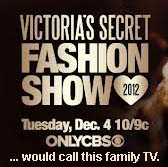
Given my views on our society and the feminine “ideal,” it should be fairly clear at this point what I think about Victoria’s Secret. The whole way that brand markets its products just makes me shake a little with indignation. I haven’t set foot in one of those stores in years. I just won’t support that company with my dollars. And let’s be clear: the “fashion show” that VS puts on on television once a year is just soft porn that’s received a stamp of cultural acceptability.

Victoria's SecretBut here’s the thing: the show is now being marketed to families. Yes, somehow this spectacle of impossibly thin, tall models with unnaturally large breasts who are showcased in sexy bras and angel wings (really?) is now somehow becoming a family event. Wha? Even though most rational people would not consider this family entertainment, it’s hard to ignore how the show is being packaged and advertised. The runway models wearing itty-bitty push-up bras and panties adorned with bling galore (can someone say Bedazzler?) are being accompanied by musical entertainment. This year, it’s Rihanna, Justin Bieber and Bruno Mars. Just who is Justin Bieber’s audience? Teen and tween girls. And Rihanna’s? Same. The producers are clearly aiming to snag the eyes of young girls and prepubescent boys, not just the obvious men of all ages and teen boys.
Is anyone else outraged by this? It’s bad enough that men are going to watch this “acceptable” porn on network television and just reinforce the feminine body ideal. And it’s bad enough that women are going to see it as well and have yet another opportunity to compare themselves unfavorably to what’s honestly a runway full of genetic aberrations. Now, young girls and boys are being indoctrinated into the religion that worships the female body ideal as well.

Just turn off the TV or switch the channel.

There’s more lying on Pinterest than in any political campaign

So I have enjoyed Pinterest quite a bit since I decided to sign up and start using it earlier this year. It’s definitely handy-dandy for lots of things. My youngest even knows that if we’re trying a new recipe, it’s most likely from Pinterest. I think, like a lot of other Pinterest users, I use the site for recipes, laughs, and just useful ideas about all kinds of things.

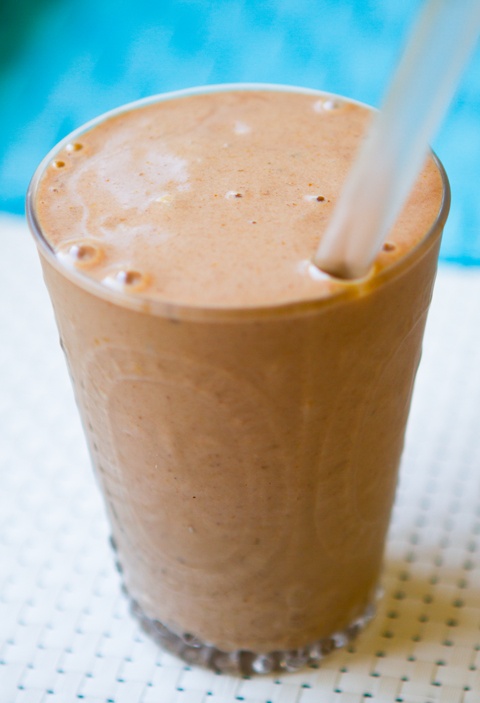
Yes, it is delicious. But NOT 50 calories; no, it’s 500.

But what has really gotten my goat over the months is noticing how much of it is just blatantly false. This is the case with “no-calorie” recipes of various kinds and with “fitspiration” pins. A few examples: the 50-calorie shake. The photo shows a delectable-looking glass filled with a thick, creamy chocolate shake. It always says “50 calorie shake” underneath the photo. I have now seen this repinned by friends at least four or five times. Every time I can’t help but comment on it. Because the truth is that the shake (if the whole recipe is imbibed) is 496 calories. Nearly 500. Not 50. If one wanted to have a 50-calorie version of this shake, that person would have to get out a shot glass, because she’d only be able to drink about 2 ounces. The original site doesn’t say anything about it being “diet” or low-calorie; it’s just a healthier way to have a “shake” than going to an ice-cream shop.

There’s also the “no-calorie slushie.” The photo shows a glass with the final product, and there’s pictures of bananas and strawberries. If anyone were to think about it for just a second, she would know that bananas and strawberries HAVE CALORIES. The blogger admits that “her diet plan” doesn’t count fresh fruit or vegetables, but for those of us who do count everything (which I certainly think is a wise move), it’s about 250 calories. I’m thinking there’s a big difference between NO calories and 250. In fact, if one were to drink that no-calorie slushie every day without changing her diet in other ways, she’d gain half a pound a week.

I think I’ve already mentioned the “fitspiration” pins. Beauty Redefined writes a fab blog post about those. Here’s the thing: it’s great to motivate yourself if you’re trying to take better care of your body by eating better and exercising. But the pins that show a ridiculously thin naked midsection with hip bones protruding, for example, are not going to help anybody. They tend to say “all you have to do to get these abs is follow this plan….” Honestly, I don’t care how much I worked my abs, I would never look like that. I’d also have to cut my calories to less than 1000 per day (not healthy) and get plastic surgery to get rid of the extra skin and the stretch marks to look like that. Can we sit back for a moment here and say, OK, I’d like to get healthier, but repinning this ridiculous photo isn’t going to help me or anyone?

Yep. All lies. Why is it that we perpetuate them? I personally don’t repin these. I just don’t. If the recipe looks tasty and I’d like to try it, then I’ll repin it and give it an accurate title and caption: “fruity slushie,” for instance, or “protein-packed shake.” And even if I would like the tips for exercise, I just flatly refuse to repin those photos of tiny midsections. I’m not gonna do it. I don’t want to send the message out to my friends that image is paramount and flat abs are a holy grail. I don’t want my wonderfully normal friends to feel worried about their abs. Why should they? I also tend to make comments when friends pin some of these, just to correct the erroneous notions that are being sent along via the ever-so-simple pin. I imagine they are annoyed by me. Oh well.

So I ask: if you’re a Pinterest user, are you going to breezily send the lies along for hundreds of other pinners to see, or are you going to stop them in their tracks? When you see a claim that seems “too good to be true,” it most likely is. Think about it for a second. Do some quick calculations. Go to the original post. Do something, but just don’t send it on!