Perfectly imperfect mothering

So it’s another Mother’s Day. This year is my 19th as a mom myself, so I’ve become accustomed to my children (and husband) scurrying around trying to figure out how to show me particular love and gratitude on my official day. But this year is the first for me to contemplate the reality of my own daughters becoming mothers: my oldest is getting married in two weeks, and somewhere down the line she will become a mother herself.

I could write a book (well, I have, actually, years ago when my oldest was little and I was just discovering truths more experienced women already knew) about mothering, but today I’ll try to share just a few words about my feelings this day, this week, this month.

I’ve realized even more than before that two opposite truths can coexist perfectly fine, and usually do: I can feel I’m doing an amazing job as a mom and I can feel I’m doing a terrible job as a mom. And while those generally go back and forth, sometimes I can feel both at once. And they’re kind of both true. I’m a person of faith, a Christian, and I believe I’m the daughter of a Heavenly Father and that I have a Savior, Jesus, who taught vital truths for me to follow, set an example, and most importantly suffered and died for my sins and weaknesses and general mortal-ness. So I can feel in that very weak mortal-ness that I’m not doing nearly as well as I’d like to be, being like that perfect example that was set. But if I just try to remember that I’m not expected to be doing great, not expected to be perfect, that the whole point of Jesus atoning was to make up for my huge insufficiencies, I feel a lot better.

This applies so well to the daunting job of mothering. I like to speak to reality, to the challenging, painful, imperfect realities that we all experience day to day. And it’s true that I can lose my temper, that I can get annoyed with my kids, that I can say things I wish I hadn’t and not say or do things I wish I had but just couldn’t summon up the energy to do. I think everyone today is painfully aware of our realities, of the ways we fall short, of the ways we don’t at all seem to fit in the glowy, pink, Hallmark Mother’s Day Mother role. So I’ve seen a lot of friends or others speak to this reality, this feeling that we just simply don’t measure up. And that’s true. We don’t. We’re not perfect, we’re not all the same, in the same Mother mold. Our own mothers weren’t, and we aren’t as mothers ourselves.

But it’s also absolutely true that we were born to be mothers. God created us to be mothers, and He knew we wouldn’t be perfect as people all-around or as mothers, specifically. And He was OK with that. He allowed us to have this experience of motherhood in part so we could become better through the crucible that it is, and that all of us interesting, different, unique souls could rub up against each other in all our roughness and smooth out our edges together. Most importantly, our Heavenly Father didn’t send us to Earth to do smoothing without any help. I firmly believe He is heavily involved in our lives and that if we turn to Him and the Savior, we will be lifted and all the stupid things we do will be made better somehow.

So this Mother’s Day, I honor my mom not because she was perfect or I grew up in the perfect home, but because she was herself and did a great job of it. Her mothering was what I needed. I feel good about my strengths and how I’ve put those to good use day in and day out with my four daughters. When it comes to my many weaknesses, I will try a little harder not just to be better but, even more than that, to remember that I am not expected to be perfect, that God will fill in the holes. I will try to remind my daughters above all that God is aware of them and that they have a Savior, and He will be there with them in everything they do, no matter how imperfectly they do it. I think I’ve done a good job teaching my oldest to turn to her Heavenly Father for help, day in and day out, especially for the times when maybe I wasn’t the best of help as her mom. So today, I feel confident that my daughter, with all her amazing strengths and, yes, her not-strengths, will be a great mom. She’ll struggle, she’ll flail around a bit, but she will be awesome. She’ll have moments of that high when mothering seems truly like a gift from God and her little ones almost like angels, and she’ll have days that are blurry from lack of sleep and dark from feelings of inadequacy.

In short, she’ll feel like mothers everywhere. And I thank God for that.

No cool holiday traditions? You can still be on the nice-parent list

My kind of PinSeems every time “the holidays” roll around, someone invariably asks me in some setting what kind of traditions we have as a family, their eyes lit up with high expectation. I hate to disappoint, but honestly, I feel like I got nothin’. I’ve heard some great stories from other people and on social media, to be sure, but all I can mumble is something about how we “open presents, eat a family dinner, talk to family members…”. As much as I’d like to, I haven’t gotten around to taking the kids to serve at a soup kitchen, for example, or doing something strikingly meaningful and religiously significant on Christmas Eve. I do believe that Christmas exists for us to remember the Savior of the World, I really do, and I try to follow Christ every day. But do I do a lot with my kids to observe that at the time of his “birthday”? Uh … not really.

Add to that people’s Facebook posts or tweets or Pins on what they do with the Elf on the Shelf every day of December (luckily, that didn’t get popular until my kids were well into growing up, so… phew!), and I just shrug and feel a little boring or deficient.

But here’s the thing: I don’t think my kids are suffering from lack of “notable” story-worthy traditions. They’re well-adjusted, happy, fun, giving, and all-round great girls. They have good memories, as do I from Christmases past. I guess my tradition as a parent is just to do the same things my parents did when I was a kid: shop and wrap presents, fill stockings, bake and cook. And hope not to be woken up way too early December 25th. I remember presents I received, time spent with my parents and grandparents and aunt and uncle and two cousins and two siblings, the music we would listen to, the cookies and pies Grandma made, my mom’s homemade noodles simmered in rich turkey broth to perfection. And my girls will remember pretty much the same things: I make the same meal, the same pies, the same cookies and noodles. And miraculously, my daughters don’t wake up at 4 a.m. (as I remember doing one year, generously keeping to my room until about 6 a.m. before disturbing my sleeping parents) or even 6 a.m.

So life is good. We may not have many cool traditions; we listen to music, hang lights, decorate the tree, put out presents, unwrap them gleefully, stuff ourselves at dinner, even read the Christmas story from the Gospel of Luke. I do absolutely nothing Pin-able. Who cares? Not my girls. And in 20 years or so, they’ll be doing the same boring things I’m doing right now and smiling nostalgically about the boring days of yesteryear. I’m cool with that.

Honoring the end of life

I’ve been able to attend two really beautiful funerals this year, both for people who were extraordinary, and who had wonderful families. I was struck both times by what a special experience it was to share in the remembrance and celebration of the lives of these people with their loved ones. At both, there were many, many experiences shared, sweet and tender memories and funny ones, recounted with laughter and tears.

But how often do you hear people say they enjoyed attending a funeral? That they looked forward to the funeral, that they cherished the time they took to be there?

Americans (and probably many in modern, Western cultures) are far behind some more “primitive” cultures: we do not appreciate the death process or anything surrounding it; we tread with great trepidation around death; and we don’t honor those who are aging, stepping ever closer to death each day. It’s a serious problem. We have become obsessed with youth, with appearance that speaks of youth, with the notion that all that attends death is blessedly far away from the young. I’ve written at length about the problems our image-consciousness (tied in part to the beauty of youth and unwrinkled, unblemished skin) is causing us as individuals and as a society. I’ve not written much about how it’s separating us from those in our culture who have the most to give and share with the rest of us: their wisdom, their fascinating experiences, their character.

Some cultures truly revere their elders. They hold them in high esteem, treat them with great respect, seek them out, not only include them in decisions but hold them as their highest decision-makers. Their middle-aged citizens and children look up to them and learn from them, seeking to be more like them.

In our culture, ageism is the rule. We hire young workers at the exclusion of older ones. We worry about the capacity for wisdom and clear thought of those who aren’t young any longer. We put them away. We don’t want them as leaders because we are sure they’re “out of touch” with “reality.”

And then there’s death. We fear it. We fear the process leading up to it; we fear what happens when and after we die. There is little of reverence and appreciation for the process, even when someone is able to leave this existence with a minimum of pain or discomfort. We are somewhat conditioned naturally to keep away from dead bodies, and we have very little cause to interact with them. I have had the opportunity, however, a few times in my church to help dress women for burial, and I have found it to be not “gross” or “weird” or “scary” but, instead, a privilege. I have found it to be a sacred experience and a lovely last opportunity to perform a service for women who have meant something to me in my church congregation. But, again, we hear little of this kind of experience and of reverence for those who have died.

One Foot in HeavenI was able to read a lovely book this year written by a hospice nurse about the experiences she’s had helping people and their families as they have passed from this life. In One Foot in Heaven, Heidi Telpner tells readers about “good deaths” and “bad deaths” and reminds us all that we all will one day experience death ourselves, and most of us will have to deal with family members’ or friends’ deaths in some way or another. As much as we may (mostly successfully) manage to evade staring down death during our lives, it is still there. It still happens to us all. And the more we are comfortable with it, the more we and our loved ones can experience “good deaths.” Telpner tells about the poignant experiences she has had getting to know good, interesting people with loving and supportive families and how their deaths have been sweet and calm. She also tells about the people who personally fought death or had family who fought the reality of impending death and made it difficult for them to die peacefully. It’s a fine primer for all of us, to remember that death is inevitable, but how we approach it can make all the difference in how we and our loved ones live — and how we prepare to die.

So I find myself still getting surprised looks from others at times when I mention how grateful I was to attend some really beautiful and inspiring funerals, that I have been blessed to be able to provide a service to a person whose body is being readied to be buried but whose spirit is still living elsewhere (as I believe). I’d love to see this change, to see our culture become more age-friendly and even elder-centric. But I’m not holding my breath: we have a long way to go.

Till we meet again

Earlier this year, I learned that a man who’s like a second father to me had cancer. He was doing so well for so long this year (from my standpoint of living at a distance from him) that I’d almost forgotten the clock was ticking on my time with him.

I was able to visit him for about an hour when I was in his state for a family event. I cherished those moments sharing him once again with two of my children, letting them spend a little time with this great man. I did know it was possible it was my last visit with him, but I hoped it wasn’t.

Now, his time on Earth is over, and he’s moving on to a new stage of life, one where he will be reunited with his sweet, sweet wife who died some years ago.

I met Robert Harbertson when I was assigned as a missionary for my church to the visitors centers at Temple Square in Salt Lake City. Rather than spending 18 months going “door to door,” as many are familiar with our church’s missionaries, I had the unusual volunteer opportunity of basically being a tour guide, of showing visitors from all over the world around Temple Square and introducing them to some of the history and beliefs of The Church of Jesus Christ of Latter-day Saints. This amazing, dear man was assigned to be in charge of all of us young volunteers (as well as the older ones, retired couples serving together). As such, he was an authority figure and a parental figure, who watched out for us and made sure we were safe and happy and thriving and getting along with each other. I saw him every day and knew he had absolutely my best interests at heart.

My 12-year-old says now her favorite story about him (I’ve told my children — and anyone else who will listen — plenty of good stories) is his opinion on the thickness of the peanut butter in my daily sandwich. Mind you, this same man handed down a rule that we young missionaries were not to comment on others’ food choices; we had missionaries serving there from countries all around the world, and sometimes they ate some strange-looking things to us Americans (or maybe vice versa). He didn’t want any comments on the “weirdness” of cultural food options to make anyone feel hurt. Even so, one day I was sitting at our lunch table and about to sink my teeth into a perfect peanut butter sandwich: it was made from the homemade whole grain bread provided in our break room and a very thick layer of creamy, gooey peanut butter. He reached around me and actually handled my sandwich, squished it, and said, “Sister Carmode! How much peanut butter did you put in that sandwich?!” I told him to mind his own business. Well, basically. We still had a good laugh.

President, as we just tended to call him, had a stern facade, which could be mighty intimidating if you didn’t know him, and if he had the need to make a point. But after just a short time of knowing him, I was wise to his game: just ready to pop out from behind the stern face was a huge, impish grin. He was also competitive, reminding us that he played college basketball, and we learned at the beginning of a spiritual address from a top church leader that President and this apostle regularly played a serious game of racquetball. I’m sure it was take-no-prisoners.

Here we are together at a 20-year reunion.

But at the heart of this stern, rule-making, authoritarian figure was a warm, gooey heart that held a spot for little ol’ me. He was in charge of probably 100 or more young women during his volunteer time, but he could make me feel I was the only one he had to take care of. Honestly, I love and miss my dad a great deal, but thanks to a very tough upbringing, Dad wasn’t a naturally, unconditionally-loving kind of person. So being in President’s care, having that place in his big heart, not just during the time he was assigned to watch out for me but in the two decades since, was a window into an experience I hadn’t quite had. It gave me a better understanding of what it means to be loved unconditionally and a boost to my feelings for myself.

When I was dating my husband, I took him to visit President and his wife, and he got their stamp of approval. It just so happened that was 2 1/2 months before my parents got to meet my then-future husband. I visited President on my way across country during one of our long-distance moves, with my firstborn baby girl. I’ve visited many times over the years and had little booster shots of that man’s love, all the while giving my girls the opportunity to experience it a little themselves.

We met in a place where a famous choir often sings “God Be With You Till We Meet Again.” Now, I sing it to President. I look forward to meeting you again.

Tips on preserving family memories

I’m presenting a class for a family history workshop on how to preserve various family memories: audio, video, documents, and photos. I thought some of my friends online might appreciate the information I’m sharing, so here are the basics:

Video

You can use a service to transfer film or VHS/Beta tapes to DVDs or do it yourself. Services are certainly easier but they’re costly.

First, the services I’ve found: Mail your materials in to MyMovieTransfer.com, ScanCafe.com, DigMyPics.com, iMemories.com, LegacyBox.com, or YesVideo.com.

Or go to Costco, Walmart, Walgreens, or CVS (these all use YesVideo service) to drop off your videos for transfer.

Next, DIY methods:

For VHS tapes, you can use a VHS-DVD burner combo player, an analog-to-digital adapter for your computer, or a separate VHS player and DVD recorder. These require various levels of know-how and equipment that might be pricey, but it might be cheaper even with pricey equipment if you have a lot to transfer. Plus, you can re-sell the equipment when you’re done to recoup some of the costs.

Digital Trends provides a nice online tutorial for DIY methods.

Once you’re finished getting your video onto DVD, then you can move on to getting it onto your computer hard drive in MP4 or similar format. For the future, it looks as if everything is going digital, so just go ahead and do it now. This also means you can have all your memories in one place. You can store on your computer and also keep a copy on a backup hard drive for safekeeping, along with all of your other digital copies of photos and audio, etc. I’ve used Xilisoft’s DVD Ripper and it’s fairly simple if you have some computer experience; standard version is $39.99. Other software includes Wondershare Video Converter starting at $39.95.

Digital Trends provides instructions for some free options.

Audio

Transferring cassette tapes onto your computer hard drive and into MP3 or similar digital audio formats is less complex than transferring video. It’s also pretty inexpensive. You just need a cassette player and an auxiliary cord to plug it into your computer, as well as software. The primary software I’ve seen (and used myself) is Audacity. Bonus: it’s free! Here are a couple of online tutorials:

http://www.cnet.com/how-to/how-to-turn-a-cassette-tape-into-mp3s/

http://www.wikihow.com/Transfer-Cassette-Tape-to-Computer

Photos

If you have photos in slide format, you can use a service, which can be quite expensive if you have a lot of them, or you can do it yourself. DIY is pretty easy and just requires a slide scanner, which can be purchased for around $80 to $120.

Loose photos or photos in albums are easy to scan with a regular scanner. Many of us now have combo printer/scanners. If you don’t have one yet, you can purchase a good-quality one for as little as $50. Only drawback is it’s time-consuming. If you’re trying to scan in photos that are still in old albums, you’ll have to scan in each page, make copies of the image on your computer, then crop down to each photo. Afterward, you can use your favorite photo-editing software to clean them up.

There are also apps for this project, such as Pic Scanner, which can be downloaded from the iTunes app store. It’s free for the first 10 scans of album pages and $2.99 after that. Pros: Makes it easy to just “take a picture,” and it isolates the separate photos for you without you having to copy and crop. Con: I liked the quality of my scanner better.

If you do want to use a service, there are lots out there, such as ScanCafe.com, DigMyPics.com, FotoBridge.com, iMemories.com, LegacyBox.com, and YesVideo.com.

Documents

Don’t forget to scan in old family documents as well. Same process goes here for photos. Use a scanner.

Now, going the other direction: many of us have photos from the past 5 to 10 years strictly in digital format. That’s great for storage, but you’ll also want to have some actually in hard copy form. I’ve found it’s nice and pretty easy to make photo albums on my computer using various photo-album services and then just have them printed and bound for me. No printing of individual photos and then assembling into albums. I’ve used Shutterfly, MiniBox, and MyPublisher and have been satisfied with their products. There are also a number of other services I haven’t tried: PhotoBook America, Peggy Bank, and AdoramaPix, for a few examples.

Deals

If you’re going to do any of these projects with services available, make sure you get the best deal you can! Groupon and LivingSocial are handy for this. Sign up for their emails and you’ll get heads-up on the various deals that might involve these kinds of services. I’ve gotten good ones from MyPublisher and am up to date on all my family photo albums thanks to them.

I also like to use Ebates to get cash back and coupons for services. Create an account and you can search for all their participating merchants.

Some current deals (local to my area in California):

ScanMyPhotos.com

Digital media services from Southtree

Video and image digitization services from Peggy Bank 

Groupon for 40-page photo books from PhotoBookAmerica

Groupon for photo books from AdoramaPix


5 years of missing a giant personality

Next week will mark five years since my dad’s death. I expected I’d write a post then to observe the occasion, but I’m finding I’m missing him a great deal right now, so that anniversary post is happening now.

Dad’s death was unexpected and a completely devastating experience I was wholly unprepared for. I felt sure I had a good decade or more with him so I wasn’t at all ready to face the possibility of him not being in my life. His loss upended me, changed me utterly, and created a crater in my very self, as if a fiery asteroid had crash-landed in my torso. Time passing and the reality of no more phone calls or visits or little notes or pictures in the mail have forced me to accept his absence, but the crater is still there. Only problem is that it’s somehow been covered up over time by the accumulating detritus of life, so few observers have any idea it’s there, this charred chasm.

Dad and Cathy LOVEDad and I were close. I have come to appreciate that calling him one of my best friends is not an exaggeration. He really was. He also could be completely exasperating and sometimes annoyingly clueless. He was a hypochondriac and an over-sharer, and loving completely unconditionally did not come naturally to him, thanks to a difficult upbringing. He was obsessed with taking care of his health and was a bit underweight, and he focused overmuch on other people’s appearances. Thanks to that, in part, I am overly concerned with how I look, a frustrating shortcoming that can sometimes take me away from what’s truly important in this short life. Honestly, I could write a few more paragraphs about how he could make me crazy, sometimes even angry.

Nonetheless, I adored him. I have so many treasured memories of time with him, daddy-daughter time. He taught me so much and transferred so many of his own “likes” and preferences to me that I feel sometimes I can just channel him. Dad took me to cultural events: orchestra and band concerts, ballet performances, plays (because he was a university professor we had access to some great performances at the various universities where he worked. And if they were free or a very low price, all the better: he really disliked spending money). He instilled his love of music and his humor. I can still almost hear him laugh. Just … almost … the sensation, the sound, is just out of reach, like a word on the tip of my tongue. I can imagine his reactions to just about anything. He loved card games and was quite competitive. He had so many distinctly-him mannerisms. I can practically bring him to life any moment by repeating something he’d typically say or by aping a habit. My oldest daughter in particular remembers those things pretty well and can accurately mimic him too, repeating how he’d bug the poor front-line workers in a McDonald’s about “What kind of oil exactly do you use in your fries?” or deliberately and dramatically placing a card down on the table when playing a game.

I’ve read over the years how those who are grieving do want to talk about their loved one who has left this mortal existence, that asking questions or talking to them about the person who’s died is actually a welcome activity, not an intrusion or painful reminder. No, we already know that the person we love is gone. We can’t possibly be “reminded” any more. It’s SO true that what I want to do is just talk about him. I want to tell everyone about him, to just talk endlessly about all his quirks, all his high notes, all characteristics in between. In talking about him, I’m bringing him to life for someone else, keeping his memory alive for myself.

I am at peace entirely with my beliefs on where he is now and what he is doing. I’m happy for him to be in this next stage of what I know is an eternal existence. He gleaned what he needed to from this stage of life, and he’s learning more and doing more where he is now. But that peace, knowledge, and happiness that I have for him doesn’t change how desperately I miss him being here, with me. I still miss him every day. I still wish I could pick up the phone and talk to him, maybe get his advice and input, just hear his voice. He was such a vibrant, oversize personality: he was impossible to miss. He spoke loudly and commanded attention (he taught TV broadcasting and spoke accordingly). He was funny and appreciated good humor. Not having that presence around now creates a Dad-size hole that won’t go away until I am reunited with him someday.

I miss you, Dad. It’s as simple as that. My heart will ever be broken till we meet again.

Parents who don’t hover are the ones in danger, not their kids

I’ve read a couple of articles lately that have reminded me just how tough it is to parent these days. And not in the ways you might think.

First, I read a great column about one woman’s experience, When kids were unbreakable, remembering her “dangerous” childhood and giving her kids some more opportunities for freer play. I think most of us who are in our 40s and up fondly recall hours of free play when we were growing up. I was particularly lucky to live “out in the country” most of the time before I turned 10, after which point I was more in neighborhoods. In both living situations, though, I was away from my house (and my watching mom) for hours at a time, playing in the dirt and in creeks, exploring the woods, walking along dirt roads, riding bikes along suburban streets or cutting through unfenced yards to walk to friends’ houses. I rode my bike with no hands a number of times, and once I ended up needing stitches in my elbow because of it (and I didn’t do it again). I don’t remember a lot of other dangerous things I must have done, just that I had lots of fun, was mostly smart about it, and paid attention to what was going on around me. Dad taught me to shoot a rifle in the backyard a few times (in the country); Mom taught me how to use a knife (and lots of other tools) in the kitchen.

The short story is this: my mom and dad didn’t watch my every move. I wasn’t penned inside my house; I wasn’t watching TV or any other screens very much. I ran and played. I breathed fresh air. I invented all kinds of fun games by myself and with friends and (if forced 🙂 ) my younger siblings. I made something fun out of “nothing,” the materials at hand. My mom felt fine — and was a perfectly great parent — letting me go outside her supervision for those hours.

Today, things are far different. We live in a hyper-vigilant society, in which we have 24-hour news coming at us from TV and the Internet and smartphones. Every instance of bad things happening to kids is reported to us. We fear strangers and are sure if we aren’t watching our kids every moment, that someone will likely snatch them. We live in a time when we are told to know the signs of child abuse. This is a good thing; abuse is not pushed under the rug as much and is better reported. But it’s made us all wary of being the kinds of parents who let our kids have free creative time to explore and imagine and play, without being within 10 yards of them at all moments. We fear that our kids might get kidnapped and/or abused. We fear that we’re not being “engaged” with our kids, providing them lots of fun play options. We fear we’re not good enough. I’m fairly sure that these weren’t concerns for our parents.

Which brings me to the second, and very disturbing but not surprising, article, Woman Calls CPS After Seeing Kid Play Outside. It upsets me to read it because I’ve been in a similar position. When my first two were only 2 years old and a few months old, I was reported (anonymously, though I was able to piece together who it was because I knew her personality and modus operandi) to CPS because someone was concerned they were undernourished and one had a raw, chapped rash between her lips and her nose. Here’s what the circumstances were: my kids were and still are, many years later, petite. The infant had Down syndrome, and many people don’t realize that children with Down’s have their own growth chart. My pediatrician measured her growth against other DS kids. She was fine and perfectly healthy. In fact, we’ve always been blessed that she’s been remarkably healthy, with no heart problems, no digestive problems, almost no ear infections, even. But she looked, to one too-sensitive observer, to be “too small.” My 2-year-old just had a bad (and difficult to break) habit of licking above her lips and that small area was for a fairly short period of time just red and chapped, and I did everything I could think of to make it better. This apparently also made me an object of concern.

A case worker came out to our house and questioned me and looked at the kids, and I was lucky enough that that was the end of it. My kids also were too young to know anything was going on. But it was extremely upsetting for me. I was scared and just sick to my stomach. Raising my kids was hard, and I was always grateful for a break and me-time, but I certainly didn’t want them taken from me!

It was also my introduction to the brave new world of Big Brother: everyone is watching you. And they are given the power over your life to call a number and anonymously report the possibility of you being a Bad Parent. Then you are thrown into what I have discovered is not just a flawed system, but one that’s in some places openly hostile and dangerous to normal, good parents. I don’t have space to tell all the stories, but I could relate a number of them, of good and loving parents who have ended up having to take time-consuming and unnecessary parenting classes, hire attorneys, and be in genuine fear for their parenting and working lives because someone misconstrued something they did in public. It is terrifying.

We have become a nation of helicopter parents, it’s true. And we’ve become a nation of people who are quick to jump to conclusions, who are quick to call “the authorities” on the basis of a tiny possibility of a problem, who don’t know their neighbors from Adam, who have no idea of any context of the lives of the people they’re reporting on. If we knew each other better, knew that our neighbors were good parents who love their kids, whose parenting styles assuredly are different from ours but are NOT BAD, who support their kids and teach them and are making them into responsible adults, we’d be far less likely to go straight to the government with a concern rather than talk to our neighbors first, if we do anything. But we don’t. We are very connected with disembodied people via smartphones and tablets and computer screens, and with talking heads on the news, but not truly interconnected with a community of real, living, breathing people. We’re taking a quick way out to call the authorities and assuage some kind of guilty conscience (for not being better involved, for not knowing Mr. and Mrs. Smith and their two kids next door) or to pat ourselves on the back for “doing the right thing,” as the government and news outlets repeatedly tell us.

Would it be possible at this point to go back a little, to recapture the sense of community we had as neighbors, to support each other in the tough job that is parenting, and to let our kids have the space they so desperately need (as studies keep proving) for free play and imagination and learning how to navigate the world? I’m a little worried that it’s not, that we’ve gone too far. But I desperately hope we haven’t.

Education problems? Families are the solution

If you’ve read my blog much at all, you may have noticed that I have a few passions: I care about and advocate for mental health issues, education, and other issues related to the media (content that’s suitable for families and kids, better accountability on issues like image and portrayals of women).

In the 14 years or so I’ve had kids in school, I’ve been involved in different aspects of education. At times, I’ve attended school board meetings and advisory meetings; at other times, I’ve been involved with specific organizations like the band boosters. I’ve always gone to my kids’ parent-teacher conferences and back-to-school nights and open houses and so on. I’ve helped out in classes sometimes and gone to activities. In all this time, I’ve observed all kinds of problems, some of which I’ve written about.

But in all I’ve done to participate, read, ask questions, and educate myself about education in the United States today, I’ve realized one thing underlies most of the problems and concerns: families aren’t playing the role they should in the development of children and their overall education.

I’ll say that again: Taken on the whole, families (i.e. parents) in this country aren’t teaching, supporting, and nurturing their kids. Why? Lots of reasons. But to be brief and try to get at a core issue, families simply aren’t “whole” anymore. I read a great overview of how there is no “average American family” anymore and it provides a few revealing statistics, taken from a new book: “Take 100 children who are representative of American life, … and 22 live in families where mom stays home and dad earns the income — the ‘typical’ family experience of 65 percent of kids in the 1950s. Another 23 live with a single mother; it’s a 50-50 proposition whether that single mom was ever married. Seven live with a cohabiting single parent and three each are being raised by a single dad or grandparent.”

If many kids are living with just one parent, and that parent has to do the job of two parents, and is necessarily away from the home working to provide for the family, it follows that those kids won’t have the level of involvement in their day-to-day lives and school lives as a household in which there are two parents. And in those households in which both parents are working (because that’s their choice or because of economic necessity), kids will have more involvement in their lives than the families with one parent around, but they simply won’t have the time dedicated to them that a family has with two parents with only one parent working outside the home. I’m not casting blame here at all; I’m simply looking at the realities of time constraints and what kind of actual QUANTITY time kids have with parents, as opposed to the oft-talked-about “quality” time.

The reality is that quality is great, but a certain amount of quantity is vital. As a stay-at-home parent (I do editing work from home on my own schedule, which is a luxury I really appreciate), I get lots of face time with my kids, who are all in formative periods of their lives. They come home from school and have questions or comments or needs, and I’m there for them. They are lucky to have a parent there to help them with needs and to do informal teaching. Kids’ learning really happens during moments they have questions and someone can answer tailored to their interests.

So with the new reality being kids living in homes with single parents who must be absent and with two parents who are both often absent (during those crucial times of afternoon into early evening), kids aren’t getting as much time for informal learning from their parents. That learning includes all kinds of topics: building character, learning to manage finances, learning about interesting topics that schools don’t necessarily provide classes in, getting opportunities for family “field trips.”

Schools are places to learn the sciences, literature, math, writing, history, etc. I was quite good in all the school subjects when I was growing up, but I wouldn’t feel comfortable teaching advanced math or sciences to my kids; I’d rather they have teachers who specialize in each subject and who are particularly adept in those to help them learn about those topics.

I guess I sound rather old-fashioned. But the reality is that it’s not the job of schools to teach character, for instance. Schools can’t take my kids on trips very often at all to learn about different areas of our state or country. Schools can’t teach faith, and they don’t often have time to focus on basic life skills that are more easily learned informally at home.

Character Counts is a nice program, but it isn't enough to replace parents teaching their kids about character 24/7.
Character Counts is a nice program, but it isn’t enough to replace parents teaching their kids about character 24/7.

Time in school is finite, and as I’ve observed at a variety of meetings with other parents and educators, it’s becoming more and more difficult to fit in during a school day all the core subjects, let alone other things schools are having to teach kids because their families aren’t doing it very well or at all. In our town, elementary schools focus on a different character trait every month to teach students: respect, responsibility, caring, trustworthiness, fairness, citizenship. Why? The “Character Counts” program was started to “combat youth violence, irresponsibility and dishonesty” by stressing positive character traits. This means that the community and schools were finding that kids and teens were acting badly and needed to be taught values; families weren’t doing the job.

Over the past dozen-plus years I’ve been actively participating in community education, I’ve seen all the problems that exist. I’ve also seen all the programs school systems have started or turned to to combat the problems. I’ve seen how little time and money exist for schools to be able to surmount all these issues by themselves. And the simple fact of the matter is this: no matter how much schools try to do to “raise” kids into good, contributing members of society, they simply can’t parent kids. Parents parent. And no one else can do that very challenging, intense, nonstop, VITAL job.

I’ll continue to be involved in school meetings and advisory panels and so on. I’ll continue to give ideas on how better to teach and support all kids, mine and everyone else’s. But nothing I or the schools can do will take the place of the home. The solution is to support families and homes. Our nation, our communities, absolutely must find ways to strengthen families. In the article I mentioned earlier, Brad Wilcox, director of the National Marriage Project at the University of Virginia, says this: “Kids raised by their own intact, married parents are more likely to flourish. Given that, public policy should help strengthen both the economic and the married foundations of family life for kids in the United States.”

Until we change our attitudes about marriage and family life, our children (including their education) will continue to suffer.

A wide-open summer: great for kids — and Mom

This past year has been an incredibly busy one for me and my family, full of activities, travel, work, volunteering, and everything else expected of a mom with kids at home. Our family had a daughter who was a senior in high school, who stayed busy with extracurriculars, and I was involved in many ways myself. We also decided to host an exchange student, and she lived with us for the entire school year. Thus, we had an extra teen and high school student in the house in addition to all our usual stuff. It was busy but fun and great in many ways.

Now that the school year is over, the senior daughter has graduated high school, and the exchange student has returned to her home, it’s summer, and a very quiet and empty one, uncharacteristically so. We have nothing planned! It’s a wonderful feeling. And whereas last summer I had some (what I thought were) modest goals, which I didn’t really achieve, this summer I have none. Well, aside from getting through it with my sanity intact. And that can be a biggie.

My parenting philosophy has always been taken from that of my mom and my own childhood: Mom isn’t responsible for keeping kids from being bored. That includes not scheduling stuff, or at least not much. I’ve always felt it was important for kids in many ways to be reared with this kind of parenting, mainly because it teaches them responsibility for themselves from an early age. They learn the world doesn’t exist to make them happy or fulfilled. It’s on them. And it allows them to just develop their creativity and thinking skills, given a sufficiently “stocked” environment. (In my feeling, this includes a mom who’s willing to spend some time reading with them, taking them to the library, and providing them some raw materials for play.)

I am not at all surprised when I read that studies bear out my (my mom’s) philosophy. This article on The Atlantic mentions several benefits for kids, such as learning “self-direction” and “self-regulation.” My job as a mom is to grow independent adults. It takes ’em a while, but I want them to be able to take care of themselves when they leave the nest. That is the idea, isn’t it?

I’ve never been a big “scheduler,” in part because I don’t want my kids to not have free time and this opportunity to self-direct, and in part because I don’t want to overschedule myself and our family as a whole. I admit that I did “schedule” my younger girls to have some summer classes in the mornings to give myself a little guaranteed time to myself and to give them the feeling that they have some balance of scheduled (but both fun and educational things) and nice wide-open afternoons. It’s a nice balance for us all so far, as I’m finding here at the end of “summer week 3.”

100_5213
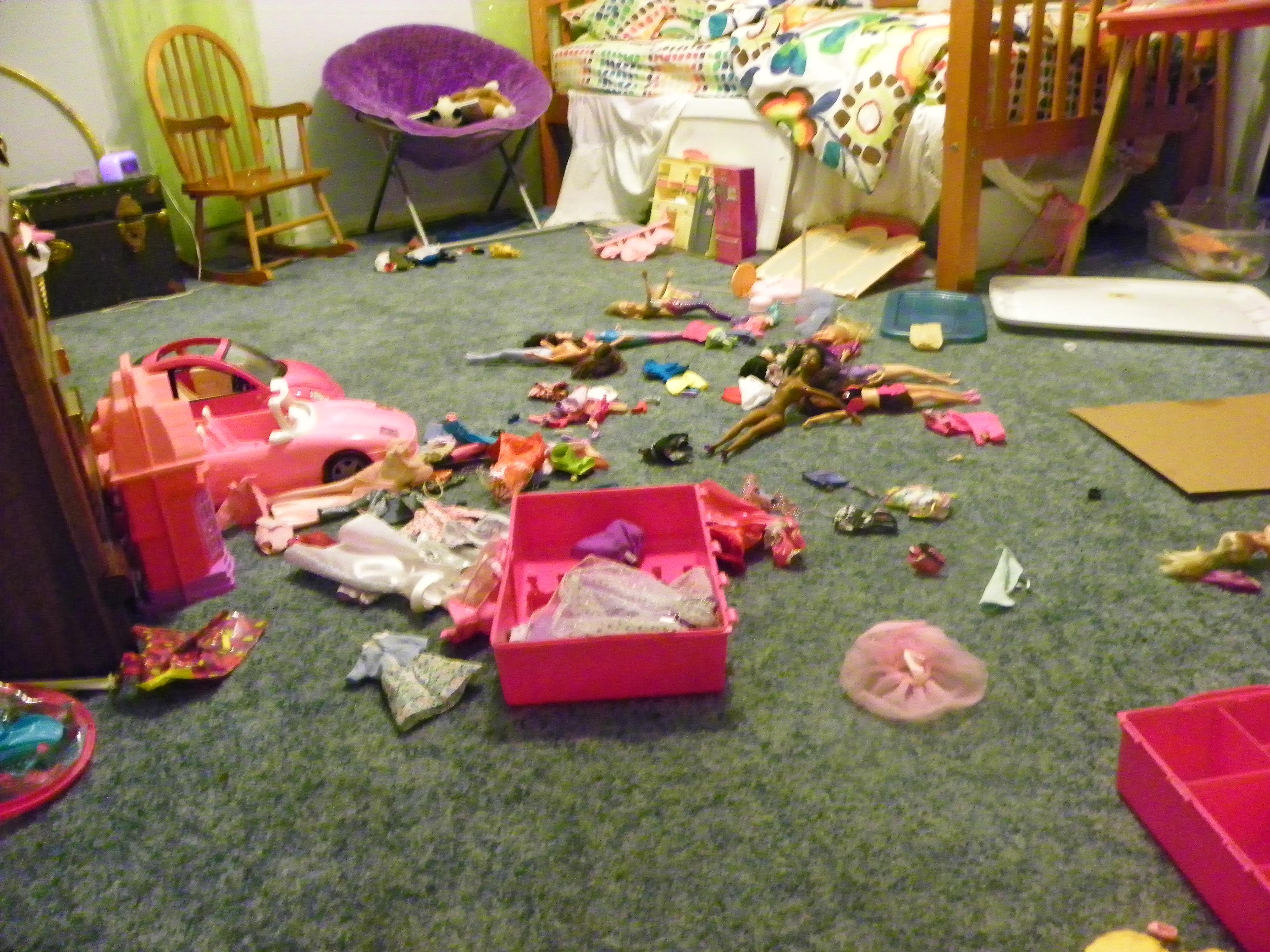
Yes, they have toys with which to keep themselves busy.

Here’s what I said at the beginning of the summer, and which I occasionally repeat as a gentle reminder of the “rules”: “I have generously paid for you to enjoy some fun things in the mornings (for five weeks). In the afternoons, and on weekends and other days you’re not in school, I have provided you plenty of options for things to do. Your rooms are now organized and reasonably stocked with art supplies, books, and toys; there are board games; we have things to do in the yard. I will go outside with you for some time most afternoons and watch you so you can swim. You have the responsibility of figuring out exactly what you’re going to do and when during all those off hours. I will not choose for you. Now, go and have fun!”

So far, the rules are working fairly well. I’m getting my paid freelance work done, I’m finally getting to the “eventually-to-do” lists (woot!!!), and everyone is mostly happy and well adjusted. I think my parenting philosophy is benefiting my kids, whether the studies bear me out or not. But they do. Ha!


A wedding is a promise of best days to come

The wedding of my littlest sister gave me the opportunity to remember the start of "best days" in my life.
The wedding of my littlest sister gave me the opportunity to remember the start of “best days” in my life.

This weekend I had the privilege of witnessing a wedding. Weddings are such happy occasions, filled with love, friendship and support and the opportunity to further cement ties of various kinds. At one point after this wedding, someone commented that the day would be the “happiest day” of this young couple’s lives. I thought immediately, “You know, it is a great day, but there will be many more and even happier days to come.” I can definitely say my wedding day was not the happiest or best day of my life; it was 21 years ago, and I was 23, and I loved my husband and was excited for the day and all it meant, but I have had so many wonderful days, better days, since.

The groom in this scenario was the next-to-youngest of eight children, and his parents were blessed to have all their older children married already, and these couples were all in attendance. I’d venture to say, from my own experience, that this day may very well have been one of the best days of the groom’s parents’ lives to date, as they were able to celebrate a beautiful, meaningful occasion not just as a couple, but as a family: the family they themselves created and nurtured.

My view is that marriage isn’t just about putting a legal or cultural stamp of approval on a romantic relationship. It’s meant to be the start of a family. And my faith teaches that families are forever: that marriage is a vow between a man and a woman that can be “sealed” in the presence of God in a temple and last forever, more than just “till death do you part.” And that promise to be faithful to each other and support each other and grow together includes having children and teaching them and loving them. That big picture, the years spent growing together as a couple in love and being able to rear children, is what brings the best days of all.

I definitely appreciate the sentiment expressed by Bruce Hafen in one of his excellent books, The Broken Heart: “One new bride reportedly said to her mother on her wedding day, “Oh, Mom, I’m so happy! I’m at the end of my troubles.’ ‘Yes, dear,’ replied the wise mother, ‘but which end?'”

A wedding day may seem the culmination or the end of a courtship, the fulfillment and denouement of romantic love. But it’s really just the start of something much bigger, deeper, and wider. I’ve enjoyed some wonderful days with my love of 21 years, as well as a bunch of stinky ones. We’ve had our share of troubles and stresses and real difficulties. We’ve had our share of disagreements and I’ve had moments or even hours during which I’ve been very frustrated with him (and I’m sure he’s been in the same boat with feelings about me), to the point where I was beside myself and unsure where to go next, how to resolve our problems, how to feel less angry or disappointed. But I’ve had moments of pure contentment, absolute satisfaction, utter bliss. I’ve been satisfied that despite the difficulties, I made a good choice of spouse and that despite everything, I still just LIKE him a lot almost all of the time.

We’ve been blessed to have four daughters, three biological and one adopted. And we’ve had days and weeks of frustration in parenting, of being at wits’ end, of not knowing how to proceed with parenting challenges. As our kids have gotten older, these moments have become more frequent and intense, because they’re more and more their own people with distinct personalities and very definite plans to exert independence. They can and do make their own decisions, and it’s our job to guide them and provide meaningful consequences, discipline and teaching, combined with big doses of love and compassion. But the whole job has gotten almost exponentially harder and more challenging with each year each gets older.

At the same time, these independent people we’re rearing are also sources of immense joy and happiness. At the best of times, when everyone is getting along, when we’re just having fun, simply being ourselves together and laughing and being distinctly us, the unit that is uniquely the Marce and Cathy Lim family, it is the best of anything I’ve ever experienced. It really does feel like heaven on earth, the best version you can dream up.

Here’s why these years can contain the best days I’ve ever had: there are more of us than just the two we started out with. Our little couple expanded into a sixsome composed of some amazing people who are wonderful to be around as individuals but even better when combined. I cherish our wedding day as the start of what we have now. But it was just a seed, an embryo, of what we were meant to be and to have. And as time goes on past today, past this year, past these moments where I can enjoy other young couples’ “seed” days of weddings, our Lim tree is growing and growing. There are far more “best days” ahead, and I look forward to them with great anticipation.