‘Salt Sugar Fat’: A fascinating look at ‘how the food giants hooked’ consumers

Salt Sugar FatSo I’ve considered myself to be better informed than the average consumer about not just what’s in processed foods but also about marketing principles in general. So I can’t say that much of what Michael Moss describes in his fascinating book Salt Sugar Fat surprised me, but it certainly did get my attention nonetheless. Just reading so many details about how food companies and their scientists have so carefully engineered their processed foods for optimal “crave-ability” and sell-ability still blew my mind.

Moss makes clear that he’s trying to show that it’s nearly impossible for the food companies to stop using such high amounts (and the most “addictive” combinations) of these three ingredients, for a variety of reasons. As the back cover says, “the industry itself would cease to exist without salt, sugar and fat.”

I’m not a vegetarian, a vegan, a raw-foodie, or any other kind of “specialty” eater or food-preparer. I do, however, make a lot of my family’s meals from scratch, which in this day and age does make me somewhat of an outlier, an exception to the rule. I don’t buy a lot of pre-packaged or pre-prepared foods. Therefore, I suppose that our family eats a lot less processed food than most of America. Unfortunately, just reading all the information in this book made me realize (not for the first time) that even the amount I do buy is far more than I would like. The food companies have perfected their ability to make “food” (I use that word loosely here) easy to buy and serve to our families, with convenience as the highest priority. But convenience has done a number on our health.

I’m not sure what the solution is. The reality is that many families have busy parents who both work (if there are two parents; those with single parents have even more challenges) and are just trying to get their children fed and cared for and out the door for their busy days. I know it’s a huge job shopping for healthier, less-processed foods, and then preparing them. But something’s gotta happen in our society to change this dynamic, because our health is paying the price. Our children’s health is paying the price.

Read this book. Think about it and figure out what you can do to get un-hooked. For a more detailed overview of the book, read my review on Rated Reads.

Let’s fix our health care system before it breaks entirely

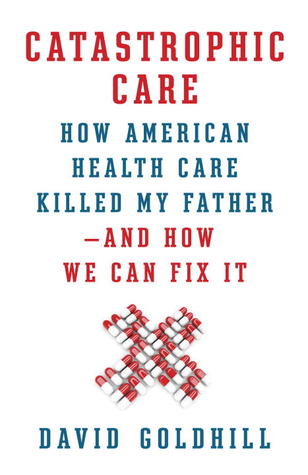
Catastrophic CareI just finished reading David Goldhill’s excellent book Catastrophic Care: How American Health Care Killed My Father — and How We Can Fix It. I don’t say this often, but EVERYONE must read this book. MUST.

It’s important to note that Goldhill is a Democrat and a liberal, as he states in the book. He wants everyone to have access to health care, at reasonable prices for them. But even he is clear that the American health care system as it has evolved over the past 40 years or so is broken and that having our government step in and use the current messed-up system to provide more care is not a viable solution. Indeed, the costs of this bloated, convoluted system are already at levels that can’t possibly be sustained, and as time goes on, the whole system will hit a critical level at which it can no longer function, and no one will receive adequate care.

There are a lot of problems going on. One is that we’re already getting poor care from the system; hundreds of thousands of Americans die every year from medical errors. Most of us have cause to complain about our insurance or health care (which are not synonymous but which are essentially tied together in a sick, symbiotic beast), but we feel helpless to DO anything about it. Goldhill writes that the problem there is that we as patients are simply not the consumers/customers of the business of health care: the insurance providers are. The system itself has pushed us out of the loop so we feel we can’t demand better care or prices.

Goldhill makes his case very clearly and simply and walks readers through how we got where we are today; read my review of the book for more information, but then read the whole book to really get the idea. That background of health care/insurance’s history then allows us to understand why the government “fixes” are just going to make the problems even bigger and worse. By the end, Goldhill even comes up with his own plans for making health care available and affordable to everyone in this country, even for rare and costly illnesses.

I can’t emphasize enough that we as consumers and patients and citizens of this country need to get better informed and then act to change the situation. Only if we all urge our political leaders to make an overhaul — and then prepare ourselves to take more responsibility on ourselves as consumers — will the system change and be something that will give us better care, prices, and customer service. Unfortunately, it may well take a terrible catastrophe or crisis (not too far off in the future) before we decide to act. I only wish we could act before that happens.

Sometimes a movie is better than the book

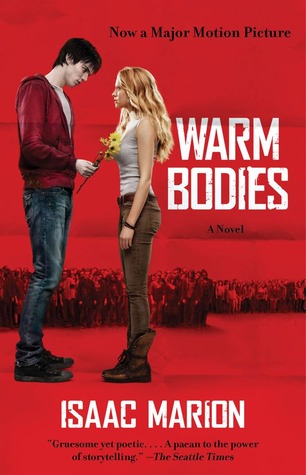
Warm BodiesSo I recently read Warm Bodies by Isaac Marion, after I’d seen the movie — twice (my teen daughter and I went to see it and then I took my husband for a date night too, since I’d ascertained he’d enjoy it). I was so thoroughly charmed by the movie, by the sweetness of the characters and the love story and the really clever witticisms sprinkled throughout that I was happy to see it in the theater twice. It was particularly a welcome good movie in the midst of what’s usually a film wasteland in January/February.

Naturally, as an avid reader, I had to check out the book. I downloaded it on my Kindle and set to it. I was dismayed primarily to find that there was A LOT of language in it (about 40 f-words: yikes!). But I also found it was a bit harsher and less “innocent” than the movie: the characters were more jaded, the dad really wasn’t a good guy even underneath his protect-everybody toughness, and it just didn’t have quite the level of sweetness and charm that I loved about the movie. Now, some people might find that welcome; I didn’t.

I can only think of one instance in which a movie was better than the book: the horribly cloying, simplistic and poorly written Bridges of Madison County was much better in film version, at least with two talented actors. I might be able to say the same for a couple of Nicholas Sparks movies, which weren’t too bad considering I really dislike his writing (I’ve already mentioned THAT).

I have yet to see “Beautiful Creatures,” but I’m guessing I may very well enjoy the movie better than the book, because I didn’t think the book was great. The supposedly intense love story lacked the sizzle and zing it should have had, and the details of the plot didn’t always come clear as they should. With the acting talent in the movie, I’m thinking it’ll be more enjoyable than the book was. But that’s just a guess.

So I’m going to be eagerly awaiting the DVD release of “Warm Bodies,” whereas I won’t be rereading the book.

Drooling over books

Books are just as appealing to me as food. I’ve come to realize that sometimes my eyes are bigger than my stomach, but it’s also true that my eyes can be bigger than the hours in my day allotted to reading.

Books, glorious booksFor one thing, right now I have a huge stack of books that must be read in a mere two weeks or so. It just so happened I had requested a number of new books through my library system, and I got a few at once, and then I requested a few to review for the Sacramento Book Review, and I was granted all four of my “wishes.” So within a few days, I had a stack from the library sitting on my hallway countertop, as well as a stack that arrived in the mail. And I won’t be able to renew the books from the library past their three-week due date because other people will have requested them, and there’s a deadline for me to review the books for the book review. So… whoa! I have a WHOLE LOT of words to consume within a pretty short time.

I also noticed recently that I tend to enjoy just looking at Goodreads and other book sites or blogs. Just reading the reviews of books readers I trust have enjoyed makes me eager to read the books, too. On they go to my to-read shelf on Goodreads. What happens, though, is that I keep adding books, and even if I read like crazy, the to-read list piles up and doesn’t ever decrease. That shelf now has 389 books on it. Yep, I’ll just get through those this year. Ha! NOT!

There’s kind of this new term now that anything people enjoy looking at online is ____ “porn.” There are beautiful websites devoted to recipes (with lots of gorgeous photos of the final products and the processes involved) and food. So one can peruse those and literally drool and Pin them in hopes of re-creating them at home. That’s “food porn,” and it’s really popular (oh, yeah, Pinterest, you know you’ve contributed to that “problem”). Then there’s “home decor porn,” and there are lots of websites  devoted to showing how to create the perfect styles of decoration at home, and probably two-thirds of those are aimed at doing that beautifully on a budget. And there’s “clothes porn,” where you can look at all the fashions out there that look so cute. Me, I don’t get too hooked on those kinds of sites. I find them useful every so often, but I don’t spend hours just looking and dreaming and drooling. No, I like “book porn.” Look at that new cover! Look — there’s a new title by a fantastic author! Look — what an incredibly clever and original premise! I click away, adding the books to my to-read shelf. And it’s piling up with options for me to read, which I’ll never have time to get to. Still, I surf and I savor. What? Is there something dripping down from the side of my mouth?

Don’t want that to warp the pages of my great new read.

My top books of 2012

Since 2012 is winding down very quickly, I thought I would jump on the bandwagon of “top of the year” lists with my top reads this year. Most are books that were also published this year. I’m not making it a top 10, just a top whatever. (I don’t want to give a couple of extra books kudos they don’t necessarily deserve just to make it an even 10. So there!)

So here goes:

  1. outlanderThe Outlander series by Diana Gabaldon. (This is actually the only entry on this list that wasn’t published this year.) Another blogger mentioned these books, and I decided to try them out. I got hooked just as thoroughly as many other readers. Normally, I would say they’re too long and full of far too much detail, but the characters and the interesting premise kept me reading. I read four, dying to know what would happen next, and then did get slowed down in the fifth, (finally coming to a point that I felt I knew enough about what had happened to them) so I’ve put it aside in favor of other books. The only downside is the sex: there’s a lot and it’s described in a lot of detail. 
  2. Goodbye for Now, by Laurie Frankel. I just read this book and found it utterly charming and funny at turns and at other times sweetly poignant and heartbreaking. Frankel describes so perfectly how it feels to lose someone you love dearly. She balances grief and new love all in one lovely book that made me both cry and laugh out loud. Plus, it has a very clever premise.
  3. EdenbrookeEdenbrooke, by Julianne Donaldson. The first in a new “series” of books called “proper romances,” this book takes readers into Regency England and brings it to life with a sweet, clean romance almost as well as Austen herself. A really fine work that aspires to grand heights of Jane-dom and doesn’t disappoint.
  4. The Secret Keeper, by Kate Morton. I’ve become a Morton fan over the past few years she’s been writing her Gothic stories full of family secrets, and this newest novel just cemented my fanaticism. Always a pleasure.
  5. On the note of further books by authors I’ve come to appreciate is also the latest middle-grade book by Rebecca Stead, Liar & Spy. She was rightly awarded a Newbery for her fantastic book When You Reach Me (the plot revolves around A Wrinkle in Time: she got my attention right away), and this newest, though not so cleverly plotted, was still poignant in just the right dose and a charming read for young readers and adults alike.
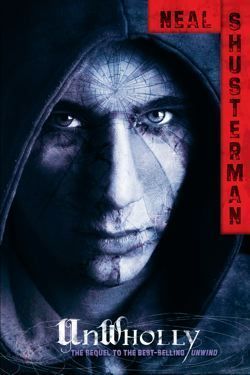
  6. Then there are the books that came next in series that lived up to the hype of the previous books. First, there’s UnWholly, an unexpected sequel to Unwind, a YA book with an incredibly thought-provoking premise that was packed with action to boot. I’ve already written in detail about these books, so just click here to read that post.
  7. Pandemonium was a great sequel to Delirium, another YA dystopian series, in which society has decided that love is a disease that can be eradicated. I thought that the sequel was just as entertaining and interesting as the first book, perhaps even better. I am now chomping at the bit to read the conclusion.
  8. Clockwork-PrinceClockwork Prince was one of two new books this year by Cassandra Clare. It was the second in her Infernal Devices series, and I enjoyed it even more than the first in the series, and definitely more than the fifth book in her Mortal Instruments series, City of Lost Souls, which was really disappointing. I love her combination of hot romance, supernatural demon-fighters, and wit. I just wish someone had made her take some time to make City of Lost Souls better. I hope that the last in the Infernal Devices series doesn’t disappoint.

Parents’ and schools’ responsibility to young readers

So I received an email through my Rated Reads site, asking me for guidance on resources that can provide information about content in books for younger readers. It got me thinking again about the place for parental involvement and potential restrictions on books for elementary-school students. I suppose I’m a little late to the game in terms of this topic because Banned Books Week was over a month ago, but here goes anyway.

Before I say anything else, I’d like to make clear that I am against “censorship” in general (let me restrict this discussion purely to books). That entails actually suppressing and forbidding the viewing or use of particular passages or entire books. It’s not my place to decide what kind of content should be completely forbidden, and it just sets a bad precedent. I wouldn’t want someone else to have the power to forbid what is viewable by me or my family members.

So while I am against forbidding things entirely to most readers, parents and educators do have a responsibility to young children to make sure they read material that is appropriate for them. Even then, I hesitate to ban books entirely because, while I wouldn’t want a child getting hold of soft porn, for example, I wouldn’t agree with those people who were eager to ban Harry Potter because of its theme of magic.

What I am a proponent of is information. That’s why I started Rated Reads, a modest effort though it is. But at least it’s something. We have nearly 1,000 books featured with content ratings and moderately detailed paragraphs explaining what kind of potentially objectionable content is in each book. I firmly believe that each reader and, in the case of children, each parent should be able to have resources to find information that will allow him or her to make a decision.

I would like to think that books that are selected for a children’s library are going to be appropriate for young readers and acceptable to most parents, both in thematic content and possible sex, violence, or bad language. But young readers who are ready for young adult books, for instance, deserve to not be shocked by what they read or to have their parents be shocked. There are a lot of great young adult books that are fine for younger readers, that don’t have strong language or detailed violence or sex scenes. But there are just as many that I wouldn’t want my younger kids reading.

Since elementary schools generally have limited space, I think it would be wisest to select books that will be most age appropriate and least objectionable to parents. But at the same time, there may be a few YA books that would be great reads, in terms of stimulating thought on various topics, that might be nice picks for those libraries. And some of those might have some violence or other scenes that could be objectionable to parents or their kids. In these cases, it seems it would be particularly smart for everyone to include a kind of electronic ping with further information for the student and her parent when it comes to checkout time. This would allow parents to give a yea or nay to their child reading that book; a note could be sent home before the book is approved for checkout, providing details about why that book could be a poor choice, including themes, sex, violence, and language.

Now there are going to be some parents who are very careful about using this system, saying no to some books and yes to others based on their consideration of the information provided; there are definitely going to be other parents who simply won’t care. And that is their business. If I were that child’s teacher, or a fellow parent, I might not agree with those parents’ decision, but it wouldn’t be my responsibility to override or actively disagree in some other way. As long as a parent hasn’t been declared unfit, it is his or her responsibility to make decisions regarding his child, and that needs to be respected.

But there is no doubt in my mind that more information should be available so readers and parents of readers can make more informed decisions. I don’t think it’s always possible or practical for a parent to read every book a child would like to read, becoming the child’s first reader. We just need more information. Again, that’s why I’m doing Rated Reads. But I’d love to see more coming direct from publishers or something similar (I suppose that’s kind of another topic, but in brief, I don’t see why it would be so hard for the editor to include a brief description that states how much language or sex or violence is in it…). There’s simply not enough information available about most books.

So. What are your thoughts? Do schools sometimes need to be more cautious about what they choose to stock in their elementary libraries? Do parents need more information, and how should it be provided? And what about junior highs/middle schools and high schools?

Strong language in books: not so common as one might think

After addressing my great discomfort with the number of strong and vulgar language in J.K. Rowling’s first book for adults, The Casual Vacancy, I looked at other bloggers’ reviews on the book, and I was perhaps a tiny bit surprised that few expressed any frustration with that issue. Several that I commented on basically did respond that they thought that the really, really frequent use of harsh language felt “authentic” to them.

So I decided to do a little analysis of how frequently the f-word, for instance, pops up in popular books to see just how much use readers are “used to” or tolerate.

My ratings website, Rated Reads, features nearly 1,000 reviews of a variety of fiction, nonfiction, and young adult books. Of those, only about 175 are rated “high” and a few are rated “DIRT” (for “don’t invest reading time” — not because of the quality of the writing, but just because of the offensive content). I thought that it would be interesting to see how many uses of the f-word tend to be used among those books my reviewers and I have already rated “high,” which means in terms of language, more than five or six uses of the f-word.

Here’s the breakdown: 17 of the “high” ratings have no use of strong language (they’re rated high for detailed sexual content); 91 have between 6 and about 15; 31 have between 20 and 40 uses of the f-word; and only 15 have more than 50 uses of that strong word (or the very rare c-word).

My conclusion? Writers of the most “popular” or “critically acclaimed” books, which are sampled fairly well on Rated Reads, don’t tend to use the f-word much more than 15 times. Only a very few use it very liberally, 50 times or more.

Which is why J.K. Rowling’s book for adults seemed so outrageous to me: she must use the f-word 100 times or so (and the c-word at least once), not to mention a liberal use all the other “milder” language. That puts The Casual Vacancy into a very small group: only about 1 percent of books, according to my sample of about 1,000 books, use strong language that casually.

It brings me back to wondering why authors use strong language. Readers who “defend” the liberal use of harsh language say it’s because the authors are being “authentic.” Especially when it comes to high school-age kids, they say, that kind of language is used all the time. I don’t argue that notion. It’s true that one can hear a lot of bad stuff in a school hallway. And then there are different groups in society that tend to use that kind of language very frequently and without any thought for what it says about them. But if most authors would hope to be “authentic,” then why do so few actually use that kind of strong language very often? In a book of 300 to 500 pages, my “most common” group of usages of the f-word only feature about 6 to 15 uses of it. That’s actually not too “true to life,” one could argue.

In fact, a lot of the books that readers really love don’t have any use of the f-word, or very limited use of it. It would seem that those authors, who write well and with large followings, don’t feel a need to use “authentic” language. Hm.

Most of the books out there that are really entertaining or thought-provoking, that open a window into other worlds of all sorts, succeed at transporting us as readers, making us think and experience other places and groups of people, and do the job we want them to do — most of the time without using really harsh language (even if the characters, places, and situations might genuinely call for that kind of language if they were to be completely “authentic”). Are most of us complaining that they don’t use more authentic language? No. But when an author does use a lot of bad language in the service of being authentic, people just say, “Well, that was authentic.” Where’s the outrage here? If only a small percentage of writers (in this case less than 1 percent) really go for it and use tons of vulgarity, why don’t they stand out from the crowd that doesn’t write with tons of that trash?

I’ll let you all ponder on these facts and draw some of your own conclusions. Then comment and let me know what you think.

All I want to say to conclude is that in real life, yes, there is plenty of “authentic” rampant use of vulgarity and harsh language. I hear it sometimes, and I heard it when I was in school. My high-schooler hears it at her school. But given the choice, we both try to avoid it as much as we can, because regardless of what we’re “forced” to hear, we still don’t like it, and we haven’t “gotten used” to it. I avoid the groups of people and places where I would be likely to hear that kind of abuse of the English language, and likewise, I try to avoid books and movies that contain that language. I don’t HAVE to read or watch those books or movies or TV programs. I have a choice. And I choose to stay away from them.

‘Casual Vacancy’ left me feeling empty

Given how gifted a writer J.K. Rowling proved herself to be as she gave readers the amazing series of Harry Potter, I couldn’t help but be excited about her writing a new book. I knew it would in no way compare to Harry Potter, but I thought that there was no way she could craft a bomb.

Well, less than 30 pages in to The Casual Vacancy, I was forced to stop reading. I’ll never know if the book is a worthy effort in terms of plot or writing style because it’s just jam-packed with vulgarity, and I refuse to read any more. I very rarely put down a book after getting started simply because it’s laced with profanity and other offensive content, but this was one of those times. I am SO disappointed. I am particularly disenchanted with Jo Rowling. From what I read in the first bit and then just after flipping through the book and stopping on random pages, I am inclined to estimate that there must be a hundred uses of the f-word (the rarely used c-word is even in the first bit that I read). Or even more. I just don’t care to read more to find out exactly how many. What’s the point?

I’ve already written about my aversion to vulgarity in books and that I don’t see a need for them to show “authenticity.” There’s just no reason for that. I know that there are people out there who disagree with me, but I am also fairly sure that quite a few readers really don’t want to read a book that contains 100 uses of the f-word.

Jo, just because this is your first book for adults doesn’t mean that it has to be “adult.” You could have written a fine book without all of that trash. I know that it doesn’t really matter to you how many copies you sell, at least financially, since you’re already set for about a hundred lifetimes. But does it matter to you that many of your loyal readers are now disappointed and disgusted by your choice to make this so full of vulgarity? I hope it does. I hope that next time you write a book you choose to make it “cleaner.” It doesn’t have to be squeaky-clean, and it doesn’t have to be appropriate for young readers, (even though that would be nice, considering the fact that some younger readers will likely try to read your adult novels even though they’re clearly “for adults”) but it would be nice if it were more accessible for everyone.

Review and thoughts on ‘UnWholly’ and ‘Unwind’

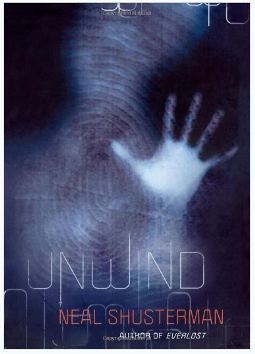
Although I write book reviews on my review website, Rated Reads, sometimes I’d just like to take a little time to write extra about the books I’ve read and put them in context in other ways. After reading Neal Shusterman’s UnWholly, the sequel to his young adult book Unwind, I find myself having to wax eloquent and enthusiastic about this series.

In brief, Unwind introduces a future in which there has been a war between pro-choice advocates and pro-lifers. It is ended when the two sides come to an agreement in which abortions are outlawed, but teens may be “retroactively aborted” or “unwound” by essentially donating their organs and ALL of their body parts. Whoa! What a concept! I love to read books that have compelling, original premises, and it thrills me when the authors are skilled enough to be able to execute those ideas perfectly. Neal Shusterman has written quite a few other young adult books, including the popular and well-regarded Skinjacker Trilogy (which I have yet to read but have heard good things about), and he also writes screenplays. So he was the right man for this job, with experience and skill.

I was introduced to Unwind by a friend, who had our book club read it, and it was a great book to use for that purpose: it’s interesting and fairly easy to read, but it is so thought-provoking that it provides plenty of material for discussion. UnWholly continues the series very well, keeping up a fast pace filled with action, and introducing new characters and new ideas that are ripe for dissection. What’s particularly interesting to me is that Shusterman doesn’t seem to have a clear “agenda” in that he’s obviously pro-life or pro-choice; he allows readers to just think about all the issues and ramifications of the choices that have been made by those two groups and society as a whole in this imagined future.

What’s nice is that Shusterman also chooses not to fill the books with bad language, vulgarity, sexual content or gore, which plenty of writers out there would certainly be tempted to do to give it “authenticity” (I’ve already discussed my feelings about THAT). There is occasional bad language and some violence, but it’s not too detailed or gross, just enough to get the point across and move along the action and plot. Good going, Neal!

This series is great for teens and adults alike, for entertainment and for the seeds of a good discussion about a variety of moral and ethical issues. Honestly, I think this trumps The Hunger Games for a few reasons and should get more attention because of that: it’s just as action-filled, compelling, and exciting, great for guys to read as well as girls (’cause honestly, there aren’t necessarily as many popular books out there geared towards teen males as there are toward female readers), but it has more elements that give food for thought. Hunger Games makes one think about the excesses of government and the concept of reality shows gone too far, but after that, it is just a good story. But Unwind and UnWholly continue to provide topics for discussion and pondering as the stories go forward, not just giving pause for thought with their premises. I’d definitely recommend this series for anyone who loved Hunger Games.

Review and thoughts on ‘Heaven Is Here’

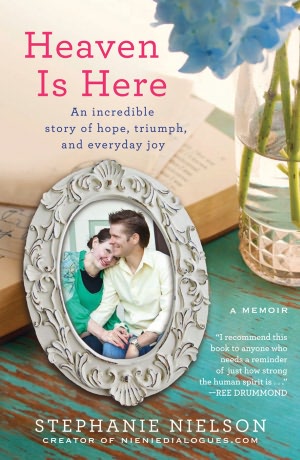
It’s funny; I simply don’t read a ton of “inspirational” books; I do read memoirs and biographies on occasion as part of the wide mix of things I do like to read. But I don’t read a lot that’s really intended as inspirational, except for some official religious/church books, which I consider more reading for spiritual/religious purposes. So it was a little unusual for me to decide to read popular blogger Stephanie Nielson’s Heaven Is Here. And the main reason I did read it is I wanted to include it as part of my overall research into the topic of beauty and self-image, which I blog about sometimes here; in this case, I was curious to see what she had to say about how she felt about her appearance after a horrific plane crash that burned 80% of the skin on her body.

It’s also an interesting and different experience reading a book by a Mormon written for a general audience. As a member of The Church of Jesus Christ of Latter-day Saints myself, I’m very used to the Mormon culture and way of talking and thinking about things, and I’m used to listening to speakers and reading books by Mormons aimed at other Mormons. But it’s rarer to read something one of “my own” has written that will be read mostly by people who aren’t familiar with some of our terminology, beliefs, and culture.

That said, it was such a fascinating experience reading this book. It actually elicited all kinds of interesting feelings and reactions as I went along. I will admit that we Mormons tend to have some interesting cultural quirks that may seem unusual to others; we marry young, for instance, typically after very short courtships, and have more children than the average. Some of our cultural quirks are particularly pronounced in the state of Utah and a few other pockets of concentrated Mormon population (note: I’m not a “Utah Mormon”: I grew up East of the Mississippi and only lived in Utah when I went to Brigham Young University). So it wasn’t surprising to me to read that Stephanie married at 19 after less than a year of knowing Christian Nielson. Or that she started having babies right away. Or that she was just thrilled at that young age to just get started with being a stay-at-home mom. At the same time, even though it was familiar territory, it was still different from what I chose to do (marry at 23, get a college degree, have first child at 26, work part-time off and on and freelance while raising kids). And there’s still just enough of cultural expectations and a kind of cultural divide that those (what outsiders may consider slight) differences just kind of grate a little somehow sometimes.

Nielson starts with telling about her very large, happy and tight-knit family in Utah and her fairy-tale courtship with Christian. She lays the groundwork of her happy, idyllic life before she moves on to the plane crash that changed it all — well, temporarily. No matter how you look at it, not everyone (well, rarely anyone) has that kind of idyllic upbringing, love story or marriage. And that’s OK. Even in our church, unmarried young people and adults are reminded not to expect an “easy” and “obvious” courtship that leads to marriage. Sometimes it is not clear if the person you’re dating is “the right one” (itself a myth). You mostly have to make sure you date good people and then choose wisely, marrying someone who has solid good qualities and should make a good partner. The answer is rarely written in the stars or with fireworks. And most of us know that idyllic families happen far less often than we’d like. (We can’t change our own upbringings, let’s just say, but we can do the best we can to provide our own children with solid, happy homes.) So reading about Nielson’s happy-happy-happy life can honestly make one feel a little over-sugared.

But knowing going into the book what Nielson is going to experience makes that early part of the book palatable — it’s all too clear that she’s going to need every ounce of strength, idyllic family support system, and reserves of happiness and faith that she has stored up to be able to survive the ordeal that she does go through. Heaven Is Here doesn’t necessarily provide many details of the plane crash or the injuries she sustained, but it definitely shares the emotions she went through after the crash — the story is no longer idyllic. Nielson is painfully honest about her fears, her anxiety, and the many scary feelings she experienced in the months after she woke up from the 10-week medically-induced coma in which she stayed shielded from unbearable pain. She had support from family, but she often felt alone, and she wanted to shield herself from even many of her own loved ones and friends. She was scared of how people would react to her, how she looked, how she felt, how her life would never be the same. She was scared of having to face a new life, one that stood in stark contrast to her “before-crash” idyllic one. The bulk of the book, then, allows us to see inside her mind and heart, as she struggles and wants to stay in a cocoon but finally knows she must gradually burst free and move forward, as difficult as it will be.

As much as I felt some reservations and knee-jerk reactions to her pre-crash account of life, I couldn’t help but be tremendously moved and, yes, inspired, by how she lived after that crash. I loved her honesty about all of the moments she had that were not supposedly inspirational. Because that’s what lent reality and depth to all that was truly uplifting. It felt authentic. She was able to do what she’d set out to do: give hope to readers and show that life is beautiful, particularly when filled with love. And a perfect body or perfect face has little to do with that. For all that, I was grateful to have read her story.