I triumphantly announced a couple of days ago that I’d managed to check a couple of major items off my to-do list. Rather than being excited for me, my husband countered, “Well, are you going to add any more things onto the list?” Sadly, he knows me all too well.
I am a type-A personality, capital A. I have always been goal-oriented, planning and working for the future. That personality served me well in school, leading me to be valedictorian of my high school class and earn a full-tuition scholarship to my desired university. Since then, it’s not been quite as useful, at least in day-to-day life. In fact, it’s probably downright detrimental when raising children. ‘Cause honestly, it’s pretty difficult to get things done efficiently when the house is full of children. They do not care that I have a list of things to do. Their raison d’etre is to prevent me from doing anything for myself, having any quiet time, or reaching goals.
Even so, I don’t know any different way of doing things, so I forge through every day with kids, taking care of them and squeezing in my goals and to-do’s and trying to think straight in the moments they’re not asking me for something. It’s like swimming upstream in molasses. But since I am so programmed to check things off a list, I just keep swimming, regardless of how thick the water is.
So making resolutions at the beginning of a calendar year is completely pointless. One, I make goals (aka resolutions) every single day. I simply CAN’T HELP MYSELF! Two, I’m already so busy with the goals I’ve already set for myself that coming up with new ones simply because it’s January means I don’t have time to work on the new ones; I barely have time for the old ones.
Therefore, I am resolving to not make any more goals, at least until I’m caught up on the lists that are scribbled on scratch paper on my desk, on the yellow sticky-note program on my computer desktop, and the ones that just crowd my head. Perhaps I can demote myself from a capital-A type-A personality to a lowercase-a. We’ll see. That’s the most grandiose resolution I’ve ever considered.
After a horrific mass shooting that took the lives of primarily young children, many people’s thoughts turned to the inevitable questions of “why” and “how.” I also noticed, unsurprisingly, many people discussing in social media and analysts addressing on news outlets the issue of gun control. I’ll save my opinions on that topic and address what actually came to my mind immediately after or right before the gun issue: mental health in America.
I read a fine article by a psychiatrist on CNN that was written after school shootings in Ohio, and he made some fine points about major mental illness and how it is handled here in the U.S. He briefly alluded to the changes that occurred in mental health care in the past decades. Basically, people with serious issues were once confined for life to institutions, usually far from home and their families. In trying to change this system, many of these institutions were closed and their inmates sent home for treatment. While this was certainly a more compassionate and family-centered way of helping, it created many holes in the care of those with serious problems.
I want to tread carefully here. As with so many other issues, this is a complex one, with many facets that need to be considered and weighed. I suppose I should backtrack a bit and talk about why mental illness came to mind after these latest shootings: honestly, with most of these events, it is discovered during investigation that the shooter had major problems. Often, these mental problems were insufficiently addressed. I do believe that evil exists and that crimes are committed by evil people and those who are extremely selfish to the point of disregard for others’ lives. But I also have seen in the news just how often these kinds of horrific crimes are committed by people who have major mental illnesses. This isn’t to say that mental illness can’t overlap with evil, but people with mental illness can do some horrible things while basically not in possession of their “right minds.” This is why we have an “insanity defense” in our legal system, and for good reason. Those who truly experience times they are essentially just not themselves or their minds are completely not their own, once treated with medication and therapy, can experience horrible grief and remorse at what they did while under that “alternate influence,” one could say. My heart goes out to not just their victims but themselves because of what they have to live with.
Our society is still not nearly where it could be in not just treating and caring for the mentally ill, but in just understanding it and accepting it as another illness that some encounter in the course of life. I’ve often said it would be a lot easier for others to understand what I go through if I just had diabetes or cancer or something more “straightforward” or strictly “physiological,” rather than something that affects the mind. Too many people simply don’t appreciate what it’s like to experience mental issues, and too many just write them off as something kind of made-up or “all in our head” (that one’s a bit ironic). That creates a society in which those with mental illness don’t really care to admit to themselves that they have problems that could improve with proper treatment, and in which there just isn’t enough support and help for them among the general population and in health care or other parts of society. All too often, those with mental illness fall through the cracks, even more than those with other more “understandable” illnesses (heart disease, diabetes, what have you) don’t get sufficient treatment if they can’t afford it, etc.
I don’t want to see our country go back to institutionalizing everyone with major mental issues far away from society, away from their families and support systems. But I am positive that we need more real help locally, and more firm but compassionate laws that would help those who might be a danger to themselves or others. It just seems that so many who commit crimes that become publicized were schizophrenic or bipolar and weren’t taking medication at the time of the crime. And yes, in these diseases, even those who are receiving care tend to want to quit taking their meds. I hate to say that we should force medication on these people, but sometimes that seems to be one of the best ways to prevent these kinds of crimes. How we do that or at least make tighter regulations on this is, yes, complex and needs to be carefully considered and applied.
My church congregation experienced our own violent crime a mere two years ago, in which a man came into our church building after services and ended up shooting and killing our bishop. It was a horrific tragedy, and one that again showed that these kinds of things can happen anywhere, even safe places like schools and churches. We were all comforted by our faith and pulled together in this event, but it left its mark. And yes, the shooter ended up forcing a confrontation with the police in which he was killed by them, and I’m fairly confident that was his aim, to end up dead. And yes, he had mental illness for which he wasn’t taking medication at the time.
We don’t yet know if this latest mass shooting was tied to a shooter with mental illness. But I’m willing to bet it will be. And while we can rightly discuss gun control, we as a society and government would be very misguided to skip over a well-needed discussion about mental illness in America. This protester may have been addressing guns, but let’s please, please, please apply this to mental illness as well. The fate of more people hangs in the balance.
So I received an email through my Rated Reads site, asking me for guidance on resources that can provide information about content in books for younger readers. It got me thinking again about the place for parental involvement and potential restrictions on books for elementary-school students. I suppose I’m a little late to the game in terms of this topic because Banned Books Week was over a month ago, but here goes anyway.
Before I say anything else, I’d like to make clear that I am against “censorship” in general (let me restrict this discussion purely to books). That entails actually suppressing and forbidding the viewing or use of particular passages or entire books. It’s not my place to decide what kind of content should be completely forbidden, and it just sets a bad precedent. I wouldn’t want someone else to have the power to forbid what is viewable by me or my family members.
So while I am against forbidding things entirely to most readers, parents and educators do have a responsibility to young children to make sure they read material that is appropriate for them. Even then, I hesitate to ban books entirely because, while I wouldn’t want a child getting hold of soft porn, for example, I wouldn’t agree with those people who were eager to ban Harry Potter because of its theme of magic.
What I am a proponent of is information. That’s why I started Rated Reads, a modest effort though it is. But at least it’s something. We have nearly 1,000 books featured with content ratings and moderately detailed paragraphs explaining what kind of potentially objectionable content is in each book. I firmly believe that each reader and, in the case of children, each parent should be able to have resources to find information that will allow him or her to make a decision.
I would like to think that books that are selected for a children’s library are going to be appropriate for young readers and acceptable to most parents, both in thematic content and possible sex, violence, or bad language. But young readers who are ready for young adult books, for instance, deserve to not be shocked by what they read or to have their parents be shocked. There are a lot of great young adult books that are fine for younger readers, that don’t have strong language or detailed violence or sex scenes. But there are just as many that I wouldn’t want my younger kids reading.
Since elementary schools generally have limited space, I think it would be wisest to select books that will be most age appropriate and least objectionable to parents. But at the same time, there may be a few YA books that would be great reads, in terms of stimulating thought on various topics, that might be nice picks for those libraries. And some of those might have some violence or other scenes that could be objectionable to parents or their kids. In these cases, it seems it would be particularly smart for everyone to include a kind of electronic ping with further information for the student and her parent when it comes to checkout time. This would allow parents to give a yea or nay to their child reading that book; a note could be sent home before the book is approved for checkout, providing details about why that book could be a poor choice, including themes, sex, violence, and language.
Now there are going to be some parents who are very careful about using this system, saying no to some books and yes to others based on their consideration of the information provided; there are definitely going to be other parents who simply won’t care. And that is their business. If I were that child’s teacher, or a fellow parent, I might not agree with those parents’ decision, but it wouldn’t be my responsibility to override or actively disagree in some other way. As long as a parent hasn’t been declared unfit, it is his or her responsibility to make decisions regarding his child, and that needs to be respected.
But there is no doubt in my mind that more information should be available so readers and parents of readers can make more informed decisions. I don’t think it’s always possible or practical for a parent to read every book a child would like to read, becoming the child’s first reader. We just need more information. Again, that’s why I’m doing Rated Reads. But I’d love to see more coming direct from publishers or something similar (I suppose that’s kind of another topic, but in brief, I don’t see why it would be so hard for the editor to include a brief description that states how much language or sex or violence is in it…). There’s simply not enough information available about most books.
So. What are your thoughts? Do schools sometimes need to be more cautious about what they choose to stock in their elementary libraries? Do parents need more information, and how should it be provided? And what about junior highs/middle schools and high schools?
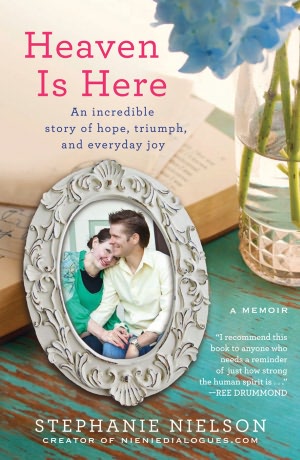
It’s funny; I simply don’t read a ton of “inspirational” books; I do read memoirs and biographies on occasion as part of the wide mix of things I do like to read. But I don’t read a lot that’s really intended as inspirational, except for some official religious/church books, which I consider more reading for spiritual/religious purposes. So it was a little unusual for me to decide to read popular blogger Stephanie Nielson’s Heaven Is Here. And the main reason I did read it is I wanted to include it as part of my overall research into the topic of beauty and self-image, which I blog about sometimes here; in this case, I was curious to see what she had to say about how she felt about her appearance after a horrific plane crash that burned 80% of the skin on her body.
It’s also an interesting and different experience reading a book by a Mormon written for a general audience. As a member of The Church of Jesus Christ of Latter-day Saints myself, I’m very used to the Mormon culture and way of talking and thinking about things, and I’m used to listening to speakers and reading books by Mormons aimed at other Mormons. But it’s rarer to read something one of “my own” has written that will be read mostly by people who aren’t familiar with some of our terminology, beliefs, and culture.
That said, it was such a fascinating experience reading this book. It actually elicited all kinds of interesting feelings and reactions as I went along. I will admit that we Mormons tend to have some interesting cultural quirks that may seem unusual to others; we marry young, for instance, typically after very short courtships, and have more children than the average. Some of our cultural quirks are particularly pronounced in the state of Utah and a few other pockets of concentrated Mormon population (note: I’m not a “Utah Mormon”: I grew up East of the Mississippi and only lived in Utah when I went to Brigham Young University). So it wasn’t surprising to me to read that Stephanie married at 19 after less than a year of knowing Christian Nielson. Or that she started having babies right away. Or that she was just thrilled at that young age to just get started with being a stay-at-home mom. At the same time, even though it was familiar territory, it was still different from what I chose to do (marry at 23, get a college degree, have first child at 26, work part-time off and on and freelance while raising kids). And there’s still just enough of cultural expectations and a kind of cultural divide that those (what outsiders may consider slight) differences just kind of grate a little somehow sometimes.
Nielson starts with telling about her very large, happy and tight-knit family in Utah and her fairy-tale courtship with Christian. She lays the groundwork of her happy, idyllic life before she moves on to the plane crash that changed it all — well, temporarily. No matter how you look at it, not everyone (well, rarely anyone) has that kind of idyllic upbringing, love story or marriage. And that’s OK. Even in our church, unmarried young people and adults are reminded not to expect an “easy” and “obvious” courtship that leads to marriage. Sometimes it is not clear if the person you’re dating is “the right one” (itself a myth). You mostly have to make sure you date good people and then choose wisely, marrying someone who has solid good qualities and should make a good partner. The answer is rarely written in the stars or with fireworks. And most of us know that idyllic families happen far less often than we’d like. (We can’t change our own upbringings, let’s just say, but we can do the best we can to provide our own children with solid, happy homes.) So reading about Nielson’s happy-happy-happy life can honestly make one feel a little over-sugared.
But knowing going into the book what Nielson is going to experience makes that early part of the book palatable — it’s all too clear that she’s going to need every ounce of strength, idyllic family support system, and reserves of happiness and faith that she has stored up to be able to survive the ordeal that she does go through. Heaven Is Here doesn’t necessarily provide many details of the plane crash or the injuries she sustained, but it definitely shares the emotions she went through after the crash — the story is no longer idyllic. Nielson is painfully honest about her fears, her anxiety, and the many scary feelings she experienced in the months after she woke up from the 10-week medically-induced coma in which she stayed shielded from unbearable pain. She had support from family, but she often felt alone, and she wanted to shield herself from even many of her own loved ones and friends. She was scared of how people would react to her, how she looked, how she felt, how her life would never be the same. She was scared of having to face a new life, one that stood in stark contrast to her “before-crash” idyllic one. The bulk of the book, then, allows us to see inside her mind and heart, as she struggles and wants to stay in a cocoon but finally knows she must gradually burst free and move forward, as difficult as it will be.
As much as I felt some reservations and knee-jerk reactions to her pre-crash account of life, I couldn’t help but be tremendously moved and, yes, inspired, by how she lived after that crash. I loved her honesty about all of the moments she had that were not supposedly inspirational. Because that’s what lent reality and depth to all that was truly uplifting. It felt authentic. She was able to do what she’d set out to do: give hope to readers and show that life is beautiful, particularly when filled with love. And a perfect body or perfect face has little to do with that. For all that, I was grateful to have read her story.
Motherhood did not come naturally to me. Babysitting, on the rare occasions I consented to do it, was a rough job, one that wasn’t worth nearly the small pay I got to do it. So once I gave birth for the first time and was presented with a tiny little stranger, I was absolutely flummoxed about what to do with her. Even looking at pictures of me with that first child, I can see the confusion and nervousness in my eyes: “What now?” I was thinking.
And that first child gave me fits. She was a very demanding baby. She didn’t eat for half an hour and then settle down quietly for the next four hours. She snacked for ten minutes and then needed to eat again two hours later. She did NOT like to be put down. I had to hold her constantly. For someone who was pretty independent and used to going about my business, having the little seven-pound interloper in my arms nonstop made it pretty difficult to get anything done.
So that darling child did not ease me gently into motherhood. It was a bumpy ride, and I did not enjoy it. I was exhausted and overwhelmed and overloaded. I remember many times that first year thinking, “I can’t wait til I’m done having children and they grow up a bit.”
Time slowly went by, and I gave birth two more times and adopted once. I knew what I was doing the second and third times, and the second baby was just the most easygoing child ever. She would eat and then sit in her bouncy seat or car seat and smile beatifically up at me, doing whatever I needed to do. Third child was somewhere in between. But by then I had help: two older sisters to distract her (and one time push her off the couch…). Fourth baby was a breeze in many ways because I didn’t breast-feed her, so everyone else could take turns feeding her a bottle. And changing diapers. And holding and playing with her. It was so much more fun that time around to have a little baby. I enjoyed her.
They all went through the terrible twos and their early stages of independence and potty training. Those days are now behind me. My oldest is now 16, and the youngest 5. They’re now all in school. They can feed and dress themselves and read to themselves, except for the kindergartener. Yes, I am finally getting to that magic place I imagined when I had that first demanding baby. And it’s struck me that this time is finite. The oldest is now not a squalling infant; she’s a high school junior. And she is amazing. She’s delightful and smart and talented and beautiful and makes me laugh. She can talk my ear off about her day. We can share jokes together. She’s one of my dearest friends, and I am loving life with her in it. Now the day of her leaving the nest is actually in sight (less than two years!), and it’s paining my heart to even think about. I DON’T WANT HER TO LEAVE!
Ah, what a difference 15 or 16 years can make.
So I have realized that, despite the absolutely crazy, hectic pace of my daily life with four children in school and all the needs they have, these are the best of times. In a few years, one daughter will be gone, and the others will be making their way towards that direction as well. The clock is ticking. And at this stage of my life, it’s not a biological clock. It’s the clock reminding me with every tock and tick that while motherhood is permanent, having children at home is not. I bemoan the lack of peace and quiet and sufficient time to myself now, but even in the midst of this busy-ness, I can’t imagine my house being quiet all the time. I love knowing that I can cuddle and squeeze all of my girls any time, that I can talk to them, listen to them, just study their faces. That we can laugh together.
I’m going to keep reminding myself during the tough days or moments that these really are the best of times. It might take a loud reminder during those moments, but I hope I can somehow still remember and appreciate what I have now.
I’ve been thinking a bit lately about how Pinterest can be really useful, and also how it can be just another brick in the backpack full of guilt that moms carry around. I read a great column yesterday by another blogger and thought it was just along the same lines of what I’d been pondering. As Tiffany writes, “I have this real and palpable fear that on my deathbed, surrounded by my children, they will say something like this: ‘Yeah, you were a pretty good mom, but you never, you know, made us apple snacks in the shape of ladybugs.’” Isn’t THAT the truth!
Because as any Pinterest user knows, here’s the breakdown on boards: 25% of pins are recipes, 25% home decor, 15% crafts, 15% exercise and diet tips, 10% jokes and inspirational quotes, and 10% everything else. And the recipes and home decor ideas have their own breakdowns: recipes are maybe a quarter cutesy kid-oriented, as are the home decor and crafts. Recipes show these darling cupcakes and unbreakable kid plates festooned with hot dogs and spaghetti noodles or vegetables or fruits cut and meticulously fashioned into animal shapes.
And kids’ rooms? They’re filled with professionally painted wall scenes, organized and clever bunk-bed arrangements, or fairy-tale canopies and related frou-frou. Pinterest is now the haven for moms gone wild decorating and cooking fantastical items for their adored little ones, who have endless ideas for educational and fun projects they do with their preschoolers. I’m guessing they sleep three hours a night, don’t work outside of the home, and focus all their time and energies on their kids.
Sixteen years into this parenting gig, I have mostly made peace with the fact that I can only do so much for my kids and everyone else. I have to sleep; I have to write; I have to take some quiet time for myself. I definitely need to take time to be with my husband. Alone. I decided I wouldn’t put my girls into lots of lessons and keep them busy all the time; I wanted them to have plenty of free-play time to just imagine and create on their own. Since I love to read, I did take the time (and still do) to read to them. Since I like to cook and bake, and since I want all of us to be healthy and use our food budget wisely, I make almost all the meals we eat. We don’t do much take-out or restaurant eating (maybe a couple of times a month). I don’t tend to make the kids a fancy breakfast most school days, but I do make something nice on weekends and maybe throw some muffins in the oven on an evening for breakfast the next day (because I’m not baking at 6 a.m.).
What I don’t do are these time-consuming jobs: home decorating. To me, function comes before form, and almost everything (except the pictures of the family on the walls) is useful in some way. Shelves hold toys and books. I don’t decorate for every holiday; I don’t, for instance, go all-out for Easter or Halloween, including a candy-corn-shaped nightlight (for instance, which I have seen) as part of the hundreds of orange/black or faux-scary decorations in October. I don’t do a lot of crafts. I do sew maybe a couple of times a year when I get the urge or when one of the girls needs something in particular for school or something else. I typically make skirts or dresses. The sewing machine otherwise sits quietly in its closet, awaiting my next yearly burst of sewing energy. Particularly, I don’t combine the two by crafting cutesy decorations, particularly not for transient seasons. I am not going to take the time to swap out dozens of decorations every month. Nope.
And yes, I like to cook, but I am not going to spend any extra time making the food look kid-friendly. I never even called broccoli trees. The girls love it, but I didn’t have to give it a cute name so they would eat it. It keeps me busy enough making weekly dinners and then breakfasts and lunches during weekends or school breaks. I can’t imagine doing any more prep or finishing work. It exhausts me thinking about it.
I’ve been able to largely be satisfied with my strengths and be OK with not doing all the other stuff over the years. I’d visit friends occasionally and be impressed with their decorations or cute kid bedrooms, but it was easy to brush aside feeling inferior because those were brief forays outside of my own good-enough child-rearing sphere. But then Pinterest came along, and it reminds every single mom out there that pins just how much we’re not doing. Well, now I have to steel myself against feeling inferior every time I get on Pinterest to look for recipes or great ways to get out stains (or the occasional really good laugh). I think I should just put a permanent pin up on the corner of Pinterest that tells me, “Being a good mom doesn’t make crafts mandatory” or any other reminders of reality.
Yes, Pinterest has its usefulness and a place in my life. But I refuse to let it make me feel bad. It’s just another time for me to go to my happy place and chant “I am a good mom, I am a good mom” until I stop looking at boards for the day.
I’ve concluded that I’m not really much of the litigious sort. When I fell down and broke my foot on the DMV sidewalk, I didn’t immediately figure out some way I could sue the state. Whenever I get the little postcards or emails about class action lawsuits involving some company or other I have patronized, I don’t just jump on the bandwagon to “get mine.” Most of the time, those suits seem pretty petty, and I haven’t had any problems with those businesses.
But once in a while, my “sue-’em-for-all-they’ve-got” side gets incited. Yesterday, my husband told me about a story that got me fired up. And it even involves a family in a town near us. The short story is that a teenage boy with Down syndrome was refused access on one airplane and on another wasn’t allowed in first class (which his father had upgraded to), instead being forced to “the back of the plane.” The airline even kept other passengers away from the family, keeping two empty rows between the teen and his parents on the back row and the rest of the passengers.
WHAAAAAT??
Yep, my girl is a great traveler.
As some of you may know from reading my blog, I have a 14-year-old daughter with Down syndrome. I wrote a post about her on World Down Syndrome Day. I’ve also, incidentally, written about traveling with kids and how airlines have been making it more and more difficult. I am quite sure airlines would be very happy to only allow business travelers to fly with them. They’d make more money and have no delicate issues to deal with. But they still do allow everyone to travel, so for now they’re stuck with families and people with disabilities. SORRY, poor little airline businesses. Boo-hoo. So I know what it’s like to be a parent and have to fly with a posse of little ones. It can be tiring and annoying on the best of days and absolutely crazy-making on the worst. I have flown a number of times over the years with all my children, including my child with Down syndrome.
I have also been able to get to know lots of great families with children with Down’s over the years, and I know that parenting a child with DS can sometimes pose some extra challenges. But I have not found the kids I know with DS to generally have lots more behavioral issues than other kids. I know that mine doesn’t. She is extremely eager to help and listen to instructions, sometimes more so than her siblings, and is really well behaved. I’ve been blessed over these years of travel to have other passengers on airplanes gush over how well-behaved she and all my kids were (at the end of a flight).
So it just rankles me to hear that an airline and pilot had the nerve to discriminate against this young man. If people with Down’s really had a known history of having behavior problems, and if this young man had truly been extremely disruptive in the gate area, then maybe I could see their concern. But I know the first isn’t true, and it doesn’t sound as if the second is true.
Yep, if it were my daughter in this situation, I’d be out at my lawyer’s office at dawn the day we were back in town, chomping at the bit.
I hope this family does pursue the case, not to make money, but to raise awareness. I’m all about raising awareness about all kinds of things, and it’s just the principle of the thing. Someone who has a disability (and in this case, what I consider to be a fairly “minor” one) is and should always be protected under the law against this kind of knee-jerk reaction. From this mama bear to another, go out there and show ’em how great our DS kids can be!
The days are slowly getting shorter and just slightly cooler, school is back in session, and I have a little time to take stock of how my house is looking. So I’ve fallen this past week into “fall cleaning.” I started with the youngest girl’s bedroom, because I knew there were some toys and puzzles and such under her bed that I could sell or donate.
Naturally, the job turned into an hour and a half of sweaty work. Aided, I’m sure, by my second-oldest daughter, the youngest had a few huge squirrels’ nests of stuff stashed away in her room. The first I discovered was the most daunting and astonishing: a tall, empty box that had been used to ship a riding toy for my third daughter had been stored in the little one’s room (at her request, I believe, so she could play with it). I looked at it and noticed that there were some clothes and other things sticking out of the top. Turns out when I picked it up, the four-foot-tall box was completely filled. I tipped it over and dumped it and just about shrieked. Gaaahhh! I ended up pulling out all the storage containers from under the bed and all the containers off the shelves and having to pick one little item out of the nest at a time to restore it to its proper place. I ended up toting out a large bag of recycling and a small bag of trash and making a smallish pile of things to donate/sell at the consignment store. Afterwards, I felt great satisfaction in seeing the lovely, organized room.
Two of my daughters sort their own rooms, so I don’t generally have to spend any time in their rooms. I did help the 10-year-old get better organized in the spring, but she manages fine by herself usually. The 16-year-old likes to reorganize and sort as well. But that 14-year-old, well, my husband’s always called her “Mouse,” but I think that “Squirrel” would be a better nickname. Or maybe “Rat,” since she brings to mind Templeton’s ways, but that doesn’t sound very cute, does it? I have been putting off even looking in any of her storage containers because I know I’ll find all kinds of nests. Her room looks wonderfully neat as long as you don’t look INSIDE any of the under-bed or shelf containers. But take off those lids… AAAIIIIIEEEEE! It’s just better for me to practice a “don’t look, don’t scream” policy.
So here it is Labor Day, and as all mothers know, it’s not much of a holiday (unless you go on a vacation or trip of some kind, and even trips with children aren’t relaxing). The kids are home, sometimes a little bored. Me, I’m just putting them to work a bit in my fall cleaning sweep. And then we’ll go see a movie at the three-dollar theater. Happy holiday to us. I suppose it’s appropriate that my little squirrels and I are going to see a film about talking animals.
I ran into a friend in a Wal-Mart parking lot yesterday after dropping off my youngest at kindergarten. She asked how I liked the teacher, and we ended up launching into a fiery discussion about the schools. Issue after issue arose, and we resolved to get more involved and have a say by going to school board meetings.
This isn’t the first time the education of my little ones has caused me to rise up in righteous indignation. Before we moved to California, we lived in a small town in the South in which there were a number of problems with the school system in town. One big problem was that of “white flight,” quite honestly. Even though the town was maybe half and half whites and blacks, with a very small sprinkling of other minorities thrown in (which included our family since my husband is Filipino), a huge percentage of the students in the system were black. Now I had no problem with that at all except that things basically had split along economic lines. Many whites and the more educated and better-off-economically blacks had moved to different neighboring towns or the county (which all had separate school systems: don’t get me started on the craziness of that: what a waste of resources), and most families left behind were poor. Again, not a problem in terms of how I viewed them, but it definitely had an impact on the system and how things ran. Before I end up having to write a lengthy discourse on all the issues, let me just cut it short here by saying there were many issues, and I started going to school board meetings and speaking up. I didn’t want to just join in the “white flight”; I wanted to see if I could stay and make things better.
Needless to say, I realized that it was a fight I simply couldn’t fight alone. We ended up moving to California, where we found a great neighborhood to live in and in which the school setup is a much better one, with small neighborhood elementaries that seem to work well. But that doesn’t mean that all is great.
First off, the economy is bad. Like THAT’S a piece of news for everyone. But it certainly has affected our schools. In California, the economy and the schools have been hit particularly hard. What once was a wonderful, thriving system is now scraping by.
I could write a whole doctoral thesis on each of the facets of the larger issue here, but let me just say a few things as I see them.
First, there is no question that the breakdown of the nuclear family has contributed to the difficulties we face in schools today. Divorced and single parents have it harder in terms of trying to parent their kids and be available for them when it comes to schools. The economy has made it incredibly challenging as well. When every parent out there is working and no one is able to stay home even part-time, it makes it difficult to have the parental support needed for great education (volunteering, fund-raising, time just spent teaching children at home casually). Collapse of family structures has led to children not being taught or modeled all the things they need to help them be secure, (somewhat) well-behaved citizens of society. What has happened is that schools (and teachers) are now expected to teach young people EVERYTHING they need to know to be good members of our society. And that is impossible. Historically, families have nurtured and taught children, and schools have simply focused on making sure they know how to read, write, do math, know history and science. Now the schools have to teach citizenship and get kids to learn to behave, when that should have been a priority at home. Again, simplifying here tremendously, but this is the Cliff’s Notes version. Suffice it to say I have heard so many stories from teachers about the issues they have to deal with and what they are expected to do to, basically, parent children. Teachers have never been paid enough for the work they do, and they certainly aren’t paid enough to parent 30 or 100 kids.
Second, I have had to conclude that the more the federal government has tried to get involved, the worse schools’ situations have become. It’s been well-intentioned, I’m sure. But as more and more laws and guidelines have been created and passed down (with badly needed federal dollars attached by a thousand strings), the more hamstrung districts, individual schools, and teachers have become. They’ll do anything to qualify for those federal monies. What infuriated me yesterday was learning that our school system had instituted a new teacher-inservice time that’s incredibly inconvenient for just about anyone (parents and teachers alike, as far as I can tell, and any parents, whether working or stay-at-home) just because having the meeting every Monday morning from 8 to 9 a.m. would allow fewer kids to arrive late to school. Yes, they’d had such problems with students arriving late that the district then could not count the students as present. And an absent child means no money that day from the government. So the district thought, “Hey, we’ll have this meeting at this precise time so kids won’t be late and we’ll get the money.” I can appreciate that in some way, but it just riles me up that 1) the district had to inconvenience everyone with this new stupid plan and 2) the district is in such dire straits and in such desperate need of every penny from the government that they’d have to do this. Again, the government should not have such power over the schools as to cause this kind of stuff to happen.
I could write pages here. But what makes me angry is that as a parent who cares deeply about my children’s education, I have had to put in a ton of time and effort to make sure that it’s a decent one and they’re getting all they need. I shouldn’t have to check up on every little thing or be mightily inconvenienced. Education should be something that I can trust in. But I have to figure out how to squeeze in yet another thing in my already heavily-loaded schedule (which, might I add, is not full because of trips to the spa; it’s loaded with things that benefit my four children, who range in age from high school junior down to kindergartener) to just be sure that crazy things aren’t going on.
Sure, there are definitely places and people who have it worse. Sure, I’m grateful that we have a free country and one in which it’s a priority to provide a free education to all citizens (and non-citizens…). I’m generally glad to participate in the process and do my part to volunteer. But my mama-bear instincts sometimes make my claws come out when I find out about all the problems that exist.
I don’t know for sure how to solve the problems. I know one solution would be to strengthen families. But that’s certainly a big one, isn’t it? Another is to get the federal government less involved in education and cut a lot of the strings tying funding to a ton of regulations. I’ve learned that No Child Left Behind has flopped. There are still tons of children being left behind. More testing of students, more teachers being judged by frankly meaningless numbers, and more oversight by big government isn’t going to fix anything. It’s just made things worse.
Yep, this mama bear is super-busy already. But now I’m going to figure out how to find some time to get even more involved. I wish it were possible for more people to do the same.
I’ve been blessed with four amazing daughters, and I have to say that, despite my general unease and unpreparedness for being a mother when I first gave birth, one of the things I most looked forward to at that time was being able to read to my children. I wasn’t a big fan of newborns or even older babies; I was eager to teach and talk to little people. Over time I did get better at appreciating the fun parts of having babies around, but I still think that my favorite part of raising children is teaching them and interacting verbally. What fun!
As a reader myself, sharing books with them was a big part of that teaching and communicating. I admit, however, when I first started reading aloud to my now-16-year-old, I was not a fan of the ABC and 1-2-3 books that we had to read OVER AND OVER. And over. And over. And … well, you get it. And over. Gah! Richard Scarry, cute. But I can only count so many bunnies and watermelons up till 3 or 4 or even 10 until my head’s about to explode like a ripe melon hit by a sledgehammer. I was SO excited when she got past that stage and I could read actual stories to her. Then we went through the stage of the very short stories that we read over and over and over. Even Dr. Seuss started to get on my nerves a bit. No, Mom, no. Don’t say that!
At any rate, I toughed it out and read to my girls every night. Unfortunately, I will also admit that as the third and fourth came along, I ended up getting a little busy and just overwhelmed to read to every single one of them every single night. My youngest hasn’t had the privilege of me reading to her every night before she nods off. The best she’s had was me reading to her in the middle of the day just before naptime. Now that this littlest one is in kindergarten, I’m going to have to figure out a good time to read to her and with her regularly. ‘Cause for a while there a few years back, I really was going bed to bed and room to room at 8:00 at night and reading with one girl at a time. An hour later, I was definitely ready for bed myself. Alone time with the husband? Important, yes. Did we get much of it? Not really.
So the routine’s gotten shaken up, but I’ve still logged many very pleasurable hours reading with the girls, at various stages and differing ages. Even my oldest enjoys having me come in at night sometimes as she’s finishing up schoolwork and Facebook-chatting and all that kind of teen stuff and lie down next to her on her double bed and read aloud as she winds down and relaxes to the sound of my voice. With her, I’ve read some of A Tale of Two Cities or Huck Finn or All Quiet on the Western Front, all assignments for classes, or we’ve pulled out a few old favorites for some fun. Maybe I’ll even read to her the night before she gets married someday. It’ll be the best way to remember our time together as mother and daughter at home.
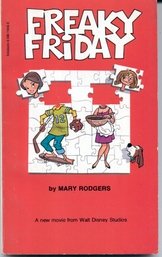
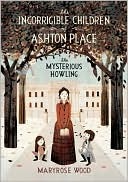
My third daughter is an absolutely voracious reader and has been wolfing down books this summer in particular. We’ve had fun with a few in particular: I read Freaky Friday, one of my favorites from when I was a pre-teen long ago, aloud to all of the girls who wanted to listen some months back, and we all laughed and chortled and chuckled together at all the funny things that happened (Boris and his beetloaf … funny stuff, man). This past month or so, this third girl and I have been reading the very charming and quotable books about the Incorrigible Children of Ashton Place by Maryrose Wood. I am of the opinion that read-alouds are most fun when they provide many opportunities for giggling and lines to quote later as a shared experience. Daddy has no idea what we’re referring to, which is different from all of our shared family movie quotes.
I read Eragon aloud with my oldest when she was probably about 10, and it took us six months to get through. But we enjoyed it. The movie version came out not long after, and she and I joined together in great distress and disgust when the movie version was absolutely horrible. What a shame!
I admit that though I do have children of varying ages, picture books up through teen and adult books, and I do a ton of reading on my own, young adult books aren’t my specialty. I have lots of blogger friends who really know a LOT about the middle-grade and young adult genre. So I think my last point here is: what do you think qualifies as great read-aloud material for middle readers, in particular? I think that something of a modest length and with some silliness is extra handy. More “serious” material is fine as well, but the silly factor makes it lots of fun. Any ideas?
 I am a type-A personality, capital A. I have always been goal-oriented, planning and working for the future. That personality served me well in school, leading me to be valedictorian of my high school class and earn a full-tuition scholarship to my desired university. Since then, it’s not been quite as useful, at least in day-to-day life. In fact, it’s probably downright detrimental when raising children. ‘Cause honestly, it’s pretty difficult to get things done efficiently when the house is full of children. They do not care that I have a list of things to do. Their raison d’etre is to prevent me from doing anything for myself, having any quiet time, or reaching goals.




 Life and Lims