Down syndrome PLUS other challenges, like mental health

I’ve already blogged about having an adult daughter with Down syndrome and how that’s so much different from having a younger child with DS. It’s tougher in many ways: the gap between that child and your other non-DS kids, in addition to the gap between that child and most everyone else, is so much wider than it was when they were little. You’re used to the different life, sure, but there are still plenty of times you’re reminded how things would be if that child didn’t have DS. As your other children become adults or older teens, that gap is starker.

What also makes life more … eh, interesting … is when that child has other challenges on top of all that DS does. We as a family have been so blessed that our daughter, unlike about half of people with DS, never had heart problems. She didn’t require surgery. I have always been appreciative of that. For us, however, what’s been tough has been my daughter’s emotional health challenges. I’ve blogged lots about my own mental health, so look at all that for what I’ve experienced personally. Marissa has exhibited a lot of mood swings and meltdowns for probably about five years, and those have gotten so much more frequent and intense the past six months or year. Over a few years, the doctor and I have tried Prozac on her to see if that could help her feel a little less out of control, but it hasn’t helped. Now, however, with her just having such a hard time, I’ve been trying to figure out just what we can do from here.

Here’s the thing: I’ve already written about how difficult it can be to find a good mental health provider, particularly a medical doctor — psychiatrist — who specializes in these things. It’s hard for EVERYONE who finds themselves in need of a psychiatrist. There simply aren’t enough to address the need. That’s particularly the case in smaller communities or other underserved populations. And it’s a tragedy.

Add that to the difficulty of finding someone who has the extra skill to work well with someone with a learning disability, for whom it is much more difficult to understand and express the nuances of things they’re feeling, and the challenge can be overwhelming.

I’ve felt overwhelmed by various emotions: frustration, sadness, some anger, helplessness, inadequacy … the list goes on. I feel bad for my daughter because I know from personal experience (years of it!) how it is to feel so taken over by your emotions. I also know it must be particularly confusing and scary and sad for her. But then when it just goes on and on, day after day, and the things I try to do just don’t seem to help much, I feel frustrated and angry and depleted and just ready for it to STOP. For at least a little while.

I took her back to her regular physician a few weeks ago, in desperation, hoping that he and I might be able to come up with something to help. Just a start. I told him what I’ve struggled with personally and what medications have now helped me for the past two or three years. I told him how few resources there are. I told him, “I know this isn’t really in your wheelhouse, but…” Luckily, he is a good and kind man who is happy to listen and consider ideas and research them, and I trust him to do what he can. He said he’d look into some things and get back to me.

Meanwhile, I had my own check-in with my psychiatrist (well, she’s technically a nurse practitioner who specializes in psychiatry and she is FANTASTIC), who is at a clinic an hour away from here (and that my insurance doesn’t cover, so I pay out of pocket for each visit: $100 each time I have a check-in). I told her about my daughter and asked for some ideas. I felt it was the best option for M to go to this place, since I know they’re good and they specialize in this. But I was thinking they weren’t taking new patients, which wouldn’t help me at all. Luckily, I had taken her there maybe five years ago, when she wasn’t doing too badly, so I was able to get her in again. She has an appointment in two weeks.

Meanwhile, she is having blow-ups and meltdowns multiple times a day, sometimes, and it’s a strain on me and especially on her youngest sister. I’m just holding on until that appointment. And even then, these things take time. It’s going to be more of a challenge to help her than to just be the patient myself (that is tricky enough, believe me).

I am aware often of the multiple challenges people face. Children and adults with DS, like anyone else, have various needs and overlapping issues. It can just make it that much harder to deal with each of those things. I have such sympathy for the individuals with DS who have these needs, and I definitely understand the needs and feelings of their parents and families. Each of us is going through a unique mix of trials and challenges, and many of us go through those without others realizing. My daughter’s DS is obvious to others. What is not obvious is all the other things we are dealing with. My girl is such a sweetie and so loving and outgoing and friendly and happy, and that’s what most people see. They don’t witness the meltdowns and the moods. That’s reserved just for me and mine (yay! ha). Today, I share this to help others see what happens behind our doors some days, and so others in a similar situation as we are can perhaps find something to latch onto and know that I get it. I feel ya.

IMG_3896
She’s high and she’s low. Most people see this. I love this face. I love her all the time. But all the complexities and challenges can be exhausting.

How my nest is different thanks to DS

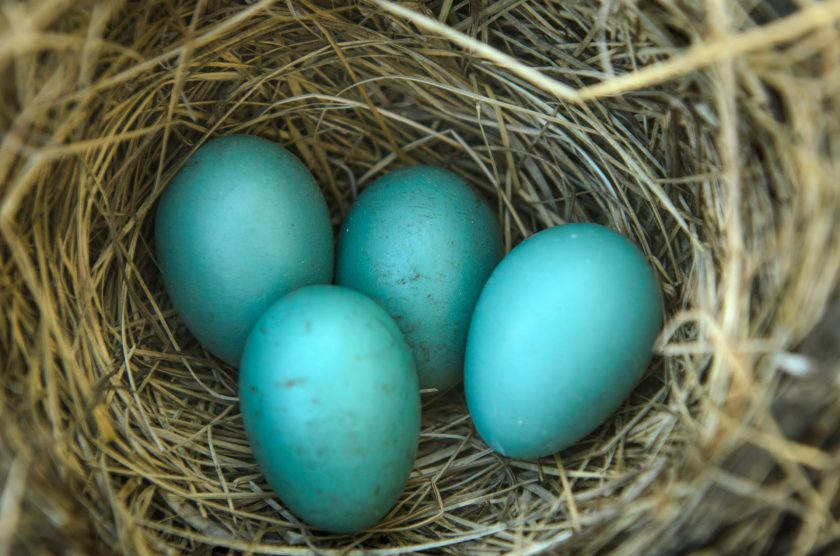
nestI read this blog post thanks to a friend sharing it on Facebook, and I had too many ideas to share in a comment, so I’m writing my own post with my takes on the idea. Liane Kupferberg Carter wrote “For Some Moms, the Nest May Never Be Empty.
I wrote last year that my second daughter, who has Down syndrome, turned 18, and it was a different experience than when my oldest daughter did. She’s now 19, and she completed high school this June. That change and others of this year have been more impactful than her just turning 18. This year, she’s in a new class setting that’s at our local community college, but that’s still run by our county school district, as was her high school class. She is still learning life skills, but the class is working even more toward the students being able to move about in society on their own and work as much in ways they are able to and will enjoy. She carries around a small purse with a little money and her state I.D. card. She got a bus pass and her own library card (which I just hadn’t done with her yet myself). She’s talking more about socializing. Or maybe I’m picking up on it more. With her having “graduated” from high school, having her be able to be “out there” in the world in ways that work for her seems more imminent. I’m thinking more about finding ways for her to get out there and socialize with her peers. I’m thinking about the possibilities of her immediate and slightly more distant future, whereas before I was just putting that on the back burner in my mind, “putting a pin in it,” because there’s just so much else for me to think about RIGHT NOW (I mean, having three kids still at home, plus a “grown” daughter and now a grandson — yay!!! — is just a ton of work anyway. A woman can only do so much).

My husband has kind of set in his head that she will just live with us forever, so we will never be empty-nesters, just as Carter wrote. I’ve always had in my head that she certainly could move out to different kinds of settings that she may enjoy more than just staying with her parents, at least off and on. I still think that. She’s pretty social and capable.

At the same time, my nest continues to feel different. My oldest moved out two years ago when she got married, which really changed the dynamics in our home. We have four daughters, and it’s astounding how the dynamics shifted when just the oldest one moved out. For one, I really mourned when that oldest got married. It took me months to come to grips with it. I missed her so much, and having her be married and “belong” to someone else made it different than just going off to college. For another thing, I just didn’t like the way the remaining three interacted, compared with how it was when my oldest was still at home. They still bicker more than when she was here (as one example), and it’s been 2-plus years.

I’m acutely aware of the differences between me and my friends, especially the ones I follow on social media. They have similar age gaps in their families, at least at the beginning (there’s two years between the first two, but then a four-year gap after I had Marissa — I just wasn’t ready for another infant too soon because she still felt like an infant and toddler for a longer time than the first had — and then a five-year gap between the last two because it took three long years to get our adopted girl), and while I see their oldest out and doing various fun “new-adult” things like my first, then I see their second and third children out doing those things, too, and I feel like my situation has stalled. Sure, it’s comparing, and you know what they say about that, but it’s just always there. I see it. I feel it. I feel “other.”

I still have plenty of parenting time in me: I have a sophomore and a fifth-grader. From experience, I know the remaining time at home is going to fly with my sophomore, who really keeps me hopping. Then she’ll fly on out of the nest on to all kinds of great things. She’s an achiever, like I was. And the 10-year-old, well, 8 years still seems like a long time.

So the nest is still full-ish. But I have enough taste of the birds starting to fly out that I can feel those changes. I can feel the things that aren’t changing. I also worry a bit about things I’m not doing, which certainly isn’t different from any parent, no matter their child’s situation. I have just recently watched one episode of “Born This Way,” which follows some young-adult people with Down syndrome, and it stirred up all kinds of feelings of sadness, guilt, wistfulness, worry, etc. I was happy for the ways those young adults are just being “normal” young people. I felt guilt for not doing more to get my daughter “out there” more like that. In a way, I don’t want to have that to compare my situation to, because it’s almost harder emotionally for me to compare with people who are essentially more in my situation than others I know. It sets a standard I don’t know I can meet. I mean, I’m sure it’s meant in part to give me hope for a good life for my daughter, but my brain doesn’t work that way. I compare negatively.

I certainly know I’m not ready to deal more with my daughter’s dating future (which is probably a whole other post on its own). It’s hard enough to deal with certain simpler issues with her when she acts like an 8-year-old in many respects, let alone the complex world of dating.

I guess that’s where I put a pin in a few items still, work on some that I’d pinned earlier, and know that I can do this, one or two topics and needs at a time. And whether she eventually flies out of the nest permanently or occasionally, we’ll be (mostly) ready for it when we amble up to that bridge that needs crossing.


5 ways to make the holidays more meaningful

The holidays can bring such joy — families gather together to share specially prepared meals, exchange gifts, and savor the particular magic that seems to permeate the air. Frosty windowpanes frame displays of trees and candles whose lights dance about merrily. The cold makes noses jauntily pink, and hot cocoa and spiced cider warm everyone back up. The scents of cinnamon and pine waft through the air.

Of course, that’s the ideal, what sparkles in our memories of favorite holidays. It’s also possible, with busy lives and the demands of work, kids’ last days of school before the winter break, and just trying to get ready for the expectations of what the holidays should be — grocery shopping, endless treks to the mall to get the toys and gadgets on the kids’ wish lists, getting lights strung around the house — to lose sight of the true meaning of the holidays.

Here are a few ideas for ways to bring back that wonderful feeling that can be the hallmark of this special time of year.

Get ideas from Grandma.

Ask an older member of your family, such as a grandmother or great-uncle, to share a tradition from his or her childhood and incorporate that this year. Grandma may tell you how when she was little she put her shoes outside the front door to have them filled with goodies from Santa Claus, instead of in a stocking next to the fireplace. This might work particularly well if you don’t have a fireplace and the children worry how Santa can get to their stockings without one!

Shake the family tree.

This free land of ours is a melting pot of many countries with their own unique practices surrounding the holidays. Your family may be a mixture of Russian, British and Norwegian, for example. Look up Christmas traditions that are common in Norway, perhaps, and pick one or two to incorporate this year in your celebrations. Christmas Eve dinner there usually features pork or lamb ribs or even cod, according to visitnorway.com, followed by the opening of gifts waiting under the tree. Get a recipe for Norwegian-style ribs and try that as a main course, and do the same for the traditional cookies — goro, krumkaker or berlinekrans.

Plan to volunteer or give back somehow as a family.

Depending on your family’s size and the ages of your children, it may be easy to find some way to give back to your community in some way or it may be a bit more challenging. Little ones won’t have a long attention span or may not be old enough to help out at homeless shelters or places that provide free meals, for instance. But anyone can find some way to serve others. Donating cans or boxes of nonperishable food items is a simple option; children can help Mom pick out vegetables they like and want to share with others. Take a box or bag full to your local food pantry. A more one-on-one way to brighten someone’s day is to visit a nursing home. Share your talents, such as music, or just sit and visit and ask an older person about his or her life. Ask him or her about long-ago traditions or holiday memories, even.

Re-emphasize your faith.

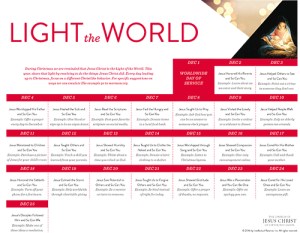
lightOur holidays are based on religious events, after all. Find a way to focus more on “what it really is all about.” Make an advent calendar that takes the whole month of December leading up to Christmas Day to remember miracles Christ performed. I’ve been enjoying the LDS Church’s #lighttheworld initiative this month so far, which gives an idea of something to do service-wise every day of the month leading up to the 25th, based on what Jesus did in his life.
Gift a memory.

It can sometimes be difficult to find just the right gift for a loved one. This year, try “throwing it back” by finding an item that reflects a favorite toy or experience the recipient had as a child. Children of the ‘80s had Atari game systems; try giving him a classic video game set in the form of an app. Maybe your grandma misses the beautiful farmhouse she grew up in; give her a framed photo of it or an ornament that harks back to it. Or try a charm for a bracelet or necklace. Have some fun!

New territory: Having an adult child with Down syndrome

Over 18 years ago, I found out through a blood test and amniocentesis that my second child had Down syndrome. Back then, there wasn’t much in the way of the Web, so I went to the library. I found one book that talked a bit about children with DS and had a few pictures that weren’t really flattering. I didn’t feel I had much to turn to in the way of sweet stories, adorable photos of adorable kids and babies, support systems, etc.

That did start changing when I had her. I found out about Band of Angels, which at the time was creating gorgeous calendars featuring models with DS shot in lovely settings. We were officially entered into “early intervention” programs where we lived and she got help with physical and occupational and speech therapy and so on. I got involved in a local Arc.

But for so long, my daughter was little, a child. She was cute, she was the poster girl for the UCP Center’s yearly fundraising campaign. She was a doll, just lovable and outgoing and friendly.

And it’s kinda funny, because for a while now, there’s been more online awareness of younger children with Down syndrome. There are plenty of groups and cute photos that circle social media. But not a whole lot in the way of adults getting attention. (But now there is the A&E reality show “Born This Way,” that follows young adults with DS living their lives, so that is cool progress.)

In short, it was relatively “easy” to have a child with DS. It wasn’t a whole lot different than raising my other children.

She had a great time this spring playing in a local softball league for people with disabilities. SO cool.

What started a change was her adolescence. She hit 14 and started puberty. She got a period. She learned about wearing pads (and not to talk about them all the time in public). She became a teenager. The moodiness that’s hard to talk through, as I have done with my other teen girls; the periods; the observations about cute boys or about seeing her sister or friends at school dating or holding hands or kissing … it wasn’t something I was really prepared for. It wasn’t so “cute” a time as when the DS kids are younger and still sporting the adorableness of babies and preschoolers. So there’s not as many pictures, not as many inspirational stories circulating Facebook and the like. For me, my new situation parenting a DS teen was kind of uncharted territory.

And that’s become even more so now that she is 18. She’s legally an adult today. But unlike my older adult daughter, she doesn’t have a driver’s license, can’t help out driving herself and younger sisters around; doesn’t run errands for me; doesn’t babysit. She needs a bit of babysitting/supervision herself still. She’s emotionally and mentally really more like a 7- or 8-year-old in a lot of respects. But she’s bigger and developed and has a menstrual cycle. It’s harder to discipline her. She’s moody and just mumbles loudly or trounces off to her room and slams the door if I try to tell her, gently and kindly, that she should be nicer in how she speaks to her 9-year-old sister, for instance. I can’t really talk her through things.

In short, it’s not so cute anymore. It’s NOT not that different from parenting my other children, like when she was little. Don’t get me wrong: she is bright in many ways and really helpful and can be incredibly sweet. She’s pretty great. But it’s now really evident that she’s different. She has Down syndrome, and it’s obvious.

We’re getting her a state official I.D., not a driver’s license. We’re talking about some programs that she can do post-high school, next year. We’re starting to think more about what kinds of things she may be good at, what she will enjoy, for work-type opportunities, for socializing, for living arrangements. This is a whole new ballgame.

That story a parent wrote a few decades ago about embracing a new reality called “Welcome to Holland” seems to be hitting me now. The writer compared having a child with a disability as planning (during a pregnancy) on going on a “fabulous trip to Italy.” But then the new reality hits, and you’re going to Holland instead. In the past 18 years, especially, I’d say, the first 12 or 14, I was kind of going to Holland with Marissa, but I still had plenty of experience in Italy, with my other three children, for sure. And then with Marissa, I was kind of in Little Italy in Holland. Now, though, that feeling of visiting Italy at least through restaurants or guidebooks or seeing pictures on the Internet has dropped away. It’s hit me that I’m really in Holland.

It’s OK, just as the story goes. But I didn’t see it coming. Or I kind of did but now it’s hitting me. And I’m going through another adjustment period. And there’s not a lot in the way of cool or cutesy memes or stories or photos going around online — but, like I said, there is “Born This Way,” so that’s a good step in the right direction. Maybe I’ll start seeing more of that. And my sharing my experiences will prompt others to share. Or I’ll just start finding others’ stories more, seeing them amongst all the other stuff that’s online.

So here I am, my cruise ship permanently docked in Holland, at least with one of my children. I’ve got ships in Italy with the other three. It can be jarring a lot of the time to switch between the two countries. But I’ll make it work, and it’s a new adventure.

Purple pain

With my teen years firmly set in the ’80s, Prince was firmly set in my musical consciousness. His songs were fun, catchy, danceable and clear indicators of his genius.

But his music and persona have become part of the fabric of my family’s life, as it’s turned out, so his death today comes as a shock.

My husband, who has fantastic taste in a variety of music, and dance skills to match, has a large stack of Prince’s CDs. And in the early days of our acquaintance (in a church congregation at college, surprisingly enough), his lip-sync and dance performance of “When Doves Cry,” complete with eyeliner, purple jacket and white ruffled blouse, for a talent show gave me the notion that he was something special. Maybe that’s why I said yes when he asked me out a month later.

228122_10150184386647400_5199462_nFive years ago, when our oldest was a teen, it was announced that Prince was adding a last-minute concert in Fresno, near us. As soon as tickets were available, I pounced. I bought them for me and my husband and my teen. And we partied like it was 1999 (only it was 2011).

Just last year, when that oldest daughter got married, we knew we had to have a special father-daughter dance at the reception. It would be something that reflected US. We deliberated, brainstormed, and came up with something perfect. And it included Prince, naturally. I thought it was awesome.

The Prince is dead. Long live the Prince.

Taking care of myself? Tougher than tough

My last blog post was about my goal to take better care of my health, with a multi-pronged approach. I did well for a few weeks. And then I didn’t.

The catalyst for getting completely foiled, at least for the past month, was my grandmother’s death. It was expected; she was 99, and my family and I had had a good visit with her a few months before, as we knew she was declining after a long and full life. But the day she died, I got drained, emotionally and physically, and I just had to step out of the Atkins diet that seems to work for me, at least scale-wise.

Since then, I’ve wanted to get back into focusing on my eating and doing all the other things necessary to take better care of my whole self. How well have I done? Crappy. That’s what.

Here’s the deal: I’m a mom. I have a husband and four daughters, and they are all in vital stages of their lives. Parenting them now is in a way more demanding than it was when they were little; then it was mainly sleep deprivation and not being able to catch much alone time. Life was just a lot simpler then. Now, there’s so much more of a mental game to it than just being the taxi driver. I’m there. I’m on call. I’m helping figure out all kinds of important things for the next week, the next month, the next year: their LIVES. Even my oldest, who is married and “on her own,” still needs me, and I am still there for her whenever I can be. Even more, our relationship has a new dynamic and dimension, one we’re still trying to adjust to, I think, almost a year on.

Add to my momhood my personal leaning toward taking care of other people all the time, and my own self gets left in the dust. This past month or so has been a pressure-cooker, a meat-grinder, of calendaring and coordinating activities and appointments; responsibilities, obligations, big questions, long to-do lists, and hardly having a moment to breathe and just think about myself. Granted, I know from sad experience (over and over and over again) that is a recipe for disaster, but after all these years, I’m still trying to figure out how to cut the recipe in half or something.

So I sit here again and contemplate how to take care of myself physically: eat better overall, less sugar, more fruits and vegetables (which I do really love and eat probably more of than the average person, but still)… all that jazz. Figure out how to decrease emotional eating (THAT’s a biggie). Mix up my exercise (I’ve been dedicated to working out for 25-plus years and I really enjoy it and how it makes me feel), do some more fun and different things. The pressure cooker of the past month or two is likely to be turned down a few notches for the near future. Maybe I can make some strides on me.

What I know is this: appropriate self-care can take a lifetime of practice.

Different kinds of mourning

Today is the anniversary of my father’s death — officially (he was on life support for a day or two and then “declared dead”). I think he was really gone very late on the 13th or early the 14th. His brain experienced two big hemorrhages and I’m sure it was really “over” fairly soon. I clearly remember the moment at 9 p.m. that day that I got the call he was unconscious. I know I went into shock myself: I sat down on the couch and was just stiff, cold and shaking.

I was not at all prepared for him to die. He was only 71, and he had worked ridiculously hard (we joked with him that he worked TOO hard) to keep himself healthy by eating well and exercising. I thought for sure he’d be around a good long while. The shock of that unexpected loss took a long while to shake off.

Six years later, I’m accustomed to his being gone. When I think of him, I don’t experience a painful stab in my chest as I did for a long while. Now it’s just a small pang of longing, much less painful. It hits in the same place, right in my heart, but the wound is no longer a gaping hole. It’s scabbed over, enough so that no one else even knows it’s there, I’m sure.

This year brought me another unexpected loss. I saw the loss coming, so I guess saying the loss itself was unexpected isn’t accurate: the grieving period I went through was what took me by surprise. Because who really thinks about the notion of mourning for a beloved child who has grown up and flown from the nest?

My firstborn got married, to an incredible young man who’s just about as incredible as she is. I was thrilled about the union (once I processed the notion of her being married pretty young, which I hadn’t seen coming either, but that’s another story. The very short version: she found a wonderful person, we love him, we love them, and it was right. Plans/expectations are one thing, but life always throws interesting curve balls.).

To say the period of engagement/wedding planning was stressful is almost a cliche. Very few people say their engagements were breezy and stress-free, and, yeah, it was busy and had its bumpy moments. Bringing two families together, planning, coordinating, … it can be tough. But all through it, you know you have this amazing day to look forward to. The reward’s huge. And the wedding day and reception were beautiful, sweet, poignant, fun, full of love and friends and family celebrating together. It was a wonderful memory.

I was thinking I’d need some “recovery” time afterward to wind down from the stress of preparation. It didn’t go quite as I’d hoped, because then my girls were all home from school for the summer and I had precious little time to myself. And my personality, my particular mix of needs, requires a certain amount of alone time, to just process the rest of life, to take a breath.

As it turns out, I realized a month or two ago, I was mourning all summer. But I didn’t really recognize it as such because it wasn’t as clear-cut a “grieving situation” as, say, my dad’s death, and my younger kids kept me so crazy all summer I didn’t get to really think much and just let everything go through my brain, my emotions, my self.

One day in the middle of the summer, I did have a moment where it struck me that I felt the loss of my daughter almost as a death. It was just one day, one morning. We hadn’t seen her in a week or more, hadn’t really had any quality time with her (she lives with her husband about a 45-minute drive away from us, and they live next door to his parents, so they get to be with his family all the time and we make a lot of trips up there to see her; as time has gone on, I’ve been able to decrease the number and frequency of trips a bit so it doesn’t seem like we’re there all the time). And I just said to my husband, “I feel like she’s dead. She’s gone. How strange. It feels like I feel with Dad.” It was so clearly a loss, and it hit me square in the chest, same thing. We saw her the next day, I think, and my husband and I ended up taking her and our 13-year-old to lunch at a salad place, and that one hour being our “old” selves in a familiar environment “like we used to be” before it all changed so much made that feeling go away, or at least recede into the background for a while.

Nearly five months after the wedding, I’m starting to feel a little more myself again. When you’re in mourning, you’re a reduced version of yourself, parts shuttered, shut down, the world seeming a little dimmer. I’ve felt the world brighten up again, I think, and I’m coming back into my own. I was sad for a few months. One consequence, in my arsenal of bad habits, was that I just ate. And ate. I went through quart after quart of ice cream. I must have gained 15 to 20 pounds over the summer. I was swallowing the pain. That last consequence I’m dealing with right now, and making progress: I put myself on a low-carb diet. I was just feeling physically cruddy, and I know all the sugar I was eating was making me feel even cloudier than the grief was. A week and a half in, I’m feeling clearer and physically much better. It’s a gift I’m giving myself: to take care of my body.

So life brings grief in various ways. Death is an “obvious” vehicle for it. But we must mourn all kinds of losses. I’m reminded occasionally, with my 17-year-old, that I mourned the loss of a “normal” child when she was born because of her Down syndrome. There are days that remind me she’s not like the “typical” teen at this stage: she’s not going to be driving (not anytime soon, for sure), she can’t babysit. We have to check on her personal hygiene sometimes, and we have to remind her about appropriate behavior around other people. It’s a loss, and I am reminded more of that now because our family dynamics have changed so much since our oldest got married and moved out.

The reality is we need to be gentle with ourselves when we mourn any loss, and realize that we have to take time to grieve. We must move through it. We also need to realize that others are mourning losses as well that may not be visible to us. Be sensitive to anyone’s mourning periods of any loss. They may breeze through the period of mourning, or they may slog through. I felt “weak” somehow this whole summer because I just wasn’t myself. I felt silly because so many of my friends had children leaving the nest, whether it was for college or for church mission opportunities or some through marriage. They all seemed to be just fine. Why wasn’t I? The truth of the matter is that it didn’t matter how other people fared, when it came to my own feelings. I had to be respectful of how I felt and how I had to work through it. I hope it makes me more sensitive to others through whatever losses they’re grieving.

Life is beautiful. It is bittersweet. It is a hodgepodge of opposites: highs and lows, gains and losses. Despite the pain of grieving, I’m grateful to be on this grand adventure.

I’m glad I didn’t marry my ‘soul mate’

Serious business.
Serious business.

Today my husband and I are celebrating our 22nd wedding anniversary. And as much as I love to celebrate and love to love, I also love to remind people that choosing a marriage partner is serious business. Sure, it involves those butterflies and fireworks, but it also involves solid doses of reality.

Here’s one: finding your soul mate is not a prerequisite for marriage. Sometimes, even, that person who feels like your “soul mate” may end up not being a good partner for you.

I love this reminder from a psychology professor at my alma mater: “Stop looking for a soul mate.” Scott Braithwaite said that when you have the idea that your soul mate is out there somewhere, and if you feel you’ve found him, you may think that the marriage relationship will be easy. Or later on when marriage does get hard (which it will), you may feel you made a mistake and thought you’d found your soul mate but didn’t. What happens then? Either looking outside the marriage for the “real” soul mate or ending the marriage to do so.

Back in my teen years and early 20s, I dated a lot. I had fun with plenty of young men. I had several serious relationships. I thought a couple might lead to marriage. They didn’t. I could even say that I probably had kind of the notion that one of those was my “soul mate.” We were a lot alike, were best friends, and had that “connection.” But it didn’t work out. While I mourned the loss of the friendship for a long time, I came to realize I was blessed not to end up marrying that person. In fact, one quality lacking in that person was something that I realized was important to me, and when I was dating my now-husband, he showed he had it.

Honestly, my husband and I don’t have what I would call a “great love story,” one that seemed fated, or meant to be, or in the stars. I probably was “crazier” about some other guys. I don’t think of him as “my best friend.” He’s not my soul mate. And that is OK. More than OK. It’s a good thing. I chose him. I chose him because of the qualities he exhibited, his dedication to me, his desire to be a good husband, his desire to be a father. He put me first. That he made me grin, was an easygoing complement to my type-A personality whom everyone can’t help but like, was a great dancer, was a great kisser… well, all those were icing on the cake.

Today, 22 years later, I am so grateful that I chose him. He wasn’t just “meant for me.” Our love story wasn’t out of our hands. It has been completely in our hands: we have written it together over all this time. We made three gorgeous babies and adopted another adorable one. We’ve moved, traveled, made friends, experienced life together, laughed, cried, supported each other. This year is particularly sweet because we got to see our oldest make her own choice of a fine husband. Today, I celebrate making a fabulous choice.

How much of life do we ‘sign up for’?

It’s difficult for me as a mother, period, and as a fellow mother of a daughter with Down syndrome, to read the words of Hallie Levine, who says she would have aborted her daughter during her pregnancy if she’d had the diagnosis then. Sure, she says now she’s grateful she didn’t, but she asserts she should have been able to and that others should be able to do so as well. Aside from all my other feelings on the subject (and I have many), I’m going to focus on one phrase she used: “I never signed up for this.”

Having heard a man whose wife is now paralyzed from the midsection down say the same thing in regards to being married, and other people in tough situations make the same remark, it strikes me that we live in a society where we really feel we should only face things we’ve agreed to. We’re so focused on freedom of choice, on contracts, on knowing so much about outcomes and possibilities, that we feel we can and do control our lives.

Assuming some equal opportunity (and that’s a topic for another blog post as well), let’s say we all get to choose the level of education we attain and what we study. We get to choose our line of work. We choose our marriage partner, if we marry. We choose how many children we have and how to raise them. We plan for and choose when to retire, and what to do in retirement.

We “sign up for” these things. We sign on the dotted line for many of them. Life is a series of contracts that we choose to accept or deny. And we’ve written escape clauses into the contracts. Many of us spend years choosing whom to marry, and when to do it, but even a few years into the contractual relationship, divorce is readily available to let us out of that signup. Pregnancy? We can avert it with birth control, we can terminate with abortion.

But how about we step back a moment and consider that life is not really within our control. It’s not just one contract after another. And when events in our era are finalized in this manner, stamped with a legal seal of approval, they often get boiled down to simple terms that don’t fully encapsulate the “real deal.”

Life is messy. It’s complicated. It involves all kinds of unpleasant surprises that we tend to think of as happening to “other people.” Even aging and death seem distant to us today, that somehow they’ll never happen to us. But they do. And the older we get, the more we experience, the more we realize that death will happen. Aging will happen. We’ll get sick, we’ll be limited in some way physically. These same things will happen to our spouses, and eventually our children.

Levine says she wouldn’t want to see someone else “forced into” her situation. But simply being alive forces us into all kinds of situations we’d rather ignore or pretend don’t exist or won’t happen to us. Choosing to get married leads us down a path in which we may very well have to care for a spouse who becomes disabled physically or loses his memory, among a host of other scary possibilities. Choosing to have children leads us down a path in which we may care for a child with a physical or intellectual disability or mental illness or any number of possibilities we never envisioned for ourselves. But those paths are real.

I don’t deny that it can be overwhelming at times to parent a child with Down syndrome. That’s just one of those “scary possibilities” I know firsthand about. I grieved for a few days when I received the results of my amniocentesis. It was an experience I didn’t count on. It was a loss, the loss of a “typical” child-rearing experience I had counted on. But life presented me this path, and I’m on it.

I don’t have any idea what other challenges lie ahead of me on life’s path, as a person, as a wife, as a mother. I won’t deny that I’ll grieve, be scared, be overwhelmed, be frustrated … any number of normal reactions. And I definitely won’t “sign up for” any of these challenges. But that’s life. And we’re all in it together. We can’t (and, yes, while many disagree with me, I heartily say “shouldn’t” when it comes to aborting in most cases) prevent these difficulties. We can learn from them, do our best to deal with them, and support each other through them. I hate to see others go through tough times, but I’ll eagerly “sign up” to lend a shoulder to cry on, a hand to help.

I still believe in ‘traditional’ marriage

I believe in what’s now referred to as “traditional” marriage. I strongly believe it should be between a man and a woman. And I believe this because of my faith.

So I am not celebrating today’s Supreme Court ruling.

I realize that many are, and that this is now the law of the land. I respect others’ choices and strong beliefs that go opposite of my own, and I DO NOT HATE them. I have never been unkind to friends and acquaintances or strangers who are homosexual. I do not believe in hate speech. But I do believe I have a right to disagree, respectfully, and not have my personal belief labeled “bigotry” or “hate speech.” I also feel it is now important for me to explain briefly why I believe the way I do.

Contrary to what some may expect, I am not a “traditionalist.” I don’t believe AT ALL that anything should continue just because “that’s the way it’s always been.” Many, many negative behaviors, beliefs, practices and laws have been perpetuated because too many people did not have the courage to change them to what would be better, or just plain right.

I do believe that if something is right, it should be supported. I could make all the arguments about why I believe that changing the definition of marriage is not going to be good for society or for children. But those have been made in many places and I do not need (or have space) to repeat them here. Besides, those are arguments, and there are many arguments that go the opposite way. We could all (and certainly have been) go around in circles, debating and arguing and ramping up the anger. I do not like that idea at all.

I support marriage between a man and a woman because I believe what my church teaches. And here’s where it gets radical: my church doesn’t teach this doctrine because of some references in the Bible or some somewhat vague ideas on what Jesus may have taught about the practice of homosexuality. My church teaches this doctrine because we believe that revelation happens today. I read and learn from the Bible. But The Church of Jesus Christ of Latter-day Saints was founded two centuries ago on a foundation of being the restored church that Jesus founded two millennia ago. That means we have a president who is a prophet, a designation that means all that has meant historically. He has two “assistants,” called counselors, and there is a group of 12 apostles, just as in ancient days. And these people aren’t just “called” apostles and prophets. They truly receive inspiration, revelation, PROPHECY from Jesus Christ. It’s His church, and it’s led by Him. He directs it on the Earth through his mortal leaders.

The LDS Church has made very clear through these people we call prophets and apostles that the doctrine of marriage is an eternal one, that marriage between a man and a woman is not only made for us here in this period of mortal life, but is meant to continue after this life: forever.

The church has also stood behind and continued to promote strongly the document revealed and agreed upon by all these apostles 20 years ago called the Proclamation on the Family. We believe it is an inspired and vital document that proclaims basic truths about the family, about marriage, parents and children, that are now being changed and disputed by others.

My 40-plus years of life have shown me time and again that faith is a crucial part of life. It’s one of the big reasons we are here in this existence of mortality. We lived before and we will live after. Here, now, we are meant to learn faith, to believe in a God we cannot see right now and to cultivate taking things on faith that might not always “make sense.” I have had my faith affirmed time and again, and I hold it dear. It guides my life and has blessed me a great deal. I KNOW things to be true because of my faith.

I know that prophets speak today and have affirmed the importance of marriage in the “traditional” sense. I recognize and respect the beliefs of others that contrast so much with my own; I also recognize that some others, friends I admire greatly, who are even members of my church, have differing opinions on this issue. I have and will continue to hope we can simply agree to disagree on this topic and continue to enjoy our friendships for all the fun reasons we are friends.

I simply ask that my strong beliefs on this topic can be respected and that I will not be called a bigot. I do not know the “whys” of many, many things. I like to search out answers, but sometimes answers cannot be found in this life, or for a long time. So far, I do not know “why” some experience same-sex attraction. Science still has no answers for that. I do know that sometimes we must act on faith, and I ask for respect for my faith. I will respect the law and others who disagree with me. But we can certainly all be civil; we can be kind; we can get along.