So I was reading this roundup article that tells about how people are having problems being DIGITAL hoarders. I suppose this should come as no surprise. I’ve long been overwhelmed by the sheer number of emails, documents, photos and other things I have to keep track of and organize in the virtual world, so it stands to reason that there are people who simply keep all their virtual things.
What’s sad is that it’s tough enough to keep entropy at bay in the concrete world. It takes daily effort to go through my house and constantly sort and throw items that creep into all my hiding places and on top of counters, desks, and shelves. I seem to have almost no help in this battle, though, since my children tend to be squirrels, and my husband would much rather keep pretty much everything, just in case. I’ve mostly broken him of the habit of picking things up at garage sales and (when we lived in the South and people just put old things on the side of the road to get rid of) bringing junk home that other people were THROWING AWAY. But he doesn’t on his own take the initiative to regularly go through things and organize and toss. I’m practically the lone ranger as I fight the onslaught of clutter.
The great news as computers have taken root in our lives is that we’ve “gone green” in many ways, replacing paper documents with e-versions. Sure, we don’t have file cabinets quite as full anymore, but our Yahoo or Gmail inboxes are overflowing. Junk mail that arrives in my mailbox gets thrown right into my recycling can, and then when I go online, I have to do the same thing with its electronic siblings. And as wonderful as it has been to visually document our families’ lives and travels, photos now proliferate in the pictures folder, a cascading wave of so-so shots of wacky faces and blinked eyes washing over the desktop. In this regard, it also doesn’t help that I have a 16-year-old with her own camera who takes it EVERYWHERE she goes and is constantly snapping shots.
So not only do I spend lots of time and energy daily sorting through the pile of paperwork that seems to multiply like rabbits on my literal desktop, I also sit down at that same cluttered desk and face a screen that shows me inboxes and folders full of unnecessary items that ARE SIMPLY 1’s AND 0’s. Even though they are not “real,” not taking up any real estate in my real life, they still manage to plague me as they multiply in my virtual world. There is something fairly satisfying about cleaning out my house, room by room, or one counter or drawer at a time, but the satisfaction isn’t quite as concrete and lovely when I am simply reducing the number on my inbox from 300 down to 230. Nope. But I have to regularly go through everything I own that only takes up space by megabytes and put it in a tiny little icon that says “recycle bin.”
What has this world come to when I have to clean something that, in a way, doesn’t really exist?
It’s funny; I simply don’t read a ton of “inspirational” books; I do read memoirs and biographies on occasion as part of the wide mix of things I do like to read. But I don’t read a lot that’s really intended as inspirational, except for some official religious/church books, which I consider more reading for spiritual/religious purposes. So it was a little unusual for me to decide to read popular blogger Stephanie Nielson’s Heaven Is Here. And the main reason I did read it is I wanted to include it as part of my overall research into the topic of beauty and self-image, which I blog about sometimes here; in this case, I was curious to see what she had to say about how she felt about her appearance after a horrific plane crash that burned 80% of the skin on her body.
It’s also an interesting and different experience reading a book by a Mormon written for a general audience. As a member of The Church of Jesus Christ of Latter-day Saints myself, I’m very used to the Mormon culture and way of talking and thinking about things, and I’m used to listening to speakers and reading books by Mormons aimed at other Mormons. But it’s rarer to read something one of “my own” has written that will be read mostly by people who aren’t familiar with some of our terminology, beliefs, and culture.
That said, it was such a fascinating experience reading this book. It actually elicited all kinds of interesting feelings and reactions as I went along. I will admit that we Mormons tend to have some interesting cultural quirks that may seem unusual to others; we marry young, for instance, typically after very short courtships, and have more children than the average. Some of our cultural quirks are particularly pronounced in the state of Utah and a few other pockets of concentrated Mormon population (note: I’m not a “Utah Mormon”: I grew up East of the Mississippi and only lived in Utah when I went to Brigham Young University). So it wasn’t surprising to me to read that Stephanie married at 19 after less than a year of knowing Christian Nielson. Or that she started having babies right away. Or that she was just thrilled at that young age to just get started with being a stay-at-home mom. At the same time, even though it was familiar territory, it was still different from what I chose to do (marry at 23, get a college degree, have first child at 26, work part-time off and on and freelance while raising kids). And there’s still just enough of cultural expectations and a kind of cultural divide that those (what outsiders may consider slight) differences just kind of grate a little somehow sometimes.
Nielson starts with telling about her very large, happy and tight-knit family in Utah and her fairy-tale courtship with Christian. She lays the groundwork of her happy, idyllic life before she moves on to the plane crash that changed it all — well, temporarily. No matter how you look at it, not everyone (well, rarely anyone) has that kind of idyllic upbringing, love story or marriage. And that’s OK. Even in our church, unmarried young people and adults are reminded not to expect an “easy” and “obvious” courtship that leads to marriage. Sometimes it is not clear if the person you’re dating is “the right one” (itself a myth). You mostly have to make sure you date good people and then choose wisely, marrying someone who has solid good qualities and should make a good partner. The answer is rarely written in the stars or with fireworks. And most of us know that idyllic families happen far less often than we’d like. (We can’t change our own upbringings, let’s just say, but we can do the best we can to provide our own children with solid, happy homes.) So reading about Nielson’s happy-happy-happy life can honestly make one feel a little over-sugared.
But knowing going into the book what Nielson is going to experience makes that early part of the book palatable — it’s all too clear that she’s going to need every ounce of strength, idyllic family support system, and reserves of happiness and faith that she has stored up to be able to survive the ordeal that she does go through. Heaven Is Here doesn’t necessarily provide many details of the plane crash or the injuries she sustained, but it definitely shares the emotions she went through after the crash — the story is no longer idyllic. Nielson is painfully honest about her fears, her anxiety, and the many scary feelings she experienced in the months after she woke up from the 10-week medically-induced coma in which she stayed shielded from unbearable pain. She had support from family, but she often felt alone, and she wanted to shield herself from even many of her own loved ones and friends. She was scared of how people would react to her, how she looked, how she felt, how her life would never be the same. She was scared of having to face a new life, one that stood in stark contrast to her “before-crash” idyllic one. The bulk of the book, then, allows us to see inside her mind and heart, as she struggles and wants to stay in a cocoon but finally knows she must gradually burst free and move forward, as difficult as it will be.
As much as I felt some reservations and knee-jerk reactions to her pre-crash account of life, I couldn’t help but be tremendously moved and, yes, inspired, by how she lived after that crash. I loved her honesty about all of the moments she had that were not supposedly inspirational. Because that’s what lent reality and depth to all that was truly uplifting. It felt authentic. She was able to do what she’d set out to do: give hope to readers and show that life is beautiful, particularly when filled with love. And a perfect body or perfect face has little to do with that. For all that, I was grateful to have read her story.
Motherhood did not come naturally to me. Babysitting, on the rare occasions I consented to do it, was a rough job, one that wasn’t worth nearly the small pay I got to do it. So once I gave birth for the first time and was presented with a tiny little stranger, I was absolutely flummoxed about what to do with her. Even looking at pictures of me with that first child, I can see the confusion and nervousness in my eyes: “What now?” I was thinking.
And that first child gave me fits. She was a very demanding baby. She didn’t eat for half an hour and then settle down quietly for the next four hours. She snacked for ten minutes and then needed to eat again two hours later. She did NOT like to be put down. I had to hold her constantly. For someone who was pretty independent and used to going about my business, having the little seven-pound interloper in my arms nonstop made it pretty difficult to get anything done.
So that darling child did not ease me gently into motherhood. It was a bumpy ride, and I did not enjoy it. I was exhausted and overwhelmed and overloaded. I remember many times that first year thinking, “I can’t wait til I’m done having children and they grow up a bit.”
Time slowly went by, and I gave birth two more times and adopted once. I knew what I was doing the second and third times, and the second baby was just the most easygoing child ever. She would eat and then sit in her bouncy seat or car seat and smile beatifically up at me, doing whatever I needed to do. Third child was somewhere in between. But by then I had help: two older sisters to distract her (and one time push her off the couch…). Fourth baby was a breeze in many ways because I didn’t breast-feed her, so everyone else could take turns feeding her a bottle. And changing diapers. And holding and playing with her. It was so much more fun that time around to have a little baby. I enjoyed her.
They all went through the terrible twos and their early stages of independence and potty training. Those days are now behind me. My oldest is now 16, and the youngest 5. They’re now all in school. They can feed and dress themselves and read to themselves, except for the kindergartener. Yes, I am finally getting to that magic place I imagined when I had that first demanding baby. And it’s struck me that this time is finite. The oldest is now not a squalling infant; she’s a high school junior. And she is amazing. She’s delightful and smart and talented and beautiful and makes me laugh. She can talk my ear off about her day. We can share jokes together. She’s one of my dearest friends, and I am loving life with her in it. Now the day of her leaving the nest is actually in sight (less than two years!), and it’s paining my heart to even think about. I DON’T WANT HER TO LEAVE!
Ah, what a difference 15 or 16 years can make.
So I have realized that, despite the absolutely crazy, hectic pace of my daily life with four children in school and all the needs they have, these are the best of times. In a few years, one daughter will be gone, and the others will be making their way towards that direction as well. The clock is ticking. And at this stage of my life, it’s not a biological clock. It’s the clock reminding me with every tock and tick that while motherhood is permanent, having children at home is not. I bemoan the lack of peace and quiet and sufficient time to myself now, but even in the midst of this busy-ness, I can’t imagine my house being quiet all the time. I love knowing that I can cuddle and squeeze all of my girls any time, that I can talk to them, listen to them, just study their faces. That we can laugh together.
I’m going to keep reminding myself during the tough days or moments that these really are the best of times. It might take a loud reminder during those moments, but I hope I can somehow still remember and appreciate what I have now.
I’ve been thinking a bit lately about how Pinterest can be really useful, and also how it can be just another brick in the backpack full of guilt that moms carry around. I read a great column yesterday by another blogger and thought it was just along the same lines of what I’d been pondering. As Tiffany writes, “I have this real and palpable fear that on my deathbed, surrounded by my children, they will say something like this: ‘Yeah, you were a pretty good mom, but you never, you know, made us apple snacks in the shape of ladybugs.’” Isn’t THAT the truth!
Because as any Pinterest user knows, here’s the breakdown on boards: 25% of pins are recipes, 25% home decor, 15% crafts, 15% exercise and diet tips, 10% jokes and inspirational quotes, and 10% everything else. And the recipes and home decor ideas have their own breakdowns: recipes are maybe a quarter cutesy kid-oriented, as are the home decor and crafts. Recipes show these darling cupcakes and unbreakable kid plates festooned with hot dogs and spaghetti noodles or vegetables or fruits cut and meticulously fashioned into animal shapes.
And kids’ rooms? They’re filled with professionally painted wall scenes, organized and clever bunk-bed arrangements, or fairy-tale canopies and related frou-frou. Pinterest is now the haven for moms gone wild decorating and cooking fantastical items for their adored little ones, who have endless ideas for educational and fun projects they do with their preschoolers. I’m guessing they sleep three hours a night, don’t work outside of the home, and focus all their time and energies on their kids.
Sixteen years into this parenting gig, I have mostly made peace with the fact that I can only do so much for my kids and everyone else. I have to sleep; I have to write; I have to take some quiet time for myself. I definitely need to take time to be with my husband. Alone. I decided I wouldn’t put my girls into lots of lessons and keep them busy all the time; I wanted them to have plenty of free-play time to just imagine and create on their own. Since I love to read, I did take the time (and still do) to read to them. Since I like to cook and bake, and since I want all of us to be healthy and use our food budget wisely, I make almost all the meals we eat. We don’t do much take-out or restaurant eating (maybe a couple of times a month). I don’t tend to make the kids a fancy breakfast most school days, but I do make something nice on weekends and maybe throw some muffins in the oven on an evening for breakfast the next day (because I’m not baking at 6 a.m.).
What I don’t do are these time-consuming jobs: home decorating. To me, function comes before form, and almost everything (except the pictures of the family on the walls) is useful in some way. Shelves hold toys and books. I don’t decorate for every holiday; I don’t, for instance, go all-out for Easter or Halloween, including a candy-corn-shaped nightlight (for instance, which I have seen) as part of the hundreds of orange/black or faux-scary decorations in October. I don’t do a lot of crafts. I do sew maybe a couple of times a year when I get the urge or when one of the girls needs something in particular for school or something else. I typically make skirts or dresses. The sewing machine otherwise sits quietly in its closet, awaiting my next yearly burst of sewing energy. Particularly, I don’t combine the two by crafting cutesy decorations, particularly not for transient seasons. I am not going to take the time to swap out dozens of decorations every month. Nope.
And yes, I like to cook, but I am not going to spend any extra time making the food look kid-friendly. I never even called broccoli trees. The girls love it, but I didn’t have to give it a cute name so they would eat it. It keeps me busy enough making weekly dinners and then breakfasts and lunches during weekends or school breaks. I can’t imagine doing any more prep or finishing work. It exhausts me thinking about it.
I’ve been able to largely be satisfied with my strengths and be OK with not doing all the other stuff over the years. I’d visit friends occasionally and be impressed with their decorations or cute kid bedrooms, but it was easy to brush aside feeling inferior because those were brief forays outside of my own good-enough child-rearing sphere. But then Pinterest came along, and it reminds every single mom out there that pins just how much we’re not doing. Well, now I have to steel myself against feeling inferior every time I get on Pinterest to look for recipes or great ways to get out stains (or the occasional really good laugh). I think I should just put a permanent pin up on the corner of Pinterest that tells me, “Being a good mom doesn’t make crafts mandatory” or any other reminders of reality.
Yes, Pinterest has its usefulness and a place in my life. But I refuse to let it make me feel bad. It’s just another time for me to go to my happy place and chant “I am a good mom, I am a good mom” until I stop looking at boards for the day.
The days are slowly getting shorter and just slightly cooler, school is back in session, and I have a little time to take stock of how my house is looking. So I’ve fallen this past week into “fall cleaning.” I started with the youngest girl’s bedroom, because I knew there were some toys and puzzles and such under her bed that I could sell or donate.
Naturally, the job turned into an hour and a half of sweaty work. Aided, I’m sure, by my second-oldest daughter, the youngest had a few huge squirrels’ nests of stuff stashed away in her room. The first I discovered was the most daunting and astonishing: a tall, empty box that had been used to ship a riding toy for my third daughter had been stored in the little one’s room (at her request, I believe, so she could play with it). I looked at it and noticed that there were some clothes and other things sticking out of the top. Turns out when I picked it up, the four-foot-tall box was completely filled. I tipped it over and dumped it and just about shrieked. Gaaahhh! I ended up pulling out all the storage containers from under the bed and all the containers off the shelves and having to pick one little item out of the nest at a time to restore it to its proper place. I ended up toting out a large bag of recycling and a small bag of trash and making a smallish pile of things to donate/sell at the consignment store. Afterwards, I felt great satisfaction in seeing the lovely, organized room.
Two of my daughters sort their own rooms, so I don’t generally have to spend any time in their rooms. I did help the 10-year-old get better organized in the spring, but she manages fine by herself usually. The 16-year-old likes to reorganize and sort as well. But that 14-year-old, well, my husband’s always called her “Mouse,” but I think that “Squirrel” would be a better nickname. Or maybe “Rat,” since she brings to mind Templeton’s ways, but that doesn’t sound very cute, does it? I have been putting off even looking in any of her storage containers because I know I’ll find all kinds of nests. Her room looks wonderfully neat as long as you don’t look INSIDE any of the under-bed or shelf containers. But take off those lids… AAAIIIIIEEEEE! It’s just better for me to practice a “don’t look, don’t scream” policy.
So here it is Labor Day, and as all mothers know, it’s not much of a holiday (unless you go on a vacation or trip of some kind, and even trips with children aren’t relaxing). The kids are home, sometimes a little bored. Me, I’m just putting them to work a bit in my fall cleaning sweep. And then we’ll go see a movie at the three-dollar theater. Happy holiday to us. I suppose it’s appropriate that my little squirrels and I are going to see a film about talking animals.
I ran into a friend in a Wal-Mart parking lot yesterday after dropping off my youngest at kindergarten. She asked how I liked the teacher, and we ended up launching into a fiery discussion about the schools. Issue after issue arose, and we resolved to get more involved and have a say by going to school board meetings.
This isn’t the first time the education of my little ones has caused me to rise up in righteous indignation. Before we moved to California, we lived in a small town in the South in which there were a number of problems with the school system in town. One big problem was that of “white flight,” quite honestly. Even though the town was maybe half and half whites and blacks, with a very small sprinkling of other minorities thrown in (which included our family since my husband is Filipino), a huge percentage of the students in the system were black. Now I had no problem with that at all except that things basically had split along economic lines. Many whites and the more educated and better-off-economically blacks had moved to different neighboring towns or the county (which all had separate school systems: don’t get me started on the craziness of that: what a waste of resources), and most families left behind were poor. Again, not a problem in terms of how I viewed them, but it definitely had an impact on the system and how things ran. Before I end up having to write a lengthy discourse on all the issues, let me just cut it short here by saying there were many issues, and I started going to school board meetings and speaking up. I didn’t want to just join in the “white flight”; I wanted to see if I could stay and make things better.
Needless to say, I realized that it was a fight I simply couldn’t fight alone. We ended up moving to California, where we found a great neighborhood to live in and in which the school setup is a much better one, with small neighborhood elementaries that seem to work well. But that doesn’t mean that all is great.
First off, the economy is bad. Like THAT’S a piece of news for everyone. But it certainly has affected our schools. In California, the economy and the schools have been hit particularly hard. What once was a wonderful, thriving system is now scraping by.
I could write a whole doctoral thesis on each of the facets of the larger issue here, but let me just say a few things as I see them.
First, there is no question that the breakdown of the nuclear family has contributed to the difficulties we face in schools today. Divorced and single parents have it harder in terms of trying to parent their kids and be available for them when it comes to schools. The economy has made it incredibly challenging as well. When every parent out there is working and no one is able to stay home even part-time, it makes it difficult to have the parental support needed for great education (volunteering, fund-raising, time just spent teaching children at home casually). Collapse of family structures has led to children not being taught or modeled all the things they need to help them be secure, (somewhat) well-behaved citizens of society. What has happened is that schools (and teachers) are now expected to teach young people EVERYTHING they need to know to be good members of our society. And that is impossible. Historically, families have nurtured and taught children, and schools have simply focused on making sure they know how to read, write, do math, know history and science. Now the schools have to teach citizenship and get kids to learn to behave, when that should have been a priority at home. Again, simplifying here tremendously, but this is the Cliff’s Notes version. Suffice it to say I have heard so many stories from teachers about the issues they have to deal with and what they are expected to do to, basically, parent children. Teachers have never been paid enough for the work they do, and they certainly aren’t paid enough to parent 30 or 100 kids.
Second, I have had to conclude that the more the federal government has tried to get involved, the worse schools’ situations have become. It’s been well-intentioned, I’m sure. But as more and more laws and guidelines have been created and passed down (with badly needed federal dollars attached by a thousand strings), the more hamstrung districts, individual schools, and teachers have become. They’ll do anything to qualify for those federal monies. What infuriated me yesterday was learning that our school system had instituted a new teacher-inservice time that’s incredibly inconvenient for just about anyone (parents and teachers alike, as far as I can tell, and any parents, whether working or stay-at-home) just because having the meeting every Monday morning from 8 to 9 a.m. would allow fewer kids to arrive late to school. Yes, they’d had such problems with students arriving late that the district then could not count the students as present. And an absent child means no money that day from the government. So the district thought, “Hey, we’ll have this meeting at this precise time so kids won’t be late and we’ll get the money.” I can appreciate that in some way, but it just riles me up that 1) the district had to inconvenience everyone with this new stupid plan and 2) the district is in such dire straits and in such desperate need of every penny from the government that they’d have to do this. Again, the government should not have such power over the schools as to cause this kind of stuff to happen.
I could write pages here. But what makes me angry is that as a parent who cares deeply about my children’s education, I have had to put in a ton of time and effort to make sure that it’s a decent one and they’re getting all they need. I shouldn’t have to check up on every little thing or be mightily inconvenienced. Education should be something that I can trust in. But I have to figure out how to squeeze in yet another thing in my already heavily-loaded schedule (which, might I add, is not full because of trips to the spa; it’s loaded with things that benefit my four children, who range in age from high school junior down to kindergartener) to just be sure that crazy things aren’t going on.
Sure, there are definitely places and people who have it worse. Sure, I’m grateful that we have a free country and one in which it’s a priority to provide a free education to all citizens (and non-citizens…). I’m generally glad to participate in the process and do my part to volunteer. But my mama-bear instincts sometimes make my claws come out when I find out about all the problems that exist.
I don’t know for sure how to solve the problems. I know one solution would be to strengthen families. But that’s certainly a big one, isn’t it? Another is to get the federal government less involved in education and cut a lot of the strings tying funding to a ton of regulations. I’ve learned that No Child Left Behind has flopped. There are still tons of children being left behind. More testing of students, more teachers being judged by frankly meaningless numbers, and more oversight by big government isn’t going to fix anything. It’s just made things worse.
Yep, this mama bear is super-busy already. But now I’m going to figure out how to find some time to get even more involved. I wish it were possible for more people to do the same.
Last summer, my daughter’s friend moved out of the country and had a cat who unexpectedly gave birth to a litter of kittens right before they left. My softie heart bled for those poor little kittens, and I decided that we should take the mother cat and all six kittens so they could have a chance at life. We fed the mama, let her feed her babies, and cleaned up after them. A lot. We gave the kittens baths at the outset and treated them for fleas so they wouldn’t be “exsanguinated” by the nasty little bugs, as a vet friend warned could happen otherwise. We cleaned some more. We had fun with those kitties and got exasperated as well. About two and a half months later, after finding homes for a few and not succeeding with the others, I took them in to the SPCA, fairly confident that they could be adopted, healthy as they were and still cute but able to eat and use a litter box. I had done my best by them, by golly.
I’ve found myself experiencing the same tug at my heart as I drive by homes in my town, particularly old ones, that have been left by their owners or occupants, most likely all because of foreclosure. They look so forlorn, their windows boarded up, their lawns growing tall. It doesn’t take long at all for a house to look derelict. I just want to buy them, somehow, and refurbish them. I’m not a house flipper; I happen to own one rental house, only because we lived in it, moved across country, and then couldn’t sell it. But I’m not an “investor.” I don’t look at houses and see investments or dollar signs or income. I see history and lives and stories.
My early years set me up for this love of mine. My parents ended up buying or renting old homes when I was a child in Pennsylvania. I remember all the neat nooks and crannies of the houses and the land they sat on (we invariably lived out in the country somewhere). So many locations for hiding, for exploring, so many stages for my imagination to create wonderful sets on.
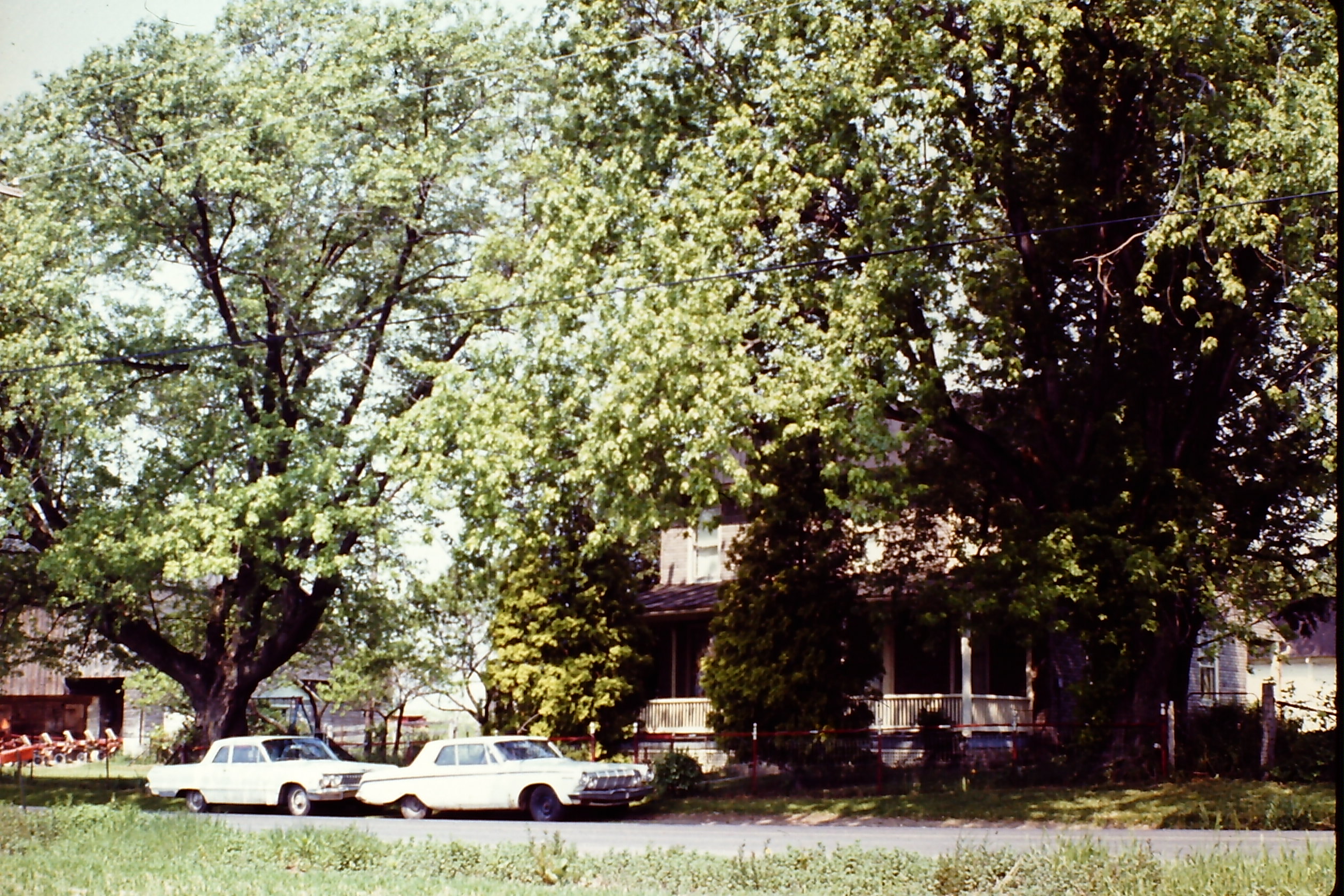
I wish I could find another picture of this house without it being so hidden behind trees. It was wonderful. Now it’s gone, only living in my memory and the memories of whoever else lived there and still is alive today.
I remember just looking at this house before we moved in and being in awe of its age, all the stories that somehow seemed to be hiding within its walls, bits of the plots or characters almost seeping out before my eyes. It had a wonderful hallway/landing at the top of the stairs around which clustered the bedrooms. If you walked all the way around the landing to the right, you’d be standing immediately above the downstairs entryway. And there was a door to the attic. The first room at the top of the stairs was originally a bedroom, but somewhere along the way it had been “modernized” to become a plumbed bathroom. So it was a good-sized room, with a clawfoot tub just sitting on one side and a sink and toilet deposited there as well. Ah, the space! The house was so old it either didn’t have closets, or they were tiny, so we had to use armoires. I did enjoy that house. It broke my heart when 20 years later I drove up to that area with my husband and first two daughters and tried to find the house, only to discover it had been replaced by a subdivision (shudder!). How dreadfully boring and unoriginal! I felt so sorry for the people who lived in those dull new houses and for those who would never get to explore the old homestead.
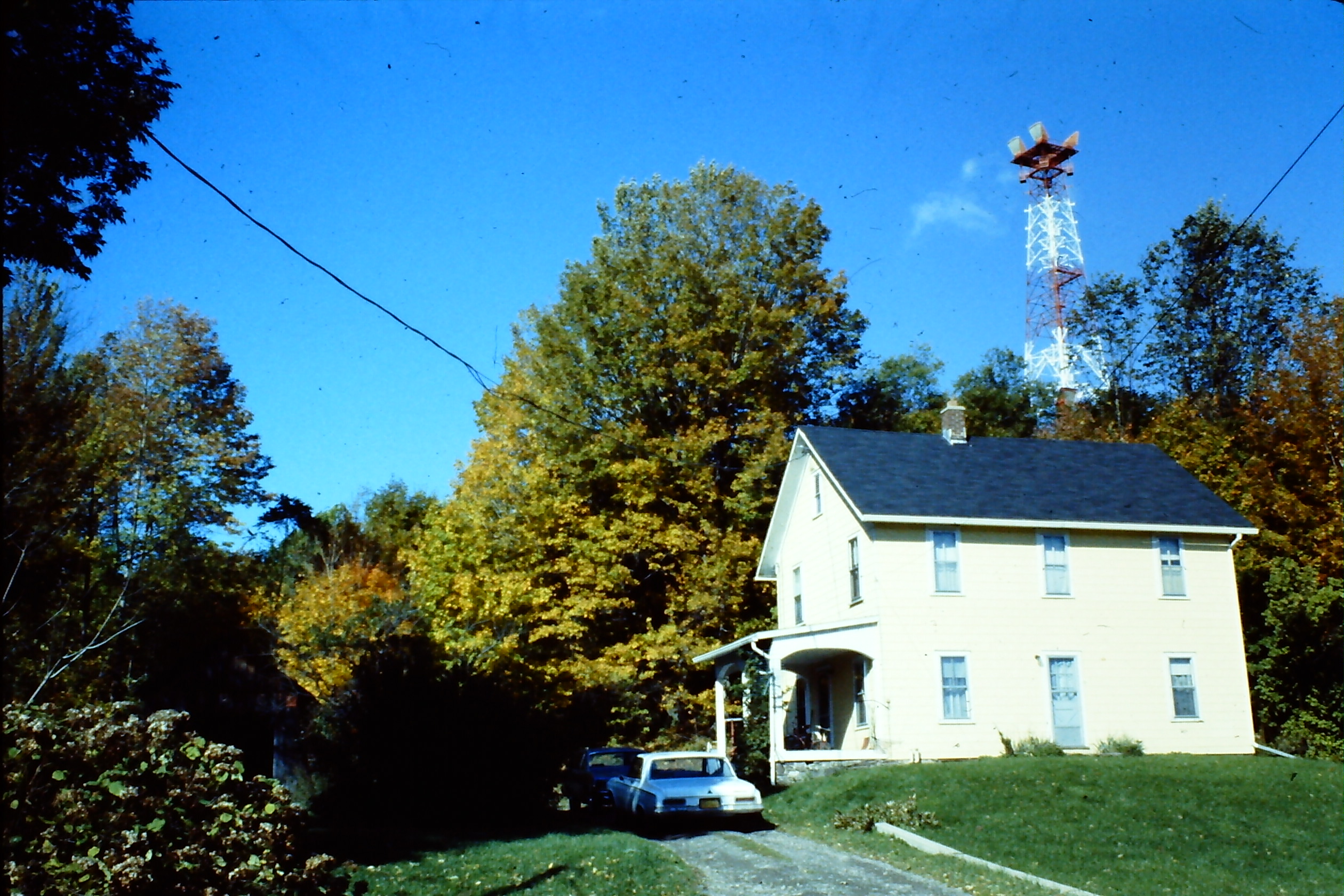
After that, we moved into the house “on the mountain,” only reachable via dirt and gravel roads which were nearly unnavigable in wintertime. Dirt roads covered with slick ice and snow that go up and up do not make for safe driving. The house itself wasn’t quite as cool as our previous house, but the whole mountain was our playground, and it was just as fun in snowy conditions as it was when all was green.
My husband grew up, however, in suburbia, in tract housing that was, frankly, boring and generic compared to what I had grown up with. Over time, I converted him to my way of thinking. We were very excited to be able to find a wonderful old place to rent for our first house as a married couple.
It was Tudor style and a solid 70 years old and had such neat touches: there was a milk-delivery slot on one side of the home. Useless to us nowadays, but cool! It was just a reminder of what the house had seen, what life had been like in its early days. It had hardwood floors and lovely built-ins and a very old but pretty wool carpet in the living/dining room area. I did love that house. It reminded me of my childhood homes and just the notion that something made of wood and plaster can feel like it’s a living, breathing thing, full of history and character.
We moved out of California back East, away from the land of layers of big-city suburbs and stucco, to small towns and wood/vinyl siding or brick. There we were able to buy our first house. It was modest in size but was older, with hardwood throughout and nice character. After eight years there, we just happened to drive by a house that had a little “for sale by owner” sign in the front. We weren’t planning on moving; hadn’t even thought about getting a different house. But I just couldn’t help but look. When I walked up the staircase and got a glimpse of the rooms upstairs, it just gave me the same feeling I’d had walking up the stairs of that old, long-gone house I lived in as a child. I couldn’t help but buy the place.
It was 100 years old when we bought it, with all kinds of wonderful touches. It had a porch all the way along the front and a barn in the back, even though it was “in town” on a main road. Everything else just grew up around it over the years, I suppose. We got in there and just rehabbed it. We painted all the rooms inside and then redid the two bathrooms, adding an antique clawfoot tub to the downstairs bath, which was large enough but somehow only had a toilet and sink (and just cried out for a clawfoot). We painted the outside eventually. We did so much to it and for it. It was beautiful, and it had such character.
But we left it behind. Now we live in a wonderful house that has some neat touches and isn’t a tract; it’s a 20-year-old custom home. It’s needed some work, too, which we’ve lovingly provided, a bit at a time. But as I drive around town and see some of the older houses here, I think, Oh, come to Momma, let me take care of you! I’ll give you the treatment you deserve.
But one can only take in so many kittens. I couldn’t possibly buy and make over all the wonderful old houses that sit so alone and desperately in need of TLC and good families to build memories and create new stories in them. Even so, the heart isn’t practical. That soft center inside my heart will always reach out to every boarded-up, uninhabited house, wanting so much to give it a new lease on life. No, I don’t get (too) excited about clearance signs in shopping malls. But my pulse accelerates at every “for sale” sign in the front of a classic home. Maybe, I think, I could just buy it and rent it out so someone else could enjoy it…
Much talk has been made over the years and even recently about “good moms” or moms who “do everything for their kids” and so on. The Time piece titled “Are You Mom Enough?” stirred quite a bit of controversy and buzz. But there are clearly as many ways to parent out there as there are parents. I would venture to say that a number of those methods employed by some parents are probably not so great, but in general, most parents get the job done passably well. But I think what bugs me the most is when people make judgments about parents whose kids are doing just fine and start saying that their parenting style is lacking. About a month ago, right around the time I was in dire need of a little me time, a Facebook “friend” posted that she was so disappointed in all the mothers who were complaining that their kids were driving them crazy. She ended by saying, “It’s about attitude!” I gently responded with a couple of kindly worded comments to the effect that just because some of us mothers were rightfully saying our kids were making us nuts (this is summertime, people!), it doesn’t make us bad parents. Just normal. A few hours later, my comments (which were completely appropriate) had been deleted. What the heck, man?! But that’s a whole other story.
Let’s just say that I consider myself in many ways a pretty normal, typical mom. For years, women have dreaded the summer months in which a passel of kids would be constantly underfoot and looked forward to school starting again (even a popular Christmas song refers to the relatively short winter break: “And mom and dad can hardly wait for school to start again!”). So feeling nutty here at the end of the summer does not make me an unusual mom, let alone a bad one.
I will say that what makes a good mom, I think, is knowing your limits. I figured out long ago that, given my personality and my mental health issues, having consistent and dependable time alone, preferably weekly, can keep me going at my best. I’m a gas-guzzling, large-capacity van, let’s just say, at this stage of my life, and I need frequent infusions of gas, oil, and water to keep me running effectively and continually transporting my load of children through their lives. I also need good quarterly maintenance.
Unfortunately, the summer months disrupt my fairly well-planned and nicely balanced routine that keeps me at my mothering best. I know this going in and start feeling a little nervous come May. But I do the best I can to plan and make allowances. And then I still end up running low on gas and oil and burning out at least once, sometimes twice, usually in the middle and at the end of the summer. A month ago, I felt myself snapping, stretched to my utter capacity for patience and sacrifice, and I scheduled a Saturday for myself. I hadn’t had more than an hour to myself in about two months. I hired a niece to babysit for the day and I went for a lovely bike ride and then had lunch and manicures and facials at the beauty school with a friend. It was wonderful. And not nearly long enough. I was not ready after merely seven hours to get back into the grind. The timing the next day of that Facebook post of my friend (unnamed here) was very unfortunate. I thought it was insensitive and judgmental. After having my comments deleted, I deleted the friend (this was not this person’s first “offense” at overreacting to innocuous comments, either). At the time, I felt it was the simplest and quickest solution to help reduce the negative influences in my life. Again, I suppose that’s a whole other story.
Mama’s stretched to snapping: it’s not a pretty picture.
A month later, I am back at snapping point. Having four children with all their demands (and whining and fussing amongst themselves, which can just grate on one’s nerves) around nonstop; then having to make sure the two older ones get to a girls’ camp; then the oldest, who can actually babysit, be gone for an entire week at band camp; then breaking my FOOT and being unable to do the things I need and want to do; then not having any time or brain-space for thinking clearly in order to work on the writing projects that mean a lot to me personally; having other big responsibilities on my plate that still need to be taken care of, broken foot or not (band boosters [the band director needs us to raise $150,000 for new instruments over the next three years?], being in charge of my university’s local alumni chapter, other volunteer things); then throw in PMS, and it’s a recipe for burnout. (Not to mention having all kinds of large and small expenses pop up until the point of ridiculousness this past four or five months, and the astonishing number of things that have kept breaking down on me the past few months till where I’m begging the financial universe for mercy…) It’s the rubber band being stretched entirely too far. It SNAPS.
I wish I could be the kind of mom who enjoys every single moment with her children. I wish I could savor every moment during the summer with them. I have done some fun things with them here and there. I just haven’t been their everything for every moment. (Nor do I think that is good for them, anyway.) I am still absolutely ASTONISHED at the amazing journey a dear friend took this summer with her seven children. They drove in a pop-up camper all the way from the western United States to Alaska and spent two months making the trip. I would have gone nuts probably on the second week, the third at the latest. How she did it is beyond me. But I am in awe and I tip my hat to her. What an amazing experience for them all. But me, I’m just getting my kids through the summer at home, barely gripping on to my sanity.
I am still trying to figure out right now how to just survive the next eight days until my children start school. It sounds silly now that I’ve managed to get through a whole summer, but the last days are seeming like an eternity because I’ve already snapped. I have no spring left. I pretty much want to curl into a ball in my bedroom, take some kind of sleeping pills so I can coast through the next days mostly unconscious, and lock the door.
I would probably be a slightly more “normal” mom if I didn’t have my mental health issues. But I do the best I can to stay on top of them. I take medication, check in with my psychiatrist, and have regular visits with a therapist. I try to be reasonable in my expectations. I’ve been trying to repeat all kinds of useful and inspirational mantras the past weeks to keep myself positive enough to survive until I have some time alone to just regroup in pretty much every way. I just don’t know who or how to ask for help. And unfortunately, when I mention my feelings and am aware that I am being stretched too far, I end up with mostly unwanted advice (one-sentence cliches that too often start with “just”… if you’d just do X, Y or Z, you’d be fine. Or just “let go and let God.” Yeah, I know all that. Doing it is really the battle, isn’t it?) I don’t want advice. I want support and practical help. Someone want to take my girls on a vacation for a few days? That would be most welcome. No mantras, no judgment. Just support and caring.
As you can see from this long post, my manic side is coming out a bit. Sorry ’bout that. But it’s my reality. I am who I am, and I’m daily trying to improve the parts of me that can be improved, and manage the things I can’t change (genetics, brain chemistry: I’m talking ’bout you). But I’m still working on it. I’m going to fall down a lot and fall short a whole lot. I just wish I were better able to figure out ways to practically deal with the snapping of the rubber band before it stretches too far. My aspirations for being a great mom are simply in knowing my limits and not pushing past them. I’ve given my children so much and taught them so much and love them a great deal. Yeah, I need some time alone, away from them, sometimes in order to be able to continue to be a good mom to them. I just want to be able to stave off the snapping.
My husband and I were struck particularly this week by some of the talk that swirled around the Web after the amazing Gabby Douglas won all-around gold in gymnastics. We were both dismayed to read how many of her fellow blacks commented not on her performance or her history-making status as the first black woman to win gold in the individual all-around at the Olympics, but on … her HAIR.
Yes. Her hair. Now, I have read a couple of fairly reasoned comments by blacks explaining why the intense focus on her hair and disparaging comments about it, saying that since she is “representing black people” as a whole, who have experienced a clearly bad history of injustice and who now feel they have to essentially overcompensate to be seen just as equal, that even appearance is an important facet of that sense of proving themselves. There is no question that that is sad.
It’s bad enough that women today are being pressured more than ever to look perfect according to current societal norms. These norms are admittedly different (within each community, at least, though not in our society overall) for whites and blacks. And blacks make no secret about how their hair is always a challenge. Comedian Chris Rock put together a very interesting and entertaining documentary about the topic, in fact, called “Good Hair.” It was just a glimpse for those of us who do not have that texture of hair into what it’s like to try to come to terms with it.
I’m only weighing in on this topic because it’s a personal one to me. We have three biological daughters, but we also adopted our youngest daughter, who is black. And from the second we got her (the day after she was born) and took her out in public, we started getting advice from blacks on how to take proper care of her hair. Five years later, we are no less inundated with opinions.
They haven’t been unwelcome. It’s clearly true that I have no experience styling black hair. I have dark blond, smooth, straight hair. Easy-peasy. I wash it and comb it and that’s pretty much it. I’ve got it good even for a white person. So it’s helpful to have people who have experience give me ideas. What’s been interesting, however, is just how varied and sometimes clearly opposite those tidbits of advice have been. My husband had co-workers telling him from the start to use Vaseline in our daughter’s hair. Others said absolutely categorically that Vaseline was NOT what we should use. When it came to products, then, I ended up fairly early buying and using the products made by Carol’s Daughter. I like them, they smell wonderful, and they seem to keep our daughter’s hair mostly smooth and manageable if we use them every single day. So, end of story. The product side is done.
What’s the other even bigger issue is that of STYLING. I’ve been mostly interested in just letting her have a natural style, keeping it oiled nicely and combed, but nice and curly and as-is. I’ve even been bolstered in this opinion by seeing all of the emails and information that Carol’s Daughter is sending out to customers about “transitioning” to more natural hair. I absolutely refuse to straighten her hair with strong chemicals. If she chooses to do that when she’s “of age,” she can, but I am not going to put lye on her tender scalp.
So straightening chemically is out. But what about styles? When I’ve gotten ambitious, and had some time on my hands, I’ve put her fairly short hair in little “poof-balls,” as I call them. They look super-cute. But I have never learned how to do cornrows or other similar styles. This week, however, I decided to try just braiding her hair. We sat down and spent half an hour getting this done. I put about 15 little braids in her hair, and I think it looks cute and, I think, SHOULD be approved by blacks.
Then again, I worry. With five years experience getting blacks’ advice (sought and un-sought, from friends and strangers), I know it can be contradictory, and that it is taken VERY seriously. This is why I am not surprised at how Gabby Douglas’s hair was discussed in what most whites would consider rather mean terms. Blacks are serious about their hair, and it’s a complex issue for them. Many women, thanks again to the not-helpful culture in which we all live, feel self-conscious about their textured, very curly hair. They want to have smooth, straight hair that isn’t so “ethnic.” As with all the other topics I’ve written about so far in the broader issue of beauty and contemporary culture, I find this sad and disappointing. Why in the world can’t we have a whole variety of “ideals”? And why does there have to even be an “ideal” shape or look anyway? Can’t everyone just be who they are, whatever shape, size, color or hair they have?
I suppose now I’m just being idealistic. It’s probably crazy to hope for something so drastic. But it doesn’t hurt to discuss it and remind ourselves that just being our own best selves is desirable. It’s a tough fight because we’re battling against SO MUCH societal pressure and messages, but we can still try to fight it.
I suppose also that I could have spent more time over the past five years going to special salons to get blacks to style my daughter’s hair. But, as with many issues I’m aware will crop up over the course of her life with me being white and her being black, I hope we can strike the right balance between pretending (ridiculously) there are no differences between us and making a big deal out of them (I just want to always acknowledge that, yes, she is adopted, but I am her mommy always and forever, and that, yes, she is black and I am white, and, yes, her hair is different than mine, and then just go about the business of being just who we are). I am just taking this interracial-adoption situation a day at a time, and just being her mom. (And, really, adoption and interracial adoption are just whole other big blog-able topics, aren’t they?) I’m doing the best I can to be a mother, period, and to be a mother to both biological children and an adopted child.
For now, I hope to be true to each of my children, for who they uniquely are. My youngest is black and adopted. My second-oldest has Down syndrome. The older three are half-Caucasian, half-Filipina. And each has her own amazing talents and gifts and personality traits. And each will have her own hair and appearance issues. But I hope that no matter what, each can feel good about herself and not succumb to society’s negative values, especially about image.
Yes, I might be treading on a minefield here. I’m well aware of that. I hope to be respectful but also share my own experience. My daughter’s only five. So I’m sure we have many years ahead in which we will just continue to take one day at a time in dealing with hair or anything else that becomes pertinent.
Just read an excellent piece about another set of articles that have continued to stir the public conversation about parents in the workplace, specifically mothers, and the idea of “having it all.” I’ve long thought and said that just seemed laughable. What is “it all”? Usually when the subject is brought up, somehow it’s assumed implicitly that phrase means that women can raise children and work in the career they have been educated for, and progress exactly as they’d like in both facets of their lives. But as a mostly stay-at-home parent who has worked part time and full time at different periods of my life, I have long known it is impossible to have that kind of “all.” Let me clarify: “all” essentially combines the concepts of being an “attached parent,” as one might put it today, and doing everything for one’s children, and going the distance in a career, all the way to “the top” of whatever field has been chosen. (And may I also now add in that our society today is including as bonus points that a mother who has it all can also look 25 when she’s 45, wear a size 2, run half-marathons by training at 4 a.m., and always be beautifully pulled together, displaying her family in a house that’s decorated by all the best ideas on Pinterest.)
Nope, not possible to do both. Not at the same time. Something is going to give. You won’t be at every single event your child is involved in, or you won’t end up at the top of the food chain in your job. But what IS possible is to take the best of both facets and focus on those parts that mean the most to you and make those count. And that balance, that particular combination of elements, is going to vary person to person, and be utterly unique. Then, knowing that you achieved at least fairly close to the combination of things you chose to do (and were flexible to go with the flow as you rethought things and reworked along the way), you could say at the “end” that it was satisfying.
I think in the article I read one thing that bothered me the most was this observation from one female writer: “But my other thought about Slaughter’s beautifully written piece is what a missed opportunity it was. Yet again, a powerful, influential woman had a platform to talk about the issue of choice when it comes to women, parenthood and power and chose not to discuss one of the most undervalued choices of all: the choice not to become a parent.” For one, that means nothing to this current argument of “having it all” as a parent. If you’re not a parent, all those choices become irrelevant, and there is nothing to “balance.” Simple as that. For another, I guess it struck me because I can’t imagine someone giving up the opportunity to raise children. Sure, it’s a messy, frustrating, difficult and time- and energy-consuming job, but it is absolutely the most joyous and satisfying in the long run. Nothing beats having reared a whole separate, unique HUMAN BEING from infancy to capable, independent adulthood. Nothing. (But I know even as I say this that a few people really just aren’t cut out to be parents. And if they absolutely know that, then I respect that choice. Absolutely. I just don’t want people who are on the line to give up on the possibility and never know the joys they could have known.)
What I found was a great observation was actually from a reader. This person commented, in part, “Even though it is difficult to live in our current economy without both parents working, we are expected to spend more time catering to our children than any other generation. Sacrificing your life for your children, however, does not make them strong, responsible adults.” Hurrah, commenter. Great observation. We as parents today are doing much more for our children than they truly need. I took this evening to remind my four progeny that as much as I love them and enjoy time with them, I do not need to nor should I spend all my time with them nor do too much for them. For one, I do have responsibilities to take care of our home and keep meeting their basic needs, whether that is shopping for food, earning some money, cooking, cleaning (the work they are not quite capable of), and so on. Second, it is not good for them for me to be with them all the time. They need the space and time to decide for themselves how to use their time, how to work and play within their own sphere. Choosing and keeping themselves busy allows them to become independent and allows their brains to develop in the best way. If I provided answers for all their questions and wants, they would not be able to stretch their brain muscles and grow as separate individuals. So no, I do not cater to my children. And they are better off for it. They actually do step in and wash dishes or clean up without me asking them to (not all the time; this isn’t a dream world!). But they show initiative and can make decisions for themselves. They work and contribute to our household in the ways they are capable of. We all work together as a team. Nope, it’s not seamless, but we’re working on that. And that’s my job as a parent: to allow them opportunities to function as a viable member of this family team.
So I’m throwing in, again, my two cents’ worth on this topic that will be dissected over and over throughout all levels of our culture. I hope that the parts that should change for the better do. I hope that all parents will feel more comfortable and accepted as they say at work, “Nope, I can’t stay late for yet another night; I need to be with my children.” I hope that more businesses can find ways to allow all workers to have flexibility in when and how they do their work. I also hope that parents can feel comfortable in allowing their children some room to be themselves, to make their own decisions, to not “helicopter” them. I hope that we all can give ourselves some breathing room as we live the only lives we have, one messy step at a time. Life will never be exactly what we envisioned, either in the realm of career or family. It won’t be perfect. It won’t align with a rigid plan. But in the end, I hope that each of us can feel satisfied that we did the best we could with every decision we made and feel our lives were full and good, despite not “having it all.”
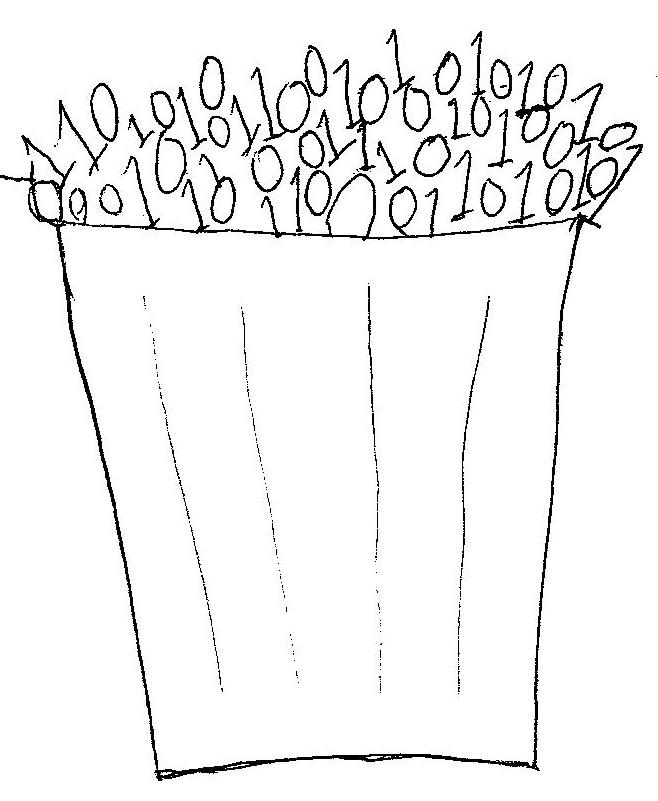 What’s sad is that it’s tough enough to keep entropy at bay in the concrete world. It takes daily effort to go through my house and constantly sort and throw items that creep into all my hiding places and on top of counters, desks, and shelves. I seem to have almost no help in this battle, though, since my children tend to be squirrels, and my husband would much rather keep pretty much everything, just in case. I’ve mostly broken him of the habit of picking things up at garage sales and (when we lived in the South and people just put old things on the side of the road to get rid of) bringing junk home that other people were THROWING AWAY. But he doesn’t on his own take the initiative to regularly go through things and organize and toss. I’m practically the lone ranger as I fight the onslaught of clutter.








 Life and Lims